



Entrepreneur
“We are terrified to say the word ‘vagina'”- the founder educating the world on reproductive health
After years of being ignored and dismissed, Golnoush Golshirazi was diagnosed with endometriosis


Vaginal health is an essential part of a woman’s overall health. Yet, misconceptions surrounding this topic often lead individuals to feel dirty or ashamed when experiencing problems.
The lack of research into vaginal health and women’s health more generally seems only to perpetuate these misunderstandings, leaving women suffering in silence.
Dr Golnoush Golshirazi knows this too well. After years of being ignored and dismissed by healthcare professionals, she was diagnosed with endometriosis.
Wanting to make a change, the now researcher and women’s health advocate built her own business and launched ScreenMe, a platform that screens for every bacteria present in the vaginal microbiome and helps women better understand their reproductive health. She sat down with us to share her story.
Hi Golnoush, could you tell us a bit more about your background?
My background is molecular biology, with a PhD in genetics.
What inspired you to create ScreenMe?
My own personal health journey was what really ignited my passion to help others in the health space. It took thousands of pounds and many years until I got my endometriosis diagnosis. I felt constantly dismissed, ignored by professionals and unable to perform at my very best.
I always remember getting my period during one of my final exams for my university degree. I literally couldn’t move from my bed, and after ringing up, the invigilators were able to bring me my exam paper at least – however, the fact that I had to sit an exam when all I could think about was the huge pain I was experiencing (and be supposed to feel ‘grateful’ for this), is something that I will always remember.
After receiving my endometriosis diagnosis, I took a look back at this long and painful journey and vowed that I wanted to work to make sure this changed for others.
I saw that I could really use my own knowledge and expertise to advance healthcare responses and assist in creating solutions that genuinely worked for people. It wasn’t just this, but the wish to create a space where people felt heard and had access to the science that can really change their life – as this was something I struggled to find and wish I had looking back.
How would you describe ScreenMe in a few words?
Wow, that is a hard one. In just a few words I would say: answers and solutions, with care. This is because ScreenMe brings cutting-edge science to those who need it, but also pairs such with professional guidance, education and genuine support, to create solutions that work for you as an individual.
What makes ScreenMe different?
ScreenMe’s main difference I would say comes from making cutting-edge science accessible to the general public and bringing together the scientific, medical and holistic field for support.
As a team of scientists, medical professionals and holistic practitioners, and experts within the women’s health space we have decades of experience between us. This allows us to separate fact from fiction and really give advice and solutions that work for our community.
In a world which is moving towards a preventative and holistic care model – our team is so passionate about this and works towards such every day. Our team is also why we focus on education and awareness. We are aware from our own experiences that so many people know so little about intimate health and its long-term implications for fertility, infection, and disease – so it is our team who have focused our strategy on first educating society on the topic.
Then people can make informed, evidenced decisions as to what care, testing or support they need (if at all). We are passionate about not trying to push the ‘hard-sell’ on our product, but empower people with the agency to make the decisions that are right for them.
In terms of technicalities. ScreenMe is the only UK-based company that provides NGS-based screening of vaginal and seminal samples for bacteria and yeast allowing identification of all species present at very high accuracy.
Do you feel there is a lack of awareness around the importance of the vaginal microbiome and vaginal health in general?
As a society we are terrified to even say the word ‘vagina’, let alone open up discussions around this or provide adequate education. Most people do not even know the difference between the vulva and the vagina; or do not know that there are actually seven holes in their intimate area (most think there are three!).
So many of the people with vaginas we see each day have no clue about the implications of the symptoms they have been experiencing, or even the basics on how to look after their intimate health. This lack of awareness also extends out into the medical community.
Vaginal ecosystem and the role of the vagina in the bigger picture of health is hardly spoken about at med school. So many concerns could be prevented or resolved if people only had access to the correct information and services – so this is honestly something that I could speak about all day.
Such a severe lack of education is why we include a free one-to-one consultation with a practitioner for each of our tests, so that results can be explained and solutions can be curated.
This is also why we have published our free online Vaginal Health Clinic on our site where we provide the latest information regarding the vaginal microbiome and how this relates to a whole host of concerns, including recurrent infection, miscarriage, IVF success, thrush, cancer risk and much more.
How do you think we could start educating people on these subjects?
For me, the two most important ways to do this is through schools and educating the healthcare system itself.
Firstly, regarding schools, it is simply not enough to learn about the reproductive organs and their very basic functions. We need to ensure that there is effective and detailed education for all genders on the many layers of health, which includes intimate health, the role of hormones, menstrual conditions and disorders, sexual health and wellbeing, menopause, fertility complications, and so much more.
Schools are such a brilliant access point to allow people to understand from an early age, how to look after themselves, how to protect their health, what symptoms to look for, and also how to interact and understand others who may be suffering from particular health concerns or conditions.
We also are really passionate about educating the healthcare community about this topic. You would be amazed at how little is often required to be learnt about intimate health and so we do a lot of work with practitioners to improve their knowledge on this topic – including webinars and broadcasts.
Vaginal health often comes with a lot of stigma. How did you find establishing your business in this sector?
We actually started focusing on women’s health care in general and it was only through listening to our community that we realised what a huge gap there was in understanding, testing, services and support for intimate health. So, while there have been barriers in this pivot, we ultimately have had a core community who are so appreciative of the work we do for them and want to hear more about vaginal health.
I think reading the many positive reviews that state how we have changed people’s lives, really keeps us motivated. However, having a business in this sector has been difficult when approaching investors.
Intimate health is not always something that people are comfortable speaking about, so it is sometimes difficult to present appropriate data on such, or have productive conversations. Yet this is something we are striving to change every day!
What obstacles have you encountered on this journey?
I guess the main obstacle I have faced is actually being a woman. We hear all the time how gender disparities reveal themselves in the workplace and in society as a whole – but I guess you never really realise the extent of this until you experience them first-hand yourself.
Particularly when looking for investment, it is difficult to always communicate some of the many struggles that women face daily, and present them as a consumer market – despite women making the majority of household health-related spending decisions!
I have even been in a room myself with an investor and my co-founder (who is a man), and the investor asked me for a tea and assumed that I was the assistant. It was only when we started the meeting and my co-founder asked me to answer the first question, that the investor realised the mistake he had made. Of course, instances like this do serve well to light a fire in my belly, but it is unrealistic to say that they aren’t sometimes difficult to navigate.
Where are you with ScreenMe now?
We are currently really focusing on our expansion of intimate health services. This has a multi-pronged approach including: providing top-quality thought leadership, providing our services globally and expanding the network with whom we work with.
Each month we are receiving more attention and onboarding more partners, practitioners, clinics and customers. We want to expand out outreach and awareness, so that intimate health is something everyone understands and makes a part of their routine check-ups. As we build momentum, we are so excited to see this future starting to take shape in front of us, even if there is still a way to go yet.
We have also recently launched our semen microbiome testing service. This is so we can help everyone with their intimate health. The semen microbiome is also really important for a range of similar reasons, including fertility, IVF success, infection risk, and risk of disease.
Further, in the case of heterosexual partners, this allows us to treat couples as a pair and prevent reinfections – as there is no use for only one person to do all of the work to optimise intimate health, when their sexual partner is doing nothing!
What are you looking to achieve with ScreenMe?
We want to achieve a world in which intimate and reproductive health is a key feature of education and research and people are able to get the testing, support and services required to improve such. It is crazy to me that we are still using swab culture methods to investigate intimate health, when this was a method devised over 100 years ago.
NGS is an available technology which provides much greater accuracy and is able to screen 100 per cent of the bacteria present, rather than a selected panel of pre-selected bacteria as used in swab culture or PCR methods.
ScreenMe works to make this technology available to everyone, so that they can understand the full context of their microbiome, rather than just get a few pieces of the puzzle. So, really what we are working towards is empowering everyone with their intimate health and at the same time seriously powering up research which is crucial for better intimate and reproductive health.
Where do you see the company in the future?
I see ScreenMe as the go-to platform for people globally when it comes to their intimate and reproductive health. I see a trustworthy, science-based place where men and women find answers, solutions, support and education with all of this leading to lower risk of non-communicable diseases across society.
I have big ambitions, so I don’t just want to see ScreenMe changing and growing in the future, but I want to see the whole of intimate health as we know it changing due to ScreenMe’s work!
Dr Golnoush Golshirazi is the co-founder and CEO of ScreenMe. She is a Cambridge graduate, scientist and entrepreneur who advocates for women’s equality within the healthcare system.









Entrepreneur
Future Fertility raises Series A financing to scale AI tools redefining fertility care worldwide

Future Fertility Inc. has announced the closing of a US$4.1 million Series A financing round.
The round was led by M Ventures (the corporate venture capital arm of Merck KGaA, Darmstadt, Germany) and Whitecap Venture Partners, with participation from new investors Sandpiper Ventures, Gaingels, and Jolt VC.
The financing will accelerate Future Fertility’s commercial expansion into Asia-Pacific and support its entry into the United States, including planned FDA 510(k) clearance for additional products as part of a broader U.S. market entry strategy.
Proceeds will also advance the development of a broader AI platform, from egg assessment through to embryo transfer, designed to support clinicians, embryologists, and patients across the full IVF journey.
M Ventures and Whitecap have supported Future Fertility’s mission to translate AI innovation into meaningful clinical outcomes since the company’s earliest stages.
Oliver Hardick, investment director, M Ventures, said: “Future Fertility is addressing a critical unmet need in reproductive medicine with a differentiated AI platform grounded in clinical data and real-world workflow integration.
“We are excited to continue supporting the company and team because we believe its technology has the potential to improve decision-making for clinicians, bring greater clarity to patients, and help advance a more personalised standard of care in fertility treatment.”
Future Fertility’s AI platform addresses a long-standing gap in fertility care: historically, there has been no objective, clinically validated method for assessing egg quality (Gardner et al., 2025), despite it being one of the most important drivers of reproductive success.
The company’s suite of deep learning tools includes VIOLET™, MAGENTA™, and ROSE™, purpose-built for egg freezing, IVF, and egg donation respectively.
The tools are based on AI models trained and validated on more than 650,000 oocyte images and are deployed in over 300 clinics across 35 countries.
Rhiannon Davies, founding and managing partner, Sandpiper Ventures, said: “The best outcomes in fertility care globally come from better data and smarter tools. Future Fertility understands that, and they’ve built a platform that delivers on it.
“Sandpiper is proud to back a team turning rigorous science into real results for patients and clinicians alike.”
Partnerships with the world’s leading fertility networks – including IVI RMA and Eugin Group across Latin America and Europe, FertGroup Medicina Reproductiva in Brazil, and most recently announced Kato Ladies Clinic in Japan – reflect growing demand for objective, AI-powered oocyte assessment in fertility care. In the United States, ROSE™ is newly available under an FDA 513(g) determination.
Research shows that approximately 50 per cent of IVF patients do not understand their likelihood of success, and many discontinue treatment prematurely, even though cumulative success rates improve significantly with multiple cycles (McMahon et al., 2024).
By delivering earlier clarity on egg quality, Future Fertility’s tools support more informed conversations between clinicians and patients, helping set realistic expectations and guide decisions about next steps.
Future Fertility’s growing evidence base spans seven peer-reviewed publications in Human Reproduction, Reproductive BioMedicine Online, Fertility & Sterility, and Nature’s Scientific Reports, and more than 70 scientific abstracts accepted and presented with partner clinics at conferences worldwide.
Christine Prada, CEO, Future Fertility, said: “Fertility treatment is one of the most emotionally and physically demanding experiences a person can go through.
“Every patient deserves objective data, not just a best guess, to support better decisions at critical moments in their care.
“This funding means we can bring that clarity to more patients, in more countries, at a moment when it matters most.”
Find out more about Future Fertility at futurefertility.com

Entrepreneur
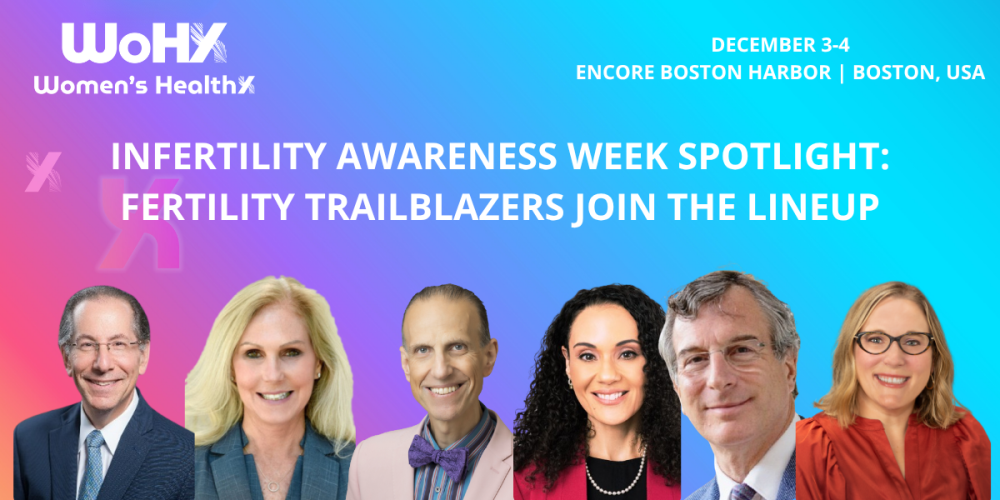
Women’s HealthX confirms exceptional speaker line-up to advance fertility and reproductive care

By Women’s HealthX
Women’s HealthX has confirmed an outstanding cohort of fertility and reproductive care leaders for its upcoming event, bringing together the senior clinicians, medical directors, and innovators shaping evidence-based practice across hospitals and healthcare systems globally.
Timed to coincide with Infertility Awareness Week, this announcement underscores the event’s commitment to accelerating the adoption of evidence-based innovations in fertility and reproductive medicine.
Find out more about Women’s HealthX
Headline Speaker
Fireside Chat: The Invisible Disease: What Endometriosis Reveals About the Future of Women’s Health
Padma Lakshmi, Co-Founder, Endometriosis Foundation of America
Confirmed Speakers from World-Leading Institutions and confirmed sessions
Training the Next Generation of Fertility HCPs
Alan Penzias, Director, Fellowship Program in Reproductive Endocrinology & Infertility, Beth Israel Deaconess Medical Center
Shaping the Future of Fertility Care
Lynn Mason, Chief Executive Officer — North America, IVIRMA Global
Ovarian Aging and Reproductive Potential: What Truly Matters
Mark Trolice, Founder & Medical Director, The IVF Center
The Patient Journey Through Fertility Care: Improving Experience & Outcomes
Adam Balen, Chief Medical Officer / Professor of Reproductive Medicine, Leeds Teaching Hospitals NHS Trust
Designing Women’s Health Around The Whole Woman: A Life-Course Model for Sustainable Outcomes
Malissa Wood, Chief Medical Officer, Women as One
Prolong Fertility Preservation by Highlighting Ovarian Insufficiency Through Genetic Variant Data Analysis
Julie Rios, Division Director, Reproductive Endocrinology & Infertility, UPMC
What Attendees Will Take Away
How to improve the fertility patient journey and outcomes
- Ways to detect ovarian aging earlier using genetic insights
- Strategies to deliver care across the full female life course
- Approaches to training the next generation of fertility specialists
Women’s HealthX spans seven dedicated stages covering the full lifecycle of women’s health — from fertility and sexual health to maternity and menopause — providing attendees with actionable insights from frontline leaders across hospitals and healthcare systems.
With Chief Medical Officers and senior clinical leaders in attendance, the programme moves beyond discussion into delivery, giving attendees direct access to the latest clinical evidence, emerging digital tools, and real-world outcomes data to support integrated, high-quality care.
REGISTER NOW FOR A CHANCE TO WIN A FREE THERAPEUTIC MASSAGE
Complimentary passes are available for qualified healthcare professionals.
Attendees who register by 15 May will gain full access to all seven stages and a chance to receive a complimentary therapeutic massage at Encore Boston.
Register your complimentary place
For speaking opportunities, partnership enquiries, or further information, please contact the team directly at info@alpahevents.com










 Entrepreneur6 days ago
Future Fertility raises Series A financing to scale AI tools redefining fertility care worldwide

 Entrepreneur4 weeks ago
Three sessions that show exactly where women’s health is heading in 2026

 Pregnancy4 weeks ago
How NIPT has evolved and what AI NIPT means in 2026

 News4 weeks ago
Two weeks left to make your mark in women’s cardiovascular health

 Opinion4 weeks ago
Q1 momentum: Female founders are advancing, but the system still hasn’t caught up
 Fertility2 weeks ago
Future Fertility partners with Japan’s leading IVF provider, Kato Ladies Clinic

 Mental health1 week ago
Lifting weights shows mental health and cognitive benefits in older women, study finds

 Mental health2 weeks ago
More research needed to understand link between brain fog and menopause, expert says
3 Comments