




Insight
Parents sue IVF clinic after delivering someone else’s baby


A Florida couple have sued an IVF clinic after giving birth to a baby who is not genetically related to either of them.
Tiffany Score and Steven Mills hired IVF Life, which operates as the Fertility Center of Orlando in Longwood to help them conceive about five years ago using in vitro fertilisation.

The couple had an embryo implanted in April and welcomed a baby girl nine months later, but soon suspected the clinic had made an error.
Both Score and Mills are white, but the baby had the appearance of a racially non-Caucasian child, according to the lawsuit.
Genetic testing confirmed that the baby is not biologically theirs. The couple filed the lawsuit on 22 January after allegedly trying to contact the clinic multiple times without getting a response.
Jack Scarola, one of the couple’s lawyers, told the Orlando Sentinel: “They have fallen in love with this child. They would be thrilled in the knowledge that they could raise this child.
“But their concern is that this is someone else’s child, and someone could show up at any time and claim the baby and take that baby away from them.”
Score and Mills are also concerned that one of the three fertilised eggs they had frozen at the clinic may have been mistakenly implanted into someone else.
They have demanded that the clinic share what happened with all other patients who had embryos stored at the facility during the year before Score gave birth. They also want IVF Life to pay for genetic testing of every child born as a result of its services over the last five years, and to account for their remaining embryos.
The couple said in a statement: “We love our little girl. We would hope to be able to continue to raise her ourselves with confidence that she won’t be taken away from us.
“At the same time, we are aware that we have a moral obligation to find and notify her biological parents, as it is in her best interest that her genetic parents are provided the option to raise her as their own.”
A family spokesperson said: “Based upon leads discovered to date, and despite the lack of help or cooperation from the clinic, there is hope that we will be able to introduce our daughter to her genetic parents and to find our own genetic child soon.”
The lawsuit names IVF Life LLC and Dr Milton McNichol, who runs the clinic.
The Fertility Center of Orlando had posted a notice on its website stating it is “actively cooperating with an investigation to support one of our patients in determining the source of an error that resulted in the birth of a child who is not genetically related to them.”
The notice was removed after a court hearing on Wednesday.
During the hearing, the judge ordered the clinic to submit a thorough plan for handling the situation by Friday.
McNichol was reprimanded by Florida’s Board of Medicine in May 2024 after an inspection of the clinic in June 2023 revealed several issues, including equipment that did not meet current performance standards, failure to comply with a risk-management plan and missing medication.
He was fined US$5,000.











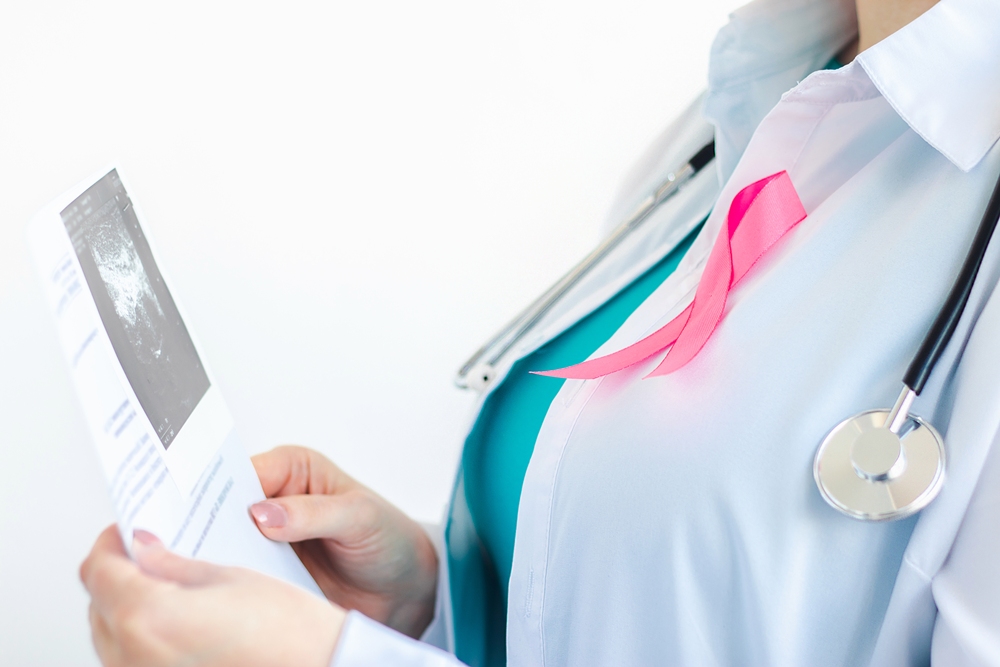

Ki-67, a protein used to measure tumour growth, may also help prevent chromosome errors that drive cancer, a study suggests.
The findings could change how scientists view Ki-67, a marker commonly used in breast cancer and other tumours to assess how quickly cancer cells are growing.
Researchers found the protein may help preserve genome stability by maintaining the structural integrity of centromeres, key parts of chromosomes that help ensure DNA is shared correctly during cell division.

The research was led by professor Paola Vagnarelli at Brunel University of London in collaboration with scientists at the University of Edinburgh and the Technical University of Berlin.
Professor Vagnarelli said: “Doctors already measure Ki-67 to see how aggressive a cancer might be. But our results suggest it is actually helping maintain genome stability.
“That means it may be more than a marker. It could potentially also be a therapeutic target.”
The study examined three proteins that attach to chromosomes during cell division and help rebuild the molecular system that tells each new cell what kind of cell it is.
Every human cell carries identical DNA. What makes a liver cell different from a brain cell is which genes are switched on and which are kept inactive.
When a cell divides, that entire system of switches must be rebuilt. The three proteins involved in this process were Ki-67, Repo-Man and PNUTS.
Vagnarelli’s team developed a method that individually removes each protein from a living cell at the precise point of division. Older techniques could not isolate that moment cleanly.
They found that cells rely on all three proteins to reset themselves after division, but each failed in a different way when removed.
Without PNUTS, gene activity spiralled out of control and thousands of genes switched on at once.
Without Repo-Man, cells escaped safety checkpoints that usually stop damaged or abnormal cells from continuing to divide.
“What we didn’t expect was how clean the separation was,” said Vagnarelli.
Each protein fails in its own specific way. There is no redundancy, no safety net. Which means there are three separate points at which this process can go wrong.
“When the system breaks down, cells can emerge with the wrong number of chromosomes. That condition, called aneuploidy, is seen in disorders such as Down syndrome and in many cancers.
“We also found that these chromosome errors can trigger inflammatory signals inside the cell.”
Aneuploidy means a cell has too many or too few chromosomes, which can disrupt normal growth and function.
Inflammatory signals are chemical messages that can make a cell behave as if it is responding to injury or infection.
“These cells behave almost as if they are under attack,” said Vagnarelli.
“The immune response switches on because the genome is unstable.
“That link between chromosome imbalance and inflammation could help explain patterns we see in several diseases.”
The researchers said the findings may help cancer scientists better understand how chromosome instability, loss of gene regulation and cells dividing before they are ready contribute to tumour growth.
They said understanding the normal machinery that prevents these errors may help researchers find ways to push cancer cells into making mistakes they cannot survive.
“We now have a clearer map of the machinery that resets the cell after division,” said Vagnarelli.
“That knowledge gives us a starting point for thinking about new therapeutic approaches.”













 Entrepreneur4 weeks ago
Women’s digital health market set to reach US$5.28 billion in 2026 – report

 Insight4 weeks ago
Why the UK’s fertility rate keeps falling – and what it means if you’re trying now
 Wellness4 weeks ago
Women’s HealthX unveils Northwell Health, Corewell Health, Biogen & more to headline Chronic Disease stage

 Motherhood3 weeks ago
What Maternal Mental Health Month reveals about where postpartum support actually breaks down
 Fertility4 weeks ago
Toxins and climate harms having ‘alarming’ effect on fertility, research warns
 News3 weeks ago
NIH Grant terminations disproportionately impact minority scientists, research finds

 Adolescent health2 weeks ago
WUKA brings Period-Positive Pool Party to London Aquatics Centre to keep girls swimming through puberty
 Fertility4 weeks ago
Researcher explores weight loss jab impact on PCOS
34 Comments