




Insight
Trend watch: The rise of the intimacy economy


By Fard Johnmar, health futurist, strategist and co-founder of the FemAging Project
For more than 20 years the digital realm has been dominated by a quest for attention: likes, clicks, views, shares, etc.
While attention is still important, the proliferation of AI tools, powered by huge amounts of data, is leading to the rise of what some are calling the intimacy economy.
The intimacy economy is characterised by a shift towards “market systems where personal and emotional data are exchanged for customised experiences catering to individual emotional and psychological needs.”
This trend is being driven by the rise of increasingly powerful AI systems that use a range of verbal, textual and visual cues to deliver highly personalised experiences.

Key technologies facilitating this trend include:
- Ambient Intelligence: Devices are becoming more attuned to our personal habits and preferences, understanding not just our spoken commands but also our nonverbal cues and emotional states
- Intimate Connections with AI assistants: We are seeing the increased incidence of the creation of intimate, and even romantic, connections with AI assistants
- Enhanced Personalisation: AI has the potential to reshape digital experiences by moving beyond attention algorithms to cultivate intimate connections with users, anticipating their needs and emotions
Companies are capitalising on this trend by creating sophisticated AI systems designed to engage users on a personal level.
For instance, platforms like Replika and Glow are designed to foster emotional bonds, allowing users to share their thoughts and feelings in a safe environment.
These AI companions can adapt to individual preferences, providing tailored interactions that mimic the nuances of human relationships.
This adaptability not only enhances user experiences but also raises questions about the authenticity of these connections and their potential impact on real-life relationships.
However, the rise of the AI intimacy economy is not without its challenges.
Critics express concerns about the implications of relying on AI for emotional fulfillment, suggesting that it may lead to a decline in genuine human interactions.
The potential for users to develop unrealistic expectations about relationships is also a significant concern.
The Intimacy Economy and Women’s Health
The rise of the intimacy economy has profound implications for women’s health across a range of domains, including:
- Behavioral health: We are already seeing AI-powered mental health companions that are delivering care – often without human intervention. Are women being helped or harmed by AI therapists and what are the long-term implications of the acceleration of automated mental health support services?
- Product development: Innovators may leverage trending intimacy economy tech to develop more ‘sticky’ and engaging patient and consumer experiences by integrating AI technologies into their products and services
- Behavior modification: Will communications, adherence/compliance solutions and other tools providing highly personalized and intimate experiences do better or worse at shaping health-related behaviors in medication adherence, vaccine utilization and other areas?
Undoubtedly, there are many other areas where AI-fueled ‘intimate’ technology will shape women’s health globally.
The next few years will likely be transformative as these technologies are adopted across healthcare — sometimes in surprising ways.
Tools and Resources to Guide You in an Era of Profound Change
As AI and related technologies continue to re-shape women’s health and well-being at a rapid pace, it’s important to understand the impact and implications of these trends and technologies on your work in health and well-being.
To help, we have developed a range of unique original research, analysis and AI-powered knowledge solutions delivered via our membership and intelligence platform, Femalytics. You can benefit from Femalytics by:
- Signing up for the Femalytics Resource Hub to receive intelligence and research in your inbox – free of charge. Click here to sign up.
- Exploring other Femalytics solutions, including personalized InnoStrategy Briefings, 20+-page reports featuring competitive intelligence, trend and tech analysis on topics you care about most. Learn more by clicking here.
About the Author
Fard Johnmar is a health futurist, strategist, and co-founder of the FemAging Project, a global initiative focused on providing insights, intelligence and connections to help drive women’s health innovation — especially for those aged 40+. Femalytics is a FemAging Project initiative.
















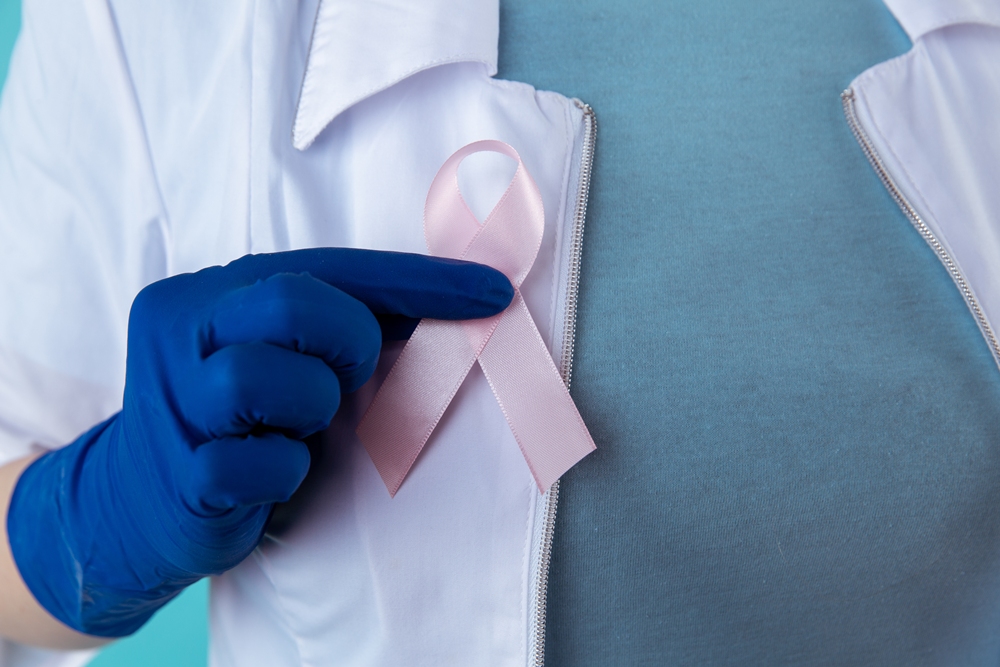
Ki-67, a protein used to measure tumour growth, may also help prevent chromosome errors that drive cancer, a study suggests.
The findings could change how scientists view Ki-67, a marker commonly used in breast cancer and other tumours to assess how quickly cancer cells are growing.
Researchers found the protein may help preserve genome stability by maintaining the structural integrity of centromeres, key parts of chromosomes that help ensure DNA is shared correctly during cell division.
The research was led by professor Paola Vagnarelli at Brunel University of London in collaboration with scientists at the University of Edinburgh and the Technical University of Berlin.
Professor Vagnarelli said: “Doctors already measure Ki-67 to see how aggressive a cancer might be. But our results suggest it is actually helping maintain genome stability.
“That means it may be more than a marker. It could potentially also be a therapeutic target.”
The study examined three proteins that attach to chromosomes during cell division and help rebuild the molecular system that tells each new cell what kind of cell it is.
Every human cell carries identical DNA. What makes a liver cell different from a brain cell is which genes are switched on and which are kept inactive.
When a cell divides, that entire system of switches must be rebuilt. The three proteins involved in this process were Ki-67, Repo-Man and PNUTS.
Vagnarelli’s team developed a method that individually removes each protein from a living cell at the precise point of division. Older techniques could not isolate that moment cleanly.
They found that cells rely on all three proteins to reset themselves after division, but each failed in a different way when removed.
Without PNUTS, gene activity spiralled out of control and thousands of genes switched on at once.
Without Repo-Man, cells escaped safety checkpoints that usually stop damaged or abnormal cells from continuing to divide.
“What we didn’t expect was how clean the separation was,” said Vagnarelli.
Each protein fails in its own specific way. There is no redundancy, no safety net. Which means there are three separate points at which this process can go wrong.
“When the system breaks down, cells can emerge with the wrong number of chromosomes. That condition, called aneuploidy, is seen in disorders such as Down syndrome and in many cancers.
“We also found that these chromosome errors can trigger inflammatory signals inside the cell.”
Aneuploidy means a cell has too many or too few chromosomes, which can disrupt normal growth and function.
Inflammatory signals are chemical messages that can make a cell behave as if it is responding to injury or infection.
“These cells behave almost as if they are under attack,” said Vagnarelli.
“The immune response switches on because the genome is unstable.
“That link between chromosome imbalance and inflammation could help explain patterns we see in several diseases.”
The researchers said the findings may help cancer scientists better understand how chromosome instability, loss of gene regulation and cells dividing before they are ready contribute to tumour growth.
They said understanding the normal machinery that prevents these errors may help researchers find ways to push cancer cells into making mistakes they cannot survive.
“We now have a clearer map of the machinery that resets the cell after division,” said Vagnarelli.
“That knowledge gives us a starting point for thinking about new therapeutic approaches.”











 Opinion4 weeks ago
What Maternal Mental Health Month reveals about where postpartum support actually breaks down

 News3 weeks ago
NIH Grant terminations disproportionately impact minority scientists, research finds

 Menopause5 days ago
Perimenopause misinformation ‘putting women at risk’

 Adolescent health3 weeks ago
WUKA brings Period-Positive Pool Party to London Aquatics Centre to keep girls swimming through puberty
 Insight3 weeks ago
PCOS renamed after decade-long campaign to end ‘cyst’ misconception

 Events4 weeks ago
WHIS 2026 unveils agenda and first speakers for the leading women’s health summit

 Menopause3 weeks ago
CBT shows promise for menopause insomnia and hot flashes

 Insight4 weeks ago
Online abuse and deepfakes ‘pushing women out of public life’
3 Comments