Connect with us

Motherhood

femble shifts strategy to strengthen doctor-patient relationships

Published

on

Leveraging new user insights, femble has announced a strategic pivot aimed at enhancing the doctor-patient relationship.

Following the successful launch of its B2C app addressing cycle-related health issues—which amassed a community of over 40,000 women and collaborated with dozens of physicians—femble’s founders identified a significant opportunity to expand into the B2B sector.

Founded in 2021 by Lina Graf and Daniel Steiner, femble was born out of a personal health journey that highlighted the need for more accessible and reliable medical information.

Lina Graf said: “We realised that medical knowledge needs to be made more accessible—especially because social media is flooded with unverified content.”

Initially, femble focused on a “recommender engine” that delivered personalised health content from trusted doctors, specifically supporting women with individual health concerns.

A Strategic Realignment Based on Market Feedback

After successfully engaging thousands of users and numerous healthcare professionals, femble recognised an even greater potential within the B2B landscape.

Daniel Steiner said: “We conducted numerous conversations with users and doctors and understood that health information should not come from just any doctors, but from their own.”

This insight led to the development of a new platform designed to help doctors more effectively inform and support their patients.

Empowering Doctors as Trusted Health Influencers

Two months ago, femble officially transformed its business model in response to strong market feedback.

Daniel said: “We developed a platform for doctors to fundamentally rethink and make the relationship with patients more efficient.

“The signs that the time is ripe for our platform have increased in recent months.

“We are observing a strong trend towards exclusive digital communities, and the emergence of generative AI in videos will further accelerate this change.

“With femble, we enable doctors to become trusted health influencers for their own patients.”

Impressive Reception and Future Expansion Plans

The strategic pivot has already garnered impressive results within weeks of implementation.

femble’s solutions, particularly in the realm of women’s health, have attracted significant interest from doctors and clinics alike.

Buoyed by this positive reception, femble is now planning a strategic relocation with a focus on expanding its presence in the US market.

For more information about femble and its new B2B platform, visit femble.co.

Image: Michael Engele

Continue Reading
Click to comment

Leave a Reply

Your email address will not be published. Required fields are marked *

Wellness

Stroke prevention and treatment during and after pregnancy key to women’s health – AHA

Published

on

Stroke prevention requires aggressive blood pressure control and rapid recognition of symptoms in pregnancy and postpartum, a new scientific statement urges.

The guidance details risk factors for pregnancy-related stroke and offers suggestions for prevention, rapid diagnosis, timely treatment and recovery during pregnancy and postpartum.

A stroke occurs in approximately 20 to 40 of every 100,000 pregnancies and is estimated to account for around four to six per cent of pregnancy-related deaths annually in the US.

The statement was published by the American Heart Association and endorsed by the American College of Obstetricians and Gynecologists.

Eliza Miller is chair of the writing group and associate professor of neurology at the University of Pittsburgh.

She said: “When a stroke occurs during pregnancy or the postpartum period, it can lead to serious complications for both the mother and baby, including neurological deficits, long-term disability, increased risk of future strokes and death.

“Controlling blood pressure and other stroke risks before and after delivery, responding immediately to stroke warning signs and providing timely treatment can help save lives and improve outcomes for mothers and their babies.”

There are two types of stroke: an ischaemic stroke occurs when a blood vessel supplying blood to the brain is blocked by a clot, while a haemorrhagic stroke occurs when a blood vessel ruptures and bleeds into the brain.

Risk factors for pregnancy-associated stroke include chronic hypertension (high blood pressure before pregnancy or diagnosed before 20 weeks), preeclampsia (a dangerous condition causing high blood pressure in pregnancy), advanced maternal age (35 years or older), diabetes, obesity, migraine with aura, infections, heart disease and clotting disorders.

Stroke disproportionately affects people of racial and ethnic minorities. A 2020 meta-analysis found that pregnant Black women are twice as likely to have a stroke compared with pregnant white women, even after adjusting for socioeconomic factors.

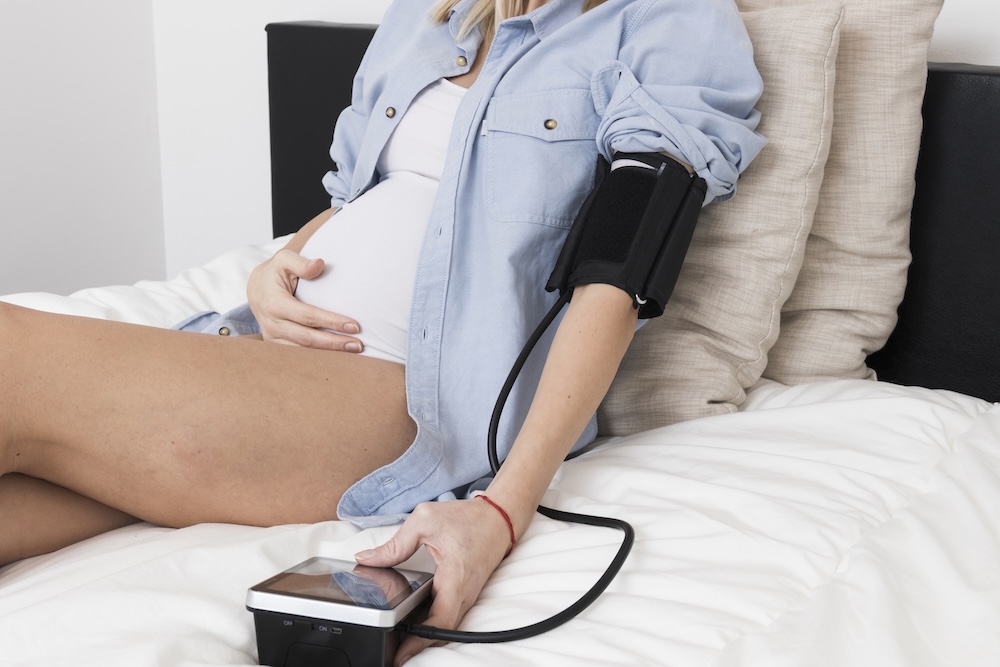
The statement authors emphasise that the majority of maternal strokes are preventable with earlier and more aggressive blood pressure control.

“Preeclampsia and eclampsia can occur before, during or after delivery, and the early postpartum period is actually the highest risk time for stroke.

“Very close monitoring of blood pressure is essential,” said Miller.

The statement urges all healthcare professionals who care for pregnant patients, including obstetricians, family medicine practitioners and nurses, to be trained to recognise stroke symptoms so they can promptly start treatment.

“It is crucial for women who are pregnant or have recently given birth and have symptoms of new neurological deficits or severe headache, especially if they also have elevated blood pressure, to be immediately evaluated for possible stroke,” said Miller.

The authors emphasise that pregnancy is not a reason to delay or interfere with recommended treatment for acute stroke.

Various anti-clotting medications are available that are safe for pregnant and lactating women, and mechanical thrombectomy (surgical removal of a blood clot) may be needed for patients with large-vessel blockages.

Survivors of pregnancy-associated stroke face unique challenges such as caring for an infant and require support from a multidisciplinary rehabilitation team.

Mood and sleep disorders are common after stroke and may be intensified by postpartum factors such as hormonal shifts, breastfeeding and disrupted sleep.

Miller said: “Babies depend on their mothers’ well-being, and supporting recovery after stroke, both emotionally and practically, is essential so mothers can heal and families can thrive.”

Continue Reading

Insight

70% of UK mothers feel overloaded, study finds

Published

on

Seven in 10 UK mothers feel overloaded and almost half have a mental health issue such as anxiety or depression, new research finds.

A survey of mothers’ experiences in 12 European countries also found most of those in Britain still do the majority of household tasks and caregiving alone, and that the UK was among the worst for motherhood disadvantaging a woman’s career.

The research was conducted by pan-European campaign group Make Mothers Matter, which surveyed 800 mothers in each of the 12 countries about the psychological impact of giving birth and the pressures of motherhood.

It found that 71 per cent of UK mothers feel overloaded, compared with 67 per cent across Europe, while 47 per cent report mental health issues including burnout, compared with 50 per cent in Europe as a whole.

Some 31 per cent of UK respondents felt motherhood had a negative effect on their career, higher than the 27 per cent average, with Ireland the highest at 36 per cent.

However, some measures showed UK mothers find it easier to balance work and caring. Only 11 per cent said their partner did not take paternity leave, far lower than the 25 per cent average across the 12 countries.

The findings prompted calls for GPs and NHS maternity and health visiting services to routinely ask mothers about their mental wellbeing and provide more help to those who need it.

Prof Alain Gregoire, a perinatal psychiatrist and honorary president of the Maternal Mental Alliance UK, said that despite improvements in NHS care in recent years, too many mothers were left “suffering in silence.”

“Much of the suffering maternal mental ill-health causes goes undetected, despite mothers’ repeated contact with maternity staff, health visitors and GPs.

“There’s a stigma associated with seeking mental health help and support, there’s not enough of that around, so women face enormous barriers to getting help, and health professionals don’t get enough training in spotting maternal mental health problems.”

He said easy access to talking therapies, which offer psychological support, would “provide an unstigmatised way of accessing help and relieve huge amounts of the suffering for mothers and families.”

Angela McConville, chief executive of the NCT parenting charity, said: “Pregnancy, birth and early parenthood are periods of heightened vulnerability, but significant gaps remain in the care and services offered to women and new parents, particularly after birth.

“After birth, women need services that provide localised mental health support, unbiased and evidence-based information, and regular, reliable touchpoints, from health visitors through to postnatal GP check-ups.”

“Instead, many women encounter a fragmented postnatal care system that is dangerously underfunded and understaffed, leaving them feeling isolated at a time when support is most critical.”

Make Mothers Matter said mothers across Europe are experiencing higher levels of stress, cognitive overload and emotional exhaustion today than when it undertook a similar survey in 2011.

A Department of Health and Social Care spokesperson said: “Every mother deserves to feel supported when it comes to their mental health, and we are determined to ensure help is there when it’s needed.

“A wide range of support is available on the NHS for new and expectant mothers, including access to specialist perinatal services, talking therapies and help from health visitors.

“We are investing more in mental health services with an extra £688m this year, we’ve hired an extra 7,000 mental health workers, and we’re providing more NHS talking therapies.”

Continue Reading

Motherhood

Women being failed by underfunded UK postnatal care, report warns

Published

on

Women in the UK are being failed by a “dangerously underfunded and understaffed” postnatal care system, a new report has warned.

Thousands of new mothers feel unsafe, unsupported and overwhelmed in the weeks and months after birth, according to the National Childbirth Trust (NCT).

The report included a survey of 2,000 new and expectant parents across the UK, including 500 women who were pregnant at the time.

Angela McConville, chief executive of the NCT, said: “Every major report has shown that the UK’s maternity system is failing to provide safe, compassionate care.”

“Becoming a parent is rarely one-dimensional. It can be joyful, frightening, overwhelming and messy, often all at once, and that kaleidoscope of emotions is shaped profoundly by the care and support families receive.

“At one of the most vulnerable times in their lives, too many parents tell us they feel unsafe, unsupported and denied genuine choice.”

Almost a quarter, 24 per cent, said they did not have regular access to NHS staff in the weeks and months after birth.

Nearly nine in 10, 87 per cent, reported feeling overwhelmed at least some of the time, with 22 per cent always feeling overwhelmed. Meanwhile, 62 per cent reported feeling lonely sometimes, with 12 per cent saying they felt lonely all of the time.

More than half, 59 per cent, of pregnant women said they worried about their mental health.

Michelle Welsh, Labour MP for Sherwood Forest and chair of the all-party parliamentary group on maternity, said the NCT report was “deeply troubling”.

It confirmed what families and NHS staff had been telling the group for years, she added.

“Too many parents are being left without a safety net at one of the most important and vulnerable times of their lives,” she said.

“Feeling overwhelmed, isolated or unsafe should never be considered a normal part of pregnancy, birth or early parenthood.”

Last year, Wes Streeting, the health secretary, ordered a review into maternity and neonatal care (care for newborns) in England.

Led by Lady Valerie Amos, it is due to report this spring and covers 12 NHS trusts. Some families have called for a full statutory inquiry.

McConville said investment, staffing, training and accountability “must be prioritised to ensure every parent can feel confident, supported and heard”.

Responding to the report, the government said women should get the support they need in their baby’s first months of life and “stark inequalities” were “unacceptable”.

A Department of Health and Social Care spokesperson added: “We expect all women to be offered a postnatal check-up with their GP at six to eight weeks after birth, which includes physical and mental health support.

“This government is taking urgent action to improve maternity services – launching a national maternity and neonatal investigation, which includes identifying the drivers of inequalities, investing over £130m to make maternity and neonatal units safer, rolling out a programme to reduce avoidable brain injuries, and backing Martha’s Rule.”

Continue Reading

Trending

Copyright © 2025 Aspect Health Media Ltd. All Rights Reserved.