




Opinion
Why digital health needs a definitive definition
By Cindy Moy Carr, founder and CEO of Vorsdatter Limited


Digital health is loosely defined as any type of healthcare application that is software-based. Or is it?
A 2020 overview of 1,527 papers by Fatehi et al. found 95 unique definitions of digital health. The authors noted “digital health, as has been used in the literature, is more concerned about the provision of healthcare rather than the use of technology”.
They added: “Well-being of people, both at population and individual levels, have been more emphasised than the care of patients suffering from disease.”
They also suggested the dominant concept in digital health is mobile health or mHealth, which is associated with concepts such as telehealth, eHealth, and artificial intelligence in healthcare – none of which particularly helps an investor that wants to become part of what is a revolution in healthcare.
From 2011 to 2021, digital health funding and deals climbed from 94 deals and a total of US$1.2bn to 729 deals for a total of US$29.1bn. The average deal size in 2021 was US$39.9m, according to Rock Health.
In my experience in talking to potential investors, they’re excited about digital health. They’ve heard about it and want to get involved in it.
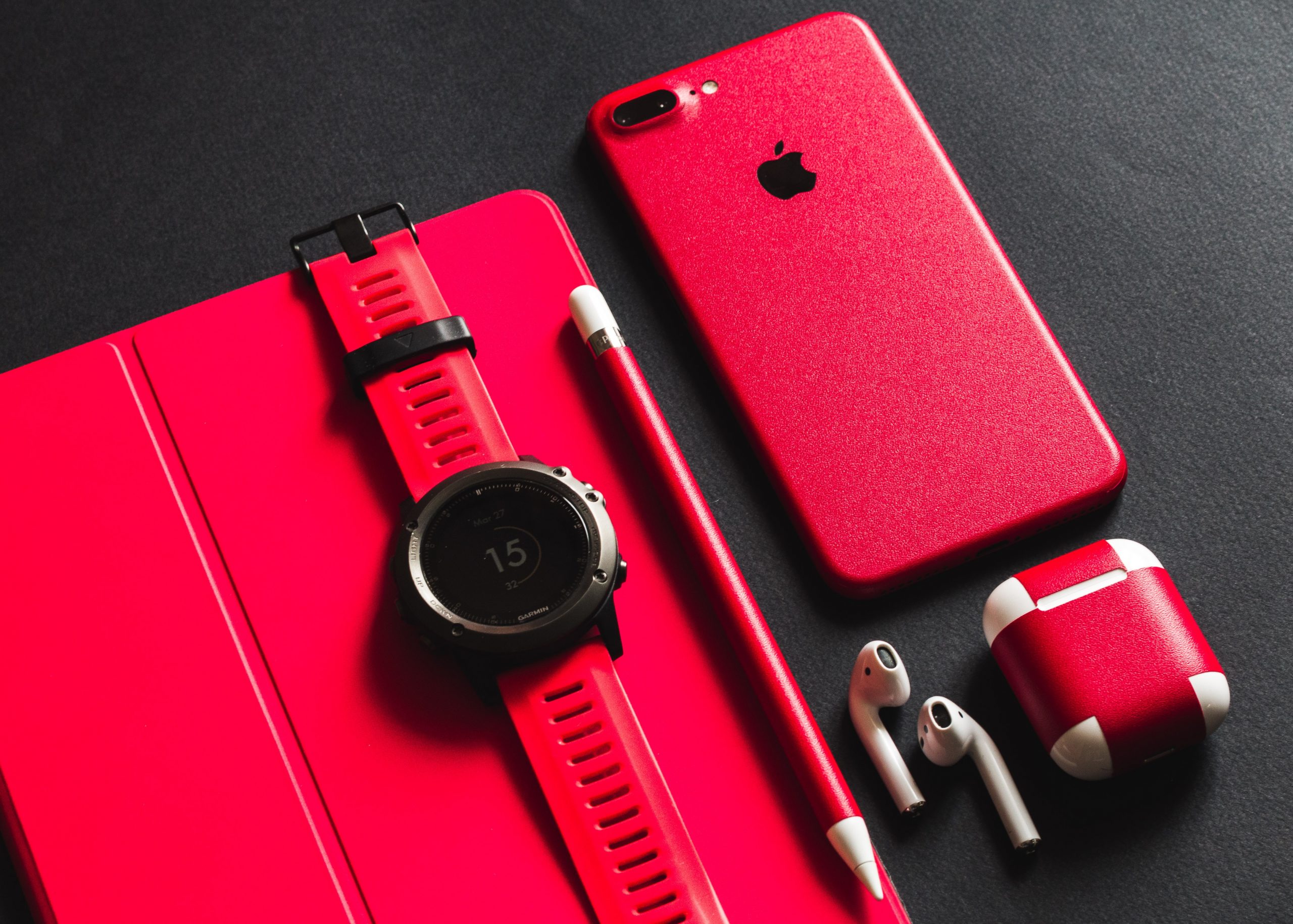
But they’re not sure what it is. Is it software? Is it hardware? Is it a device like the Apple Watch? Hospital software? Implantable chips or a ring to wear on your finger?
Most importantly to potential investors, how can they make money from it in a relatively short time frame?
Digital health has the potential to transform healthcare and improve quality of patient care. It can drive efficiencies and decrease costs. But it’s important that everyone involved understands what it is.
A few thoughts on definitions
Often, the definition of “digital health” is built on tools. For example, the U.S. Food and Drug Administration (FDA)’s definition includes, “Categories such as mobile health (mHealth), health information technology (IT), wearable devices, telehealth and telemedicine, and personalized medicine.”
Another definition, from Mesko et al., is based on societal impact or vision: “…the cultural transformation of how disruptive technologies that provide digital and objective data accessible to both caregivers and patients leads to an equal level doctor-patient relationship with shared decision-making and the democratization of care.”
The Healthcare Information and Management Systems Society (HIMSS) proposes: “Digital health connects and empowers people and populations to manage health and wellness, augmented by accessible and supportive provider teams working within flexible, integrated, interoperable, and digitally-enabled care environments that strategically leverage digital tools, technologies and services to transform care delivery.”
These are complicated definitions, for sure, and as someone running a digital health company, I prefer the broader and looser definition of a software-based health application.
It covers a range of modalities, including wearable devices, telehealth, online portals, and apps. Another definition could be “where healthcare and the internet meet.”
Why should we care?
One reason to care is that digital connectivity changed everything. Although there are still obstacles with interoperability — how data from one device or system communicates with another system or device — the current impact and future impact are considerable.
Consider five possible benefits:
- As is well understood, appropriate healthcare is unequal, often limited by socio-economic status, geography, and cultural issues. Women use our apps, mySysters (iOS) and Hot Flash Sisters (Android), to manage perimenopause and menopause symptoms. They were developed during my own experience of caring for small children, a spouse who survived a heart attack at the age of forty-eight, a mother with dementia, and an elderly father, all while experiencing severe perimenopause symptoms including migraines, dry eyes and repeated UTIs. At the time I was living in Minnesota–home to the biggest concentration of medical device companies in the US, as well as the Mayo Clinic–and married to a biomedical engineer. Despite health insurance, geography, and other resources, it was ten years–TEN YEARS–before I was able to access medical care for perimenopause. Seven years later, the healthcare situation has not improved for most women. Half of US counties do not have a single ob/gyn. Of those that do, many understandably prioritise pregnant patients, leaving perimenopausal and menopausal women with nowhere to turn. Use of a digital health application enables a person to actively learn about and manage her symptoms through lifestyle changes before making a doctor appointment.
- Efficiency. Digital health can streamline communication with healthcare providers and potentially decrease unnecessary site visits. Women who track their symptoms are more engaged and informed patients. Physicians may have fewer than ten minutes to spend with each patient. Imagine the level of care received by one of our customers who walked in and presented twelve weeks of data on every migraine, hot flash and night sweat she experienced compared to my initial doctor visits in 2007 when I’d never even heard the term ‘night sweat,’ much less whether I’d had one or when.
- Lower costs. Improved efficiency can decrease costs. Reduce the time physicians and staff spend on in-person patient visits and decrease costs. More importantly, more accurate and faster diagnoses can avoid unnecessary procedures. The data is still undeveloped, however. A 2022 study published in Front Public Health by Gentili et al. reported, “Findings on cost-effectiveness of digital interventions showed a growing body of evidence and suggested a generally favorable effect in terms of costs and health outcomes.” But due to the heterogeneity of reports, it was difficult to compare effectiveness between approaches.
- Better quality. A 2022 review of 54 digital health studies published in Digital Health found that the “majority of reviews describe improved health behavior, enhanced assessment, treatment compliance, and better coordination as the main approach of quality improvement via digital health.” Although electronic health records (EHR) are common now, patient and healthcare data8 aren’t being appropriately accessed, analyzed, and linked to alerts to notify providers and patients that action is required.
- Personalised medicine. Sometimes dubbed personalised health care (PHC), personalised medicine is a scaffolding for patient care linking predictive technologies with an engaged patient to promote health and disease prevention. The goal, simply, is to treat individuals, and not treat healthcare as one-size-fits-all. Further, but more effectively treating patients, digital health should decrease costs while improving outcomes.
Where is the money going?
Investor interest is a good reason to settle on a reasonable definition of digital health. GSR Ventures conducted a survey of 50 digital health venture capital investors at the end of 2022 and expected there to be investments from about US$15bn to US$25bn in 2023.
In 2021, digital health investment hit US$29.1bn, per Rock Health, a jump from US$15bn in 2020.
Last year was actually down, around US$12.6bn, but 2023 is projected to be similar to 2020.
Not unusual, investors are interested in a high return on investment (ROI). Another factor investors appear interested in is clinical validation of a technology’s platform. That makes sense and is only likely to become more important as the sector matures.
In addition, any digital health solution that reduces ongoing labor shortages in healthcare or can help with administrative burdens is likely to be of interest to investors.
Approximately 40 per cent to 50 per cent of health-tech investing since 2019, worth about US$30bn, has been toward alternative care, according to Chris Moniz, market manager in Silicon Valley Bank’s HealthTech & Devices segment. This has included telehealth, home dialysis machines, and a variety of remote trackers.
Moniz believes two subsectors of alternative care will be the hot new areas of growth: mental health and women’s health.
One thing is certain. There’s still quite a bit of interest in digital health. And its impact has the potential to be huge.
Cindy Moy Carr is the founder and CEO of Vorsdatter Limited which developed mySysters, an app for perimenopause and menopause. She’s an attorney and journalist who authored the American Bar Association’s Guide to Health Care Law.




Sahar Abid is a Science Associate at Ema EQ, where she works on cultural sensitivity and bias in AI.
A woman asks an AI health assistant about postpartum depression.
She mentions that her in-laws are telling her to “push through” and skip medical help, even as her symptoms get harder to manage. She never says where she is from or names her background.
The assistant describes the condition and gives her a hotline number. It sounds correct, but it misses what she needs.
That gap is more common than the industry admits, and it points to a blind spot in how we test health AI for bias.
Most bias testing looks at what people explicitly say.
The typical way to check an AI for bias is to label a prompt with someone’s demographic details and see if the answer changes. That catches some problems but misses a bigger one.
Most people do not lead with their identity. They lead with their situation. The woman above told the assistant everything it needed to help her, just not in the form of a label.
Her real question was not only “what is postpartum depression?” It was “how do I get care when the people around me don’t want me to?
When family members hold sway over health decisions, and in many communities they do, advice that asks someone to overrule their family is not something they can act on.
The AI didn’t say anything factually wrong. It answered a different question than the one she was living.
We call this culturally implicit bias, meaning the AI misses the cultural context a situation implies rather than the context a person spells out.
When systems are trained to notice only the explicit cues, they fall back on a default answer built for the majority. For everyone else, the response can feel generic, off-target, or discouraging enough that they stop looking for help.
In health, that is not small. The people most likely to be missed are often the ones the system already underserves.
What we set out to test.
At Ema, we wanted to know how well AI picks up on cultural context that is implied but never stated. So we built our own way to test for it, across a range of communities and real situations like postpartum depression and fertility, using questions that carried cultural meaning without announcing it.
The patterns were consistent. Models often missed the meaning underneath the question. They dropped the specific details a person did share and smoothed them into something generic.
And even when they pointed toward real care, they tended to offer one option instead of choices that might actually fit a person’s life. Any one of those can be the difference between someone following the advice and walking away from care.
Why this matters for anyone building health AI.
Getting this right is the right thing to do, and it also works better.
When an answer reflects a person’s real context, people trust and act on the recommendations more, so they get the help and support they need.
Testing for it is harder than the shortcut most teams use. Swapping a name or a demographic label in and out is easy. Checking whether a model actually understands the human context around a question takes more care.
The shortcut teaches models to perform cultural competence instead of practicing it. No matter how much or how little someone chooses to share, they deserve an answer that is warm, complete, and usable.
A better question.
The bar for equitable health AI should be “does it serve someone who never told you who they are?” It is the harder test, but it determines whether real people get help.
The work of getting there is far from finished, and it is exactly what we are building toward at Ema.
Sources: Naidoo, V., & Chadha, K. K. (2025), Culturally responsive AI chatbots: from framework to field evidence, Computers in Human Behavior: Artificial Humans. Souligne, N., & Subbian, V. (2026), FairLogue: A toolkit for intersectional fairness analysis in clinical machine learning models.

A perimenopause app that maps existing smartwatch data to the menopausal transition has launched across 39 markets in the UK and Europe.
anna app uses information already recorded by wearables, including sleep, heart rate and body temperature, and returns one suggested lifestyle action each morning alongside the research behind it.
The company says each rule in its library links a defined pattern in a woman’s own data to a specific action. The recommendations were developed with an advising clinician and draw on more than 300 published studies.
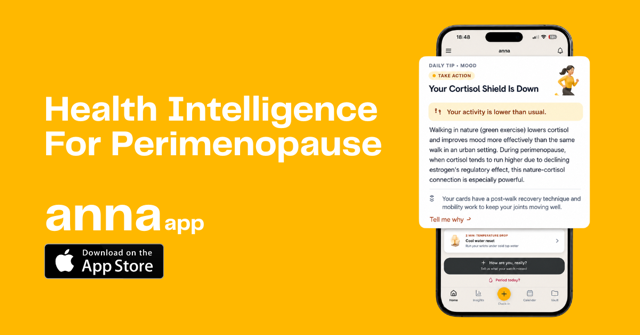
The company says recommendations are not generated automatically and each can be traced to research reviewed by a doctor.
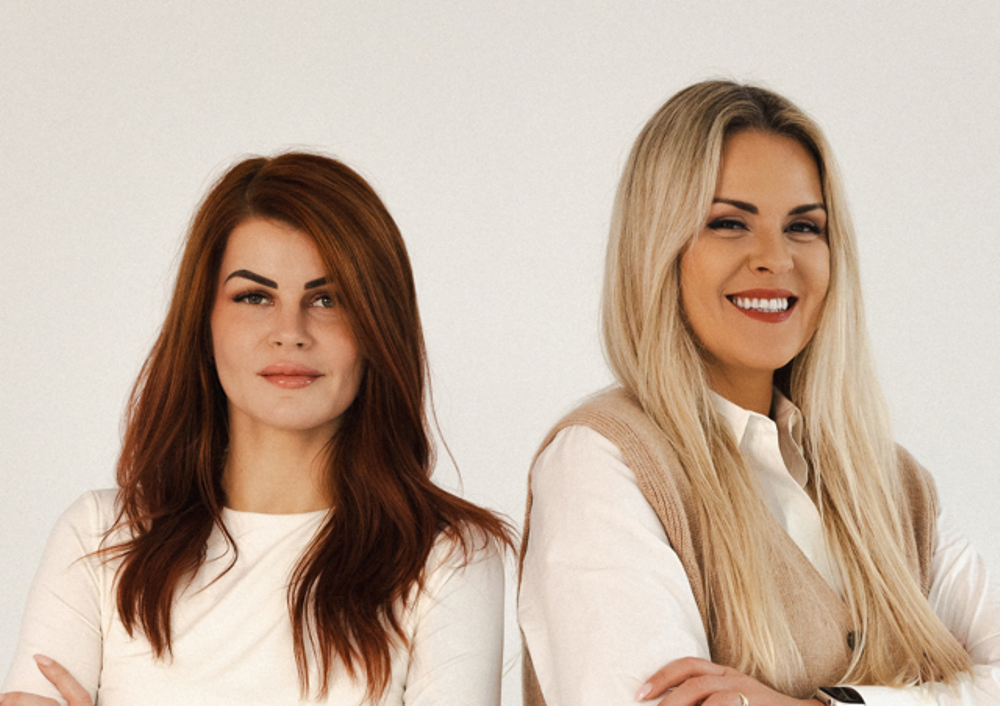
The app was built by two women in Riga, has been funded without outside investment and was tested with women in the UK over three months before launch.
Perimenopause is the period of hormonal change before periods stop and usually begins after 40.
The company says one of the challenges is the unpredictability of the transition, with sleep, energy, mood and concentration potentially changing from week to week.
Because the experience varies between women, the developers say it can be difficult to find care tailored to individual needs. After 45, there is also no reliable blood test to confirm perimenopause.
The transition can coincide with a busy period in women’s working lives.
CIPD research published in 2023 found that 27 per cent of working women aged 40 to 60 with menopause symptoms said they had affected their career progression, equivalent to around 1.2m women in the UK.
Some 79 per cent said they felt less able to concentrate.
The long-running Study of Women’s Health Across the Nation, which has followed thousands of women through the menopausal transition, found that cognitive difficulties reported during perimenopause appear to be time-limited, with improvement returning in early postmenopause.
The developers say anna differs from standard wearable data by interpreting measurements specifically in the context of perimenopause.
A smartwatch may show changes in sleep, heart rate or temperature, but anna is designed to look at combinations of those signals and link them to lifestyle guidance for that day.
The app is also designed to work without daily symptom logging.
Users can complete an optional daily check-in if they want to add more context, but the app can operate without a symptom diary or daily manual entries.
It uses information from a compatible device the user already owns, such as a watch, ring or band.
Elina Pika-Lepere, co-founder and chief executive of anna app, said: “Perimenopause arrives exactly when a woman has the least spare capacity. She is often at the peak of her career, raising children, caring for ageing parents. What she has lost is not information, it is predictability.
“We built anna to offer a helping hand and evidence-based guidance through a stage that is difficult but temporary.”
The company gave the example of a morning when a user’s watch shows she has slept well below her own 28-day average.
Rather than simply telling her she is tired, anna may suggest choosing one priority and working on it in 25-minute blocks with a short break between them.
The app also displays the sleep and concentration research used for the recommendation.
anna was founded by Pika-Lepere, who spent 15 years building products in advertising, retail and e-commerce, and product lead Zanda Freimane, whose background is in product management in fintech and e-commerce.
The wider team includes a mathematician and university researcher advising on data architecture, a senior developer and a user experience adviser from a Baltic unicorn company.
anna app is not a medical device and does not provide medical advice.
Its guidance is limited to lifestyle support, and the company describes the app as a tool to complement a doctor rather than replace professional medical care.
anna app is available on iOS across 39 markets in the UK and Europe and is listed on the App Store as anna: Perimenopause & Sleep.
The app is in English and works with Apple Watch, Garmin, Fitbit, Oura and Whoop through Apple Health.
The company says user data is hosted in the EU and is never sold.
The service costs £13.99 a month or £99.99 a year in the UK and €14.99 a month or €99.99 a year in the euro area after a seven-day free trial.

By Ruby Raut, founder, WUKA
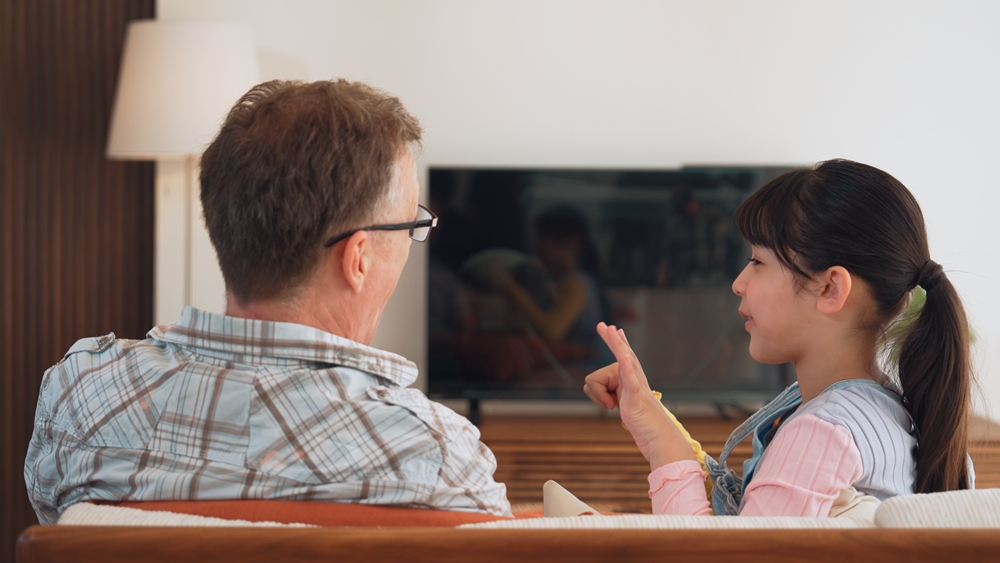
Every time we post a dad talking to his daughter about periods, the internet seems to split in two.
One side says: “This is brilliant. I wish my dad had spoken to me like this.”
The other says: “Why on earth are men talking about periods?”

And I always find that second reaction fascinating.
- Because men might not menstruate, but they live in a world with people who do.
- Your daughter might get her first period while you are the only parent at home.
- Your teenage niece might bleed through her clothes while you are driving her somewhere.
- Your girlfriend might wake up at 3am with cramps.
- Your wife might suddenly realise she has run out of period products.
- A colleague might bleed through her trousers during a meeting.
- A girl you coach might quietly tell you she cannot play because she has started her period.
At some point in your life, there is a very good chance a woman or girl will have a period around you.
And at that moment, you have two options. You can be calm, informed and useful. Or you can stand there looking as if nobody ever taught you what a period actually involves.
So perhaps we need a Haynes manual for men and periods. Not a biology degree or a lecture.Just the information every man should probably know.
First: yes, men should know what a period actually is
Let us start with the basics. A period is not simply “a bit of blood once a month”.
Menstruation is part of the menstrual cycle. The lining of the uterus builds up and, if there is no pregnancy, that lining is shed.
That is the bleeding part. But for many women and girls, the experience can also involve cramps, back pain, headaches, bloating, tiredness, diarrhoea, tender breasts, mood changes and generally feeling pretty rotten.
Some barely notice their period. Others are completely floored by it. This is important because one of the least helpful things you can say to somebody struggling with their period is:
“Is it really that bad?”
You do not need to experience period pain to believe someone when they tell you they are in pain.
Second: if a girl tells you she has started her period, do not panic
This one is particularly important for dads.
Imagine your daughter gets her first period while Mum is out. What does she need from you? Probably not a horrified expression or you shouting across the house, “YOUR PERIOD HAS STARTED!”
She needs you to behave as though this is an entirely normal bodily function.
Because it is. Ask her what she needs. Find her a period product. If there is blood on her clothes, help her sort it out without making a huge fuss. If she does not know how to use a pad or period underwear, help her find clear instructions.
And please do not make jokes about her “becoming a woman”.
For a young girl, a first period can already feel confusing, embarrassing and frightening. Your job is not to make it into a ceremony but to make her feel safe. Sometimes the most useful sentence a dad can say is simply:
“Okay. No problem. What do you need?”
Third: learn what period products actually are
Pads.Tampons.Period underwear.Menstrual cups.Period swimwear. You do not have to develop strong opinions about all of them. You just need to know they exist.
If someone asks you to buy pads, do not behave as though you have been sent into a nuclear reactor without protective clothing.
Go to the period aisle. Text them a photo if you are unsure. Ask which absorbency they want. Buy the product. Come home.
And if you are the father of a daughter, having a few period products in the bathroom before she starts menstruating is a very sensible idea.
You keep toilet roll in your house before somebody needs it. Period products should not feel radically different.
Fourth: never announce a period stain
This should be basic human etiquette.
If you notice that a woman or girl has bled through her clothes, tell her quietly and discreetly.
Do not point, laugh, or whisper about it to someone else. And definitely never announce it to the room.
If you have a jumper or jacket she can tie around her waist, offer it. If there is somewhere she can clean up or change, help her get there. Then move on with your life.
Period leaks happen. The embarrassment surrounding them is often far worse than the actual blood.
Fifth: stop using periods as an explanation for every emotion
“Are you on your period?”
Four words capable of making almost any disagreement significantly worse.
Sometimes a woman is angry because she is angry and sometimes she disagrees with you because she disagrees with you. Sometimes you genuinely are being annoying.
Hormonal changes can affect mood for some people, but using menstruation to dismiss a woman’s feelings is patronising and incredibly unhelpful.
If your partner says she feels emotional before her period, listen to her. That does not permit you to diagnose every future disagreement as PMS.
Sixth: period pain is not something every woman should simply put up with
There is an extraordinary tendency to tell girls from a young age that painful periods are just part of being female. For some, mild cramps are manageable.
For others, period pain can be severe enough to disrupt school, work, sleep, exercise and everyday life. So if your daughter is doubled over in pain every month, repeatedly missing school, fainting, vomiting or unable to function normally, do not tell her to toughen up.
Take her seriously and help her seek medical advice.
Being a supportive dad does not require you to know what is causing her symptoms. It requires you to believe her when she says something is wrong.
Seventh: men talking about periods does not take anything away from women
This is perhaps the strangest objection to our Dads and Periods campaign. The idea that periods somehow belong in a conversation that only women are allowed to have.
Women should absolutely lead conversations about their own bodies and experiences. But understanding periods should not be restricted to people who menstruate.
We teach children about digestion even though they are not gastroenterologists and about first aid even though most people are not doctors.
We teach boys about pregnancy even though they will never be pregnant. Knowledge is not ownership. A father understanding periods does not make periods less female. It makes him a better prepared father.
A boy understanding periods does not mean he suddenly understands exactly what menstruation feels like. It means he is less likely to laugh when a girl gets a stain on her skirt.
A male coach understanding periods does not make him an expert on women’s bodies.
It means a teenage player might feel able to tell him why she needs five minutes off the pitch instead of inventing an excuse.
A male partner understanding periods does not mean he has to track every detail of his girlfriend’s cycle. It might simply mean that when she says, “My cramps are awful today,” his response is not, “Again?”
So should men talk about periods?
Yes.
But perhaps “talk” is not even the most important word.
Men should know about periods. Men should be comfortable hearing about periods. Men should know what to do when someone starts one unexpectedly. Men should know how to buy period products. Men should know not to make somebody feel ashamed about bleeding.
And fathers, in particular, should be able to talk about periods with their daughters without embarrassment.
Because there is a bigger point here. Girls learn very quickly which subjects make adults uncomfortable.
If Dad goes silent every time periods are mentioned, she notices. If he leaves every period conversation to Mum, she notices. If he wrinkles his nose at period products, she notices. And she may quietly absorb the message that this part of her body is something men find disgusting or embarrassing.
That is exactly the message we should be trying to dismantle.
At WUKA, we started our Dads and Periods campaign because we want fathers to feel capable of having these conversations.
Not perfectly. Not scientifically. Not with a PowerPoint presentation about the uterus over Sunday lunch. Just normally. Periods happen.
Roughly half the population will experience them at some point in their lives. The other half should probably know what they are.
And if the choice is between a dad who knows what a period is, knows where the period products are kept and can calmly help his daughter when she needs him, or a dad hovering helplessly outside the bathroom shouting, “SHALL I CALL YOUR MUM?”
I know which one I would rather have.
Learn more about WUKA at wuka.co.uk







 Entrepreneur1 week ago
KOVE Medical raises €1.7 million to improve safety of foetal surgery

 Pregnancy1 week ago
UK study aims to transform maternity care for high-risk pregnancies

 Mental health2 weeks ago
PMDD after SSRIs or hormones: Why the brain may be the missing treatment target
 Diagnosis2 weeks ago
Ark Surgical secures further institutional backing to accelerate US expansion

 Entrepreneur3 days ago
Last chance to save on Women’s Health Week and Women’s Sport Summit: Early Bird pricing ends 11 September

 Menopause6 days ago
Menopause hormone treatment may ease brain fog, study suggests

 Motherhood2 weeks ago
Thousands of UK women develop undiagnosed PTSD after childbirth each year – study

 Cancer2 weeks ago
AI analysis of mammograms can detect heart disease, study suggests