Connect with us

Cancer

Tumour organoids from breast cancer patients successfully cultivated for the first time

Published

on

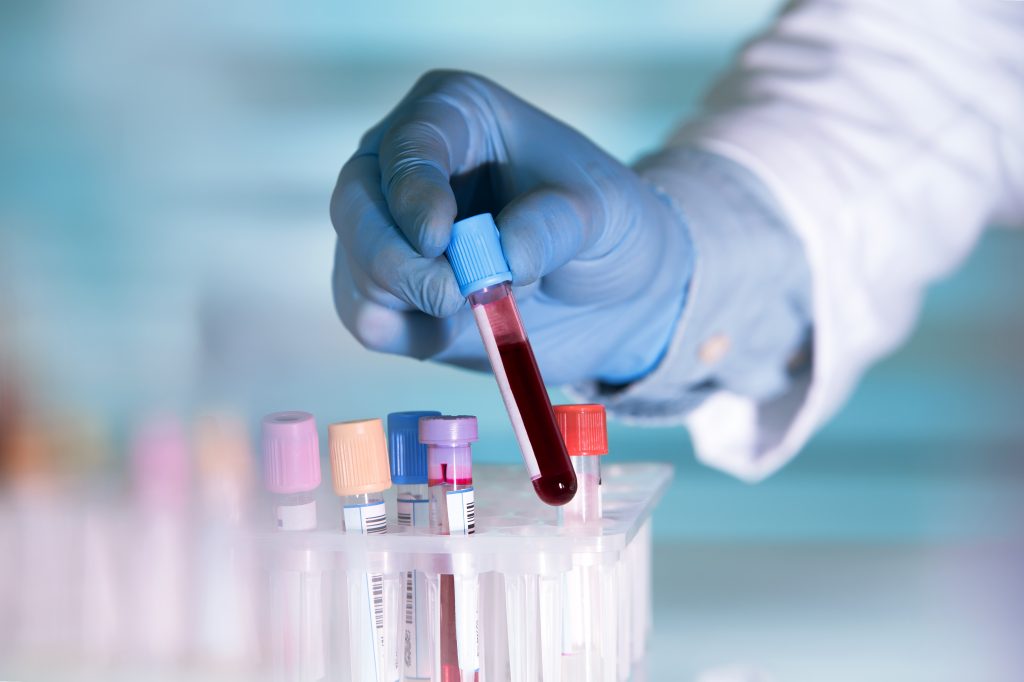
Stable tumour organoids have been directly taken from blood samples of breast cancer patients; in a world first that could speed the development of new treatments

Tumour cells circulating in the blood are the “germ cells” of breast cancer metastases – cancer cells that detach from its original tumour and spread around the body. Until now, these cells could not be  propagated in culture dishes, posing a barrier to research into therapy resistance.

Using these mini-tumours, researchers have deciphered a molecular signalling pathway that ensures the cancer cells’ survival and resistance to therapy, enabling the development of an approach to eliminate them.

The researchers emphasise that these circulating cancer cells (CTCs) are extremely rare and hide among the billions of blood cells.

Andreas Trumpp, head of a research division at the German Cancer Research Center (DKFZ), which carried out the study, had previously shown that only a few CTCs can form a new metastasis in another organ.

Roberto Würth from Trumpp’s lab and first author of the paper said: “This makes it difficult to develop targeted new therapies that directly attack the metastasis-initiating cells. However, if we understand how these cells survive the initial therapy and what drives their resistance, we could tackle the formation of breast cancer metastases at the root and perhaps one day even prevent them.”

The researchers were able to multiply the CTCs and grow them as stable tumour organoids in the culture dish.

The team say that three-dimensional and patient-specific mini-tumours can be cultivated from blood samples several times during the course of the disease and are ideally suited for investigating the molecular mechanisms that enable tumours to survive despite therapy.

They found that the protein NRG1 acts like a fuel, binding to the HER3 receptor on the cancer cells and, together with the HER2 receptor, activates signalling pathways that ensure the growth and survival of the cells, and that an alternative signalling pathway, controlled by FGFR1, ensures growth and survival.

“With the help of such ‘bypasses’, tumours react to external influences, for example to targeted therapies against HER2. This is a crucial mechanism in the development of therapy resistance,” said Würth.

The researchers then used organoids to show that blocking both the NRG1-HER2/3 and FGFR signalling pathways can effectively stop the tumour growth and induce cell death.

Trumpp said: “The possibility of cultivating CTCs from the blood of breast cancer patients as tumour organoids in the laboratory at different time points is a decisive breakthrough. This makes it much easier to investigate how tumour cells become resistant to therapies.

“On this basis, we can develop new treatments that may also specifically kill resistant tumour cells. Another conceivable approach is to adapt existing therapies in such a way that the development of resistance and metastases is reduced or even prevented from the outset.

“As the organoids are specific to each patient, this method is suitable for identifying or developing customised therapies that are optimally tailored to the respective diseases.”

The team say the method must now be tested in clinical trials.

Diagnosis

Vaccine could prevent some people from developing ovarian cancer

Published

on

A vaccine trial will test whether an mRNA jab can help stop precancerous cells developing into bowel and ovarian cancer in people with Lynch syndrome.

The first stage is due to launch this summer and will assess whether the jab can train the immune system to recognise and eliminate precancerous cells before cancer develops.

Around 175,000 people in England have Lynch syndrome, but only five per cent, or around 10,000 people, know they have it.

The inherited condition increases the risk of developing bowel cancer by 80 per cent and is linked to around 1,100 bowel cancer cases each year.

Lynch syndrome is also linked to a far higher risk of bowel, womb and ovarian cancer, alongside other types including stomach, pancreatic, kidney and skin cancer.

While the syndrome does not directly cause cancer, the genetic changes can lead to more abnormal cells developing, which then multiply and increase the risk of cancers such as bowel, prostate and endometrial cancer.

It is caused by an alteration in a mismatch repair gene. Carriers do not have any symptoms.

The new Intercept-Lynch trial is part of a scientific collaboration between the University of Oxford and Moderna, while Cancer Research UK has backed the vaccine’s development.

Once patients receive the new mRNA-4194 jab, experts will analyse their immune responses, assess the best dose and check whether the jab is safe.

The second phase of the study will include multiple centres across the UK, including Oxford, and is expected to begin in 2027.

The aim of the trial is to train the immune system with a vaccine to recognise abnormalities and stop them developing into cancer.

Professor David Church, Cancer Research UK senior cancer research fellow in the University of Oxford’s centre for human genetics and lead investigator of the trial, said: “People with Lynch syndrome are at risk of cancers over their entire lives.

“So, it’s very common, for instance, a woman to have a first cancer of her womb, and then some years later have a bowel cancer, or vice versa.

“The targets we’ve chosen for the vaccine were chosen based on their sharedness across multiple cancer types in Lynch syndrome, so we think they should provide broad protection, if the vaccine works.”

In people with Lynch syndrome, mutations can build up, making the cells containing them more likely to turn into cancerous cells.

However, those mutations can be made visible to the immune system and, with enough stimulation, the immune system can attack the abnormal cells and stop cancer from forming.

Professor Church said the mRNA jab acts as “an instruction manual” for the body to attack precancerous cells.

He added that, as with many vaccines, patients may need a booster jab at some stage.

On whether similar approaches could help prevent cancers not caused by Lynch syndrome, Professor Church said: “In terms of proof of principle that we can train the immune system to recognise these cancer-associated alterations and enhance the immune response against them to prevent these pre-cancers or prevent the progression of pre-cancer to cancer, that proof of principle should give us insights that are generalisable.”

David Berman, chief development officer at Moderna, said: “By applying mRNA technology earlier in the patient journey, we aim to harness the immune system when it can have the greatest impact.

“We are proud to bring this innovation to the UK, building on our long-standing collaboration with leading UK institutions to advance mRNA research and development.”

Continue Reading

Diagnosis

Lymph nodes could reveal who’s most at risk of breast cancer spreading

Published

on

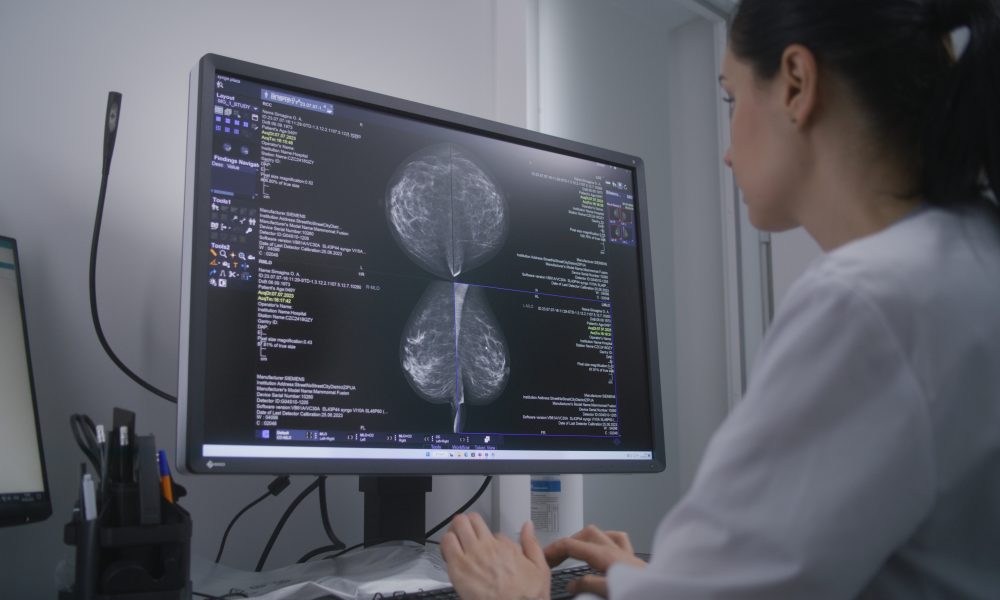
Changes in lymph nodes may help show which breast cancer patients face higher or lower risk of the disease spreading, researchers have found.

The findings could support more tailored care, new treatments and help more people avoid unnecessary treatment.

Dr Simon Vincent is chief scientific officer at Breast Cancer Now, which funded the research:

He said: “These findings suggest that changes to the structure of the lymph nodes are more than just a consequence of the cancer. They can also play an active role in helping breast cancer progress.

“With one person tragically dying from breast cancer every 45 minutes in the UK, we urgently need research like this so that we can better understand who is most at risk of their cancer progressing and becoming incurable. Only then we can find ways to stop it.

“With a better understanding of how lymph nodes change as breast cancer spreads, we could find new targets for future treatments for types of breast cancer that are harder to treat.”

Lymph nodes, a key part of the immune system, help the body fight infections and cancer. In breast cancer, the lymph nodes in the armpit are often the first place the disease spreads to.

At the moment, everyone with invasive breast cancer has to undergo surgery to remove lymph nodes so doctors can check for cancer cells.

Invasive breast cancer means cancer that has spread beyond where it first developed in the breast into nearby tissue.

While this is effective, it can lead to long-term side effects such as swelling of the arm, known as lymphoedema, and may be unnecessary for some patients, particularly those with early-stage disease or those whose cancer responds well to treatment.

The study analysed 331 lymph node samples from people with different types of breast cancer and compared them with healthy lymph nodes from people free from the disease.

It found that breast cancer could change the structure of a network that supports the lymph nodes.

Crucially, some of these changes could occur before doctors were able to spot any cancer cells in the network.

Some changes were linked to a better chance of survival, while others were associated with a poorer prognosis.

Dr Amy Llewellyn and Dr Kalnisha Naidoo from King’s College London, together with professor Sophie Acton at University College London, compared the 331 samples with healthy lymph nodes in people free from the disease.

They looked at fibroblastic reticular cells, known as FRCs, a group of cells in lymph nodes that provide their structure, control fluid flow and activate different immune cells.

The study showed that the structure of this FRC network could change before the cancer had spread and differed depending on the type of breast cancer, any spread and whether someone had received chemotherapy.

Chemotherapy uses medicines to kill cancer cells or slow their growth.

The researchers said the findings could help doctors better understand who is most at risk of breast cancer spreading.

Dr Llewellyn said the first large-scale analysis of FRC in human lymph node tissue from breast cancer patients was addressing the “urgent need” for a better understanding of the area’s biology.

Continue Reading

Cancer

Life-prolonging ovarian cancer drug approved for use in England

Published

on

A new ovarian cancer drug has been approved for NHS use in England, offering hundreds of women with hard-to-treat disease a life-prolonging treatment.

Elahere is the first new drug for chemotherapy-resistant ovarian cancer to be approved by the NHS for more than 20 years.

Ovarian cancer is the 18th most common type of cancer globally, affecting more than 300,000 women a year.

More than three-quarters of patients are diagnosed at an advanced stage, making the disease harder to treat.

Prof Ruth Plummer, national clinical lead for cancer drugs at NHS England, said: “This represents the most significant breakthrough in NHS treatment for these hard-to-treat ovarian cancers in over two decades – and we’re delighted it will now offer hundreds of women much-needed hope of precious extra time with their loved ones.”

Standard treatment for ovarian cancer usually involves surgery and chemotherapy, but about 80 per cent of patients with advanced disease relapse and most eventually develop resistance to chemotherapy.

According to the National Institute for Health and Care Excellence, patients with folate receptor-alpha-positive platinum-resistant epithelial cancers have until now had limited options when their tumours stop responding to standard chemotherapy.

Now NICE has approved mirvetuximab soravtansine, also known as Elahere, for patients with epithelial ovarian, peritoneal or fallopian tube cancer that has become resistant to platinum-based chemotherapy and whose tumours contain the FRα protein that the drug targets.

FRα is a protein found on the surface of some cancer cells.

NHS England said up to 400 women a year in England could benefit, in what it described as a major milestone for treatment.

Mirvetuximab soravtansine is given through a drip once every three weeks.

A global clinical trial involving eight NHS hospitals found that the treatment delayed cancer progression and prolonged survival by an average of four months, compared with chemotherapy alone, with more manageable side-effects.

Cancer progression means the disease is growing, spreading or worsening.

In 37 per cent of patients, tumours shrank by at least 30 per cent, compared with 16 per cent of those given chemotherapy.

The drug, made by AbbVie, combines a “homing” antibody, which seeks out the FRα protein on the surface of cancer cells, with a cancer-killing molecule that destroys the cell from within.

Experts said the decision was a seminal moment and could significantly improve the quality of life of affected patients.

Rachel Downing, head of policy and external affairs at Target Ovarian Cancer, said: “This is a hugely important moment for women with platinum-resistant ovarian cancer and their families, who have faced limited effective treatment options for far too long. Today’s announcement offers real hope of improved quality of life.”

Victoria Clare, chief executive of the charity Ovacome, said: “Today marks a landmark moment. Being told that platinum-based chemotherapy is no longer working can bring anxiety and uncertainty, particularly when the disease is at an advanced stage, where time and options are limited.

“This recommendation is the first in over 20 years to offer the ovarian cancer community an additional choice at a critical stage, with the potential to make a real difference to patients and their families.”

Helen Knight, director of medicines evaluation at NICE, said: “We heard clearly from patients and clinicians about the very limited options available at this stage of the disease and the substantial burden that chemotherapy places on women’s lives.

“We are pleased that, following a robust process and a new commercial arrangement with AbbVie, we are now able to recommend this treatment for NHS use.”

Continue Reading

Trending

Copyright © 2025 Aspect Health Media Ltd. All Rights Reserved.