




Diagnosis
Lung cancer drug shows breast cancer potential


Ovarian cancer cells quickly activate survival responses after PARP inhibitor treatment, and a lung cancer drug could help block this, research suggests.
PARP inhibitors are a common treatment for ovarian cancer, particularly in tumours with faulty DNA repair. They stop cancer cells fixing DNA damage, which leads to cell death, but many tumours later stop responding.
Researchers identified a way cancer cells may survive PARP inhibitor treatment from the outset, pointing to a potential way to block that response. A Mayo Clinic team found ovarian cancer cells rapidly switch on a pro-survival programme after exposure to PARP inhibitors. A key driver is FRA1, a transcription factor (a protein that turns genes on and off) that helps cancer cells adapt and avoid death.

The team then tested whether brigatinib, a drug approved for certain lung cancers, could block this response and boost the effect of PARP inhibitors. Brigatinib was chosen because it inhibits multiple signalling pathways involved in cancer cell survival.
In laboratory studies, combining brigatinib with a PARP inhibitor was more effective than either treatment alone. Notably, the effect was seen in cancer cells but not normal cells, suggesting a more targeted approach.
Brigatinib also appeared to act in an unexpected way. Rather than working through the usual DNA repair routes, it shut down two signalling molecules, FAK and EPHA2, that aggressive ovarian cancer cells rely on. FAK and EPHA2 are proteins that relay survival signals inside cells. Blocking both at once weakened the cells’ ability to adapt and resist treatment, making them more vulnerable to PARP inhibitors.
Tumours with higher levels of FAK and EPHA2 responded better to the drug combination. Other data link high levels of these molecules to more aggressive disease, pointing to potential benefit in harder-to-treat cases.
Arun Kanakkanthara, an oncology investigator at Mayo Clinic and a senior author of the study, said: “This work shows that drug resistance does not always emerge slowly over time; cancer cells can activate survival programmes very early after treatment begins.”
John Weroha, a medical oncologist at Mayo Clinic and a senior author of the study, said: “From a clinical perspective, resistance remains one of the biggest challenges in treating ovarian cancer. By combining mechanistic insights from Dr Kanakkanthara’s laboratory with my clinical experience, this preclinical work supports the strategy of targeting resistance early, before it has a chance to take hold. This strategy could improve patient outcomes.”












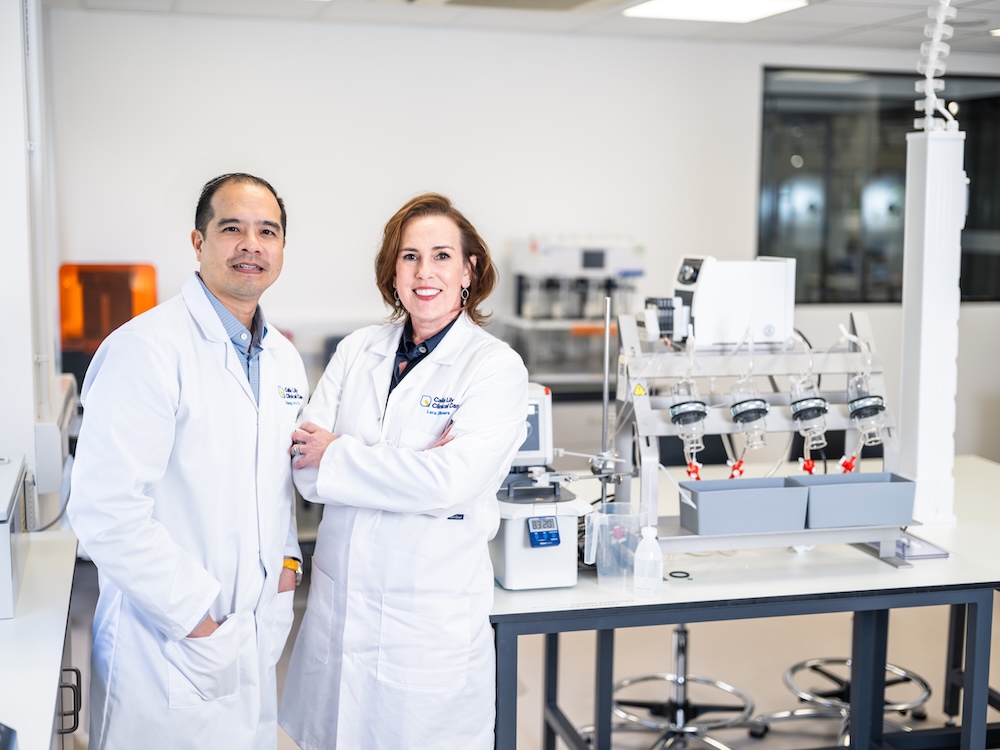
Calla Lily Clinical Care has joined a US$50m antibiotics programme to assess vaginal delivery of UTI treatments through its Callavid platform.
The women’s health medical technology company will evaluate whether antibiotics can be delivered directly through the vaginal wall to treat urinary tract infections (UTIs).
The project will use Callavid, the company’s intravaginal drug delivery platform, aiming to deliver treatment to the site of infection while limiting systemic exposure.
Calla Lily has been selected for Wellcome Leap’s Focused Antibiotics programme, which is exploring ways to reformulate existing antibiotics so they reach infections while sparing the gut microbiome without loss of efficacy.

Dr Serena de Gelidi, Principal Investigator and R&D Manager, Calla Lily Clinical Care
The programme is backed by US$50m and aims to investigate technologies that could reduce the unintended effects of antibiotic treatment.
UTIs are among the most common bacterial infections in women. According to the source material, women are prescribed almost 40 per cent more antibiotics than men between the ages of 16 and 54.
Calla Lily will assess whether Callavid can deliver antibiotics through the vaginal wall while bypassing gastrointestinal transit and first-pass metabolism.
The company expects the approach could keep systemic exposure below 5 per cent.
There is currently no first-line UTI antibiotic available in a mass-manufactured vaginal formulation, according to Calla Lily.
The company said a successful project could contribute to the wider programme’s goal of reducing antibiotic-driven resistant infections by up to 40 per cent a year.
Callavid has a patented, leak-free, tampon-like design intended to deliver medicines and hormones through the vagina.
The platform is already being assessed in the NIHR-funded FREEDOM trial, which is studying vaginal progesterone delivery using Callavid.
That study began in April 2026 and is examining safety, user acceptability and drug absorption. According to the company, it has passed its safety stopping rule and 90 per cent of patients have completed their first round of dosing.
Dr Lara Zibners, co-founder and chair of Calla Lily Clinical Care, said: “Women are disproportionately impacted by urinary tract infections, yet the consequences of that repeated systemic exposure have been largely overlooked. Organisations such as Wellcome Leap play a vital role in tackling major healthcare challenges through bold innovation. We are honoured to be part of the Focused Antibiotics programme and to explore the potential of Callavid in a foundational antibiotic application, demonstrating how women’s health innovations can deliver benefits far beyond fertility and reproductive care.
Thang Vo-Ta, co-founder and chief executive of Calla Lily Clinical Care, said: “Being selected by Wellcome Leap, one of the world’s most ambitious health innovation funders, is a significant validation of what we are building at Calla Lily Clinical Care. Our ambition has always been for Callavid to become the defining platform for intravaginal drug delivery across a wide range of indications. The Focused Antibiotics programme gives us the ideal partner to pursue one of the most consequential of those indications: treating the world’s most common bacterial infection in women while helping to address a global resistance crisis that, left unchecked, could claim eight million lives annually by 2050. This marks a pivotal moment in demonstrating that when you solve for women, you solve for everyone.”
The project will be led by Dr Serena de Gelidi, principal investigator and R&D manager at Calla Lily Clinical Care.
She will be supported by Professor Andrew Lewis, principal scientist at the company and an international authority on drug-eluting systems, with 58 patents and more than 260 peer-reviewed publications.
Pregnancy
Adverse pregnancy outcomes linked to greater social needs in Black and Latina women – study

Pregnancy complications are linked to greater health-related social needs among Black and Latina women, a study has found.
Adverse pregnancy outcomes include pre-eclampsia, gestational hypertension, gestational diabetes, low birth weight and preterm birth.
These complications are associated with risks of further complications, chronic disease and cardiovascular disease, and disproportionately affect Black and Latina women.

Researchers from Mass General Brigham found that adverse pregnancy outcomes among Black and Latina women were also associated with substantially greater health-related social needs.
These included education, transport, food security, financial strain, employment and social support.
The researchers said integrating assessments of social needs into postpartum care could help improve long-term maternal health and reduce disparities.
Michael C. Honigberg, cardiologist and researcher with the Mass General Brigham Heart and Vascular Institute and senior author, said: “Pregnancy can offer a critical window of engagement for patients and providers.
“Pregnancy complications should be viewed as an opportunity not only for cardiovascular risk prevention but also for screening for and addressing social needs.”
Honigberg and colleagues from Mass General Brigham’s Heart and Vascular Institute and Department of Obstetrics and Gynecology analysed data from the BUSY-BP cohort study.
The study included Black and Latina women recruited from hospitals and health centres affiliated with Mass General Brigham.
Participants completed a screening tool covering their living situation, food, transport, utilities, safety, financial strain, employment, family and community support, education and other needs.
The study included 883 women who had previously been pregnant, including 400 participants, or 45.3 per cent, who had experienced one or more adverse pregnancy outcomes.
Researchers found that the rate of adverse pregnancy outcomes increased as the burden of health-related social needs rose, particularly for needs related to education.
These included help with starting or completing job training, gaining a high school diploma or obtaining a General Educational Development equivalency certificate.
The authors said further research is needed to separate cause and effect and identify interventions based on the findings that could improve health outcomes.
Honigberg said: “Identifying and testing interventions, such as social support programmes that can help women during the postpartum period, will be critical for improving downstream health outcomes for women and babies.”


Phthalates found in plastics and personal care products may be linked to higher blood pressure during pregnancy, a study suggests.
Hypertensive disorders of pregnancy, including pre-eclampsia, are a leading cause of maternal mortality in the US.
Higher blood pressure during pregnancy has also been linked to adverse health outcomes for both mothers and children.
While family history and lifestyle are known risk factors, growing evidence suggests exposure to phthalates may also contribute to raised blood pressure during pregnancy.
Phthalates are chemicals found in plastics, personal care products and hundreds of other consumer goods. Some can interfere with the body’s natural hormones.
Kimberly Parra, of Harvard T.H. Chan School of Public Health, said: “Our study suggests that having higher concentrations of personal care products-associated chemicals, known as phthalates, in the body might contribute to elevated blood pressure in pregnancy.
“While our study does not show that phthalates cause high blood pressure during pregnancy, it suggests that reducing exposure to this class of chemicals by limiting personal care products containing these ingredients, particularly those with fragrance, may be a way to address high blood pressure in pregnancy and improve pregnancy health.”
Researchers measured phthalate exposure and blood pressure in 338 pregnant women from the Environmental Reproductive and Glucose Outcomes Study at three points during pregnancy.
They analysed whether higher levels of the chemicals, individually and in combination, were linked to higher blood pressure or an increased risk of pregnancy-related high blood pressure disorders.
Women with higher urine concentrations of phthalates associated with fragrances and personal care products had higher systolic and diastolic blood pressure, markers of increased risk of hypertensive disorders of pregnancy.
Systolic blood pressure is the pressure in the arteries when the heart beats, while diastolic pressure measures it between beats.
Around 13 per cent of participants developed a pregnancy-related high blood pressure disorder.
Women with higher levels of certain phthalates, particularly those found in personal care products, tended to have higher blood pressure later in pregnancy.
Parra said: “More research is needed to better understand these findings, particularly whether the effects are driven by changes in oestrogen-related pathways. Additional studies should also examine the potential role of other phthalates and their replacement chemicals.”











 Entrepreneur2 weeks ago
Applications close August 18 for Women’s Health Innovation Summit 2026 Innovation Showcase

 Menopause2 weeks ago
Third of women unaware of perimenopause mental health impact

 Fertility6 days ago
Chelsea FC Women to launch first-of-its-kind player fertility fund

 Entrepreneur2 weeks ago
Women’s Health Week Europe 2026 releases fully populated agenda ahead of October summit

 Menopause1 week ago
Menopausal hormone therapy may lower dementia risk, study suggests

 Hormonal health2 weeks ago
We are wrapping our children in plastic and calling it care

 Pregnancy2 weeks ago
Chemicals in plastics may be linked to high blood pressure during pregnancy

 News2 weeks ago
Women with endometriosis face 46% higher risk of type 2 diabetes – study