




News
Breast density— the cancer risk factor millions of women may not know about


Data suggests millions of women in the UK aren’t being told their breast density, despite it being a risk factor for cancer.
New research, published during Breast Cancer Awareness Month, has revealed a stark lack of awareness around breast density among UK women.
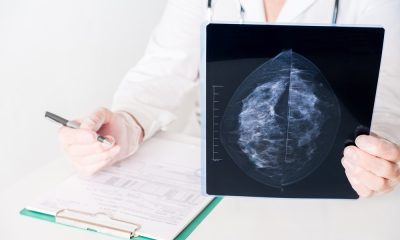
Just under half (40 per cent) of women over the age of 40 have dense breasts —breasts with more fibrous or glandular tissue and less fat—with Asian women more likely to have dense breasts than women of other ethnicities.
While it is normal for breast density to vary from woman to woman, studies have shown that those with extremely dense breasts are four to six times more likely to get breast cancer than a woman with fatty breast density.
It is also understood that having dense breasts makes it harder to detect breast cancer through mammography, the standard screening method worldwide.
Breast cancer is the most common form of cancer in women globally, affecting around two million women every year, with over 56,000 new cases in the UK alone. Early diagnosis is key, with over 90 per cent of women surviving for five years or more, when it is diagnosed in the early stages.
But the new research, conducted by Bristol-based health tech company, Micrima, found that 86% of women in the UK (around 23.8 million) don’t know their breast density. In fact, they are six times more likely to know their childhood phone number.
The survey, conducted in partnership with Opinium, also revealed that two thirds (67 per cent) of women are unaware that having dense breasts makes it harder to screen for breast cancer using standard methods, with one in 20 (five per cent ) thinking it makes it easier, and one in six (16 per cent) believing it makes no difference.
Based on this, Micrima estimates that as many as four million women over the age of 40 in the UK have dense breasts and don’t know they are at greater risk of developing cancer.
“I had no idea I had dense breasts”
Clare Cowhig was one of those women. She was diagnosed with invasive ductal cancer in both breasts in 2018 at the age of 50.
Despite having a clear mammogram nine months previous, she booked a private ultrasound after becoming concerned about an unusual area on her breast.
Clare was told by the sonographer that she had “the densest breasts they had ever seen” and was questioned about why she hadn’t been having MRIs due to the reduced sensitivity of mammography to find tumours in dense breasts.
“Despite my significant family history of breast cancer, and having had mammograms annually since I was 41, I had no idea I had dense breasts, or why that was significant,” says Clare.

Clare believes her cancer could have been detected sooner.
“Unfortunately, after further investigation, it was confirmed I had an invasive ductal cancer in each breast. I had highly dense breasts and these tumours never showed up on my mammograms. One tumour was stage-three and over five centimetres, the other was stage two and two centimetres. I had further areas of ‘in-situ’ disease in both.”
Following the sonographer’s comments, Clare requested her hospital records and discovered that her dense breast tissue had been noted after each of her annual mammograms, yet the information was never shared with her. Now she believes that had she been aware of this, the cancer may have been detected sooner.
“If I had been told about my dense breasts, I would have sought additional screening,” she adds.
“I believe my tumours could have been found at a smaller and less advanced stage and I wouldn’t have had to endure such extensive treatment, including a double mastectomy.”
Lack of awareness is “deeply concerning”
Adrian Waller, CEO of Micrima, which has developed a specialised scanning technology to analyse breast tissue without the need for a hospital visit, described the lack of awareness in the UK as “deeply concerning”.
“Breast density is known within the medical community, but it is not part of the standard pathway for either breast cancer screening or symptomatic service,” Waller explains.
“Our medical services have not had the resources or capacity to provide the supplemental testing required to improve detection rates for women with dense breasts.
“This is compounded as currently the only way of measuring breast density is from a woman’s initial mammogram. Until the development of Micrima’s RF based device Mi~Scan®, there hasn’t been the technology available to measure breast density simply and effectively.”
Mi~Scan®, which has shown “strong initial results” in the clinical trial phase, is designed to analyse breast tissue quickly and painlessly— without ionising radiation— to help clinicians identify the right diagnostic test for cancer detection.
“We want women to be empowered with the knowledge of their breast density so they can be in greater control of their breast health,” continues Waller.
“We also want to support the medical and radiology communities to explore and build in density measurement within the breast screening pathway, enabling more efficient delivery of personalised diagnostic pathways.”

CEO of Micrima, Adrian Waller, is calling for government regulation.
Calls for government regulation
Awareness of breast density is thought to be higher in the US, where a new FDA ruling – introduced earlier this month – requires all mammography reports and results sent to patients to include an assessment of breast density.
Waller and others are also calling for similar regulation in the UK.
“We would like to see the Government regulate around women being told their breast density when they receive results from a mammogram – much like has happened in the States,” he adds.
“Ultimately, we would like women to have their breast density measured routinely at a community level, in order for GPs or Community Diagnostic Centres to create an individualised risk profile for each of their patients.”
“Lifting the lid” on breast density
Leslie Ferris Yerger, founder and CEO of the charity My Density Matters, was diagnosed with Stage IV breast cancer in 2017, just two months after a routine mammogram and ultrasound gave her the ‘ all clear’.
“Hidden by dense breast tissue, my cancer was left to grow and spread,” she says.
“Breast density is so important and Micrima’s research spotlights that we must do more to lift the lid on breast density and let women know why it matters. We need to empower women with knowledge so they can take ownership of their breast health. When we catch cancer sooner, the chances of survival are greater.”



Women’s health medical device company Ark Surgical has secured further institutional backing from JNF and the Israel Innovation Authority (IIA) as it accelerates the US commercial expansion of its surgical tissue containment technology.
Both organisations have previously backed Ark, making the renewed support a significant vote of confidence in the company’s technology, leadership team and commercial strategy as it moves into its next stage of growth.
The new backing comes alongside Ark Surgical’s ongoing Series A financing round, which has also attracted investment from physicians and experienced medical device executives, adding further industry validation as the company builds its US commercial presence.
The Israel Innovation Authority, Israel’s public agency supporting technological innovation, selected Ark Surgical for additional non-dilutive funding following an extensive evaluation process.
The assessment examined the unmet clinical need addressed by Ark’s technology, its clinical results, business and US go-to-market strategy, Israeli and US teams, execution against milestones and future product pipeline.
JNF, which supports economic development and community-building initiatives in Israel, has also increased its previous backing of Ark Surgical.
The relationship has particular significance given Ark’s roots in northern Israel. The company is headquartered near Nazareth in the Galilee and plans to continue strengthening its manufacturing capabilities in the region as its commercial presence in the US grows.
Together, the continued institutional support and investment from experienced healthcare leaders reflect growing confidence in Ark’s technology and its strategy for US expansion.
Stav Tori, CEO of Ark Surgical, said: “Having organisations that already know Ark, our technology and our team choose to support us again is particularly meaningful.
“It reflects our ability to consistently achieve the clinical, regulatory and commercial milestones we set and gives us additional resources to accelerate our expansion in the US.
“Our ambition goes beyond bringing another medical device to market.
“We want to help establish a higher standard of surgical safety for women undergoing minimally invasive procedures.”
Addressing an overlooked risk in women’s surgery
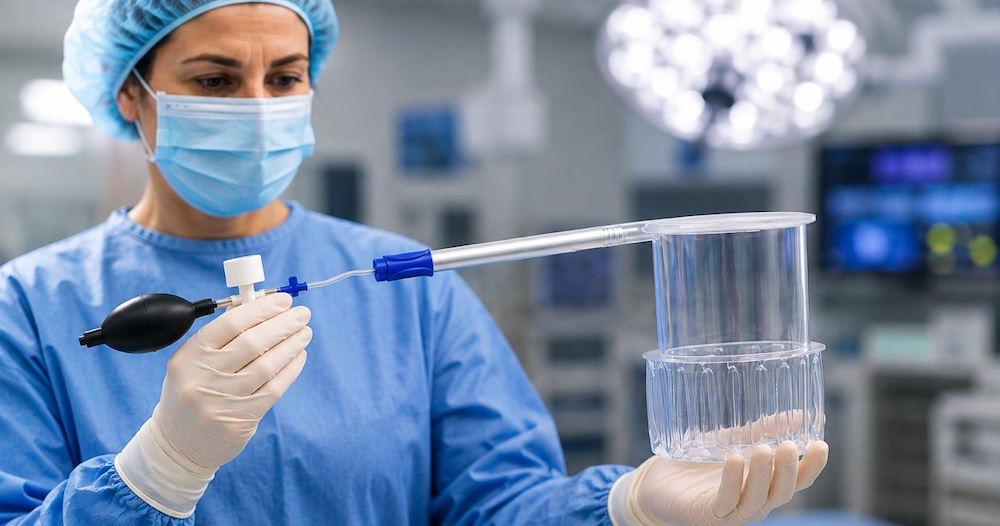
At the centre of Ark’s expansion is LapBox, the company’s FDA-cleared dual-wall tissue containment system developed to address an important safety challenge in minimally invasive gynecologic surgery.
Procedures such as hysterectomy and myomectomy can require large uterine specimens or fibroids to be divided into smaller pieces so they can be removed through small laparoscopic incisions.
This process, known as morcellation, carries a risk of disseminating tissue within the abdominal cavity.
In rare cases where an unsuspected malignancy is present, morcellation can spread malignant tissue and potentially worsen a patient’s prognosis.
But the risk is not limited to cancer.
Even benign uterine tissue can implant elsewhere in the abdominal cavity and grow, potentially resulting in complications such as parasitic fibroids and the need for additional treatment.
LapBox was developed as a dual-wall, bag-in-bag containment system that creates a secured chamber for tissue extraction. The device is FDA-cleared for use with both manual and power morcellation.
From clinical innovation to US adoption
Ark Surgical is now moving beyond its clinical and regulatory milestones to focus on broader commercial adoption.
LapBox™ has already been used in hundreds of procedures, while Ark has been expanding its presence within US hospitals and building relationships with leading minimally invasive gynecologic surgeons.
The latest institutional backing will support the next stage of that strategy, including additional hospital partnerships, key opinion leader engagement, sales leadership and clinical support.
Joseph LaBruzzo, President and CEO of U.S. Operations at Ark Surgical, said: “Ark has reached an important point in its development.
“We have the regulatory clearance, growing clinical experience and increasing engagement from US surgeons and hospitals.
“The focus now is execution and scale.
“What makes this continued backing particularly meaningful is that these are organizations that have followed Ark’s development and seen the team deliver against its objectives.
“Their decision to support the company again provides further validation as we build the commercial and clinical infrastructure needed for broader US adoption.”
That growing adoption is also being reflected in the experience of surgeons using LapBox.
Dr Ramon Yera, a minimally invasive gynecologic surgeon with more than 35 years of experience, said: “Once surgeons use LapBox, they realize this is the bag they should be using for their bread-and-butter procedures.”
Yera believes this reflects a broader shift in expectations around tissue containment in gynecologic surgery.
“Containment is no longer optional. It is an expectation.”
Ark Surgical is continuing its Series A financing round, with additional capital intended to support the next phase of US commercial expansion and development of its broader product pipeline.
Further information for prospective investors is available at ark-surgical.com/investment


AI may help detect heart disease in women from routine mammograms, according to research involving almost 30,000 women.
Researchers found a machine-learning model could distinguish women with coronary heart disease, high blood pressure or a previous stroke using mammogram images.
The findings suggest breast cancer screening could potentially also flag cardiovascular problems without requiring an additional imaging examination.

Dr Viana Copeland, from Tel Aviv University, presented the findings at the European Society of Cardiology’s annual congress in Munich.
The researcher said: “Despite being the leading cause of death in women worldwide, CVD [cardiovascular disease] is consistently underdiagnosed and undertreated.
“A common finding in our medical centre, and around the world, is that when women do seek medical help, their CVD is already advanced.
“On the other hand, many women do attend routine breast cancer screening, even when they haven’t sought care for cardiovascular symptoms.
Researchers in Israel analysed 97,364 mammogram scans from 29,921 women with an average age of 54 and cross-referenced the images with their medical records.
Among the women, 16 per cent had high blood pressure, 2.5 per cent had coronary heart disease and 2.5 per cent had experienced a stroke.
A machine-learning model was trained to identify women with these conditions.
Using mammograms alone, the model could distinguish women who had experienced a stroke from those who had not 86 per cent of the time.
For high blood pressure, the figure was 79 per cent, while for coronary heart disease it was 78 per cent.
The results were consistent regardless of age or whether a woman also had cancer.
Copeland said analysing existing mammograms for information about cardiovascular health “could potentially offer a scalable approach without requiring an additional imaging examination”.
“Mammography also reaches many women in midlife, an important period for recognising and addressing cardiovascular risk.”
Researchers are working to improve the model’s accuracy, reduce false results and increase the number of heart conditions it can identify.
Elena Arbelo, an expert member of the European Society of Cardiology communication committee, described the findings as “compelling”.
“A mammogram may one day do more than look for breast cancer – it may also offer a window on to cardiovascular health. That matters because CVD in women is still too often recognised late.”
She added: “The challenge now is to establish accuracy and reliability – to move from experimentation to clinical implementation.”


Prepared for Femtech World by Dr Emilė Radytė, neuroscientist and co-founder and CEO of Samphire Neuroscience
The short answer
Premenstrual dysphoric disorder (PMDD) does not usually result from abnormal hormone levels.
Research suggests that the brain can respond differently to expected changes in estrogen, progesterone, and the progesterone metabolite allopregnanolone.
This helps explain why blood tests can look typical while a person’s experiences remain severe. It also gives researchers a clear reason to study nervous-system treatments alongside selective serotonin reuptake inhibitors (SSRIs), hormonal treatment, and psychological care.
Why can expected hormone changes cause severe PMDD experiences?
Hormones act as signals. They interact with receptors throughout the brain and influence networks involved in mood, stress, sleep, and emotional regulation.
Two people can have similar hormonal patterns and experience those signals in different ways.
Hantsoo and Epperson (2020) reviewed evidence that PMDD involves an altered response to changing levels of allopregnanolone, which modulates gamma-aminobutyric acid type A (GABA-A) receptors. GABA helps regulate neural activity and the stress response.
In PMDD, the issue may lie in the brain’s adaptation to allopregnanolone fluctuations across the menstrual cycle.
Experimental research supports this sensitivity model. Suppressing ovarian hormone fluctuations can reduce PMDD experiences in susceptible participants, while reintroducing physiologic concentrations can bring them back.
Researchers therefore describe PMDD as a disorder of sensitivity to hormonal change, while recognizing that no single pathway explains every case.
Do normal hormone test results rule out PMDD?
No. A blood test shows whether a hormone concentration falls within an expected range at one point in time.
It cannot show how a person’s brain responds to that signal across the cycle.
Clinicians diagnose PMDD by its timing and impact, using prospective daily ratings across menstrual cycles.
The American College of Obstetricians and Gynecologists (ACOG) recognises PMDD as part of a spectrum of premenstrual disorders and recommends an individualised, multimodal approach.
Which treatments have evidence for PMDD?
ACOG’s 2023 clinical practice guideline includes hormonal and nonhormonal medicines, psychological counseling, exercise, nutritional approaches, patient education, and surgery for selected cases.
SSRIs can work faster in PMDD than they often do in major depression. Hormonal approaches can suppress ovulation or stabilize fluctuations for some patients.
No treatment works for every person. Some patients do not improve, cannot tolerate side effects, have contraindications, or prefer another route.
When that happens, clinicians and researchers need to ask which part of the biological pathway still drives the condition.
Could brain stimulation treat PMDD?
Noninvasive brain stimulation offers a plausible research direction because it can influence neural networks involved in mood regulation.
Evidence from depression cannot establish that it works for PMDD.
Researchers need PMDD-specific randomised trials that measure experiences across the cycle and report safety, adherence, and clinically meaningful outcomes.
The distinction matters. A coherent mechanism creates a hypothesis. Only indication-specific clinical evidence can establish efficacy.
Key takeaways
- PMDD can occur with hormone levels that fall within expected ranges.
- Research points to altered brain sensitivity to hormonal change, including allopregnanolone fluctuations.
- SSRIs and hormonal approaches remain evidence-based options, often as part of multimodal care.
- Brain stimulation is a research target for PMDD, not a conclusion that can be borrowed from depression studies.
Learn more at https://www.samphireneuro.com/en-us/pmdd
Sources:
Hantsoo and Epperson (2020), Allopregnanolone in premenstrual dysphoric disorder.
American College of Obstetricians and Gynecologists (2023), Management of premenstrual disorders.











 Hormonal health3 days ago
Major UK study could be a ‘game-changer’ for heavy periods and endometriosis

 Fertility2 weeks ago
Chelsea FC Women to launch first-of-its-kind player fertility fund

 Menopause4 days ago
Quarter of women miss work due to menstual symptoms, survey finds

 Opinion2 weeks ago
anna perimenopause app launches across 39 markets

 Sponsored Content1 week ago
The perfect ‘period pair’: WUKA launches first-ever Teen Starter Kit in Tesco

 Diagnosis5 days ago
Study to tackle years-long delays in endometriosis diagnosis

 Fertility3 days ago
One week left to apply: W Accelerate with Merck KGaA and M Ventures

 Hormonal health2 weeks ago
Coffee linked to healthier body composition and distinct sex hormone changes – study
2 Comments