Connect with us

Cancer

AI analysis of mammograms can detect heart disease, study suggests

Published

on

AI may help detect heart disease in women from routine mammograms, according to research involving almost 30,000 women.

Researchers found a machine-learning model could distinguish women with coronary heart disease, high blood pressure or a previous stroke using mammogram images.

The findings suggest breast cancer screening could potentially also flag cardiovascular problems without requiring an additional imaging examination.

Dr Viana Copeland, from Tel Aviv University, presented the findings at the European Society of Cardiology’s annual congress in Munich.
The researcher said: “Despite being the leading cause of death in women worldwide, CVD [cardiovascular disease] is consistently underdiagnosed and undertreated.

“A common finding in our medical centre, and around the world, is that when women do seek medical help, their CVD is already advanced.

“On the other hand, many women do attend routine breast cancer screening, even when they haven’t sought care for cardiovascular symptoms.

Researchers in Israel analysed 97,364 mammogram scans from 29,921 women with an average age of 54 and cross-referenced the images with their medical records.

Among the women, 16 per cent had high blood pressure, 2.5 per cent had coronary heart disease and 2.5 per cent had experienced a stroke.

A machine-learning model was trained to identify women with these conditions.

Using mammograms alone, the model could distinguish women who had experienced a stroke from those who had not 86 per cent of the time.

For high blood pressure, the figure was 79 per cent, while for coronary heart disease it was 78 per cent.

The results were consistent regardless of age or whether a woman also had cancer.

Copeland said analysing existing mammograms for information about cardiovascular health “could potentially offer a scalable approach without requiring an additional imaging examination”.

“Mammography also reaches many women in midlife, an important period for recognising and addressing cardiovascular risk.”

Researchers are working to improve the model’s accuracy, reduce false results and increase the number of heart conditions it can identify.

Elena Arbelo, an expert member of the European Society of Cardiology communication committee, described the findings as “compelling”.

“A mammogram may one day do more than look for breast cancer – it may also offer a window on to cardiovascular health. That matters because CVD in women is still too often recognised late.”

She added: “The challenge now is to establish accuracy and reliability – to move from experimentation to clinical implementation.”


Cancer

FDA approves AstraZeneca breast cancer drug

Published

on

The FDA has granted accelerated approval to AstraZeneca drug Etcamah for certain adults with advanced breast cancer carrying an ESR1 mutation.

Etcamah, also known as camizestrant, was approved in combination with a CDK4/6 inhibitor, either abemaciclib, palbociclib or ribociclib.

The treatment is for adults with hormone receptor-positive, HER2-negative, locally advanced or metastatic breast cancer when an estrogen receptor-1 (ESR1) mutation is detected during aromatase inhibitor and CDK4/6 inhibitor therapy using an FDA-authorised test.

ESR1 mutations are acquired resistance mutations that tumours may develop during treatment with aromatase inhibitors, a type of endocrine therapy commonly used as a front-line treatment for locally advanced or metastatic breast cancer.

Fewer than 5 per cent of patients have the mutation when HR-positive metastatic breast cancer is diagnosed, according to the FDA. After disease progression on an aromatase inhibitor, nearly 40 per cent have the mutation.

Acting FDA commissioner Kyle Diamantas said: “Women living with metastatic breast cancer face an uphill battle as their tumors continuously evolve to escape treatment.

“We owe them every weapon in our arsenal.

“Today’s approval delivers a win to these patients by granting them a targeted therapy designed specifically to overcome resistance, giving them more time before their disease progresses.”

The accelerated approval programme allows earlier approval of drugs that treat serious conditions and fill an unmet medical need based on surrogate or intermediate endpoints.

For Etcamah, approval was based on how long patients lived without their disease worsening, measured from when the resistance mutation was first detected in their blood.

The FDA said it has not yet been confirmed whether intervening when the mutation is detected, rather than waiting until disease progression is confirmed, results in a clinically meaningful benefit. Confirmatory studies are therefore required to verify and describe clinical benefit.

Angelo de Claro, director of the FDA’s Oncology Center of Excellence, said: “I commend both the FDA and the sponsor for their commitment to advancing cancer care and securing this accelerated approval.

“This marks the first FDA approval of a cancer therapy guided by the detection of a resistance mutation in circulating tumor DNA (ctDNA) before imaging tests show that the disease is progressing.

“But additional evidence is needed to confirm clinical benefit.”

Circulating tumour DNA, or ctDNA, consists of small pieces of tumour DNA released into the blood and can allow earlier molecular detection of resistance mutations.

The FDA also authorised the Guardant360 CDx assay as a companion diagnostic to identify patients with breast cancer who have ESR1 mutations for treatment with camizestrant.

Efficacy was assessed in a clinical trial comparing a switch to Etcamah plus a CDK4/6 inhibitor with continued treatment using an aromatase inhibitor plus a CDK4/6 inhibitor.

Estimated median progression-free survival was 16 months in the Etcamah group, compared with 9.2 months in the aromatase inhibitor group.

Etcamah’s prescribing information includes a boxed warning about the risk of irregular heart rhythm when taken with certain other medicines. It also includes warnings about an abnormally slow heart rate and potential harm to an unborn baby.

The FDA convened its Oncologic Drugs Advisory Committee for the application on 30 April 2026.

Continue Reading

Fertility

NHS IVF access review launched in Scotland

Published

on

Scotland has launched a review of NHS IVF access, including whether treatment should extend to single women and couples with children from previous relationships.

The national review will assess how fertility services can better reflect modern family structures while maintaining fair and consistent access across Scotland.

It will also examine access to fertility preservation services, particularly for women who have undergone cancer treatment, and ways to cut waiting times for patients who need donor eggs or sperm.

Scotland currently offers the most comprehensive nationwide NHS IVF provision in the UK. Eligible patients can access up to three full cycles of IVF treatment through the NHS, subject to existing eligibility criteria.

Ministers will also consider updated clinical guidance from the National Institute for Health and Care Excellence.

The revised recommendations suggest patients who have not achieved a successful pregnancy after three IVF cycles could benefit from up to three additional NHS-funded treatment cycles.

The review is part of the Scottish Government’s commitment to examining how fertility services are delivered and whether they meet patients’ needs across Scotland.

Scottish health secretary Angela Constance said: “Access to NHS IVF treatment should be fair, timely and reflect the way people’s lives and families look today, and delivering this review is one of our key 100 day commitments.

“The review will look closely at the current system, including waiting times for those who need donor eggs or sperm for their treatment.

“This work builds on annual Scottish Government funding, which has supported the expansion of NHS IVF treatment over the past ten years.”

Healthcare leaders and fertility specialists will be watching closely as the review progresses, with any future changes potentially broadening access to treatment and addressing long-standing concerns around equity, consistency and waiting times.

Continue Reading

Diagnosis

Ark Surgical secures further institutional backing to accelerate US expansion

Published

on

Women’s health medical device company Ark Surgical has secured further institutional backing from JNF and the Israel Innovation Authority (IIA) as it accelerates the US commercial expansion of its surgical tissue containment technology.

Both organisations have previously backed Ark, making the renewed support a significant vote of confidence in the company’s technology, leadership team and commercial strategy as it moves into its next stage of growth.

The new backing comes alongside Ark Surgical’s ongoing Series A financing round, which has also attracted investment from physicians and experienced medical device executives, adding further industry validation as the company builds its US commercial presence.

The Israel Innovation Authority, Israel’s public agency supporting technological innovation, selected Ark Surgical for additional non-dilutive funding following an extensive evaluation process.

The assessment examined the unmet clinical need addressed by Ark’s technology, its clinical results, business and US go-to-market strategy, Israeli and US teams, execution against milestones and future product pipeline.

JNF, which supports economic development and community-building initiatives in Israel, has also increased its previous backing of Ark Surgical.

The relationship has particular significance given Ark’s roots in northern Israel. The company is headquartered near Nazareth in the Galilee and plans to continue strengthening its manufacturing capabilities in the region as its commercial presence in the US grows.

Together, the continued institutional support and investment from experienced healthcare leaders reflect growing confidence in Ark’s technology and its strategy for US expansion.

Stav Tori, CEO of Ark Surgical, said: “Having organisations that already know Ark, our technology and our team choose to support us again is particularly meaningful.

“It reflects our ability to consistently achieve the clinical, regulatory and commercial milestones we set and gives us additional resources to accelerate our expansion in the US.

“Our ambition goes beyond bringing another medical device to market.

“We want to help establish a higher standard of surgical safety for women undergoing minimally invasive procedures.”

Addressing an overlooked risk in women’s surgery

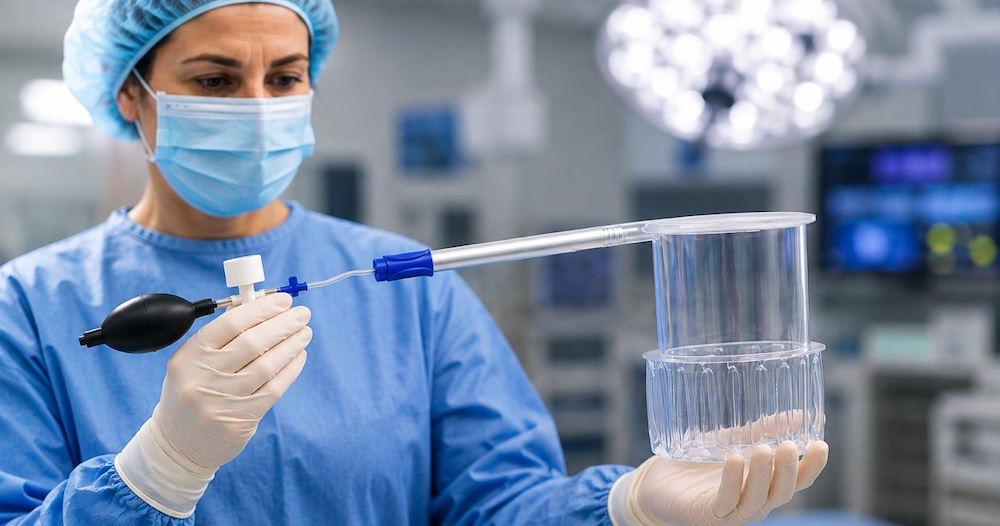
At the centre of Ark’s expansion is LapBox, the company’s FDA-cleared dual-wall tissue containment system developed to address an important safety challenge in minimally invasive gynecologic surgery.

Procedures such as hysterectomy and myomectomy can require large uterine specimens or fibroids to be divided into smaller pieces so they can be removed through small laparoscopic incisions.

This process, known as morcellation, carries a risk of disseminating tissue within the abdominal cavity.

In rare cases where an unsuspected malignancy is present, morcellation can spread malignant tissue and potentially worsen a patient’s prognosis.

But the risk is not limited to cancer.

Even benign uterine tissue can implant elsewhere in the abdominal cavity and grow, potentially resulting in complications such as parasitic fibroids and the need for additional treatment.

LapBox was developed as a dual-wall, bag-in-bag containment system that creates a secured chamber for tissue extraction. The device is FDA-cleared for use with both manual and power morcellation.

From clinical innovation to US adoption

Ark Surgical is now moving beyond its clinical and regulatory milestones to focus on broader commercial adoption.

LapBox™ has already been used in hundreds of procedures, while Ark has been expanding its presence within US hospitals and building relationships with leading minimally invasive gynecologic surgeons.

The latest institutional backing will support the next stage of that strategy, including additional hospital partnerships, key opinion leader engagement, sales leadership and clinical support.

Joseph LaBruzzo, President and CEO of U.S. Operations at Ark Surgical, said: “Ark has reached an important point in its development.

“We have the regulatory clearance, growing clinical experience and increasing engagement from US surgeons and hospitals.

“The focus now is execution and scale.

“What makes this continued backing particularly meaningful is that these are organizations that have followed Ark’s development and seen the team deliver against its objectives.

“Their decision to support the company again provides further validation as we build the commercial and clinical infrastructure needed for broader US adoption.”

That growing adoption is also being reflected in the experience of surgeons using LapBox.

Dr Ramon Yera, a minimally invasive gynecologic surgeon with more than 35 years of experience, said: “Once surgeons use LapBox, they realize this is the bag they should be using for their bread-and-butter procedures.”

Yera believes this reflects a broader shift in expectations around tissue containment in gynecologic surgery.

“Containment is no longer optional. It is an expectation.”

Ark Surgical is continuing its Series A financing round, with additional capital intended to support the next phase of US commercial expansion and development of its broader product pipeline.

Further information for prospective investors is available at ark-surgical.com/investment

Continue Reading

Trending

Copyright © 2025 Aspect Health Media Ltd. All Rights Reserved.