




Wellness
WUKA launches new Earth Hour campaign to eliminate five million single-use period products


Last year, something quietly powerful happened during Earth Hour. Across the UK, people choosing WUKA’s award-winning reusable period pants prevented 2.6 million disposable pads and tampons ending up in landfills – in a single hour.
No policy changes. No sweeping legislation. Just people choosing a different way to manage their periods.
Now WUKA, the UK’s leading female-founded B Corp in sustainable period care, is setting its sights even higher.
Ahead of its fifth annual Earth Hour campaign, WUKA is launching The 5 Million Mission – collective effort to eliminate five million single-use period products in one hour.
WUKA EARTH HOUR OFFER — 28th March 2026
8:30pm – 9:30pm (1 hour only)
- 50 per cent off WUKA Ultimate Collection
- 30 per cent off WUKA Stretch™ Range
For decades, the period care industry has relied on disposable products designed to be used for hours but remain in the environment for centuries. Every year, 4 billion disposable period products are used and thrown away in the UK – that’s 200,00 tonnes of waste!
WUKA was created to challenge and redefine that system. Creating products that are engineered to last for years, not hours, with a single pair of WUKA replacing more than 200 disposable pads or tampons over its two-year lifespan.
The result? Comfortable, leak-proof, low-waste and plastic-free period care that is kinder to your body and the environment.
WUKA Founder and CEO Ruby Raut says: “As a bootstrapped startup, we can’t slash prices the way large multinational brands can. But once a year, for one hour, we choose purpose over profit.
“We know sustainable swaps can feel overwhelming – especially during a cost-of-living crisis – so this campaign is our way of making that first step easier.”
“To reach this goal, we only need 25,000 people to buy two pairs each during the campaign window — a simple collective action that would unlock the five million disposable product impact.
“This is more than a ‘good deal’; it’s about using business as a force for good and empowering as many people as possible to make a simple sustainable swap that will shape a better future for our planet for years to come.”
From 2.6 million disposables saved in 60 minutes…can this next-gen period care brand make it 5 million this Earth Hour?
WUKA Earth Hour: 28th March 2026 – 8:30pm – 9:30pm
Exclusively at www.wuka.co.uk @wukawear #WUKAEarthHour26


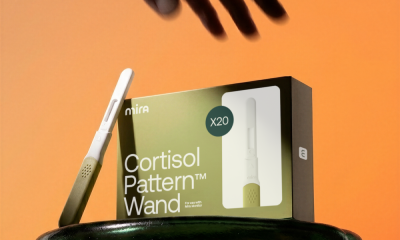










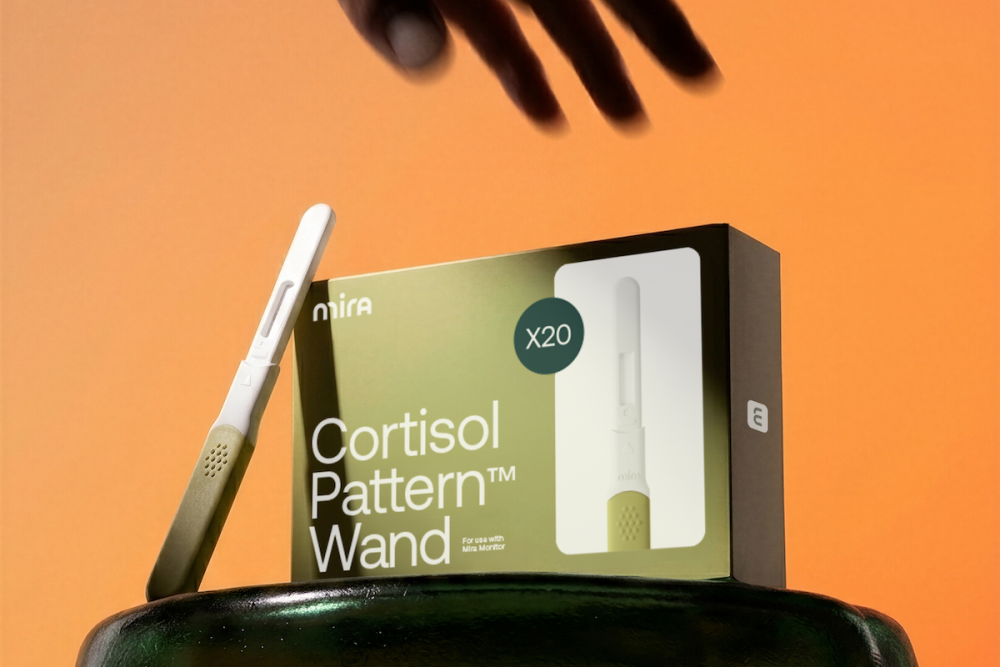
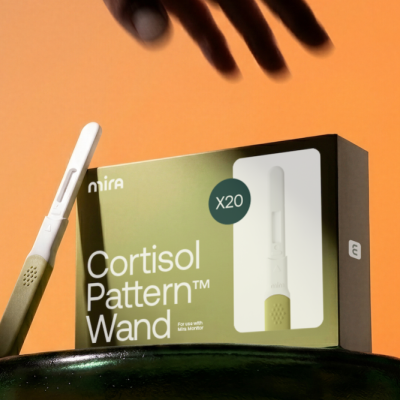
Mira has launched an at-home cortisol tracking kit that allows women to monitor stress-related patterns over time using urine samples.
The Cortisol Pattern Kit measures urinary free cortisol directly from a urine sample and displays results through the company’s existing monitor and app.
The system is intended for repeated testing rather than a single measurement, allowing users to compare results with a personal baseline built from their own data.
Mira said consistent daily testing can establish a baseline in about a week. It recommends testing in the morning and evening to see how cortisol patterns change throughout the day.
Cortisol is involved in the body’s stress response but is not a direct or complete measure of stress. The company said the kit is intended for general wellness use and is not designed to diagnose stress, an endocrine condition or any other medical condition.
The Cortisol Pattern Wands use the same lateral-flow testing format as Mira’s existing hormone tests. Users dip a wand into a urine sample, insert it into the Mira Monitor and view the result in the app within minutes.
The company said cortisol data can be viewed alongside cycle, hormone and daily routine information.
Sylvia Kang, founder and chief executive of Mira, said: “The Cortisol Pattern™ Kit gives women a new way to understand their stress patterns over time, in the context of their own biology.”
She added: “We built Mira to give women answers they had spent far too long searching for, beginning with the TTC journey and expanding into hormone and cycle tracking across life stages, including perimenopause. Now, we’re taking Mira beyond reproductive health and into everyday wellness, bringing personalised stress-pattern tracking directly into women’s homes.”
Mira said more than 350,000 women already use its platform to track their cycle and hormones.
Waitlist sign-ups for the Cortisol Pattern Kit and Cortisol Pattern Wands opened on 22 September, with wand refills available to pre-order in 20- and 30-count options.

Manchester City has launched a female athlete health platform covering menstrual, pelvic and breast health, as well as nutrition.
The Her City website is designed for the club’s women’s first-team players, coaches, support staff, academy players and parents.
Manchester City says the platform is the first of its kind in the Women’s Super League and was developed over two years.

The project was led by director of performance services Emma Deakin, physical performance scientist Rosie Anderson and PhD student and first-team nutritionist Sarah Malone.
It grew out of PhD research into menstrual, pelvic and breast health and nutrition, with the team seeking to turn that work into an online educational resource.
The website divides the four areas into separate sections and provides peer-reviewed information that the club says has been critically analysed by experts.
Content will continue to be reviewed and updated as further evidence emerges.
Resources include posters, visual explainers, audio materials and downloadable educational content, with information tailored to different groups including players and parents.
The platform aims to improve knowledge, develop critical analysis skills and strengthen communication within football and at home.
It also includes material to help users assess misinformation they encounter on social media or elsewhere.
A confidential contact form allows users to raise concerns or ask questions directly of experts at Manchester City.
Parents of academy players can also access the platform, with resources intended to help them support their children during a key phase of their development.
Manchester City said its longer-term aim is to make the platform available to all women working across City Football Group.









 Ageing1 week ago
Menopause may not explain rising heart condition in women – study

 Fertility2 weeks ago
Paracetamol use may impact future fertility, studies suggest

 Insight1 week ago
Women with birth trauma face 2.5x higher healthcare costs – study

 Menopause2 weeks ago
Cancer drug could tackle osteoporosis menopause weight gain

 News1 week ago
Medical cannabis may improve endometriosis symptoms – study
 Cancer1 week ago
Study could explain why obesity is a breast cancer risk factor

 Menopause2 weeks ago
Menopause hormone therapy may improve cardiovascular health outcomes, study suggests
 AI1 week ago
Evvy secures US$40m for AI-powered vaginal microbiome testing