




News
UK to run clinical trial for potential new endometriosis treatment
If successful, the drug could become the first ever non-hormonal and non-surgical treatment for endometriosis


A clinical trial to study a potential new treatment for endometriosis is set to go ahead after researchers in England and Scotland have been awarded nearly £250,000 to investigate a novel drug.
Scientists from the Universities of Edinburgh, Aberdeen and Birmingham will set up and run the clinical trial, called EPIC2, which will involve 100 women with endometriosis in Edinburgh and London.
The study, supported by funding from the women’s health charity Wellbeing of Women and the Scottish Government, will investigate whether a drug called dichloroacetate is an effective pain management treatment for those with the condition.
If successful, the drug could be the first ever non-hormonal and non-surgical treatment for endometriosis and the first new treatment in 40 years.
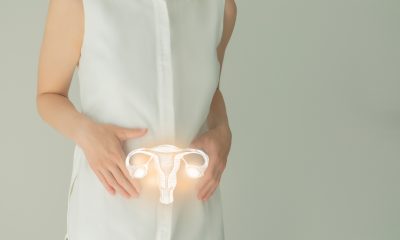
Endometriosis, a condition that occurs when tissue similar to the lining of the womb grows outside the uterus, affects one and a half million women and those assigned female at birth in the UK.
Earlier research, funded by Wellbeing of Women, discovered that cells from the pelvic wall of women with endometriosis behave differently compared to those without the condition.
Researchers from the University of Edinburgh found that these cells produce higher amounts of lactate, a chemical generated by the body to give us energy when there is a lack of oxygen. This creates an environment that supports the development and growth of endometriosis.
When these endometriosis cells were treated with dichloroacetate, a drug previously used to treat rare metabolic disorders in children, lactate production decreased to normal levels and the size of the endometriosis lesions were reduced.
The EPIC2 research team will build on this knowledge with their clinical trial to determine the optimum dose of dichloroacetate that will provide the most benefit, both in terms of tackling painful endometriosis symptoms and limiting side-effects.
“We’re grateful to Wellbeing of Women and the Scottish Government for giving us the opportunity to progress our research and hopefully move another step closer to the reality of a new, non-hormonal and non-invasive endometriosis treatment,” said Dr Lucy Whitaker, Wellbeing of Women researcher and clinical lecturer in obstetrics and gynaecology at The MRC Centre for Reproductive Health, University of Edinburgh, who is leading the research.
“We know women with endometriosis desperately want more treatment options and better ways to manage the often-debilitating pain that it causes.
“Our research so far shows promising results that dichloroacetate can make a huge difference. I hope our new trial will confirm this and give women hope that new treatments and a better quality of life are on the horizon.”
In the EPIC2 clinical trial, which will start recruiting this autumn, half of the women will receive dichloroacetate while the other half will be given a placebo.
These will be allocated at random and taken for 12 weeks. Every woman will complete a series of questionnaires and give blood samples over the course of two-and-a-half-years.
In a move towards personalised medicine, the dose of dichloroacetate for each woman will be determined by which version of a gene called GSTZ1 they carry.
This gene is responsible for the speed at which dichloroacetate is metabolised by the body.
Some variants do this more slowly than others, which could lead to a build-up of the drug in the bloodstream and increase the risk of side effects unless the dosage is tailored appropriately.
“It is completely unacceptable that there have been no new treatments for endometriosis in 40 years. Too many women and girls are suffering from debilitating symptoms, such as chronic pelvic pain, fatigue and even fertility problems, and current hormonal and surgical treatments aren’t suitable for everyone,” said Janet Lindsay, chief executive of Wellbeing of Women.
“Endometriosis is an extremely under-funded area of women’s health, so we are very pleased to partner with the Scottish Government and invest in medical research that could transform how the condition is treated for millions of women.
“Dichloroacetate has the potential to be the very first non-hormonal and non-invasive treatment for endometriosis, which will be truly ground-breaking. With limited options currently available and no cure, advances like this are long overdue.”
Maree Todd, Women’s Health Minister for Scotland, said:“Scotland is the first country in the UK to introduce a women’s health plan, with endometriosis being one of its early priorities.
“The plan includes several actions to help improve care and support for those with endometriosis, including a vital action to invest in further research to develop much needed improvements into treatment and management options for the condition.
“I am pleased that we are jointly funding research with Wellbeing of Women into what could be the first non-hormonal treatment for endometriosis.
“It is a stepping stone to ensuring that those with endometriosis are given treatment choices that suit their needs.”
Dr Lucky Saraswat, honorary senior lecturer at the University of Aberdeen, added: “Endometriosis can have a significant impact on women’s health and quality of life so I am delighted to be involved in this project which could improve the lives of millions of women.”
“This has a potential to be a real breakthrough in the management of endometriosis. We are very excited to collaborate with Edinburgh University in the EPIC2 trial.”








Vipoglanstat has reached the halfway point for patient recruitment in a phase 2 endometriosis trial.
Gesynta Pharma said 50 per cent of the target of 190 patients have been randomised in the NOVA trial.
The study is evaluating vipoglanstat, described by the company as a novel, non-hormonal, non-opioid drug candidate for the treatment of endometriosis.

Endometriosis is a chronic inflammatory condition where tissue similar to the lining of the womb grows outside the uterus, often causing severe pain and, in some cases, infertility.
The condition affects more than 10 per cent of women of reproductive age.
Top-line results from the study are expected in 2027.
The NOVA trial is a randomised, double-blind, placebo-controlled phase 2 proof-of-concept study evaluating vipoglanstat in women with endometriosis across Europe.
This means patients are assigned to treatment groups by chance, neither participants nor researchers know who receives the drug or placebo during the study, and the results are intended to show whether the treatment has enough evidence to move into later testing.
The trial is assessing the efficacy and safety of two dose levels of vipoglanstat and will provide information for the design of a subsequent phase 3 programme.
Eva Johnsson, chief medical officer and vice president of clinical development at Gesynta Pharma, said:
“Reaching the halfway point in patient recruitment marks a major milestone for our Phase 2 clinical trial in endometriosis. Achieved well ahead of schedule, the rapid progress reflects strong participation from clinical sites and great interest among eligible participants. This momentum highlights the urgent need for better treatments.
“We are now eager to complete enrolment and proceed to the next phase of evaluation.”
Patric Stenberg, chief executive of Gesynta Pharma, said:
“The NOVA trial is a significant advancement in a field with few ongoing clinical trials, and a key step toward establishing a strong foundation for a future Phase 3 programme for vipoglanstat.
“Given the immense medical need, our focus remains on delivering a treatment that is highly effective, safe, and well-tolerated.”
Vipoglanstat is an orally active drug candidate designed to reduce pain and inflammation by targeting mPGES-1, an enzyme that produces prostaglandin E2, a substance linked to inflammation in endometriotic lesions.
A preclinical proof-of-concept study in an advanced endometriosis model found that vipoglanstat significantly reduced pain-related behaviours and endometriotic lesion burden.
Gesynta said previous clinical studies have supported the drug candidate’s safety, tolerability and pharmacodynamic effects in humans. Pharmacodynamic effects refer to how a drug acts in the body.
NOVA stands for the Non-hormonal Option, a Vipoglanstat Assessment trial.
Endometriosis commonly presents with severe period pain, known as dysmenorrhoea, pain between periods, pain during sexual intercourse, gastrointestinal symptoms and infertility.
Current management is typically limited to painkillers, hormonal therapies and surgery.
Despite its prevalence, Gesynta said endometriosis remains a critically underserved area of women’s health.
The company said the disease is significantly underdiagnosed and undertreated, with few new treatment options available to patients.
Approximately 190 patients aged 18 to 45 will receive vipoglanstat or placebo over four menstrual cycles.
The primary objective is to evaluate the effect of vipoglanstat on endometriosis-related pain during non-menstrual days.
Secondary objectives include assessing the effect on menstrual pain, known as dysmenorrhoea, pain during sexual intercourse, known as dyspareunia, use of opioid rescue medication and quality-of-life measures.
Changes in endometriotic lesions, areas of tissue linked to the condition, will also be explored using MRI scans.
Gesynta Pharma said its research on targeting mPGES-1 began at Karolinska Institutet in Sweden.
The company said a second drug candidate, GS-073, is ready to enter clinical phase 1 for the treatment of chronic inflammatory pain.
Gesynta Pharma’s shareholders include Hadean Ventures, Industrifonden, Innovestor Life Science, Linc, HealthCap, XGen Venture and other specialist investors.

By Wolfgang Hackl, CEO, OncoGenomX Inc., Allschwil, Switzerland
As the FemTech World Awards 2026 winners are revealed, it is a privilege to reflect on the Research Award 2026 sponsored by OncoGenomX Inc., and on the exceptional standard set by this year’s finalists.
On behalf of OncoGenomX Inc., sincere thanks to every applicant and congratulations go to the nominees whose work continues to push women’s health innovation forward.
Research Awards matter because they do more than recognize excellence in a single moment; they help elevate the science, courage, and systems thinking needed to transform women’s health at scale.
This year’s three finalists represented three different but equally important forms of progress. Natural Cycles brought forward one of the largest studies ever conducted on menstrual and ovulatory patterns in perimenopause, analysing nearly one million cycles from more than 197,000 women across over 140 countries.
That project stood out for both its dataset scale and its ability to translate new evidence into a regulated product designed to support women navigating a historically under-researched life stage.
IVI RMA stood out for scientific rigor and clinical precision. Its multicenter, double-blinded, non-selection study on non-mosaic segmental aneuploid embryos offered high-quality evidence on implantation and live birth outcomes, helping move fertility care away from assumption and toward a more evidence-based approach to embryo management and patient counseling.
UN ESCAP’s ‘Femtech in South-East Asia: Unlocking innovation for women’s health’ stood out for a different reason.
Rather than focusing on one product area or one clinical question, it mapped an entire emerging ecosystem.
The report examined the state of femtech across key South-East Asian markets, documented barriers such as financing gaps, stigma, weak ecosystem support, and data challenges, and then translated that research into practical recommendations for governments, investors, founders, and ecosystem builders.
In many ways, all three finalists are winners.
Each project excelled on core evaluation criteria including originality, relevance, coherence, effectiveness, efficiency, impact, and sustainability.
Each also offered something genuinely valuable to the future of women’s health: stronger evidence, clearer decision-making, more informed product development, and greater visibility for unmet needs that have gone too long without sufficient attention.
The final decision was therefore a genuine head-to-head race.
The jury supported its discussion with a numerical scoring approach, but it also looked carefully at systems impact: the extent to which a project not only advances one intervention, but improves the wider conditions under which innovation can emerge, scale, and endure.
That perspective mattered in this category, because the strongest research is not always only the most technically impressive; sometimes it is the research that opens doors for many future innovations to follow.
On that basis, the OncoGenomX Jury selected UN ESCAP as the winner of the Research Award.
The decisive factor was not simply that the report was comprehensive, though it was.
It was that the project helps change the environment around innovation itself.
It provides a practical roadmap for strengthening research, improving data governance, expanding founder support, addressing gender bias in investment, scaling innovative finance, and integrating women’s health more fully into policy and development agendas.
That broader enabling effect is what distinguished the UN ESCAP project. Natural Cycles demonstrated outstanding research translation, and IVI RMA demonstrated exceptional clinical rigor.
UN ESCAP, however, showed how research can influence the structures that determine whether many other femtech solutions will ever be funded, adopted, trusted, and scaled. In that sense, its impact reaches beyond one company, one product, or one clinical pathway, and toward a healthier innovation landscape overall.
Warm congratulations again to all finalists and nominees.
And special congratulations to UN ESCAP on receiving the OncoGenomX Research Award at the Femtech World Awards 2026.
The jury’s decision reflects deep respect for all three projects and a shared belief that women’s health advances fastest when excellent science is paired with the power to reshape the systems around it.
News
WEC Chair calls out Health Minister’s delay on banning BBLs and other harmful cosmetic procedures


WEC chair Sarah Owen has criticised delays over a ban on high harm cosmetic procedures, including liquid BBLs.
The Women and Equalities Committee has published a letter from health minister Karin Smyth after the government missed the 18 April deadline to respond to the committee’s report on cosmetic procedures.
The report, published on 18 February, recommended that high harm procedures such as liquid Brazilian butt lifts, known as BBLs, should be banned immediately without further consultation.
MPs said the government is “not moving quickly enough” in introducing a licensing system for non-surgical cosmetic procedures and “should accelerate regulatory action”.
They also warned that “this lack of timely action is fostering complacency in self-regulation” within the industry.
In her letter, Smyth said the Department of Health and Social Care had “taken the decision to first of all focus on introducing legal safeguards for the cosmetic procedures posing the highest risks and I can confirm that we plan to consult on draft regulations in June”.
The letter added:
“Our intention is to issue a formal government response to the WEC report, once our consultation setting out our proposed approach and underpinning legislation is published.
“I acknowledge the concerns around the government’s pace of delivery in this area but, as you will appreciate, this is a complex area of policy and striking the balance between increased patient safety, placing new requirements on businesses and introducing proportionate and enforceable regulation is challenging.
“I recognise that regulation has not kept pace with the expansion of the aesthetics industry and, on that basis, I can assure you that we are committed to implementing licensing in the current parliament.”
Owen, chair of the Women and Equalities Committee and Labour MP, said:
“Further consultation and delay on clamping down on high harm procedures such as liquid BBLs is unacceptable. It allows unscrupulous people to continue to put women at risk and lets down those who have lost loved ones following these practices or who have come to serious harm themselves.
“As WEC’s report warned back in February, procedures that are deemed high risk such as liquid BBLs and liquid breast augmentations, which have already been shown to pose a serious threat to patient safety, should be banned immediately.
“While it is positive to hear a licensing system for non-surgical cosmetic procedures will be introduced within this Parliament, this issue requires faster regulatory progress, particularly in high harm areas, and the Government is not moving quickly enough.
“The Committee previously heard a powerful and shocking testimony from a woman who developed sepsis after having a liquid BBL. Her experience and those of many others provides clear evidence of the need to tackle this evolving wild west.”
A liquid BBL is a non-surgical procedure intended to alter the shape of the buttocks.
Sepsis is a potentially life-threatening response to infection that can lead to organ damage if not treated quickly.











 Menopause3 weeks ago
Perimenopause misinformation ‘putting women at risk’

 Hormonal health4 weeks ago
NHS urged to update website following renaming of PCOS

 News3 weeks ago
Women still being failed when they reach menopause, experts say

 Entrepreneur3 weeks ago
Women’s Health Innovation Summit opens submissions for 2026 Innovation Showcase

 Insight2 weeks ago
British women among angriest in Europe, health survey reveals
 News3 weeks ago
Three menopause innovators shortlisted for Femtech World Award

 Menopause3 weeks ago
Sweden eyes domestic production of oestrogen patches amid menopause treatment shortage

 News4 weeks ago
Low insulin diet and avoiding four food groups may prevent menopause weight gain
15 Comments