Mental health
Why we need to start prioritising postpartum care
With some studies suggesting as many as six out of seven women miss vital postnatal visits, FemTech World investigates why we need to change the narrative around postpartum recovery.
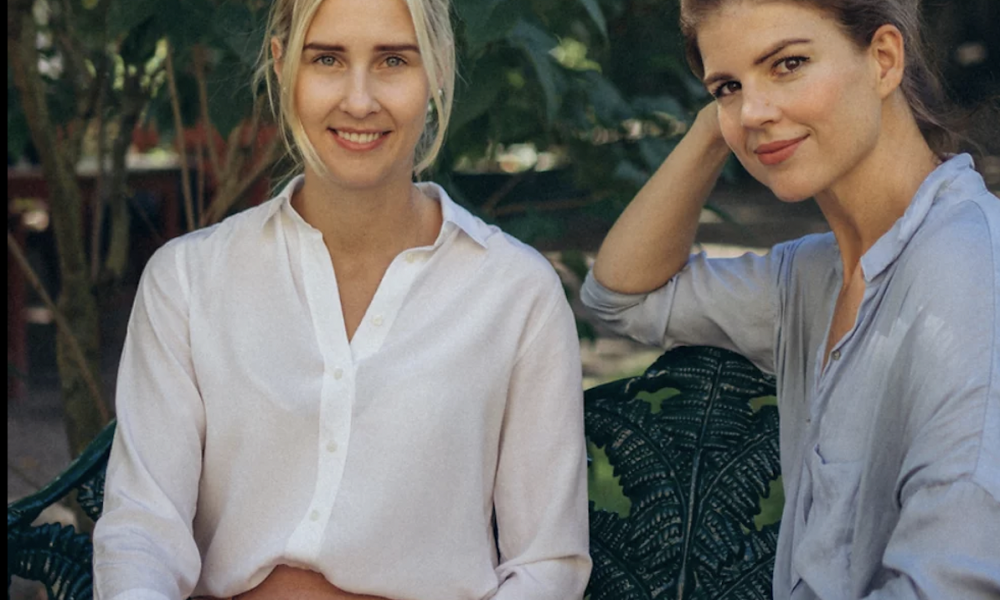
Sandra Wirström was working in the digital health sector in Sweden when she had her two daughters. She experienced birth injuries both times and she was surprised by the lack of data and support around post-natal care.
“I had to fight for every single piece of information and every single doctor appointment. I was extremely frustrated that nothing has been digitalised when it comes to the postpartum care,” says Sandra.
Sandra’s experience applies to hundreds of women across the UK. Recent figures show that six out of seven new mothers in England are not getting a check-up of their health six weeks after giving birth, despite such appointments becoming a new duty on the NHS. Of those who attend one, only 15 per cent have a dedicated consultation with a GP to discuss their physical and mental health, according to the National Childbirth Trust (NCT).
Another US study from the American College of Obstreticians and Gynecologists revealed that as many as 40 per cent of women do not attend a postpartum medical visit after giving birth.
“Nothing has been done when it comes to postpartum digitalisation,” says Sandra. “So, about a year ago when I was on one of my walks with my second daughter, I thought ‘okay, we need to do something about this and change the narrative around postpartum care’.”
Soon after that Sandra met Astrid Gyllenkrok Kristensen, who was as passionate about women’s health as Sandra and like so many other mothers out there, struggled with the physical and emotional recovery process after giving birth.
They decided to set up LEIA, an app co-developed with midwives and medical experts that offers women personalised physical and mental health support during the postpartum months, also known as the fourth trimester.
“There are hundreds of apps to help you during pregnancy and everyone asks you how you feel,” says Astrid. “Post-delivery, you are left on your own in what seems to be the most overwhelming and sometimes traumatising time of your life. Out of 140 million women giving birth each year 90 per cent will experience emotional or physical difficulties, from breastfeeding complications to postnatal depression and pelvic dysfunction.
“When we started looking into this, we found that there were a couple of key issues leading to women struggling in silence,” Astrid continues. “The lack of digitalisation that Sandra mentioned is one of them, along with the lack of medical experts. Women do not get the information they need. They end up self-diagnosing and they have no idea who to turn to. There’s no structure and globally, the healthcare chain is very fragmented.
“There’s also a massive stigmatisation in society surrounding postpartum. The narrative, especially in Sweden, is that you’re supposed to give birth, and then within a week, go for power walk and have friends over.”
A study from the polling company Survation, revealed that 85 per cent of the 893 mothers in England interviewed over a month said their appointments were mainly or equally about the baby’s health and they did not get the chance to talk to the GP about their mental wellbeing.
Astrid says: “One of the problems of women are not getting the health care they need is because the healthcare system is not focused on the women’s perspective and is not based on their needs.
“Studies show us that suicide is now one of the leading causes of death in new mothers, up to one year after giving birth and this is something that shows the acceleration of the problem. The system is broken.”
The pandemic has only amplified this. Research by the Maternal Mental Health Alliance shows that more mothers than usual have been struggling during the pandemic because restrictions on social contact means they have been denied support from family and friends, which has led to more anxiety and loneliness.
LEIA is an app based on science and self-lived experiences of motherhood. Astrid explains that: “Together with both private and public health care, we created a medical advisory board to make sure that we achieve our primary focuses to create a solution and meet the needs of new mothers.”
“Before going into the product, what we wanted to do was to create an app that would help by giving women AI or data driven insights about their emotional and physical health, to help understand what’s going on in their head, what’s going on in their body and what the recovery process in the fourth trimester is.
“But we also wanted to include the partner within that experience, because men are also getting diagnosed with depression. Seeing it as a unit and not just pinpointing the woman, is something that we feel is integral for a healthy recovery.”
Astrid highlights how crucial postpartum check-ups really are when it comes to mental health.
“One of the key things during these visits is to screen women for postnatal depression, which is normally done face-to-face with a questionnaire called EPDS – Edinburgh Postnatal Depression Scale. With LEIA, we’ve digitalised screening models for both postnatal depression, but also pelvic dysfunction, identifying women in risk at a much earlier stage. This means even before giving birth, we’ll be able to identify women at risk of postnatal depression.”
However, changing the narrative around postpartum care is as important as offering women the support they need.
Astrid says that: “Most people understand the first three trimesters and the changes in the women’s bodies because that narrative has been established.
“So, we want to establish a narrative around postpartum as well. People need to know that there’s a physical recovery and it takes a year for the body to recover after childbirth. We think that by educating people about the recovery process we can normalise it and start breaking down the stigma.”
Sandra adds: “There’s been a boom in the femtech market focusing on fertility and pregnancy.
“In the past years, there has been a digital transformation in areas such as fertility, period tracking and menopause. However, there are still a lot of things to do, especially when it comes to postpartum care. We’re still not getting educated enough about what is happening in our body after giving birth.”
LEIA’s data-driven approach aims to influence improvements in public health.
Globally, research data on postpartum care is limited. Amid a lack of awareness of postpartum conditions, however, investment in further studies and in developing options which address postpartum symptoms is also limited, says Astrid.
“We all know that politics is driven by economics,” she says.
“By collecting this data, we will be able to show how the lack of investment and support is actually affecting women. We have to put a number on the problem before they actually start looking into it.”
Sandra agrees: “It’s not only our perspective and our motivation, we are in fact putting the mothers in focus in everything we do by building an app for the mothers out there.”
Clearly, fundamental changes will be required to adequately address postpartum challenges in future. The success of LEIA in starting a conversation around postpartum care is, however, an important first step in driving this change.
Find out more about LEIA here.
Entrepreneur
Screen time reduction app awarded £15k in women-led startup competition

A screen time app that lets friends cut their phone use together has won the £15,000 top prize in a women-led startup competition.
Snitch, led by design engineering MEng graduate Asha Bakhai, took first place at WE Innovate, Imperial College London’s flagship competition for women-led startups.
The team aims to tackle excessive screen use among young people, which some research suggests may have a negative effect on mental and physical health.
The app lets users join accountability groups and set shared limits across their most-used apps.
When one person scrolls, the group’s combined timer counts down. Its founders say this helps build awareness, encourages reflection and supports small changes in behaviour by making screen use a shared responsibility.
Speaking at the WE Innovate Grand Final, Bakhai, co-founder and chief executive of Snitch, said: “Thank you to all the people who have been involved with thinking about what it could look like for young people to not be addicted to their phones.
“Whether that’s our friends who we started this with – exchanging screen time passwords and things like that – or the users along the way who beta tested with us, or our families and our friends who we’ve forced to use our app, even though it failed and bugged out and blocked all their apps. Thank you to all of them – and especially, thank you to WE Innovate for making all of this happen.”
Snitch’s team also includes co-founders Serena Sebastian and Yoshiki Berrecloth.
WE Innovate is a six-month pre-accelerator run by Imperial Enterprise Lab for teams led by female students, recent alumni and early career researchers.
The programme supports 25 women-led teams through masterclasses, business coaching, one-to-one expert support and peer mentoring.
The top five teams competed for a share of a £30,000 prize fund.
Professor Hugh Brady, president of Imperial College London, said: “WE Innovate was born out of the realisation that women founders were grossly underrepresented among our wider founder group across the university – so it was an imperative for Imperial to start such a programme.
“It was just last year that we heard Dame Alison Rose, author of the Rose Review, speak about the untapped economic opportunity and potential of women entrepreneurs in the UK.
“After 12 years, this programme has supported hundreds of women entrepreneurs, leading to exciting ventures across health tech, clean tech and all aspects of deep tech.”
The winning teams were selected by a panel including Kristen McLeod CBE, chief strategy officer at the British Business Bank, and Elizabeth Gooch MBE, founder and former chief executive of EGS plc.
The panel also included Pierre N. Rolin, founder and chief executive of Ankh Impact Ventures, and Professor Mary Ryan, vice-provost for research and enterprise at Imperial.
The final marked the second year of WE Innovate National, a UK-wide programme with separate Grand Final showcases held this month at Queen’s University Belfast, Swansea University and Loughborough University.
Joanna Jensen, founder of skincare brand Childs Farm, gave a keynote address about her experiences as an entrepreneur and co-writing The Rise Report of Female Entrepreneurship.
The report found that the UK economy would be £310bn larger if women started and scaled businesses at the same rate as men.
Jensen said 78 per cent of the founders surveyed reported that human connection had been central to their journey, while one in seven identified loneliness as their biggest challenge as an entrepreneur.
She said: “That is why what Imperial is doing matters so profoundly. Not just here in South Kensington but as WE Innovate goes national.
“Because a founder in Loughborough, Durham or Swansea deserves the same access to networks, mentors, capital and belief as a founder sitting in this room tonight.
“Talent is everywhere. Opportunity, until now, has not been.
“A nationwide network for female founders, being backed by women and men, having doors opened for them by women and men, and then paying that forward: that is how you close a £310 billion gap.
“Not with one programme. With a system of programmes, joined up across the country, and held to account on outcomes.”
Waypoint, led by innovation design engineering MSc student Bana Quronfuleh, received the £7,000 second prize.
The team is developing a video game controller that allows visually impaired players to hear and feel popular games.
AlphaVectors Biotech, led by Imperial alumnus Dr Apanpreet Kaur, received the £5,000 third prize for its lipid nanoparticle platform, which aims to improve the stability of RNA vaccines at room temperature.
Lipid nanoparticles are tiny fat-based particles used to protect and deliver genetic material, including the RNA found in some vaccines.
The other finalists, FluoroCycle and Epile-X, each received £1,500.
PHlora LABS received the Lauren Dennis Award, which was established in memory of a pioneering WE Innovate alumnus, for developing a synbiotic suppository intended to prevent recurrent vaginal infections.
Synbiotics combine beneficial microorganisms called probiotics with substances known as prebiotics, which help them grow.
The award recognises a team demonstrating exceptional entrepreneurial spirit in science, technology, engineering and mathematics and includes a six-month business coaching package.
DisoLens received the Engineers in Business Award, sponsored by the Engineers in Business Fellowship.
The award provides each winner with £1,500 in grant funding, mentorship and a professional CV package for entrepreneurs working across engineering sciences.
The team is developing a self-dissolving biodegradable contact lens intended to remove the need for lenses to be taken out each day.
Mental health
£50m initiative aims to tackle disparities in maternal healthcare
Mental health
Pilates may improve heart and metabolic health in sedentary women, study finds

A four-week Pilates programme may improve heart, metabolic and stress measures in previously sedentary women, a small study suggests.
Pilates is a mind-body form of exercise that has been linked to better fitness, balance, posture, muscular endurance, mental wellbeing and quality of life in different groups.
Built around breathing, concentration, control, precision, centring and flow, Pilates is already used in physiotherapy, rehabilitation and preventive health. The new study looked at whether a structured four-week programme could affect cardiovascular, metabolic, body and stress-related measures in sedentary adult women.
The longitudinal study included 30 sedentary women split into two age groups, 30 to 40 and 50 to 60.
All participants completed a standardised, supervised Pilates programme lasting four weeks, with three sessions a week lasting 50 to 60 minutes.
Researchers measured resting heart rate, systolic and diastolic blood pressure, body mass index, abdominal circumference, fasting blood glucose and serum cortisol at the start and end of the programme.
Systolic and diastolic blood pressure are the top and bottom readings in a blood pressure test. Cortisol is a hormone linked to the body’s stress response.
The four-week Pilates programme was linked to improvements in cardiovascular, metabolic, body and neuroendocrine measures, although not every change reached statistical significance within each age group.
In the younger group, significant reductions were seen in heart rate, blood pressure, body mass index and fasting blood glucose after the intervention.
The reduction in blood pressure after the programme was significantly greater in the older group than in the younger group.
Older participants also showed a greater reduction in glucose and cortisol levels after the intervention than younger participants.
Analysis also found significant links between cardiovascular, metabolic and neuroendocrine changes.
In the younger group, this was particularly seen between heart rate and blood pressure responses.
In the older group, it was particularly seen between changes in body mass index and fasting glucose.
The findings suggest Pilates could be a useful multidimensional exercise approach for cardiometabolic health and stress regulation in previously sedentary women.
The researchers said the larger reduction in blood pressure seen in the older group may reflect a higher cardiometabolic burden at the start, leaving more room for improvement after the programme.
The greater reduction in fasting glucose and cortisol in older participants may similarly suggest that people with higher baseline metabolic and neuroendocrine dysfunction could benefit more from structured exercise such as Pilates.
Although Pilates is known to improve body composition through energy use, neuromuscular activation and support for healthier habits, the researchers said the fall in body mass index over four weeks is unlikely to be explained by Pilates alone.
They noted that participants were also told to avoid alcohol, sugar-containing products and sugar-sweetened drinks during the intervention, which may have contributed to the change.
In the younger group, the link between heart rate and blood pressure suggested coordinated cardiovascular responses after Pilates.
The researchers also found that cortisol appeared to be linked to blood pressure and body mass index, suggesting stress-related changes may be tied to cardiovascular and body regulation after the intervention.
In the older group, the link between body mass index and fasting glucose highlighted the relationship between body fat and metabolic regulation.
A positive link between blood pressure and body mass index in this group also suggested that improvements in vascular regulation may be associated with reductions in body mass.
Overall, the findings suggest Pilates-related physiological changes may involve interconnected cardiovascular, body, metabolic and neuroendocrine mechanisms, with different response patterns by age.
The study has important limits. It did not include a non-exercise control group, so it cannot prove Pilates directly caused the changes.
The sample size was also small, which limits how far the findings can be applied more widely.
The authors also noted that cortisol was measured using a single fasting morning sample, which limits conclusions about broader hypothalamic-pituitary-adrenal axis regulation, the system involved in the body’s stress response.
They said larger studies with longer follow-up will be needed to confirm whether Pilates causes these physiological changes over time.
Insight3 weeks agoBritish women among angriest in Europe, health survey reveals
News4 weeks agoWomen still being failed when they reach menopause, experts say
Menopause3 weeks agoApple Health adds menopause and perimenopause tracking
News2 weeks agoFemtech World Awards 2026: Winners revealed
News3 weeks agoElation Health acquires EHR startup Aster
Menopause3 weeks agoMenopause workplace toolkit launched to help UK employers support staff
News4 weeks agoEndometriosis documentary profiles stars including Marilyn Monroe and Amy Schumer
News4 weeks agoSmartwatch data helps researchers study menopause transition


Pingback: Estonian femtech start-up prepares for launch in Germany - FemTech World
Pingback: Novel pill shows promise in treating postpartum depression - FemTech World