




News
Experts call for regulation of toxic period product chemicals


Academics are calling for regulation banning toxic chemicals in period products as a major menstruation conference prepares to open in Brighton.
The design, health and sustainability of period products will be a central theme at the Menstruation Research Conference 2026.
Keynote speaker Helen Lynn will discuss the lack of regulation and encourage attendees to support an open letter from the Women’s Environmental Network (Wen) calling for change.

Lynn, an honorary researcher at the University of Exeter and senior consultant and research fellow at Wen, said independent tests had found toxic chemicals in period products.
These included PFAS, known as “forever chemicals”, the heavy metals lead, arsenic and mercury, the pesticide glyphosate, biocidal silver and synthetic fragrances.
She said: “Period products are placed in prolonged contact with the highly permeable vulval and vaginal tissues.
“The vaginal tissue itself is thought to be up to 80 per cent more absorbent than the skin elsewhere on the body.
“Repeated tests have shown that toxic chemicals are present in period products.
“Worryingly, we know there are no safe levels of exposure for many of these chemicals, so even small amounts could be harmful.
“We believe everyone who needs them should have access to safe, sustainable and accessible period products, and we’re calling on governments to take action now.”
Lynn’s talk will head two days of events at Brighton and Sussex Medical School on the University of Sussex campus on 7 and 8 July.
The conference is hosted by the Menstruation Research Network and the 4M Consortium, a group of researchers focusing on menstruation and mental health.
The organisations have combined their conferences for the first time, making the event the largest ever held in the UK and one of the largest in the world.
More than 300 research presentations will feature at the conference. Registration remains open.
Co-organiser Professor Gemma Sharp, of the University of Exeter, leads the 4M Consortium.
She said: “We know that research into women’s health has been woefully under-funded, and our conference is crucial to advancing knowledge in this area.
“We’re learning ever more about how menstruation and menopause link to wider issues in our physical and mental health.
“Our conference also brings in the psychological, biomedical and environmental experience across the life course, to foster crucial collaborations to improve health.”
Co-organiser Dr Chi Eziefula, of Brighton and Sussex Medical School, said: “This conference is very international, bringing together researchers from 66 countries with a unique focus on menstruation.
“We’re hosting experts in biological and social science, policy, advocacy, the arts and industry to highlight the latest research, ideas and creative solutions to support good menstrual health across the globe.
“We will highlight the huge range of research that is available to guide policy and to make menstruation and menopause less stigmatised and more healthy.”










Australia’s drug advisory committee has recommended wider funding of triptorelin for women with breast cancer or endometriosis.
The recommendation comes after AstraZeneca announced plans to remove Zoladex from the market, risking leaving more than 7,500 women with breast cancer without an alternative treatment.
Both medicines block the release of oestrogen and testosterone and can be used as part of treatment, or for fertility preservation, in some forms of cancer.
The Pharmaceutical Benefits Advisory Committee met urgently in July and recommended making triptorelin unrestricted under the Pharmaceutical Benefits Scheme (PBS), which would mean it was funded for all uses.
The drug has been listed on the PBS for prostate cancer since 2006.
Triptorelin and Zoladex can also be used to treat endometriosis and to block puberty for either precocious puberty or gender-affirming care.
Vicki Durston, director of policy and advocacy at Breast Cancer Network Australia, described the recommendation as “a significant step forward” and said access to the medicine could mean the difference between life and death for some patients.
She said some women had already chosen to have their ovaries removed because of uncertainty over Zoladex supplies.
Marilla Druitt, Victorian state chair of the Royal Australian and New Zealand College of Obstetricians and Gynaecologists, said it remained unclear whether triptorelin would work exactly the same way as Zoladex, but the recommendation was likely to be positive for patients with endometriosis and pelvic pain.
She said: “I’m glad we’ve got an alternative.”
“That’s fantastic, and it remains to be seen whether or not it will be as good, but pain is so complex, pain is a really hard thing to study because it’s got so many contributors.”
Druitt said further research would be needed after the medicine was introduced.
If accepted by the federal government, the recommendation would also allow PBS funding of triptorelin for puberty suppression in precocious puberty and gender-affirming care.
This would make gender-affirming care federally funded through the PBS for the first time and would remove a financial barrier for transgender children in Queensland and the Northern Territory.
Stuart Aitken, medical director of Gender Health Australia, said the recommendation had sparked “absolute joy” among his patients.
He said: “It takes away a huge barrier to accessing evidence-based care.”
“It means that the ban has a very limited effect.”

By Women’s HealthX
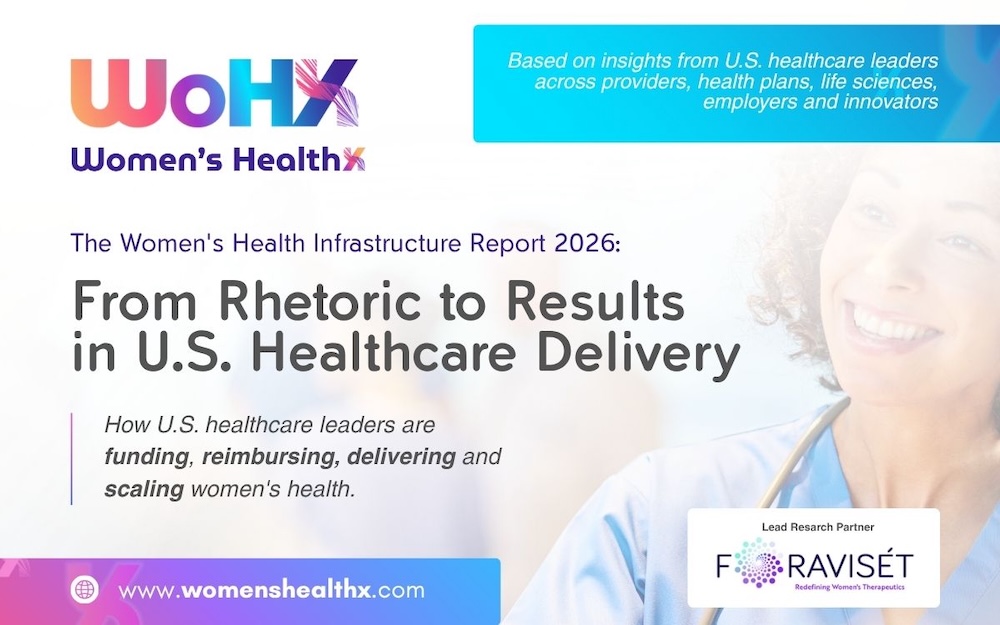
As healthcare organisations navigate tightening compliance mandates, evolving reimbursement frameworks, and shifting health economics, the single most critical asset for leadership is operational visibility into what their industry counterparts are executing right now.
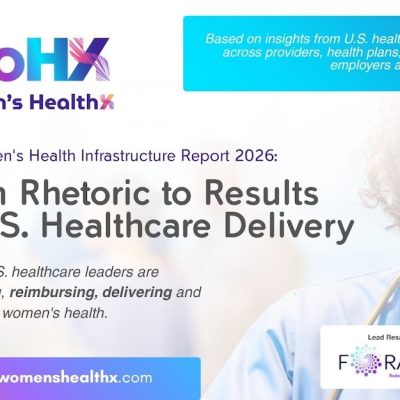
Ahead of the Women’s HealthX marketplace in Boston this December, a cross-functional steering committee of health plans, hospital networks, biopharma innovators, and enterprise employers has launched the definitive 2026 U.S. Health Infrastructure Survey.
The objective of this brief, multi-state index is to bypass abstract market fluff and map out exactly how the country’s elite healthcare stakeholders are practically structuring their 2027 budgets, clinical protocols, and technology procurement guidelines.
Some of the questions we are asking:
- Health Plans & Payers “What is the biggest operational barrier to expanding women’s health coverage?”
- Health Systems & Providers “What is the biggest women’s health priority for health systems over the next 24 months?”
- Pharma & Life Sciences “What is the biggest commercial hurdle facing women’s health innovation?”
- Employers & Benefits Leaders “Which women’s health challenge creates the greatest workforce impact?”
By contributing just 60 seconds of your operational insight to the index, you will ensure your specific sector’s parameters are accurately represented.
In return for your participation, you will secure a priority, pre-ordered copy of the completed 30-page intelligence report when the final data drops this September!
See where your direct peer groups are drawing their line in the sand for the upcoming fiscal year.
Contribute 60 seconds and pre-order your national benchmark report
Women’s HealthX 2026 | From Rhetoric to Results
Encore Boston Harbor | December 3-4 2026
Bypass abstract market rhetoric to evaluate real-world health economics, regulatory compliance mandates, and care delivery systems.
Join the region’s foremost health plan medical directors, hospital COOs, biopharma innovators, and enterprise benefits buyers anchoring our 2026 tracks.

Sahar Abid is a Science Associate at Ema EQ, where she works on cultural sensitivity and bias in AI.
A woman asks an AI health assistant about postpartum depression.
She mentions that her in-laws are telling her to “push through” and skip medical help, even as her symptoms get harder to manage. She never says where she is from or names her background.
The assistant describes the condition and gives her a hotline number. It sounds correct, but it misses what she needs.
That gap is more common than the industry admits, and it points to a blind spot in how we test health AI for bias.
Most bias testing looks at what people explicitly say.
The typical way to check an AI for bias is to label a prompt with someone’s demographic details and see if the answer changes. That catches some problems but misses a bigger one.
Most people do not lead with their identity. They lead with their situation. The woman above told the assistant everything it needed to help her, just not in the form of a label.
Her real question was not only “what is postpartum depression?” It was “how do I get care when the people around me don’t want me to?
When family members hold sway over health decisions, and in many communities they do, advice that asks someone to overrule their family is not something they can act on.
The AI didn’t say anything factually wrong. It answered a different question than the one she was living.
We call this culturally implicit bias, meaning the AI misses the cultural context a situation implies rather than the context a person spells out.
When systems are trained to notice only the explicit cues, they fall back on a default answer built for the majority. For everyone else, the response can feel generic, off-target, or discouraging enough that they stop looking for help.
In health, that is not small. The people most likely to be missed are often the ones the system already underserves.
What we set out to test.
At Ema, we wanted to know how well AI picks up on cultural context that is implied but never stated. So we built our own way to test for it, across a range of communities and real situations like postpartum depression and fertility, using questions that carried cultural meaning without announcing it.
The patterns were consistent. Models often missed the meaning underneath the question. They dropped the specific details a person did share and smoothed them into something generic.
And even when they pointed toward real care, they tended to offer one option instead of choices that might actually fit a person’s life. Any one of those can be the difference between someone following the advice and walking away from care.
Why this matters for anyone building health AI.
Getting this right is the right thing to do, and it also works better.
When an answer reflects a person’s real context, people trust and act on the recommendations more, so they get the help and support they need.
Testing for it is harder than the shortcut most teams use. Swapping a name or a demographic label in and out is easy. Checking whether a model actually understands the human context around a question takes more care.
The shortcut teaches models to perform cultural competence instead of practicing it. No matter how much or how little someone chooses to share, they deserve an answer that is warm, complete, and usable.
A better question.
The bar for equitable health AI should be “does it serve someone who never told you who they are?” It is the harder test, but it determines whether real people get help.
The work of getting there is far from finished, and it is exactly what we are building toward at Ema.
Sources: Naidoo, V., & Chadha, K. K. (2025), Culturally responsive AI chatbots: from framework to field evidence, Computers in Human Behavior: Artificial Humans. Souligne, N., & Subbian, V. (2026), FairLogue: A toolkit for intersectional fairness analysis in clinical machine learning models.







 Entrepreneur2 weeks ago
Applications close August 18 for Women’s Health Innovation Summit 2026 Innovation Showcase

 Menopause2 weeks ago
Third of women unaware of perimenopause mental health impact

 Fertility6 days ago
Chelsea FC Women to launch first-of-its-kind player fertility fund
 Entrepreneur2 weeks ago
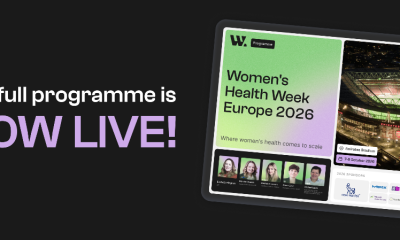
Women’s Health Week Europe 2026 releases fully populated agenda ahead of October summit

 Menopause1 week ago
Menopausal hormone therapy may lower dementia risk, study suggests

 Hormonal health2 weeks ago
We are wrapping our children in plastic and calling it care

 Pregnancy2 weeks ago
Chemicals in plastics may be linked to high blood pressure during pregnancy

 News2 weeks ago
Women with endometriosis face 46% higher risk of type 2 diabetes – study