




Wellness
UK extends 24hr breastfeeding support helpline


New mothers can now access breastfeeding support 24 hours a day after the government extended a national helpline.
The National Breastfeeding Helpline provides free, evidence-based information day and night – supporting families to overcome challenges that might prevent mothers from successfully breastfeeding their baby.
Breastfeeding can take time to establish, with some mothers worrying if their baby is feeding well enough, particularly in the days after birth. The helpline offers personalised advice from trained volunteers to address these concerns.

Run by the Breastfeeding Network and the Association of Breastfeeding Mothers, the service now operates around the clock.
Public health minister Ashley Dalton said: “Many parents will know the struggle of being up in the middle of the night, desperately trying anything to get your baby to feed.
“It can be incredibly overwhelming and deeply lonely.
“We are determined to make sure more women get the support they need through this vital 24/7 helpline.”
Data published by the Office for Health Improvement and Disparities in November shows the prevalence of breastfeeding at six to eight weeks in England increased to 52.7 per cent in 2023–24, up from 49.2 per cent the year before.
At the time, OHID said breastfeeding rates “are generally improving at local level in England”. However, disparities remain, with women in wealthier areas more likely to breastfeed than those in more deprived areas.
Catherine Hine, chief executive of the Breastfeeding Network, said: “While some callers seek help for a wider range of infant feeding challenges, we know that almost nine in 10 (89 per cent) of callers are more confident to continue breastfeeding after contacting the helpline.
“Many women also call to talk about combination feeding, introducing solids, stopping breastfeeding and formula feeding.
“We’re really excited that shifting to a 24-hour service has been so popular and that our great team are being contacted by women and families throughout the UK and with a wide variety of backgrounds and infant feeding experiences.”
Minister for children and families Janet Daby said extending the helpline for 2025–26 is “just one part of a much bigger effort to transform how families are supported”.
The move is part of a wider £126m Family Hubs and Start for Life programme, which includes £18.5m to improve infant feeding support across 75 local authorities in England.
Earlier this month, the government announced there will be a Best Start family hub in every local authority in England by April 2026.
The £500m initiative is targeted at disadvantaged communities and described as a “one-stop shop” for families from pregnancy through to early years and beyond.











Pregnant women are being advised to avoid runny or under-cooked eggs when eating out amid a developing salmonella outbreak.
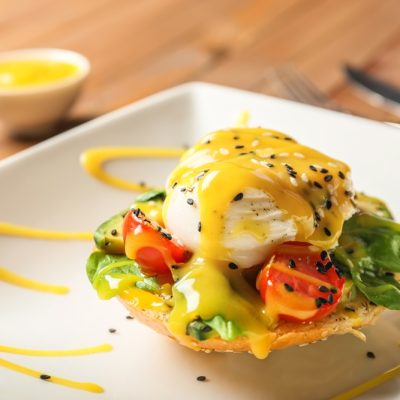
The advice also applies to freshly made products that may contain uncooked eggs, including mayonnaise, soufflé and hollandaise sauce.

The FSA said well-cooked eggs served in restaurants, cafés and takeaways remain safe to eat.
The warning follows the UK Health Security Agency declaring a national outbreak of salmonella food poisoning after one person died and hundreds more fell ill.
Imported eggs or dishes containing them are thought to be behind the outbreak.
FSA chief scientific adviser Ian Young said: “If people are eating out or consuming eggs or egg-containing products from cafes and restaurants then for those people in particular who are young, elderly, pregnant or vulnerable, it’s important to make sure that any eggs or egg products that you consume in those settings have been very well cooked.”
He described the outbreak as “unusually large and rapidly increasing”, adding that “people need to be careful”.
The FSA said British eggs bought from supermarkets are not linked to the current outbreak because chickens bred in the UK are vaccinated against common strains of salmonella.
“There is no link to those eggs to this current outbreak,” Young said.
Mark Williams, chief executive of the British Egg Industry Council, said British eggs were safe to eat when runny, including for vulnerable people, and were widely available in restaurants and cafés.
“Customers who want to enjoy a runny egg should simply ask whether British Lion eggs are being used,” he said.
More than 200 cases in the UK have been linked to the outbreak, with the majority across England.
Genetic testing suggests the infections are part of the same outbreak and show similarities with previous outbreaks involving imported eggs.
Investigations into individual cases also suggest the eateries involved were buying eggs from abroad.
Salmonella are a family of bacteria that typically live harmlessly in the digestive systems of animals including cattle, pigs and chickens, which is why eggs and poultry are among foods commonly associated with infection.
People can become infected by eating contaminated food that has not been properly cooked, through cross-contamination between raw and cooked food or by coming into contact with infected animals.
Symptoms can include stomach cramps, diarrhoea, vomiting and fever.
Most people recover without further treatment, but older people, babies and people with weakened immune systems are at greatest risk of severe illness.
Hospital treatment with fluids and, in some cases, antibiotics may be needed for severe infections.
People who are concerned are being advised to contact their GP or out-of-hours service in the first instance.


Chelsea FC Women is to launch a fertility fund giving players access to assessments, treatments, counselling and workshops.
The initiative is part of a new partnership with London fertility clinic Fertility Plus, which has been named the club’s official fertility partner.
Chelsea said the fund will be available to every player in its women’s team, with support tailored to individual needs.

Giulia Mazzia, commercial director for Chelsea FC Women, said: “At Chelsea FC Women we are never done pushing for progress for our players and our community.
“This first-of-its-kind partnership with Fertility Plus will open up the conversation about fertility, help to raise awareness for our incredible fanbase and beyond, and give practical support to our players off the field as well as on it.”
Support through Fertility Plus will include fertility assessments and treatments, as well as counselling and workshops.
The partnership will also provide evidence-based information about reproductive health and address misconceptions around fertility.
Chelsea cited previous research on fertility knowledge which found that 41 per cent of respondents actively trying to conceive did not know when their fertile window was.
The club and Fertility Plus plan to provide educational content, resources comparing fertility myths with medical evidence and insights from Chelsea FC Women ambassadors.
Dr Amit Shah and Dr Anil Gudi, co-founders of Fertility Plus, said: “Elite sport asks a lot of women during the very years when fertility matters most, yet it’s a conversation the game has rarely had.
“Partnering with Chelsea FC Women allows us to help change that by giving players, staff and supporters access to trusted fertility expertise and compassionate, consultant-led care.
“We’re proud to work alongside a club that’s setting a new standard for supporting women’s health, both on and off the pitch.

Climbing during the third trimester was not linked to higher rates of self-reported pregnancy complications in a global study.
The findings provide direct evidence on an activity pregnant women have traditionally been advised to avoid because of concerns about falls.
Researchers surveyed 692 people about climbing during pregnancy, falls, maternal and baby health outcomes and their return to the activity after giving birth.
The study recorded almost 64,000 hours of climbing among participants.
During that time, participants reported 155 “hard falls”, defined as falls or catches forceful enough to be remembered or cause concern.
The rate of adverse clinical events, meaning negative medical outcomes affecting the pregnancy or baby, was 0.03 per 1,000 hours of climbing exposure. All babies in the study were born live.
Researchers found no significant difference in pregnancy or foetal health outcomes between participants who stopped climbing at or before 27 weeks and those who continued beyond that point.
The findings suggest continuing the activity into the third trimester was not associated with increased self-reported complications among those surveyed.
The survey also found 96 per cent of participants said that, despite concerns about climbing while pregnant, they felt “happy” or “very happy” that they had continued.
Margie Davenport, professor in the Faculty of Kinesiology, Sport, and Recreation and lead author of the study, said the preliminary findings challenge an assumption about maternal exercise that had been based on opinion rather than research.
She said: “For decades we have restricted pregnant women from activities like climbing due to concern for their health and the health of the baby, but our evidence suggests it’s beneficial for both mental and physical health.”

 Events2 weeks ago
Applications close August 18 for Women’s Health Innovation Summit 2026 Innovation Showcase
 Menopause2 weeks ago
Third of women unaware of perimenopause mental health impact

 Fertility1 week ago
Chelsea FC Women to launch first-of-its-kind player fertility fund
 Mental health2 weeks ago
Menopausal hormone therapy may lower dementia risk, study suggests

 Opinion1 week ago
anna perimenopause app launches across 39 markets
 Pregnancy2 weeks ago
Chemicals in plastics may be linked to high blood pressure during pregnancy
 News2 weeks ago
Women with endometriosis face 46% higher risk of type 2 diabetes – study
 Sponsored Content6 days ago
The perfect ‘period pair’: WUKA launches first-ever Teen Starter Kit in Tesco