




Fertility
The future of family: unveiling 45 cutting-edge advancements in IVF
By FinDBest IVF


The past couple of years have witnessed exciting advancements in the IVF/ART space, driven by cutting-edge technologies and a relentless pursuit of improving fertility outcomes. Here, FinDBest IVF offers a glimpse into some notable breakthroughs.

1. EMBRYOSCOPE (VITROLIFE) – iDAScore
- Area: Artificial Intelligence (AI) in Embryo Selection
- Description: Time-lapse imaging AI platform analysing embryo development for improved selection.
- Impact: Predicts implantation potential, increasing pregnancy rates and reducing miscarriages.
- URL: Vitrolife iDAScore
2. EXAMEN – SpermComet
- Area: Non-invasive Sperm Selection
- Description: DNA fragmentation assay for improved sperm selection.
- Impact: Identifies sperm with minimal DNA damage, potentially increasing fertilisation and implantation rates.
- URL: Examen SpermComet
3. EXCELLENT SCIENCE (Cherry Biotech) – MicroFSMA
- Area: Microfluidics-based Sperm Analysis
- Description: Automated method for semen analysis and quality sperm isolation.
- Impact: Improves detection of male infertility and quality sperm isolation.
- URL: MicroFSMA

4. OVERTURE LIFE – DaVitri, m|z, and ICSI.A
- Area: Automation of Full ART Cycle
- Description: Automated IVF process technologies to enhance consistency and affordability.
- Impact: Reduces variability in outcomes and makes IVF more affordable.
- URL: Overture Life
5. IVF 2.0 – SiD
- Area: Computer-enabled Sperm Quality Tracker
- Description: Computer vision-based sperm selection tool.
- Impact: Analyses sperm motility more accurately than the human eye.
- URL: IVF 2.0 SiD
6. IVF 2.0 – ERICA
- Area: AI and Machine Learning for Embryo Selection
- Description: Prioritises euploid embryos using AI without sampling or biopsy.
- Impact: Enhances embryo selection for higher success rates.
- URL: IVF 2.0 ERICA

7. TMRW LifeSciences – CryoRobot Select
- Area: Automation of Tracking, Monitoring, and Storing of Frozen Embryos
- Description: AI-integrated platform for tracking and storing frozen eggs and embryos.
- Impact: Improves clinical outcomes and optimises treatment costs.
- URL: TMRW CryoRobot Select
8. LIFE WHISPERER – Life Whisperer Genetics (LWG)
- Area: AI-powered Euploid Pre-screening of Embryos
- Description: AI evaluation of genetic normality in embryos.
- Impact: Non-invasive pre-screening of embryos for genetic normality.
- URL: Life Whisperer Genetics
9. LIFE WHISPERER – Life Whisperer Viability (LWV)
- Area: AI-powered Embryo Selection
- Description: AI evaluation of embryo viability for clinical pregnancy.
- Impact: Enhances embryo selection for better pregnancy outcomes.
- URL: Life Whisperer Viability

10. INITO – Inito
- Area: Point-of-Care Fertility Testing
- Description: Home-based hormone testing kit for fertility assessment.
- Impact: Provides affordable and convenient fertility screening.
- URL: Inito
11. Cooper Surgical Fertility Companies – RI Witness ART Management System
- Area: Witness System for Monitoring ART Cycles
- Description: Automated control system for monitoring sample and embryo handling.
- Impact: Standardises the environment and minimises human error.
- URL: RI Witness
12. HAMILTON THORNE, MICROPTIC – CASA (Computer-Assisted Sperm Analysis), SCA (Sperm Class Analyzer)
- Area: Advanced Sperm Motility Analysis
- Description: Enhanced motility and morphology assessment systems.
- Impact: Provides detailed sperm quality data for better selection.
- URL: Hamilton-Thorne CASA
- URL: SCA

13. AVA WOMEN – The Ava Bracelet
- Area: Wearables
- Description: Predicts optimal implantation window through cervical secretion analysis.
- Impact: Identifies the most receptive time for embryo transfer.
- URL: Ava Women
14. NATERA – Panorama™ Test
- Area: Non-invasive Preimplantation Genetic Testing (PGT)
- Description: NIPT-based analysis of foetal DNA for genetic abnormalities.
- Impact: Safer and less invasive option for PGT.
- URL: Natera Panorama
15. CONCEPTION BIO – Invitro Gametogenesis (IVG)
- Area: Human Eggs from Stem Cells
- Description: Generates eggs from induced pluripotent stem cells.
- Impact: Potential breakthrough in fertility preservation.
- URL: Conception Bio
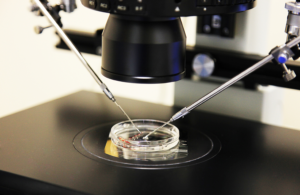
16. KITAZATO – Soft Microrobot
- Area: Microrobot-guided Embryo Transfer
- Description: Controls the implantation position during embryo transfer.
- Impact: Increases pregnancy rates and prevents ectopic pregnancy.
- URL: Kitazato Microrobot
17. OURA – Oura Ring
- Area: Wearable Health and Fertility Trackers
- Description: Tracks biometric data relevant to fertility cycles.
- Impact: Provides personalised insights into menstrual cycles and ovulation windows.
- URL: Oura Ring
18. FERTILIS – Micro Devices for IVF Techniques
- Area: General Automation of ART Process
- Description: Micro medical devices for enhancing IVF treatment quality.
- Impact: Improves oocyte retrieval, ICSI performance, and more.
- URL: Fertilis
19. EMBL-EBI – AlphaFold DB
- Area: AI-powered Sperm Morphology Analysis
- Description: AI-based protein structure prediction for sperm morphology assessment.
- Impact: Offers high-resolution analysis of sperm structure.
- URL: AlphaFold
20. OVAREPRED (Pekin University Third Hospital) – OvaRePred
- Area: Online Model for Ovarian Reserve Assessment
- Description: Predicts the quantity of potential female eggs suitable for fertilisation.
- Impact: Aids in treatment planning and optimising outcomes.
- URL: OvaRePred
21. IGENOMIX (VITROLIFE) – WES
- Area: IVF Genomics
- Description: Whole exome sequencing for analysing gene coding sequences.
- Impact: Cost-effective technique for genetic analysis.
- URL: Igenomix WES

22. VISCOFAN, IT3D GROUP, TISSUELABS, ADVANCED SOLUTIONS
- Area: 2D and 3D Printing of Biomaterials with Applications in IVF/ART
- Description: Technologies for developing biomaterials using 2D and 3D printing.
- Impact: Enhances the development and application of biomaterials in IVF/ART.
- URL: Viscofan Bioengineering, Advanced Solutions, TissueLabs, IT3D Group
23. FERTIL IBÉRICA – SpermVD
- Area: Next-Generation Sperm Cryopreservation Techniques
- Description: Vitrification process for improved sperm survival and motility.
- Impact: Offers potential for longer sperm storage and improved fertilisation rates.
- URL: Fertil Ibérica SpermVD
24. FLUIGENT – Microfluidics for Cell Biology
- Area: Microfluidics for Cell Analysis
- Description: Cell biology is crucial for medical innovation. Fluigent’s microfluidics technology integrates precise fluid flow control with microscopy, creating automated platforms for cell growth in physiologically relevant environments. This minimises error manipulation by automating fluid delivery at controlled rates.
- Impact: Enhances accuracy and efficiency in cell biology experiments, facilitating better understanding and treatment of diseases.
- URL: FLUIGENT – Microfluidics for Cell Biology
25. MICRONIT – Organ-on-a-Chip (OOC)
- Area: Organ-on-a-Tube Microdevices
- Description: Organ-on-a-chip devices simulate biological systems for in-vitro drug testing. Cells are cultured on membranes with separately controllable fluid flows, leading to more accurate biological representations than traditional methods. These resealable OOC flow cells allow cell seeding through standard protocols.
- Impact: Provides more precise drug testing results, enhancing the drug development process.
- URL: MICRONIT – Organ-on-a-Chip
26. ONI, BRUKER, WASATCH PHOTONICS, MALVERN PANALYTICAL, SPECTRA SOLUTIONS – Ultrasound-Guided TESA
- Area: Non-invasive Testicular Sperm Extraction (TESA) with Ultrasound Guidance
- Description: This technology offers a minimally invasive alternative to traditional sperm retrieval methods, using multiphoton microscopy, Raman spectroscopy, and optical coherence tomography for better visualisation and retrieval of sperm.
- Impact: Potentially less painful and more efficient sperm retrieval method, improving patient comfort and outcomes.
- URL: ONI, Bruker, Wasatch Photonics, Malvern Panalytical

27. MIM FERTILITY – FolliScan
- Area: AI-powered Follicle Tracking and Ovulation Prediction
- Description: AI software that analyses transvaginal ultrasound images to identify and measure follicles with high precision.
- Impact: Improves accuracy in tracking ovulation, enhancing the chances of successful fertilisation.
- URL: MIM FERTILITY – FolliScan
28. BERRY GENOMICS – NIPT-Based Analysis
- Area: Non-invasive Prenatal Screening for Multiple Genetic Diseases
- Description: Advanced NIPT technology that screens foetal DNA for a wide range of genetic abnormalities, beyond traditional panels.
- Impact: Provides comprehensive prenatal genetic screening, leading to early detection and better management of genetic conditions.
- URL: BERRY GENOMICS
29. Fairtility – CHLOE™
- Area: Transparency in AI
- Description: CHLOE™ is a transparent AI-based decision support tool that provides visibility into clinical and laboratory data to help improve IVF outcomes.
- Impact: Enhances IVF success rates by offering detailed insights and data transparency to clinicians and prospective parents.
URL: Fairtility – CHLOE™ 30. ARWorks and The IVF Company – IVF Sim Pro
- Area: Educational Tools with Virtual Reality (VR)
- Description: VR software designed for technical training in ICSI and embryo biopsy, aimed at professionals, universities, and clinics.
- Impact: Improves technical skills and training efficiency in IVF procedures through immersive virtual reality.
- URL: IVF Sim Pro
31. Eggschain – Eggschain
- Area: Blockchain Technology for IVF Patient Data
- Description: Blockchain-integrated system for genomics, medical records, and biospecimen tracking, enabling patients to have greater control over their healthcare data.
- Impact: Enhances data security and patient empowerment in managing healthcare information.
- URL: Eggschain
32. Ovogene – Ovogene
- Area: AI-Driven Donor Bank
- Description: An international egg donor bank offering Genetically Certified Oocyte® technology, providing oocyte NGS screening and 100% euploid oocytes.
- Impact: Increases success rates and reduces the need for multiple IVF attempts by ensuring high-quality oocytes.
- URL: Ovogene

33. IVF-assistants.com – Skillsets
- Area: AI-Driven Digital Assistants for Fertility Clinics
- Description: Provides personalised access to information about ART and IVF services, helping patients understand their options and book consultations.
- Impact: Enhances patient engagement and trust, improving consultation bookings and clinic-patient communication.
- URL: IVF-assistants.com
34. inviTRA – Eeva Test
- Area: Genomics for Optimal Embryo Selection
- Description: Eeva test predicts which embryos have the greatest developmental potential using a time-lapse system attached to the incubator.
- Impact: Improves embryo selection for transfer, enhancing the success rates of assisted reproduction treatments.
- URL: inviTRA – Eeva Test
35. Lumiris – Metaphor™
- Area: Embryo selection with metabolism data.
- Description: Using metabolic imaging with AI-hyperspectral microscopy, the metabolic stress of embryos is assessed to determine its quality.
- Impact: Improve selection of optimal embryos and therefore transfer success and fertilziation ratios.
- URL:IBEC-Metaphor

36. Clue – Clue Birth Control, Clue Conceive
- Area: Self-Managed Patient Care Using Smartphones (mHealth)
- Description: App-based system for monitoring menstrual periods, ovulation, and PMS, offering numerous educational resources.
- Impact: Empowers female patients to manage their reproductive health effectively using smartphone technology.
- URL: Clue
37. ViOHealthTech – OvuSense OvuFirst, OvuSense OvuCore, and OvuSense Pro
- Area: App-Based Patient Health Monitoring
- Description: An app-based platform that helps screen for common health issues related to reproductive health, including ovulation tracking and fertility monitoring.
- Impact: Provides comprehensive health monitoring, improving fertility tracking and assisting in managing reproductive health.
- URL: ViOHealthTech
38. HERA Biotech – MetriDx
- Area: Non-Surgical (Non-Invasive) Diagnostic Test for Endometriosis
- Description: The world’s first non-surgical test for definitive diagnosis and staging of endometriosis.
- Impact: Offers a less invasive and more accessible option for diagnosing and managing endometriosis.
- URL: HERA Biotech

39. Labcorp – Preeclampsia Test
- Area: Blood-based Screening Test
- Description: The first screening test for assessing preeclampsia risk in the first trimester of pregnancy.
- Impact: Enables early detection and management of preeclampsia, potentially improving maternal and fetal outcomes.
- URL: Labcorp
40. EVOLUTIVE MEDICA – BreastDS, MiniPc Koios Medical, InferScholar, Airs Medical
- Area: AI for Medical Image Analysis (Rx)
- Description: AI-driven analysis and diagnostic technology for early and precise cancer detection.
- Impact: Enhances accuracy and efficiency in cancer diagnostics, improving early detection and treatment outcomes.
- URL: EVOLUTIVE MEDICA
41. Rhea – RheaLabs (including recently acquired Embryonics for AI-Driven Diagnostics)
- Area: Technology Integration for Improved Patient Experience
- Description: Integrated approach to patient engagement using AI and machine learning, enhancing clinic workflow and patient case management.
- Impact: Provides a more seamless and meaningful patient experience, improving care quality and operational efficiency.
- URL: Rhea – RheaLabs

42. AIVF – EMA Platform, ART Compass by AIVF
- Area: AI Technology for Improved IVF Cycle Success and Management
- Description: AI-powered IVF solutions for clinics, labs, and patients, including embryo evaluation, patient communication, and analytical tools.
- Impact: Increases the certainty of successful IVF cycles by enhancing evaluation and communication processes.
- URL: AIVF
43. Nilotech – Nilochecker
- Area: State-of-the-Art Lab Equipment Calibration
- Description: All-in-one reference instrument for controlling and calibrating critical laboratory equipment, such as incubators and warming systems.
- Impact: Ensures accurate calibration and control, improving laboratory efficiency and reliability.
- URL: Nilotech – Nilochecker
44. IBM and Ovum Health – IBM Watsonx Assistant
- Area: Chatbot Assistant for Patient Communication and Management
- Description: Custom AI applications for managing data sources and accelerating AI workflows, designed for enhanced patient communication and management in fertility clinics.
- Impact: Streamlines patient interaction and clinic management, improving overall efficiency and patient satisfaction.
- URL: IBM Watsonx
45. Spring Molecular Diagnostics – IVFinfo.AI
- Area: ChatGPT-Like Site for IVF/ART Questions
- Description: Multilingual website featuring an AI chatbot that answers questions about assisted reproduction (ART) and fertility.
- Impact: Provides accessible and reliable information to patients, enhancing their understanding and decision-making in fertility treatments.
- URL: AI

Pioneering frontiers in reproductive medicine
As the field of reproductive medicine continues to evolve, several pioneering areas of research are emerging. These cutting-edge advancements have the potential to revolutionise infertility treatments and offer new hope to individuals and couples facing reproductive challenges. Below, we highlight some of the most promising developments currently under investigation:
- Mitochondrial Replacement Therapy: This experimental technique aims to prevent the transmission of mitochondrial diseases by replacing the mother’s mitochondria in the egg with healthy ones from a donor.
- Artificial Womb Development: Artificial womb technology is under exploration for potential use in certain cases of infertility or high-risk pregnancies.
- In Vitro Gametogenesis (IVG): Researchers are exploring ways to create sperm and egg cells from stem cells, which could offer new possibilities for infertile individuals and couples.
- Nanotechnology in Reproductive Medicine: Nanotechnology holds promise in enhancing drug delivery systems, improving embryo culture conditions, and developing novel diagnostic tools for infertility.
- 3D Bioprinting of Reproductive Tissues: Researchers are exploring the use of 3D bioprinting technology to create reproductive tissues, such as ovaries and uterine scaffolds, for transplantation or in vitro study, offering potential solutions for fertility preservation and restoration.
- Non-Invasive Embryo Assessment Techniques: Non-invasive imaging modalities, such as optical coherence tomography (OCT) and time-lapse microscopy, are being explored for real-time monitoring and assessment of embryo development within the incubator, reducing the need for invasive embryo biopsy procedures.
These innovative approaches represent the forefront of reproductive research, promising to expand the possibilities of assisted reproduction and improve outcomes for patients worldwide.
The future is now: partnering with FinDBest IVF to realise your vision

The advancements outlined in this article paint a hopeful picture for the future of IVF/ART. While some technologies are still under development, many are already being implemented or can be brought to market faster through the right partnerships. This is where FinDBest IVF steps in.
FinDBest IVF: your partner for global expansion and innovation in IVF/ART
FinDBest IVF goes beyond connecting you with distributors; we’re your gateway to a world of possibilities. Our platform curates a network of service providers specializing in:
- Market expansion services: Leverage market research firms to identify regions with the highest demand for your innovations.
- Clinical trial management: Partner with experienced firms to navigate regulatory hurdles and conduct successful trials with leading fertility clinics.
- Marketing and communication experts: Craft targeted campaigns that resonate with fertility clinics and healthcare professionals, ensuring your technology reaches the right audience.
The benefits of a comprehensive approach
Partnering with FinDBest IVF offers numerous advantages:
- Faster time to market: Identify the right partners and navigate market complexities with greater efficiency.
- Enhanced innovation: Collaborate with leading research institutions to bring groundbreaking technologies to market faster.
- Streamlined communication: Connect with fertility clinics seeking solutions and build lasting relationships with key stakeholders.
FinDBest IVF: your partner in progress
The future of IVF/ART is bright. FinDBest IVF empowers you to foster innovation, build strong partnerships, and ensure your life-changing technologies reach the patients who need them most.
Join us and unlock the full potential of your IVF/ART solutions on a global scale. Let’s revolutionise the path to parenthood, together.






The UK government is reviewing a surrogacy firm after complaints that medical insurance claims involving surrogates in Mexico were rejected.
The Department of Health and Social Care (DHSC) is considering whether UK-based provider My Surrogacy Journey should remain listed on gov.uk as one of four domestic surrogacy agencies available to intended parents.
The review follows allegations concerning its Mexican sister company, where surrogates are based.

Health minister Diana Johnson said: “The department is looking into the allegations about My Surrogacy Journey.
“As part of that assessment, the department will consider whether it is appropriate for that company to remain on the gov.uk list of agencies.”
Emails sent by My Surrogacy Journey chief executive Michael Johnson-Ellis and seen by the Guardian suggest multiple surrogate women in Mexico had their insurance claims rejected.
The emails also suggest 300 couples using the company were moved to a new insurance provider because of the increased risk of claims being rejected.
Commercial surrogacy is banned in the UK, where only altruistic arrangements are permitted.
My Surrogacy Journey operates a not-for-profit UK branch alongside for-profit sister companies in Mexico and the US. All three companies have the same owners and chief executives.
The reported insurance issues relate to surrogacy arrangements in Mexico.
One couple told the Guardian they paid tens of thousands of pounds to cover medical costs after their surrogate had a hysterectomy during childbirth and an insurance claim was refused.
The Guardian said it understood that at least five sets of parents said they had to cover medical costs after insurance claims were rejected.
In an email to the couple whose surrogate underwent a hysterectomy, Johnson-Ellis wrote: “We have already told you that the insurance companies have been declining some of the claims and we are actively working with the broker to get this issue resolved but you should also consider that they may not be paid out and there is nothing we are able to do to change this …
“We appreciate this is not an insignificant sum but this genuinely is out of our control.”
Johnson-Ellis also said the company had switched insurance providers, writing: “We’re also managing this for 300 other journeys, which is a complex position to be in.”
Lawyers acting for My Surrogacy Journey said the company did not comment on individual cases, but that existing insurance policies were in place and claims continued to be accepted and processed.
They said the company understood that a small number of claims had been rejected and was supporting people seeking to resolve those claims with an insurer.
Under the surrogacy arrangements, intended parents are understood to be contractually required to cover medical costs not paid by an insurer.
The couple said they had been recommended the company’s Mexico option. Its website advertises that intended parents using the route can have a baby in “under 18 months”.
They said they were told the UK route could take up to five years and that the US option was much more expensive.
Lawyers for My Surrogacy Journey said prospective parents are given information about typical timelines, costs, legal frameworks and practical considerations, and that the 18-month timeframe is indicative only.
The couple said their surrogate developed placenta accreta, a serious condition in which the placenta attaches to the wall of the uterus.
Emails from Johnson-Ellis acknowledged that the insurance provider investigated the birth after the surrogate experienced health complications.
The parents are considering legal action, while the Guardian said it understood at least four other couples were reviewing their options.
Phil Brickell, MP for Bolton West, raised concerns in parliament about a separate couple who had used My Surrogacy Journey.
He said: “Two of my constituents recently travelled to Mexico, where their children were born by surrogacy.
“Those births were facilitated by a company called My Surrogacy Journey, which is listed on gov.uk.
“While in Mexico, they had repeated traumatic experiences with the company relating to issues including insurance for their children, accusations of bullying towards staff and repeated efforts to silence any constructive criticism.
“I understand that other members of this house have received similar complaints.”
Brickell called for My Surrogacy Journey to be removed from gov.uk pending a review by the Human Fertilisation and Embryology Authority.
Lawyers acting for My Surrogacy Journey said the company was communicating with DHSC and was confident any issues could be resolved.

Fertility
Spain football federation partnership to offer players egg-freezing and fertility treatment


Spain’s football federation will offer national team players egg-freezing and fertility treatment through a clinic partnership running until 2029.
The agreement with the Tambre clinic in Madrid will give Spain’s World Cup winners more options to pursue motherhood when they feel the time is right.
The Royal Spanish Football Federation (RFEF) said the agreement covers all national team players, including the futsal team, as well as Primera Division referees and assistants and all other federation employees.
It is the latest policy introduced by the RFEF as it seeks to lead the way in work-life balance and maternity protection.
The federation has also introduced measures allowing players to travel with their children during major tournaments. The scheme was extended to the men’s team during their successful World Cup campaign in North America this past summer.
RFEF president Rafael Louzán said: “If Spain and its national teams are the best in the world on the pitch, they must also be the best in matters such as work-life balance.
“This is a new, comprehensive and pioneering benefit that extends to all federation employees. Today is a great day for the entire Spanish football family.”
The agreement followed a direct request from players after discussions with national team captains, including London City Lionesses midfielder Alexia Putellas.
Putellas told Spanish outlet El País: “As a group of captains, we had a concern — because experiencing a World Cup is vital for a player — regarding the difficulty of reconciling that with the desire to become a mother.”
“It’s a desire I didn’t originally have but developed some time ago.
“Thanks to the incredible work done by the federation, an agreement has been reached with a clinic allowing us to freeze our eggs while we are still active players, for as long as we wish.
“For me, this is a huge step forward; the federation understands that you are serving your country in a way that runs counter to your biological clock — that you can’t simply pause your career to become a mother because you need your body to do your job.”
The announcement follows Chelsea becoming the first Women’s Super League club to offer similar fertility treatment options to its players.
The move has also drawn criticism.
Spanish triple jumper Ana Peleteiro-Compaoré Brión said on Instagram: “The problem obviously isn’t freezing eggs.
“The problem is: why does the institution these women work for have an interest in financing them to delay their motherhood?
“And here there’s a problem that for me changes absolutely everything.
“Is this measure intended to make it easier for women to be mothers or is it intended to make it easier for them not to be while they’re playing?”
Spain are the current world champions in both the women’s and men’s games.
The women will attempt to defend their title at the 2027 World Cup in Brazil next summer.

Paracetamol use in pregnancy was not linked to autism or ADHD, while separate research found reproductive differences in girls exposed before birth.
One study analysed health records from more than 120,000 children and found no increased risk of autism following prenatal paracetamol exposure.
A separate analysis of nearly 100,000 children also found no increased risk of ADHD among those born to mothers who used the painkiller during pregnancy.
Researchers from the Hong Kong Hospital Authority examined electronic health records covering pregnancies between January 2001 and December 2023.
The autism analysis included 124,333 children, who were nine years old on average and split almost evenly between males and females. There were 3,445 autism diagnoses, representing 2.8 per cent of the group.
The ADHD analysis involved 97,285 children, who were seven years old on average and also split evenly between males and females. There were 5,168 ADHD diagnoses, representing 5.3 per cent.
Women prescribed paracetamol during pregnancy were more likely to be older and have pre-existing conditions including psychiatric disorders, as well as reasons for taking the drug such as infection, fever or chronic pain.
No association was found between prenatal paracetamol exposure and either autism or ADHD.
The findings did not differ according to the trimester in which paracetamol was taken or whether use was intermittent or daily. Advanced maternal age, defined as pregnancy in women over 35, did not alter the findings.
The researchers wrote: “Paracetamol remains a safe and essential analgesic [pain reliever] and antipyretic [fever reducer] during pregnancy, whereas alternatives, such as NSAIDs and opioids carry well-documented risks.
“Unwarranted reluctance to use paracetamol could lead to undertreatment of pain and fever, or the use of more harmful alternatives, both posing risks to the pregnancy and developing fetus.”
The authors said women should assess paracetamol use with guidance from their doctor.
A separate study involving 685 pregnant women without pre-existing conditions and 302 infant daughters found associations between prenatal paracetamol exposure and differences in reproductive organs and hormone levels.
Researchers from Copenhagen University Hospital enrolled the women during their first trimester and assessed them during the first trimester, third trimester and again when their babies were three months old.
At around three months, infants experience a temporary rise in reproductive hormones sometimes called mini-puberty.
Pregnant participants completed questionnaires every two weeks about their use of pain medicines including paracetamol. Infant girls underwent ultrasound scans of their reproductive organs and blood tests to measure hormone levels.
Researchers also examined a separate group of 1,210 girls followed from infancy to adolescence whose mothers reported paracetamol use during the third trimester.
Three-month-old girls exposed to paracetamol before birth had an average 40 per cent smaller ovarian volume, 13 per cent smaller uterine volume and 23 per cent fewer ovarian follicles.
Girls exposed during the first trimester also had lower levels of Anti-Müllerian hormone, a marker of ovarian function.
Among the older girls, those exposed before birth were more likely to have smaller uteruses at puberty and smaller ovaries during their teenage years.
Dr Margit Bistrup Fischer, lead study author and postdoctoral researcher in the Department of Growth and Reproduction at Rigshospitalet hospital in Denmark, said: “Animal studies have demonstrated that impaired formation of ovarian follicles can lead to reduced fertility and earlier reproductive aging.
“Whether the differences observed in our study have implications for fertility and age at menopause in humans remains unknown and will require long-term follow-up of the girls in our cohort.”
She cautioned that women who had used paracetamol during pregnancy “should not be alarmed by our findings”, as the study found associations rather than direct causation and outcomes for individual women and children are unclear.
“Importantly, our study does not evaluate whether [acetaminophen] causes reproductive problems, nor does it provide evidence that prenatal exposure affects future fertility or age at menopause,” she said.
“Although we observed similar associations in an independent cohort, long-term follow-up is needed to determine whether these early-life differences have any clinical significance later in life.”











 Menopause1 week ago
Menopause may not explain rising heart condition in women – study

 Fertility2 weeks ago
Paracetamol use may impact future fertility, studies suggest

 Insight1 week ago
Women with birth trauma face 2.5x higher healthcare costs – study

 pain conditions1 week ago
Medical cannabis may improve endometriosis symptoms – study

 Mental health5 days ago
Neuroscience-backed journaling for women’s mental health

 Cancer1 week ago
Study could explain why obesity is a breast cancer risk factor

 Menopause2 weeks ago
Menopause hormone therapy may improve cardiovascular health outcomes, study suggests

 AI1 week ago
Evvy secures US$40m for AI-powered vaginal microbiome testing
1 Comment