




News
New AI breakthrough in IVF embryo assessment


A new AI system can accurately assess the chromosomal status of IVF embryos via time-lapse videos of the embryos and maternal age, data shows.
The new system, called BELA, is the latest AI-based platform for assessing whether an embryo has a normal (euploid) or abnormal (aneuploid) number of chromosomes—a key determinant of IVF success.
Unlike prior AI-based approaches, BELA does not need to consider embryologists’ subjective assessments of embryos. It thus offers an objective, generalisable measure and, if its utility is confirmed in clinical trials, could someday be used widely in embryology clinics to improve the efficiency of the IVF process.
“This is a fully automated and more objective approach compared to prior approaches, and the larger amount of image data it uses can generate greater predictive power,” said study senior author Dr. Iman Hajirasouliha, associate professor of physiology and biophysics at Weill Cornell Medicine.
Embryologists typically assess an IVF embryo’s quality by examining it under a microscope. If it looks relatively normal but there are reasons to suspect possible problems, such as in cases of advanced maternal age, they may test its chromosomal status more directly.
The “gold standard” test is a somewhat risky, biopsy-like procedure called preimplantation genetic testing for aneuploidy (PGT-A). In recent years, embryologists have been teaming up with computer/AI experts to find ways to automate some of this workflow and improve outcomes.
In a 2022 study, Dr. Hajirasouliha and colleagues developed an AI-based system called STORK-A, which uses a single microscopic image of an embryo, plus maternal age and embryologists’ scoring, to predict the embryo’s ploidy status with about 70 per cent accuracy.
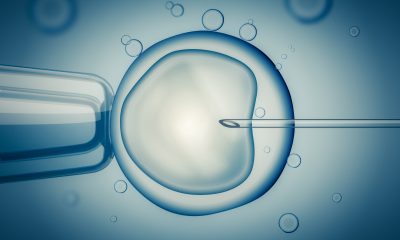
The researchers developed BELA to generate accurate ploidy prediction independently of embryologists’ assessments. The heart of the system is a machine-learning model that analyzes nine time-lapse video images of an embryo under a microscope in a key interval about five days after fertilization to generate an embryo quality score.
The system then uses this score and maternal age to predict euploidy or aneuploidy.
The researchers trained the model on a Weill Cornell Medicine CRM deidentified dataset with image sequences of nearly 2,000 embryos and their PGT-A-tested ploidy status. They then tested the model on new datasets and those from separate, large IVF clinics in Florida and Spain.
They found that the model predicted ploidy status with moderately higher accuracy than previous versions and worked well for the external and internal datasets.
The next step, the researchers say, is to test BELA’s predictive power prospectively in a randomised, controlled clinical trial, which they are currently planning.
“BELA and AI models like it could expand the availability of IVF to areas that don’t have access to high-end IVF technology and PGT testing, improving equity in IVF care across the world,” the researchers said.
The fact that BELA is set up to process a vast amount of image data for each embryo also suggests to the researchers that it could be used for more than ploidy prediction.
“Our hope is that this model could be useful also for general embryo quality estimation, prediction of the embryo development stage, and other functions that an embryology clinic could tailor for its own needs,” they added.







A non-profit has launched an endometriosis documentary featuring Amy Schumer and Marilyn Monroe as it pushes for changes in how the condition is treated and understood.
The Endometriosis Collective has launched to change how endometriosis is researched, treated and understood, starting with a documentary featuring stories from people including Amy Schumer and Marilyn Monroe.
The feature-length documentary, “End of the Cycle”, will premiere in New York on Tuesday, and The Endometriosis Collective is making the film free to stream online.

Schumer, a comedian, writer and actor, has previously spoken of how endometriosis left her “on the floor in pain, vomiting from the pain, the pain that nobody can see.”
Schumer is one of several celebrities featured in the documentary. Other contributors include dancer Julianne Hough, Olympic medallist Brittany Brown and actors Janel Parrish and Folake Olowofoyeku.
The Endometriosis Collective timed the documentary premiere to coincide with the 100th anniversary of Marilyn Monroe’s birth.
Monroe, who died in 1962, starred in films such as “Some Like It Hot” and “Gentlemen Prefer Blondes.”
According to a biography published in 1985, Monroe’s endometriosis was so severe that it destroyed her marriages, her wish for children, her career and ultimately her life.
The Endometriosis Collective said the documentary shares newly uncovered information about Monroe’s experience with endometriosis.
The non-profit said the information connects Monroe’s story to the experiences of women across generations, highlighting how far awareness, research and care still have to go.
A representative of the Marilyn Monroe Estate said: “By sharing this part of her story through ‘End of the Cycle,’ we hope to honour her legacy in a way that brings visibility to endometriosis, encourages more open dialogue and helps inspire the research needed to create change.”
As part of the premiere, The Endometriosis Collective is holding a panel discussion.
Schumer, Brown and Olowofoyeku, the documentary’s co-directors Sammy Jaye and Soraya Simi, and medical experts are due to be part of the premiere.
AbbVie’s Orilissa and Sumitomo Pharma’s Myfembree are among the approved drugs for endometriosis pain.
Hough, one of the participants in the documentary, starred in an Orilissa campaign in 2017.











 Menopause1 week ago
Perimenopause misinformation ‘putting women at risk’

 News4 weeks ago
NIH Grant terminations disproportionately impact minority scientists, research finds

 Wellness4 weeks ago
WUKA brings Period-Positive Pool Party to London Aquatics Centre to keep girls swimming through puberty
 Insight3 weeks ago
PCOS renamed after decade-long campaign to end ‘cyst’ misconception

 Events4 weeks ago
WHIS 2026 unveils agenda and first speakers for the leading women’s health summit

 Menopause4 weeks ago
CBT shows promise for menopause insomnia and hot flashes
 Hormonal health2 weeks ago
NHS urged to update website following renaming of PCOS

 News6 days ago
Three menopause innovators shortlisted for Femtech World Award