



Insight
Tackling women’s mental health with music and tech


By Tuned Global
Mental health problems affect both men and women, but not in equal measure. According to the Mental Health Foundation, one in five adults has a common mental health condition: about 24 per cent of women and 15 per cent of men.
The Mind Organisation also reveals women are more likely to have suicidal thoughts and to make suicide attempts than men. So how can music therapy help?
At a recent industry event, audiences attending a session on music in the medicine and research space gained insights into the therapeutic benefits of music, such as treating conditions including dementia, Parkinson’s disease, PTSD and ADHD.
Three experts sat down to discuss this exciting and complex space and to explore how in trying to bring these treatments to patients or the broader market, the not-so-common intersection of medtech and music surfaces a number of challenges.
How AI can strengthen music therapies

Felicity Baker
Music therapy itself is not new, and therapists have been delivering such interventions in one-on-one sessions and small groups for decades.
The exciting prospect highlighted during the session was that technology and AI can now enable this at scale and with evidence-based approach.
If more people can gain access to music treatment through technology, there is the potential to decrease medication intake, reduce healthcare costs and improve outcomes.
However, scaling these therapies does introduce new considerations and challenges that traditional clinical settings have not had to face.
Felicity Baker is a music therapist, professor at the University of Melbourne and Founder of Matchplus.ai, a sensor-based AI solution that detects early physiological markers of agitation and delivers personalised music interventions to improve the wellbeing of people living with dementia and other cognitive conditions.
With over three decades of experience in dementia care and music therapy, Baker is leading this project at prototype stage to reduce distress, medication reliance and create a more enabling environment for individuals with cognitive decline.
Having successfully secured USD $1.3m from Google.org (the philanthropic arm of Google LLC) to develop scalable technology, Baker has become one of just 15 recipients worldwide from more than 800 applications.
“We’re using wearables to actually develop algorithms that can predict when someone is going to start wandering or is going to get up and have a fall or hit another resident in the nursing home,” she said.
“We’ve got it down to between five and 15 minutes, so a carer or family member can anticipate that something’s going to happen.”
Baker said using AI to help preempt when to use music was one thing, but then what order the music should come in, what kind of music and how to be sensitive to the specific symptoms of people with dementia created further challenges they continue to work on.
Simone Dalla Bella, co-director of the BRAMS laboratory at the University of Montreal is conducting research focused on rhythm interventions for patients with various disorders, including Parkinson’s disease.

Simone Dalla Bella
The interventions include rhythmic serious games such as Beat Workers, and mobile apps such as BeatMove, developed by the start-up BeatHealth that Dalla Bella co-founded.
For example, BeatMove can adjust music tempo to help Parkinson’s patients walk more effectively.
“Imagine that you have music in the background that you chose, and the music is going a bit faster than you, so it motivates you to run a bit faster.
“But then if you’re tired and you slow down, the music will follow you gently as if you were running or walking with a theoretical partner,” he said.
“A clinical trial is currently ongoing in France to test a large group of patients with Parkinson’s who basically take the app outside in a park, they use it, and we are seeing beneficial effects of that kind of intervention.”
Navigating music licensing challenges
The prospect of music-powered therapy is rather inspiring and life-affirming. Providing outcomes for patients with debilitating conditions in a non-invasive way is certainly a noble cause for academics and entrepreneurs alike to take up.
However, what many might not have considered is how these medical applications acquire and manage music rights.
Virginie Chelles, VP and Global Head of Marketing and Communications for music licensing and technology company Tuned Global, described the complexity facing these innovators.
In working with medical technology clients, Chelles highlighted that while founders deeply understand the science and tech behind their products and projects, they often have no knowledge of music industry operations.
“When it comes to us, there is a whole new industry, being the music industry which has little or no connection with the medical industry, [which in itself also] has a lot of regulation,” she said.
In the medical music space, Tuned Global currently works with MediMusic, a UK startup that uses AI to analyse brain responses and select music for anxiety and pain management.
Companies like MediMusic are obviously performing powerful and important work, but in cases where they are not up to speed on all of the requirements to correctly licence music, they are adding layers of risk to an already compliance-heavy environment.

Virginie Chelles
“They’re dealing with the legal side of medicine in being able to have it delivered in NHS Hospitals in the UK, and going for trials and all that is involved.
“There is a lot of paperwork to do there,” Chelles said. “But then, if they play the wrong track, [a] track that was not licensed, the business is in trouble.”
“[They would be looking at lawsuits], and they wouldn’t be paying the rights to the right people. There are master rights, there’s publishing rights. [So they think], ‘How do I do that? How do I find the right tracks?’.”
Often in these kinds of apps, an AI personalisation solution will drive the selection of tracks that resonate with certain patients, so another challenge for medtech clients in knowing the extent of what other tracks they will need access to.
Companies must also consider whether their licenses permit training medical algorithms on music assets.
“Thousands of tracks are released every day, and [if you look at what’s being produced] with AI. It’s even more,” she said.
“Many companies don’t need millions of tracks. If you work on dementia, just working on a back catalogue, like the catalog that makes sense for these people when they were in their 20s.
“For us, it helped us to understand what you need to license the right catalog, rather than millions of tracks, because accessing millions of tracks is a lot of money in storage and in processing.”
Understanding music licensing early in the innovation process
For medtech companies wanting to leverage music, Chelles was direct about the challenges and decisions they face when they first approach music licensing.
A lot of consideration needs to be made about how much music they need, what kind, whether they need commercial music or production music and more.
When MediMusic first engaged Tuned Global, these considerations presented a big challenge.
“Because licensing music is not a science. It’s not predictable, but we can definitely help,” she said.
Elaborating further, Chelles said that companies tended to be more successful when they addressed music licensing early in development rather than treating it as an afterthought.
“It’s going to take as much time to build the music and the licensing and compliance technology as building your medical device or app or science behind it,”
“Talk to a music expert early on, it can be us, but it can also be entertainment lawyers or licensing specialists that are going to be able to help from the beginning … to just understand what it is about.
“We can also help them to build their business case to pitch to those labels, because this can be quite strategic depending on the label and their current objectives.
“Making big pitches without understanding them or the broader environment could cost a lot of time and money if they don’t sign you up right away.
“Being able to demonstrate and communicate value in this industry on the industry’s terms is really important for success, so if you can work with people that have these relationships and can engage with them it’s very helpful.”
Working with an established music technology company can help medtech startups navigate label negotiations. Labels recognise that companies already working with licensing specialists have typically secured funding and understand the commercial requirements.
“[The labels are] like, okay, they are legit, because if Tuned Global can work with them, they already have the funding and they understand what they’re doing,” Chelles said.
Securing licensing agreements is only the first step. Companies then need backend technology to access the actual tracks.
Tuned Global maintains 190 million tracks, with the catalog growing daily.
Companies must negotiate separately with both master rights holders (the record labels) and publishers who represent musicians and writers.
Commercialising research and innovation
Neither researcher came from a background that prepared them for music industry negotiations.
Despite publishing in The Lancet and Nature and securing major medical research grants, Baker found music licensing remained unfamiliar territory.
Dalla Bella received more than $USD 3.5m in European research funding but similarly had no training in navigating music rights.
Startup activity at universities is growing, but this has not always been the case.
Baker noted that while the institutions themselves were very supportive and really wanted to push research innovations into the market, there still exists some commercialisation stigmas among some researchers.
“For some researchers, commercialising your research is kind of almost like a dirty word.
“To them it’s like you’re not being true to the science if you want to actually make a company and do something with this,” she said.
Dalla Bella described how moving from pure research into commercial applications required stepping outside his comfort zone.
“Sometimes in science, we’re very closed, right?
“We do work just in science, in our niche, we are happy with what we do, but then you have to go beyond your comfort zone to start to work with engineers and start to work with a startup company,” he said.
“[I’ve seen for a lot of people] it took time to build this collaboration, this common language, and to be able to work together. After a certain amount of time, you discover the real potential of doing that.”
The future of tech powered music therapies
The medical music technology sector is an exciting and expanding space.
As more innovators enter the industry, the intersection between healthcare regulation and music licensing will likely require more standardised frameworks and understanding of the complexities so they aren’t bogged down or exposed to complications that could cut their journey to provide care short.
For now, companies navigating both industries must build relationships with experts in each domain.
The medical science may be groundbreaking, but without proper music licensing infrastructure, therapeutic applications cannot reach patients or compensate the artists whose work makes treatment possible.
About Tuned Global
Tuned Global is the leading data-driven cloud and software platform that empowers businesses to integrate commercial music into their apps or launch complete streaming experiences using advanced APIs, real-time analytics, licensing solutions, and customisable white-label apps.
Our turnkey solutions for music, audio, and video — coupled with a broad ecosystem of third-party music tech integrations — make us the most comprehensive platform for powering any digital music project. We streamline complexities in licensing, rights management, and content delivery, enabling rapid innovation and bringing new ideas to life.
Since 2011, we’ve supported 40+ companies in 70+ countries — across telecom, fitness, media, aviation, and more — to deliver innovative music experiences faster and more cost-effectively.
For more information, visit www.tunedglobal.com.












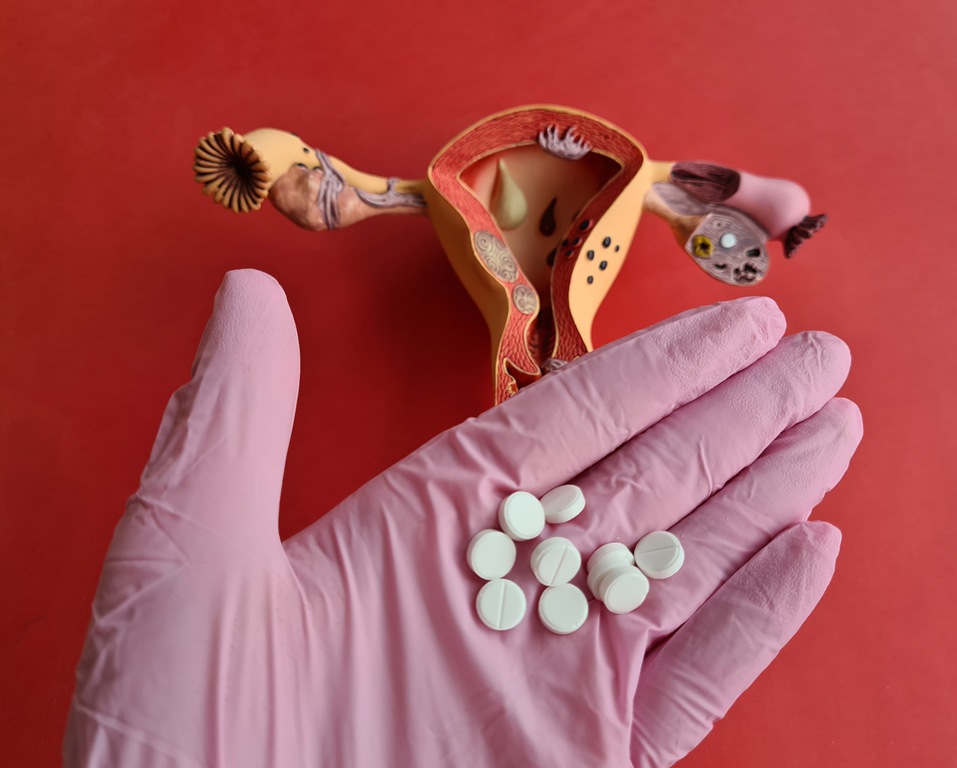
GSK said its ovarian cancer drug shrank or cleared tumours in more than 60 per cent of patients in an early trial as CCO Luke Miels pushes faster development.
The company said that in an early-stage trial, Mocertatug Rezetecan, known as Mo-Rez, shrank or eliminated tumours in 62 per cent of patients with ovarian cancer after chemotherapy had failed, and in 67 per cent of those with endometrial cancer.

Hesham Abdullah, GSK’s global head of cancer research and development, said: “Treatment of gynaecological cancers remains a major challenge, with a pressing need for new therapies that offer improved response rates.
“With Mo-Rez we now have compelling evidence of a promising clinical profile.”
GSK acquired the Mo-Rez treatment, an antibody-drug conjugate, from China’s Hansoh Pharma in late 2023 and has trialled it in 224 patients around the world, including the UK, over the past year.
Only a few patients needed to stop treatment because of side effects, the most common being nausea.
It is given every three weeks by intravenous infusion, meaning directly into a vein.
Combined with data from a separate intermediate trial in China, the results have given the British drugmaker the confidence to go straight to late-stage trials, with five clinical studies planned globally in the next few months, including on patients in the UK.
Speaking to journalists before the conference, Abdullah described Mo-Rez as a “key asset” in the company’s growing cancer portfolio.
It is expected to be a blockbuster drug, with peak annual sales of more than £2bn, which GSK hopes will help it achieve its 2031 sales target of £40bn.
A few years ago GSK did not have any cancer drugs on the market, but it now has four approved medicines and 13 in clinical development.
Last year, oncology generated nearly £2bn in sales, up 43 per cent from 2024, with sales of its endometrial cancer drug Jemperli rising 89 per cent.

Self-employment is linked to lower rates of high blood pressure, obesity, diabetes, poor health and binge drinking in Hispanic women, research suggests.
The findings, published in the peer-reviewed journal Ethnicity & Disease, suggest work structure may be related to cardiovascular disease risk among this group.

Dr Kimberly Narain is assistant professor of medicine in the division of general internal medicine and health services research at the David Geffen School of Medicine at UCLA, senior author of the study, and director of health services and health optimisation research for the Iris Cantor-UCLA Women’s Health Center.
She said: “Hispanic women experience a disproportionate burden of heart disease compared to non-Hispanic women. This is the first study to link the structure of work with risks for heart disease among this group of women.”
The researchers examined 2003 to 2022 data from the Behavioral Risk Factor Surveillance System to assess the association between self-employment, cardiovascular disease risk factors and health outcomes for Hispanic women.
The data included 165,600 Hispanic working women. Of those, about 21,000, or 13 per cent, were self-employed rather than working for wages or a salary.
Overall, the researchers found that self-employed women were less likely to report cardiovascular-disease-associated health problems.
They were also about 11 per cent more likely to report exercising compared with their non-self-employed counterparts.
Specifically, they found that self-employed Hispanic women had a 1.7 percentage point lower chance of reporting diabetes, roughly a 23 per cent decline.
They also had a 3.3 percentage point lower chance of reporting hypertension, roughly a 17 per cent decline.
The study also found a 5.9 percentage point lower chance of reporting obesity, roughly a 15 per cent decline.
It found a 2.0 percentage point lower chance of reporting binge drinking, roughly a 2 per cent decline.
It also found a 2.5 percentage point lower chance of reporting poor or fair overall health, roughly a 13 per cent decline.
The relationship between heart disease risks and the structure of work among Hispanic women was not driven by access to healthcare or differences in income, Narain said.
In fact, the decrease in high blood pressure linked to self-employment was nearly as large as the decrease in high blood pressure linked to being in the highest income group.
The study has some limitations.
The researchers relied on self-reported outcomes, which might be less reliable among ethnic and racial minorities and those from a lower socioeconomic background.
In addition, the researchers’ definition of poor mental health does not entirely match the accepted definition in the fifth edition of the Diagnostic and Statistical Manual of Mental Disorders.
They also did not have data allowing them to examine the specific types of occupations held by the women.
The study design also cannot prove any causal relationship between self-employment and cardiovascular disease risk, which is a subject the researchers will explore.
“The next step in the research is to conduct studies that are able to better assess if the structure of work is a cause of higher heart disease risks among Hispanic women.”
Narain said this.
Study co-authors are Lisette Collins, who led the research, and Dr Frederick Ferguson of UCLA.
Grants from the Iris Cantor-UCLA Women’s Health Center-Leichtman-Levine-TEM program and the UCLA National Clinician Scholars Program supported the research.











 Entrepreneur2 weeks ago
Three sessions that show exactly where women’s health is heading in 2026

 News4 weeks ago
Luna and Kindbody partner to bring data-driven insight to women’s health and fertility care

 News4 weeks ago
Femtech World Awards announces deadline extension

 Fertility4 weeks ago
Menstruation costs £20,359 a lifetime, sparking calls for Government action

 Menopause3 weeks ago
California plans US$3.4m menopause care overhaul

 News4 weeks ago
Halogen Ventures surpasses 100 investments in female-founded startups

 Menopause3 weeks ago
Watchdog bans five ads for women’s heath claims

 Pregnancy2 weeks ago
How NIPT has evolved and what AI NIPT means in 2026
1 Comment