




Motherhood
Report flags serious concerns over NHS trust’s maternity care


An NHS England report has identified significant concerns about the safety and quality of maternity care at Leeds Teaching Hospitals NHS Trust.
The findings, published after a visit in March, included 101 recommendations to improve the quality of care and ensure the wellbeing of mothers and babies.
Key issues involved staffing problems, a “challenging” culture, and poor learning from earlier incidents.

Over the past six months, the BBC spoke to 67 families who said they experienced inadequate care at the trust. Several said their babies suffered avoidable injury or death.
Five whistleblowers also raised safety concerns.
Two months after the BBC’s initial report, NHS England placed the trust under its national Maternity Safety Support Programme (MSSP), which is triggered when serious concerns are identified.
An NHS whistleblower told the BBC that “huge concerns” remained and that many of the same issues were raised back in January during a Rapid Quality Review Meeting.
They said the trust likely saw the MSSP findings as early as May.
A spokesperson for a group of bereaved Leeds families said the MSSP report, which also highlights good practice, made “truly shocking and horrifying reading”.
The spokesperson said: “As bereaved and harmed families, this most recent report, yet again, totally vindicates what we have been saying for years.
“The culture of denial, the failure to listen and the absence of real accountability are systemic and persistent,”
The MSSP report follows last month’s Care Quality Commission decision to downgrade maternity services at both of the trust’s hospitals from “good” to “inadequate”.
Fiona Winser-Ramm, whose daughter Aliona died in 2020 after what an inquest found to be “gross failures”, is one of dozens of families now calling for an independent inquiry to ensure accountability for baby deaths or injuries.
The BBC previously reported that the deaths of 56 babies at Leeds hospitals may have been preventable.
The trust’s chief executive, Phil Wood, announced earlier this month—just days before the report was released—that he will retire at the end of the year.
Wood has led the trust since February 2023 and was chief medical officer from May 2020.
Bereaved families said the timing of his departure raised concerns, given his leadership roles during years when dozens of cases of potential avoidable harm occurred.
Rabina Tindale, chief nurse at the trust, said: “This report has highlighted significant areas where we need to improve our maternity services, and my priority is to make sure we urgently take action to deliver the recommendations.
“I would like to apologise to all the families who have received maternity care with us which has fallen short of the high standard we aim to provide.”
She said the trust remained committed to delivering “safe”, “high-quality” and “compassionate” care.
Wood said: “My intention was to retire in the next 12 to 18 months, but with the changes taking place within the NHS nationally, this feels like the right time for me to hand over to a new leader.
“I am committed to making sure our robust maternity improvement plans, already developed with the CQC and NHS England, are fully embedded, and that we engage constructively with the Rapid National Investigation into Maternity and Neonatal services as it develops.”













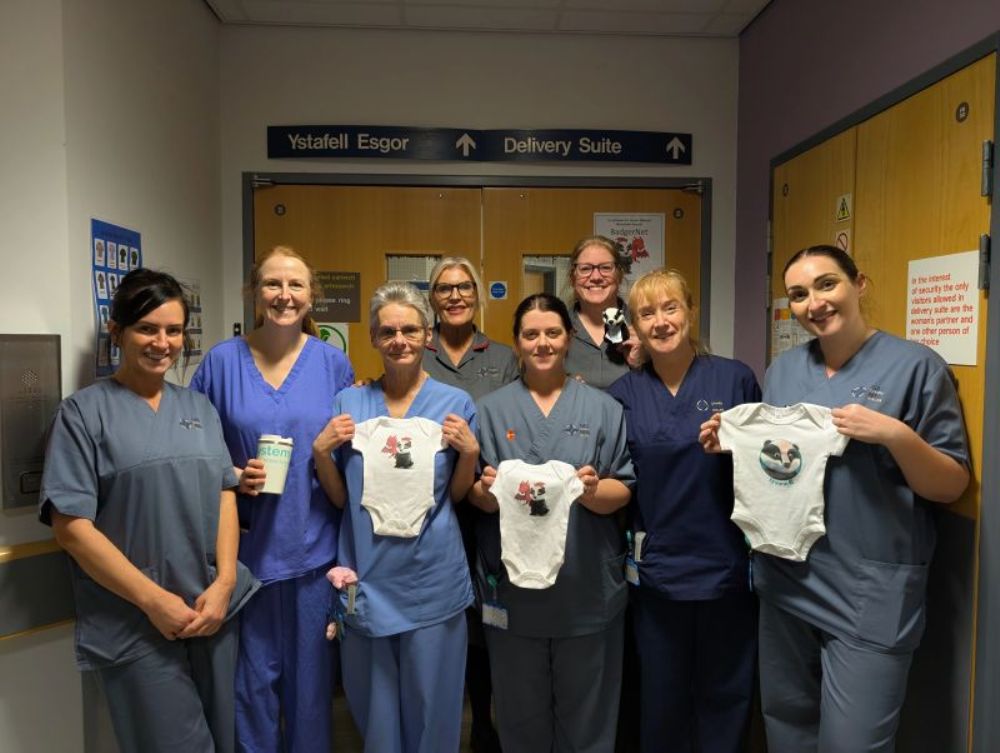
System C has completed the national rollout of BadgerNet Maternity across all seven NHS Health Boards in Wales. This is the first time any UK nation has unified its maternity care under a single digital record and patient-facing app.
With approximately 26,000 babies born annually in Wales, BadgerNet connects maternity information across organisational boundaries in the country.
Expectant parents can access their records, maternity appointments and key updates digitally through a single app, wherever they receive care while clinicians have secure access to the right information at the point of care.
The national three-year agreement across all Heath Boards replaces a patchwork of separate local systems and eliminates the need for paper hand-held notes.
Anthony Tracey is director of digital at Hywel Dda University Health Board, the final of the Welsh Health Boards to go live with BadgerNet.
He said: “The rollout of BadgerNet across Wales is a vitally important step forward in modernising our maternity services and providing a consistent service across the country.
“By giving expectant parents direct access to their information and enabling clinicians to share data more effectively, we are strengthening safety, transparency and consistency in maternity care nationwide.”
For expectant parents, the single digital maternity record transforms how they engage with their care.
Instead of carrying paper notes and repeating information at every appointment, parents can access key details, appointments and updates digitally, supporting more informed conversations and shared decision-making.
The result is greater transparency, fewer administrative frustrations and a more joined-up experience throughout pregnancy and into the postnatal period, regardless of which health board they fall under.
For clinicians and Health Boards, the joined-up approach reduces duplication and streamlines handovers across teams and sites. Information is digitally captured once and made available securely wherever it is needed, helping to minimise errors, reduce time spent tracking down notes and support more efficient multidisciplinary working.
At a national level, linking maternity data across Wales creates a foundation for safer, more consistent care.
Aggregated, standardised information enables earlier identification of trends and variation, supports evidence-based policy decisions and enhances long-term service planning.
With a comprehensive view of maternity activity and outcomes across the country, Wales is now better positioned to raise standards for parents, babies and families.
Guy Lucchi, managing director of healthcare at System C, added: “Delivering a truly national approach across all seven Health Boards is a significant achievement for Wales.
“One shared system means information flows with the patient, not the organisation.
“That reduces duplication, supports earlier identification of risk and frees up valuable clinical time.
“Crucially, linking maternity data at a national level provides powerful insight to drive improvement. Health Boards can benchmark, plan services with greater confidence and ensure resources are targeted where they are needed most, while expectant parents benefit from clearer communication and a more connected experience of care.”



Motherhood
Women’s HealthX marks World Maternal Mental Health Day with lineup of maternity care leaders

By Women’s HealthX
In recognition of World Maternal Mental Health Day, Women’s HealthX is placing a spotlight on one of the most urgent and under addressed areas in women’s health: maternal mental health and maternity care innovation.
Worldwide, 1 in 5 new mothers experiences a perinatal mood and anxiety disorder, yet up to 7 in 10 hide or downplay their symptoms.
Even within established care frameworks, this creates challenges for timely detection and treatment, highlighting the need for additional tools, insights, and system-level support to prevent long-term consequences for both mother and child.
Women’s HealthX convenes 750+ senior leaders from across the women’s health ecosystem, including pharma & biotech, hospitals, digital health innovators, solution providers, payers, enterprises & policy makers to explore how telehealth, predictive analytics, and digital health platforms are transforming maternal and postnatal care – from AI-driven early risk identification to remote monitoring solutions that keep mothers cognitively and emotionally supported long after they leave the clinic.
Key sessions on Maternity & Maternal Care with key industry leaders:
Key sessions dedicated to maternity and maternal mental health will address critical system challenges and opportunities for innovation, including fragmentation in care delivery, health inequities, and persistent maternal mortality rates in high income countries.
Featured speakers include:
Christina Pardo, medical director, women’s health, Weill Cornell Medicine NewYork Presbyterian, on “Bridge Existing Healthcare Gaps Caused by Fragmentation Between OB/GYN And Birth Workers.”
Gayatri Setia, director of preventive Cardiology, NYCHHC, on “Improve Patient Access to Prevention in Equalities and Discrimination in Maternity and Maternal Care”
Catherine Monk, founding director, Center for the Transition to Parenthood, Columbia University Irving Medical Center, on “Leveraging Developmental Neuroscience to Provide Improved Maternal Care”
Danielle Johnson, chief medical officer, Lindner Center of HOPE, on “Understanding the Scope of Disparities in Perinatal Mental Health”
Kimberley Sampson, chair of OB GYN, Southwestern Vermont Medical Center, on “Why Maternal Mortality Persists in High-Income Countries”
Erica Smith, VP value and access, Chiesi, on “Empowering Mothers, Advancing Equity, and Improving Outcomes in Premature Care”
A Call to Action for the Femtech Ecosystem
As femtech continues to mature, maternal mental health represents a critical frontier where technology, data, and clinical insight must converge.
Women’s HealthX provides a platform for collaboration and knowledge sharing to accelerate the development and adoption of solutions that deliver measurable impact for mothers and families.
From predictive analytics to personalized, continuous care models, the event underscores a central theme: meaningful transformation in women’s health begins with better data, stronger evidence, and cross sector collaboration.
Special Limited Time Offer
Only 9 days left to register for your chance to win a therapeutic massage at Encore Boston
Women’s HealthX is where the transformation of women’s health begins at its true foundation: data, science, and evidence.
About Women’s HealthX
Women’s HealthX is where the transformation of women’s health begins at its true foundation: data, science, and evidence.
It’s the leading event dedicated to closing the sex difference data gap and accelerating breakthroughs through science driven, real world case studies.
Taking place on December 3 to 4, 2026 in Boston, USA, the exhibition will bring together more than 750 healthcare leaders, including clinicians, payers, employers, investors, and policymakers.
7 different stages across 2 days with 150+ expert speakers taking an holistic approach to women’s health.
From fertility, maternity, sexual health, cognitive health, menopause and chronic disease, we address care at every stage of a woman’s life.











 Motherhood4 weeks ago
What Maternal Mental Health Month reveals about where postpartum support actually breaks down

 News3 weeks ago
NIH Grant terminations disproportionately impact minority scientists, research finds

 Menopause4 days ago
Perimenopause misinformation ‘putting women at risk’

 Adolescent health3 weeks ago
WUKA brings Period-Positive Pool Party to London Aquatics Centre to keep girls swimming through puberty

 Insight2 weeks ago
PCOS renamed after decade-long campaign to end ‘cyst’ misconception

 Events4 weeks ago
WHIS 2026 unveils agenda and first speakers for the leading women’s health summit

 Menopause3 weeks ago
CBT shows promise for menopause insomnia and hot flashes

 Insight4 weeks ago
Online abuse and deepfakes ‘pushing women out of public life’