




Motherhood
Risk-free simulation lab transforms maternity training


A Birmingham simulation lab recreating emergency childbirth in a risk-free environment is changing how maternity staff train, according to the NHS.
The unit at Birmingham Women’s Hospital received £1m from fashion entrepreneur George Davies through his charitable trust.
Its launch follows nationwide scrutiny of maternity services after the Ockenden Report into Shrewsbury and Telford NHS Trust. That inquiry recommended that clinical teams train together – a central aim of simulation.

The lab includes spaces modelled on working wards such as a delivery room, neonatal unit and theatre.
Staff can rehearse emergencies from a home birth to a baby born in a car park, then follow the mother and baby through to the delivery room and neonatal intensive care unit.
Consultant neonatologist Matt Nash said the centre makes joined-up training possible.
He said: “The Ockenden report actually outlined that teams who work together need to train together, and simulation is the absolutely right way to do that.
“We’re able to get the neonatal teams and maternity teams, obstetricians, ancillary staff, theatre staff all together to be able to run through acute scenarios, to make sure that it’s as safe and effective as possible.”
The lab is used by teams from Birmingham Women’s Hospital and other hospitals in the region.
Perpetual, mother to five-year-old twins, saw the hospital’s expertise in 2020 when she contracted Covid.
She was placed in an induced coma, and her twins were delivered by Caesarean section at 26 weeks in a high-risk operation.
“This is an added advantage to training, which we didn’t have before. So I think personally, as a mum, that gives me huge reassurance,” said Perpetual, who is also a hospital consultant.
Davies has backed the trust since 2006, when staff saved his granddaughter Evie, born with a rare heart defect.
He chose to donate again after meeting advanced neonatal nurse Catherine Powell in his local pub.
Davies said: “There’s not a person I’ve met that I’ve not been impressed with – a nurse or a doctor.
“I think the biggest satisfaction to me in life now is helping people.”


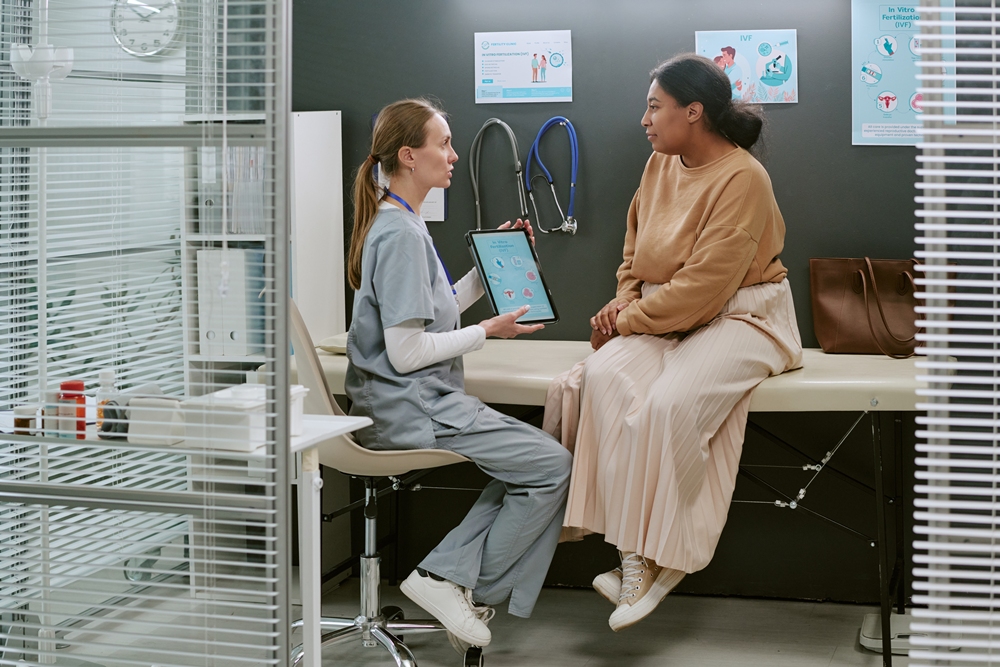
The Scottish government has launched a national review into whether NHS IVF access should be extended to single women.
The review will also consider whether wider access should be offered to couples who have children from previous relationships.
Health secretary Angela Constance said: “Access to NHS IVF treatment should be fair, timely and reflect the way people’s lives and families look today.”
Most single women are not currently eligible for NHS IVF treatment in Scotland.
Campaigners have welcomed the review.
Katie Rollings of Fertility Action said: “It’s an essential and long-awaited decision that will impact a huge number of people who are struggling to grow their families.
She said there is “no evidence” that having two parents rather than one determines whether a child will thrive.
She added: “What matters is whether a child is loved, safe, supported and has stable, positive relationships around them.”
Figures from the Human Fertilisation and Embryology Authority show Scotland is the only UK nation where NHS-funded IVF cycles outnumber privately funded cycles.
In 2024, more than 6,000 cycles of fertility treatment were carried out among more than 4,000 patients in Scotland. Both figures were slightly lower than the record highs recorded in 2022.
The past 20 years have also seen a rise in the number of same-sex female couples and single women receiving fertility treatment.
In 2024, 625 IVF cycles were carried out for women in same-sex couples in Scotland, with more than one third funded by the NHS.
There were 330 cycles involving single women, of which 50 were NHS-funded.
In England, single women can access IVF through the NHS, although eligibility varies according to the local health trust’s policy.
Current Scottish rules state that couples are eligible if they have been living in a stable relationship for two years and neither partner has been sterilised.
Couples where one partner already has a child can be eligible, but those where both partners have children from previous relationships are not.
Eligibility rules also require a body mass index above 18.5 and below 30, and state that couples must not smoke, drink alcohol or take drugs during treatment. The mother must be under 42.
The Scottish government said the review would also examine consistency of access to fertility preservation, including during cancer treatment, as well as reducing waiting times for donor eggs and sperm.
Same-sex female couples already have access to NHS IVF, but they can face long waits for donor eggs or sperm, as can heterosexual couples who require donor treatment.
The National Fertility Group will lead the review and make “costed, demand-modelled recommendations”, which are due to be published by early summer 2027.
The group will include fertility experts from Scotland’s four NHS-assisted conception units in Glasgow, Edinburgh, Aberdeen and Dundee.
Prof Sarah Martins Da Silva, an NHS consultant and chair of fertility medicine at Dundee University, said there were questions to be answered in a resource-stretched NHS.
“As a fertility specialist I’m never going to be disappointed if the criteria is widened,” she said.
“But with single people, as an NHS clinician looking at the competing demands we have, I’d ask the question about whether being single is a health condition that needs to be funded.”
Da Silva said NHS waiting lists were full of couples who require donated eggs or sperm because of medical conditions including cancer and could face longer waits.
“It’s slightly a disservice to them,” she said.
“There would need to be a real investment and resource without making everybody wait an extraordinary long time.
“With the current financial environment we work in, if you’re talking about new money, where would that come from?”
She said she would welcome changes that encouraged more people to donate eggs or sperm and questioned whether arguments about children needing two parents were necessarily relevant to the debate.
“On the one hand bringing up a child is quite an expensive process, and if you don’t have that support, it can be very difficult.
“But on the other hand, many people start off as a couple and divorce.”
Da Silva also welcomed plans for the review to consider eligibility for couples who already have children, describing the move as “fantastic”.


Thousands of UK women develop undiagnosed PTSD after childbirth each year, with at least 15,000 cases going undetected, researchers say.
The true number could be double that or more, according to an evidence review of childbirth-related post-traumatic stress disorder (PTSD).
PTSD can involve symptoms including nightmares, flashbacks, anxiety and persistent negative thoughts. Research estimates suggest between 5 and 5.9 per cent of women giving birth develop the condition.
Doctors at the University of East Anglia’s medical school reviewed existing data on births, PTSD prevalence and six-week postnatal GP appointments to estimate how many cases are going undiagnosed.
They said many GPs mistake childbirth-related PTSD for postnatal depression, potentially resulting in women receiving treatment that is not appropriate for PTSD.
Research has estimated that fewer than half of women with postnatal PTSD symptoms are diagnosed and receive NHS care.
Lead author Dr Megan Foreman, who is also a GP, said: “The Office for National Statistics figure for the 2025 live birthrate in England and Wales, not including Scotland and Northern Ireland, was 585,396.
“This figure does not include stillbirths and miscarriages, which are significant risk factors for childbirth-related PTSD.
“Therefore, at 5 per cent of the 2025 ONS birthrate for England and Wales (29,269), combined with the evidence from Moran et al that less than 50 per cent of women with PTSD symptoms postnatally are referred for specialist perinatal mental health support, a UK figure greater than 15,000 women, but potentially in the tens of thousands, would be justifiable based on the available evidence.”
The researchers said cases are being missed during the NHS six-week postnatal check, which assesses the health of both the mother and baby.
There is no approved framework for assessing a woman’s risk of childbirth-related PTSD during these appointments, they said.
Assessing a newborn’s health can also make it harder to focus on the mother’s mental health, particularly if she attends the appointment alone with her baby.
The researchers also noted that some women may not feel able to discuss a traumatic birth soon afterwards because doing so could retrigger the experience.
The review cited UK research in which half of GPs recognised trauma-related features in case examples of childbirth-related PTSD, but postnatal depression remained their most common diagnosis.
The authors said misdiagnosis could be detrimental because women may be prescribed antidepressants, which are not as effective for treating PTSD as psychological therapy.
Treating depression alone may also fail to improve coexisting childbirth-related PTSD.
Identifying the condition is particularly important because both PTSD and postnatal depression are associated with an increased risk of suicide, the most common cause of death among women in the year after giving birth, the authors said.
The review also said untreated childbirth-related PTSD can affect women and their families, contribute to further healthcare needs, lead to avoidance of doctors and hospitals and influence decisions around future pregnancies.
Angela McConville, chief executive of parenting charity NCT, said: “The possibility that so many women could be living with undiagnosed PTSD after birth is deeply concerning.
“PTSD after birth is a serious and often overlooked condition that can have a profound impact on women and new mothers, as well as those around them.
“No one should have to reach crisis point before they are listened to and able to access support.
“These findings are a powerful reminder that birth trauma does not end when care in hospital ends.
“When trauma goes unrecognised or unsupported, the effects can be felt across relationships, family life and wellbeing for months or even years.”
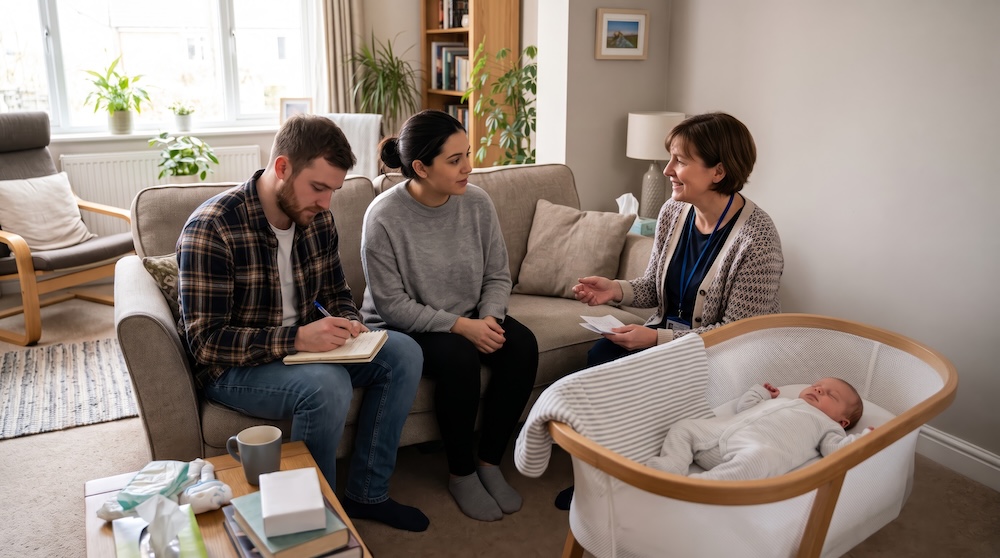
Health visitor support may help women who quit smoking during pregnancy remain smoke-free after giving birth, research suggests.
The BabyBreathe programme was designed to help women who stopped smoking before or during pregnancy avoid returning to smoking after childbirth.
The programme was funded by the National Institute for Health and Care Research and tested by a team led by the University of East Anglia.
Professor Michael Ussher of the University of Stirling’s Institute for Social Marketing and Health was a senior investigator on the study and led recruitment at two trial sites.
Ussher said: “This study is the first to show that an intervention focussing on support from a health visitor may help women avoid returning to smoking.
“These findings are important as many women stop smoking in pregnancy but then return to smoking soon after their baby is born.”
BabyBreathe provides one-to-one support from trained health visitors alongside digital tools, text message support, a dedicated website and app and a relapse-prevention kit sent to families after birth.
Women who received the intervention as intended, with support from trained health visitors, were significantly more likely to remain smoke-free 12 months after giving birth than those without health visitor support.
A total of 886 women from England and Scotland who had successfully stopped smoking before or during pregnancy took part in the large-scale randomised controlled trial.
Participants were randomly assigned to receive either BabyBreathe or usual care, which offered no advice or support aimed at preventing smoking relapse.
BabyBreathe was not delivered as intended to around one in five participants because of health visitor workforce pressures, missed appointments or administrative problems.
Health visitors provided tailored one-to-one advice and support to women in the intervention group towards the end of pregnancy and immediately after their baby was born.
The support included advice on alternatives women could try if they experienced urges to smoke again, as well as advice for partners and family members and access to digital resources including the BabyBreathe app and website.
A relapse-prevention kit was also posted to women immediately after their baby was born.
Support continued for up to 12 months after childbirth during routine health visitor appointments.
The intervention followed more than a decade of research and development involving women, families, health professionals and researchers who worked together to design, develop and test the support package.
Among participants who received the intervention as intended, 57.6 per cent remained smoke-free after 12 months, compared with 49.9 per cent of those receiving usual care.
Researchers said the findings suggest health visiting services could play a significant role in providing consistent relapse-prevention support and helping more mothers remain smoke-free after giving birth.
Lead researcher Professor Caitlin Notley, professor of addiction sciences at UEA’s Norwich Medical School, said: “Women of childbearing age who quit and stay non-smoking can reduce their risks of developing a smoking-related disease to almost the same level of risk as non-smokers.
“There are also great benefits for babies and children brought up by parents who do not smoke in avoiding exposure to second-hand smoke, and in helping to prevent the next generation from taking up smoking.
“Until now, health visitors had no training on smoking relapse prevention.
“This meant that when women had made the extremely important and difficult health behaviour change of quitting smoking during pregnancy, no one picked up on this and gave them positive praise and support.
“This new approach extends the intensive support for initially quitting smoking that pregnant women are offered, going one step further to help women to stay smokefree in the long term.”
Researchers noted several limitations that affected the primary analysis, including incomplete delivery of BabyBreathe and low engagement with some parts of the programme.
The participant group was also more highly educated and less socioeconomically deprived than the wider population, which may have affected the programme’s overall effectiveness and limit how broadly the findings can be applied.
The Institute of Health Visiting worked with UEA on the BabyBreathe study.
Vicky Gilroy, director of innovation and research at the Institute of Health Visiting, said: “Health visitors and their teams are uniquely placed to support women in preventing smoking relapse as part of their universal offer.
“It has been a privilege to contribute to the BabyBreathe study and help develop the evidence of the importance of their role. The findings reinforce the need for all health visitors to receive training in this important area.”







 Entrepreneur2 weeks ago
KOVE Medical raises €1.7 million to improve safety of foetal surgery

 Menopause1 day ago
Menopause may not explain rising heart condition in women – study

 Mental health2 weeks ago
UK study aims to transform maternity care for high-risk pregnancies

 Fertility5 days ago
Paracetamol use may impact future fertility, studies suggest

 Entrepreneur1 week ago
Last chance to save on Women’s Health Week and Women’s Sport Summit: Early Bird pricing ends 11 September

 Menopause2 weeks ago
Menopause hormone treatment may ease brain fog, study suggests

 Menopause1 week ago
Cancer drug could tackle osteoporosis menopause weight gain

 Insight1 day ago
Women with birth trauma face 2.5x higher healthcare costs – study