




Pregnancy
Planned C-sections linked to leukaemia risk in children
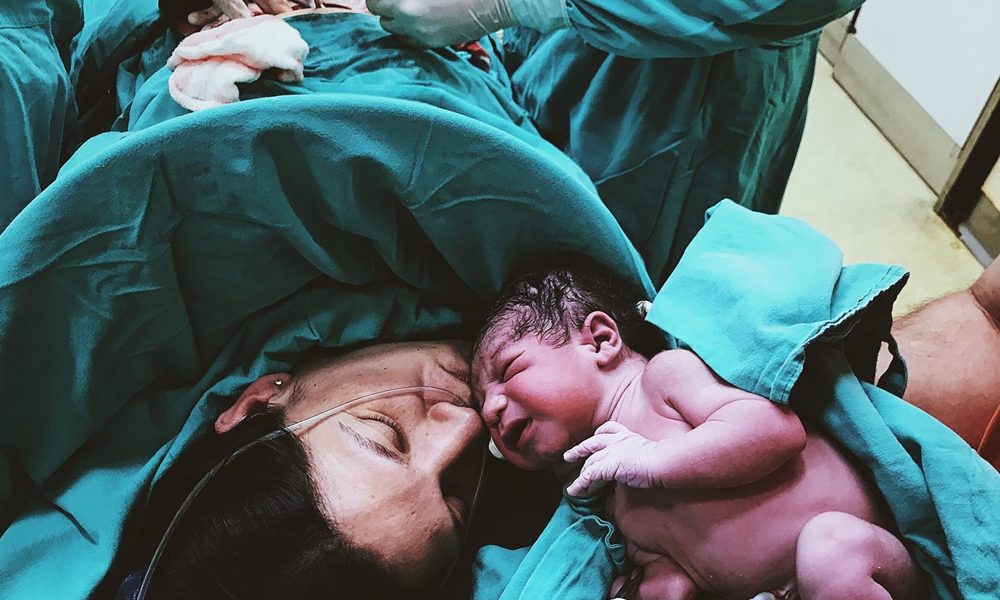
Children born by planned caesarean section may face a 21 per cent higher risk of developing acute lymphoblastic leukaemia (ALL) later in life, new research has found.
The risk was even higher for B-cell acute lymphoblastic leukaemia (B-ALL) – the most common form of childhood blood cancer – with a 29 per cent increased risk compared to children born vaginally. The elevated risk appeared more pronounced in boys and in younger children.
Despite the findings, researchers stressed that childhood leukaemia remains rare. In Sweden, between 50 and 70 children are diagnosed with B-ALL each year. The excess risk associated with planned C-sections corresponds to approximately one additional case annually.
The study, led by researchers at Karolinska Institutet, examined data from nearly 2.5 million children born in Sweden between 1982 and 1989, and from 1999 to 2015. Of these, around 15.5 per cent – approximately 376,000 children – were delivered by caesarean section. In the entire cohort, 1,495 children were later diagnosed with leukaemia.

ALL is a cancer of the blood that affects white blood cells. B-ALL specifically affects B-lymphocytes, a type of immune cell that plays a role in fighting infection.
Using the Medical Birth Register, researchers were able to distinguish between planned and emergency caesarean sections. The increased risk was observed only among those born by planned C-section. The association remained even after adjusting for other relevant factors in mothers and children.
Christina-Evmorfia Kampitsi, researcher at the Institute of Environmental Medicine at Karolinska Institutet and lead author of the study, said: “C-sections are an important and often life-saving part of obstetric care. We don’t want mothers to feel anxious about medically indicated C-sections. But when this result is combined with other study results showing that the risk of later asthma, allergies or type 1 diabetes increases in children born by planned C-section, there is reason to discuss C-sections that are not medically indicated.
Researchers suggest the difference in risk between planned and emergency C-sections may be related to how the baby is exposed to stress and bacteria at birth. Emergency caesareans often begin as vaginal deliveries, meaning the baby may experience birth-related stress and be exposed to vaginal bacteria if the amniotic sac has ruptured.
In contrast, planned C-sections are typically performed before labour starts, reducing exposure to maternal bacteria and stress, which may affect immune system development and help explain the increased risk.
Some results did not reach the threshold for statistical significance, meaning chance cannot be entirely ruled out. Kampitsi said: “Fortunately, ALL is rare. This means that many C-deliveries are needed to obtain a statistically significant result, and it is difficult to obtain such a large sample in a Swedish registry study. However, the results are close to significant, are in line with what previous studies have shown, and remain when we adjust for other relevant factors, which still makes them relevant.”
The findings may help improve understanding of the causes of childhood leukaemia and add to growing evidence of associations between planned C-sections and immune-related conditions.
The research was funded by the Swedish Research Council and the Swedish Cancer Society. The researchers reported no conflicts of interest.

Opinion
Women’s Health has waited long enough for innovation

By Dr Fran Conti-Ramsden, clinician at Guy’s and St Thomas’ NHS Foundation Trust, academic at King’s College London, and chief medical officer of MEGI Health.
A woman gives birth. A few days later she goes home, often with a bag of medication for her blood pressure, and then, very often, very little structured follow-up for her heart (cardiovascular) health.
In my clinical work, and through our collaboration with Action on Pre-eclampsia, I see and hear about this postnatal cliff edge again and again, and it still shocks me.
We invest a lot of medical care and attention whilst a woman or birthing individual is pregnant, then, at the very moment emerging evidence suggests we have a window of opportunity to modify long-term health, the support falls away.
That cliff edge is a symptom of a deeper issue: we have come to treat “women’s health” as a synonym for reproductive health. Pregnancy, periods and fertility, important as they are, have crowded out everything else.
Yet the conditions that do most to shorten and limit women’s lives are not reproductive at all.
Cardiovascular disease is the leading cause of death in women worldwide, and it is still too readily thought of as a man’s problem.
Heart disease in women is more likely to be missed and under-treated, in part because for decades women were under-represented in the research that built our knowledge.
Pregnancy makes this vivid.
Conditions such as pre-eclampsia are not only risks to be managed for nine months; they are early warnings about a woman’s future, markers that she is more likely to develop heart disease and high blood pressure in the years to come.
We have the knowledge to act on that. What we mostly do instead is discharge her and look away.
This is exactly the kind of problem better tools should help us solve: spotting risk earlier, supporting women and their clinicians through the vulnerable postnatal window, and providing continuity where the system currently provides a drop due to lack of capacity.
Artificial intelligence and digital health have real potential here; in risk prediction, in monitoring blood pressure at home, and in helping stretched clinicians know who needs attention and when.
And yet this is not where most of the energy is going.
It is far easier to build, fund and scale an app that tracks a cycle than a tool that changes the trajectory of a woman’s heart.
So, innovation clusters at the lighter, lower-risk end of innovation, while the conditions that actually kill and disable women, and moments like the postnatal cliff, stay under-served.
Closing the women’s health gap could add at least a trillion dollars to the global economy each year, the World Economic Forum estimates, but the bigger prize is women living longer, healthier lives.
None of this means technology is a cure in itself. It is a tool, and a tool built carelessly can do harm.
Because women have been under-represented in medical data, systems trained on that data can quietly carry the same blind spots forward, deepening inequalities rather than closing them.
Responsible innovation, with clinical-grade evidence, privacy and equity designed in from the start, and tools built around real clinical pathways rather than bolted on afterwards, is not a brake on progress.
It is the only version of progress worth having.
I am optimistic, because a serious community is forming around exactly these questions and the appetite to get it right is real.
It is why, at MEGI, we are bringing clinicians, researchers, founders, regulators and investors together for our AI × Women’s Health summit on 25 June.
If we keep our focus on the conditions that matter most to women’s lives, and build the tools to meet them responsibly, the postnatal cliff edge could become something else entirely: the moment the system finally catches her and delivers preventative healthcare.
AI × Women’s Health: Innovation, Challenges and Opportunities summit is taking place on Thursday 25 June 2026 at the London Institute for Healthcare Engineering. The event is free and is fully booked and operating a waiting list. Join the waiting list here.
About Dr Fran Conti-Ramsden
Dr Fran Conti-Ramsden is a UK Obstetrics and Gynaecology registrar and Chadburn Clinical Lecturer at KCL passionate about transforming women’s health through technology and innovation.
Combining NHS clinical experience with an MRC-funded PhD, recent NHS Clinical AI fellowship and commercial role as Chief Medical Officer at Megi health, she works at the intersection of clinical medicine, data science, technology and AI.
Her current programme of research focuses on the intersection of healthcare and technology; leveraging advances such as smartphone based vital signs capture and large language models to drive forward scalable innovation in maternal cardiovascular care.
She has published over 20 peer-reviewed manuscripts (See gScholar, h-index 12), including award-winning work recognized by Hypertension Journal.
She was awarded an AI visionary award in 2025 by Health Innovation KSS was the recipient of the 2024 International Society for the Study of Hypertension in Pregnancy Zuspan prize.
Pregnancy
Women with pre-eclampsia at increased risk of chronic kidney disease, study finds

Women who develop pre-eclampsia face a higher risk of chronic kidney disease and high blood pressure later in life, new research suggests.
The amount of protein found in the urine during pregnancy may help identify those at greatest risk of developing long-term health problems.
Pre-eclampsia usually involves high blood pressure and increased protein in the urine. Some women also experience severe headaches and changes to their vision.
The condition cannot be treated during pregnancy and, in some cases, labour must be induced early to protect both the woman and baby.
The study found that the condition may be linked to longer-term health problems.
Anne Høy Seemann Vestergaard, a medical doctor and PhD at the department of clinical medicine at Aarhus University, said: “What we can see is a clear association between pre-eclampsia and the development of high blood pressure, chronic kidney disease and cardiovascular disease later in life.”
The researchers found that the amount of protein passed in the urine during pregnancy was linked to the risk of developing chronic conditions after giving birth.
Protein in the urine can indicate that the kidneys are not filtering blood normally.
Vestergaard said: “The most surprising finding was how clearly the amount of protein in the urine during pre-eclampsia was linked to the risk of later high blood pressure and chronic kidney disease. Women with moderate to severe protein excretion had a higher risk of both conditions compared with women with low or no protein excretion.”
Among women with pre-eclampsia and moderate to severe levels of protein in the urine, around one in 20 developed chronic kidney disease within 10 years and around one in six developed high blood pressure.
Most women in the study did not develop long-term complications, but the researchers said the increased risk should still be taken seriously because the potential effects can be severe.
Vestergaard said: “At first glance, this may sound like a low number, but it represents a markedly increased risk when the groups are compared. In the group with pre-eclampsia and high levels of protein in the urine, around 1 in 20 women developed chronic kidney disease within ten years, including early stages of the disease, compared with around 1 in 100 in the group with lower or no protein excretion.”
She added: “That is a considerable number in light of the fact that chronic kidney disease is a potentially serious condition that can progress to kidney failure if isn’t diagnosed early.”
The findings suggest women who experience pre-eclampsia may benefit from more systematic monitoring after pregnancy.
Vestergaard said: “Our study suggests that these women may benefit from monitoring of blood pressure and kidney function after pregnancy.”
Pregnancy
Pregnant women may reduce key health risk through more light exercise, study finds

Light exercise and less sitting may reduce pregnant women’s risk of serious blood pressure complications, according to a new study.
Researchers have proposed a daily activity and sleep guide that they say was linked to a nearly 30 per cent lower risk of hypertensive disorders of pregnancy.
The suggested pattern includes fewer than eight hours of sedentary time, at least seven hours of light physical activity, around 22 minutes of more intense activity and nearly nine hours of sleep.
The University of Iowa-led study examined the daily behaviours of 470 pregnant women across all stages of pregnancy.
Participants wore monitors that measured physical activity over 24-hour periods and recorded how long they spent asleep.
Hypertensive disorders of pregnancy include chronic high blood pressure, gestational hypertension and pre-eclampsia.
Gestational hypertension is high blood pressure that develops during pregnancy, while pre-eclampsia is a potentially serious condition involving high blood pressure and signs that organs may be affected.
Sedentary behaviour means being mostly inactive, such as sitting or lying down.
Light physical activity can include casual walking, moving around the home or standing.
Moderate to vigorous activity includes movement such as brisk walking, where breathing and heart rate increase.
Kara Whitaker, associate professor in the department of health, sport, and human physiology at Iowa and corresponding author of the study, said: “We are identifying the optimal composition of movement behaviours across the day associated with the lowest risk of developing HDP and the most improved health outcomes.
“This blueprint holds for each and every trimester of pregnancy.”
Study participants were enrolled at sites in Iowa City, Pittsburgh and Morgantown, West Virginia.
The women wore activity and sleep monitors for at least one week during each trimester of pregnancy.
Four in five participants were non-Hispanic white and nearly a quarter lived in rural areas.
The data showed a steep rise in risk among pregnant women who were sedentary for more than 10 hours a day.
Women who increased light physical activity to at least four hours a day reduced their risk of hypertensive disorders of pregnancy to 15 per cent from 30 per cent.
Whitaker said: “Just moving around more seems to have significant health benefits.
“And I think it also may be a more feasible target for women who are pregnant who are not exercising regularly.”
The researchers said they were surprised that longer durations of moderate to vigorous physical activity did not appear to provide additional benefit.
Sleep beyond a certain duration also did not appear to bring major further benefits.
Whitaker said: “Through this study, we are providing evidence that reducing sedentary behaviour and engaging in light physical activity are important, and maybe more important, when it comes to pregnancy and health.”
The findings may be relevant beyond pregnancy because clinical research has shown that women who develop hypertensive disorders of pregnancy are more than twice as likely to develop heart disease later in life.
Cardiovascular disease includes conditions affecting the heart and blood vessels, such as heart disease and stroke.
Whitaker said: “We know that cardiovascular disease is the number one killer of women, and if we can intervene in pregnancy and prevent women from developing a hypertensive disorder of pregnancy, we are putting them on a better trajectory, away from cardiovascular disease and toward more optimal cardiovascular health.”
The study was published online on June 10.
A second study, published online on May 27, looked more closely at the ratio and type of sedentary behaviour and light physical activity linked to a lower risk of hypertensive disorders of pregnancy.
Whitaker is a lead co-author on that study.
Co-authors in the June 10 study include Alex Crisp, Jaemyung Kim, Karina Smith, Donna Santillan, Mark Santillan and Bridget Zimmerman, from Iowa; Jacob Gallagher, from Iowa State University; Melissa Jones, from Oakland University in Michigan; Bethany Barone Gibbs, Katrina Wilhite, Alexis Thrower and Iqra Sheikh, from West Virginia University; and Sabera Rahman, Janet Catov, Christopher Kline and Maisa Feghali, from the University of Pittsburgh.
The National Institutes of Health, the University of Iowa Institute for Clinical and Translational Science, the University of Pittsburgh Clinical and Translational Science Institute and the West Virginia Clinical and Translational Science Institute funded the research.
Menopause4 weeks agoPerimenopause misinformation ‘putting women at risk’
Entrepreneur4 weeks agoWomen’s Health Innovation Summit opens submissions for 2026 Innovation Showcase
Insight3 weeks agoBritish women among angriest in Europe, health survey reveals
News4 weeks agoWomen still being failed when they reach menopause, experts say
Menopause4 weeks agoSweden eyes domestic production of oestrogen patches amid menopause treatment shortage
Menopause2 weeks agoApple Health adds menopause and perimenopause tracking
News2 weeks agoFemtech World Awards 2026: Winners revealed
News4 weeks agoThree menopause innovators shortlisted for Femtech World Award



