




News
AI-powered tool boosts skin cancer detection accuracy by 11 per cent, study finds


A new artificial intelligence tool has improved doctors’ ability to detect skin cancer by 11 per cent, according to research from an international team led by Monash University.
The system, named PanDerm, is designed to analyse multiple types of medical images simultaneously to help identify melanoma and other skin diseases more quickly and accurately than current methods.
With skin conditions now affecting 70 per cent of the global population, researchers say the technology could prove especially useful for early detection, which is crucial for better outcomes.

PanDerm was developed using more than two million skin images from 11 institutions across several countries.
It can analyse a wide range of visuals, including close-up photographs, dermoscopic images (taken with a magnifying tool), pathology slides, and total body photographs.
When tested, the tool helped non-dermatologist healthcare professionals improve diagnostic accuracy across a range of skin conditions by 16.5 per cent.
It also flagged suspicious lesions before they were identified by clinicians.
Associate Professor Zongyuan Ge is from Monash University’s Faculty of Information Technology.
The researcher said: “Previous AI tools have struggled to integrate and interpret multiple data types, limiting their usefulness in real-world clinical settings.
PanDerm is designed to work alongside clinicians, helping them interpret complex imaging and make decisions with greater confidence.”
Unlike traditional AI models designed for single tasks, PanDerm was evaluated across several clinical applications—including skin cancer screening, predicting recurrence risk, assessing skin type, mole counting, tracking lesion changes over time, lesion segmentation, and diagnosing a wide range of skin conditions.
In many cases, it delivered best-in-class results with just 5–10 per cent of the labelled data usually required.
Rather than replacing clinicians, PanDerm supports routine diagnostic workflows by processing image types commonly used in dermatology and providing diagnostic probability assessments.
This approach can enhance accuracy, particularly for non-specialists, and help detect subtle lesion changes over time.
First author Siyuan Yan is a PhD student in Monash University’s Faculty of Engineering.
Yan said: “By training PanDerm on diverse imaging modalities, we’ve created a system that mimics how dermatologists synthesise information from different visual sources.
“This allows for more holistic analysis than previous single-modality AI tools.”
Adjunct Professor Victoria Mar, director of the Alfred Health Victorian Melanoma Service, said the system could help identify subtle lesion changes and signs of future spread.
She added: “This kind of support could improve early detection and provide more consistent monitoring for melanoma patients.”

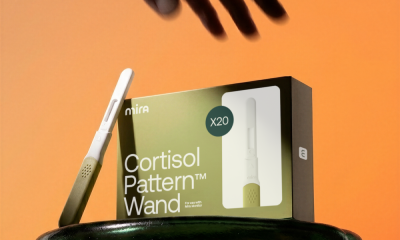










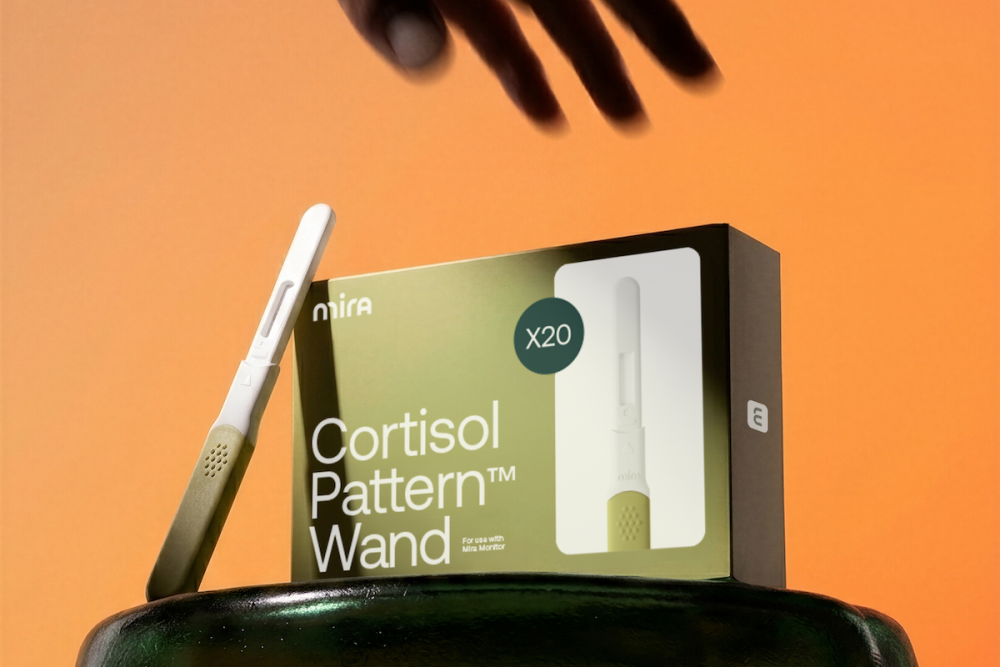
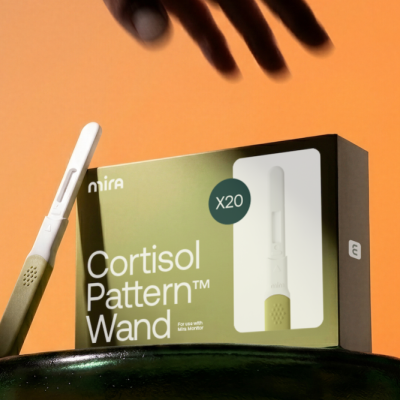
Mira has launched an at-home cortisol tracking kit that allows women to monitor stress-related patterns over time using urine samples.
The Cortisol Pattern Kit measures urinary free cortisol directly from a urine sample and displays results through the company’s existing monitor and app.
The system is intended for repeated testing rather than a single measurement, allowing users to compare results with a personal baseline built from their own data.
Mira said consistent daily testing can establish a baseline in about a week. It recommends testing in the morning and evening to see how cortisol patterns change throughout the day.
Cortisol is involved in the body’s stress response but is not a direct or complete measure of stress. The company said the kit is intended for general wellness use and is not designed to diagnose stress, an endocrine condition or any other medical condition.
The Cortisol Pattern Wands use the same lateral-flow testing format as Mira’s existing hormone tests. Users dip a wand into a urine sample, insert it into the Mira Monitor and view the result in the app within minutes.
The company said cortisol data can be viewed alongside cycle, hormone and daily routine information.
Sylvia Kang, founder and chief executive of Mira, said: “The Cortisol Pattern™ Kit gives women a new way to understand their stress patterns over time, in the context of their own biology.”
She added: “We built Mira to give women answers they had spent far too long searching for, beginning with the TTC journey and expanding into hormone and cycle tracking across life stages, including perimenopause. Now, we’re taking Mira beyond reproductive health and into everyday wellness, bringing personalised stress-pattern tracking directly into women’s homes.”
Mira said more than 350,000 women already use its platform to track their cycle and hormones.
Waitlist sign-ups for the Cortisol Pattern Kit and Cortisol Pattern Wands opened on 22 September, with wand refills available to pre-order in 20- and 30-count options.
A targeted nanotherapy reduced endometriosis lesions and pain sensitivity after a single dose in mice, early research has found.
The experimental treatment uses a nanoparticle to deliver an existing drug to immune cells associated with endometriosis.
Researchers hope the approach could eventually lead to a treatment for people with the chronic condition, but it has not yet been tested in humans.

Kanako Hayashi, professor in Washington State University’s School of Molecular Biosciences in the College of Veterinary Medicine and a corresponding author of the research, said: “We found the disease-specific immune cell, and then we had a drug, but we couldn’t target the cell with the drug alone.
“So we used this nanocarrier that delivers the drug specifically to the disease site.”
The Washington State University team developed the therapy after previously identifying a distinct population of macrophages associated with endometriosis. Macrophages are white blood cells involved in immune defence.
They designed a nanocarrier, a specialised molecule used to transport drugs to the disease site, to target these cells without affecting surrounding cells and tissue.
The treatment uses niclosamide, a drug approved to treat intestinal tapeworms that is also being studied for other potential uses, including cancer treatment.
Previous research by the team found that niclosamide could reduce endometriosis lesions. However, the drug has low solubility, meaning large amounts are needed for it to work and limiting how long it can safely be taken.
The researchers engineered a nano-sized molecule called a dendrimer to bond with niclosamide and deliver it in a more soluble form.
In a mouse model, a single injection reduced the size and number of endometriosis lesions as well as sensitivity to pain.
Endometriosis affects roughly 190 million women worldwide and occurs when lesions similar to tissue inside the uterus grow outside it.
Symptoms can include chronic pain, severe cramps, pain during sex and infertility. Hormonal therapies can help manage symptoms but may affect fertility and bone density, while surgery can remove lesions but its effectiveness may be short-term.
Recent research has focused on immune system dysfunction in endometriosis, particularly problems involving macrophages.
The researchers are working with the WSU Office of Entrepreneurship and Innovation as they pursue patenting and commercialisation opportunities and seek support to test the technology in human trials.
Hayashi said: “Although we still need to clear multiple phases, this study is telling us the efficacy is strong, and this nanocarrier is stable, so far, for two weeks—and we think we can go longer.
“The idea is that if it’s stable for a month, you could go to the doctor once a month, get the shot, either IV or muscle injection, and then go home.”

Chest Heart & Stroke Scotland has launched a three-year Women’s Health Plan setting out actions to improve prevention, diagnosis, treatment and support for women in Scotland.
The 2026 to 2029 plan includes commitments on health information, prevention and early detection, professional training, peer support, post-diagnosis care, policy and research.
It comes amid disparities affecting women with chest, heart and stroke conditions, including differences in diagnosis, testing and treatment.
Figures cited by the charity show women in Scotland are 50 per cent more likely than men to receive an initial misdiagnosis after a heart attack.
Jane-Claire Judson, chief executive of Chest Heart & Stroke Scotland, said: “Women have been telling us for years that their symptoms aren’t being taken seriously, and the evidence backs them up.
“When we talk about women’s health, we need to look beyond reproductive and maternal health alone.
“Women experience inequalities across a wide range of conditions, including chest, heart, stroke and Long Covid conditions, and they deserve equitable access to the information, support and care they need.
“Our CHSS Women’s Health Plan is about listening to those experiences and turning them into meaningful action.”
Across the UK, women are twice as likely to be misdiagnosed with heart failure, with many waiting an average of 20 weeks for a diagnosis, compared with 3.6 weeks for men.
There are more than 4,600 incidences of stroke in women in Scotland each year, with more than 1,200 dying as a result.
Asthma and chronic obstructive pulmonary disease (COPD) are also more common among women, while women are nearly twice as likely as men to die from asthma.
Women are less likely to be offered diagnostic testing within 72 hours of a heart attack and less likely to be prescribed medication that reduces the risk of a second heart attack, according to the charity.
CHSS also said conditions that predominantly affect women, including Long Covid and heart conditions such as coronary microvascular dysfunction, remain under-researched and under-diagnosed.
Four in five women say they are not listened to by healthcare professionals, while UK female life expectancy has fallen from 20th to 26th place among 38 OECD countries in recent years.
The Women’s Health Plan includes developing women-specific health information and launching a prevention and early detection programme through CHSS’s Health Defence and Community Healthcare Support Service.
Other commitments include raising the visibility of women’s health, strengthening training for healthcare professionals, CHSS colleagues and volunteers, expanding peer support and post-diagnosis care, and campaigning for changes to policy, funding and women’s inclusion in research.
The charity also plans to drive continuous improvement in its women’s health work, shaped by lived experience.
CHSS said it will seek to address inequalities through prevention programmes, professional education, policy influence and improved support for women across Scotland.
The plan builds on CHSS’s women’s health work launched in 2021 and its wider No Life Half Lived strategy. It also aligns with phases one and two of the Scottish Government’s Women’s Health Plan.
More than 140 responses to a national survey helped shape the plan, alongside consultation with health and social care professionals and people with lived experience through CHSS’s Voices of Experience Panel.
Judson said: “By improving awareness, supporting earlier detection and diagnosis, and ensuring women are heard when they seek help, we can begin to address inequalities that have persisted for far too long.
“Our first plan, launched in 2021, established important foundations.
“This next phase builds on that progress and reflects our commitment to a Scotland, where nobody is left behind because of their sex or gender.
“At Chest Heart & Stroke Scotland, our No Life Half Lived mission means working towards a future where everyone can live well with their condition. By bringing together women with lived experience, health professionals, policymakers and partners, we can create lasting change and help build a fairer, healthier Scotland for women.”










 Menopause1 week ago
Menopause may not explain rising heart condition in women – study

 Fertility2 weeks ago
Paracetamol use may impact future fertility, studies suggest

 Insight1 week ago
Women with birth trauma face 2.5x higher healthcare costs – study

 Menopause2 weeks ago
Cancer drug could tackle osteoporosis menopause weight gain

 News1 week ago
Medical cannabis may improve endometriosis symptoms – study
 Cancer1 week ago
Study could explain why obesity is a breast cancer risk factor

 Menopause2 weeks ago
Menopause hormone therapy may improve cardiovascular health outcomes, study suggests
 AI1 week ago
Evvy secures US$40m for AI-powered vaginal microbiome testing