




Cancer
A common cholesterol drug could help weaken a fluid shield that helps ovarian cancer tumours survive, early lab findings suggest. The findings do not show the drug treats ovarian cancer. But they suggest changing the environment the cancer depends on could make it more vulnerable to existing treatment. A federally funded study at [...]

Artera has won FDA clearance for ArteraAI Breast, its breast cancer platform for patients with early-stage HR-positive, HER2-negative invasive breast cancer. ArteraAI Breast is the first and only FDA-cleared digital pathology-based risk stratification tool for breast cancer. These FDA milestones come alongside recent CE marking for both the ArteraAI Prostate Biopsy Assay and the ArteraAI [...]

A nurse who works with breast cancer patients has spoken of her pride after joining a trial that improved breast cancer surgery after her own diagnosis. Heidi Jones, a 53-year-old staff nurse on the surgical day unit at Basildon Hospital, is a mother of two from Corringham in Essex and works with breast cancer patients [...]

Obesity may be a key driver of rising rates of 11 cancers in adults under 50, a study has found. The 11 cancers were thyroid, multiple myeloma, liver, kidney, gallbladder, colorectal, pancreatic, endometrial, oral, breast and ovarian cancers. All except oral cancer are known to be linked to excess weight, with researchers saying raised insulin [...]

Ovarian cancer cases are rising among younger adults in England, with bowel cancer showing a similar pattern, a new study suggests. Researchers said excess weight is a key contributor, but is unlikely on its own to explain the pattern. The authors wrote: “These patterns suggest that while similar risk factors across ages are [...]

An AI tool could help spot breast cancer risk by analysing how individual breast cells behave when squeezed under stress, research suggests. Researchers at City of Hope and the University of California, Berkeley, created a microfluidic platform that assesses women’s breast cancer risk at the cellular level. The platform squeezes individual breast epithelial cells, which [...]

An experimental drug slowed triple-negative breast cancer in mice by flooding tumour cells with toxic fats. Triple-negative breast cancer lacks three common drug targets, making it one of the hardest-to-treat and most aggressive forms of the disease. The compound, known as DH20931, appears to push cancer cells past their limits by triggering a surge in [...]
Cervical cancer elimination in the EU is becoming achievable as HPV vaccination coverage rises, a new report says. As Europe marks European Immunisation Week 2026, the European Centre for Disease Prevention and Control said progress in human papillomavirus vaccination is continuing across the EU and European Economic Area. All EU and European Economic Area countries [...]
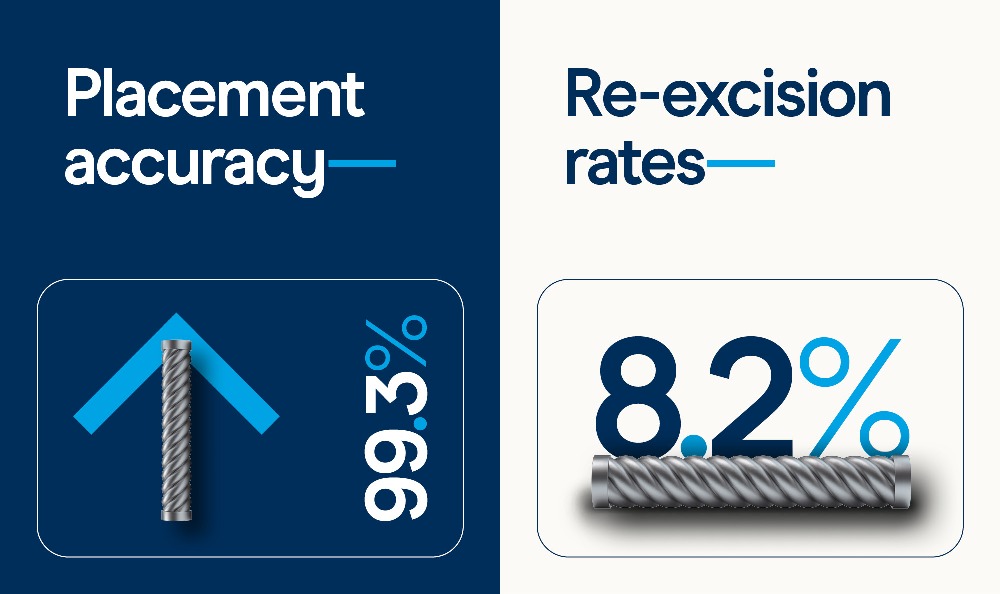
An independent meta-analysis from January 2026, pooling 2,117 patients and 2,176 Magseed marker placements, has reported low re-excision rates (8.2%) and low positive margins (7.6%) when the marker is used to localise non-palpable breast lesions prior to breast‑conserving surgery (BCS). Al Darwashi et al. (2026) pooled 16 studies to evaluate safety and efficacy outcomes when the [...]

Poor mental health, poverty and pollution can raise women’s heart failure risk, with up to one in four cases potentially preventable, a study has found. UK Biobank data from more than 230,000 women suggest that depression, socioeconomic hardship and exposure to polluted environments are linked to a significantly higher risk of heart failure in women. [...]
Newsletter
Sign up for free weekly updates
The latest femtech news, research and investment, straight to your inbox.




