




Cancer
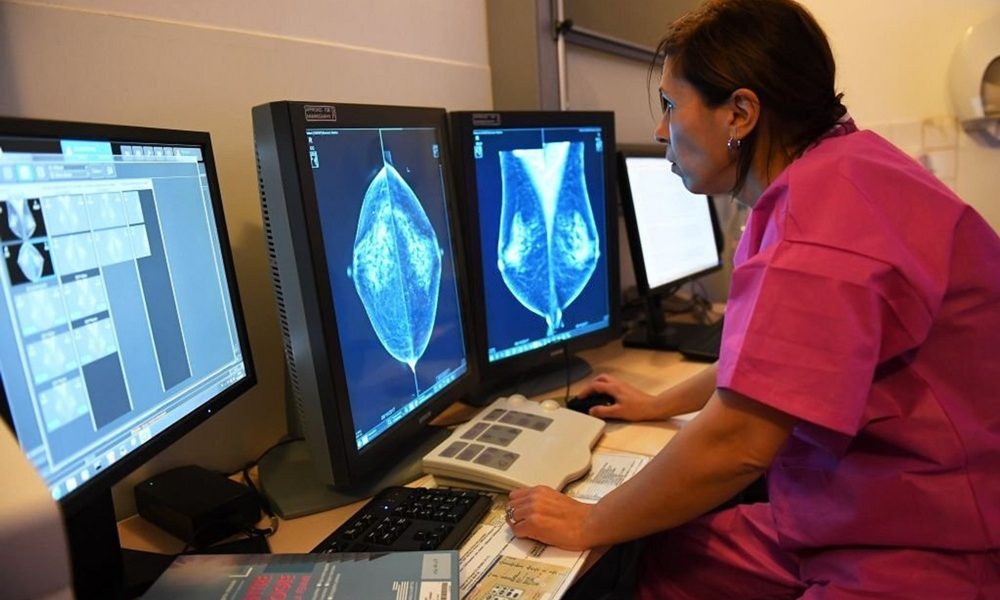
Changes in lymph nodes may help show which breast cancer patients face higher or lower risk of the disease spreading, researchers have found. The findings could support more tailored care, new treatments and help more people avoid unnecessary treatment. Dr Simon Vincent is chief scientific officer at Breast Cancer Now, which funded the [...]

A new ovarian cancer drug has been approved for NHS use in England, offering hundreds of women with hard-to-treat disease a life-prolonging treatment. Elahere is the first new drug for chemotherapy-resistant ovarian cancer to be approved by the NHS for more than 20 years. Ovarian cancer is the 18th most common type of cancer globally, [...]

AI may help speed breast cancer diagnosis for high-risk women after abnormal mammograms, a study suggests. Women with abnormal mammograms often wait weeks to learn whether they have breast cancer. Researchers at UC San Francisco and UC Berkeley said an AI-guided workflow could help reduce that wait by quickly identifying those most likely to have [...]

A genomic test may help some women with breast cancer avoid chemotherapy, with near-identical outcomes in an international trial. The findings suggest patients with a low test score could be treated with hormone therapy alone without increasing the risk of their cancer returning. Researchers said the results could support more personalised treatment decisions and spare [...]

The FDA has delayed approval of camizestrant while it reviews new analyses submitted by AstraZeneca after advisers voted against the breast cancer drug. The US regulator had been considering whether to approve the oral treatment after a phase 3 switching study in a specific group of breast cancer patients. Camizestrant is an oral SERD, or [...]

An early PET scan after one cycle of chemotherapy may help predict how aggressive breast cancer responds to treatment, a study suggests. Research led by The Institute of Cancer Research, London and King’s College London suggests that an early scan taken after one cycle of chemotherapy could help predict how well a patient’s cancer will [...]

Only one per cent of women can name all five gynaecological cancers, new research suggests, as 21 women in the UK die every day of the diseases. The report also found that 31 per cent of women have put off or avoided seeking medical advice for gynaecological symptoms. It also found that 43 per cent [...]

AI could transform ovarian care by personalising cancer and fertility treatment, but more clinical validation is needed before routine use. A systematic review and meta-analysis found AI models showed high diagnostic accuracy for ovarian cancer when combining data such as ultrasound scans and blood test results. Across 81 studies, AI models correctly identified ovarian cancer [...]

Femtech World is delighted to reveal the shortlist for this year's Women's Cancer Innovation award. The award, sponsored by Endomag, will honour a groundbreaking innovation dedicated to the prevention, early detection treatment or ongoing care of cancers that uniquely or disproportionately affect women. Endomag is a medical technology company devoted to improving the global standard [...]

Ki-67, a protein used to measure tumour growth, may also help prevent chromosome errors that drive cancer, a study suggests. The findings could change how scientists view Ki-67, a marker commonly used in breast cancer and other tumours to assess how quickly cancer cells are growing. Researchers found the protein may help preserve genome stability [...]
Newsletter
Sign up for free weekly updates
The latest femtech news, research and investment, straight to your inbox.




