




Pregnancy
Wales becomes first UK nation to unite maternity care under a single digital record

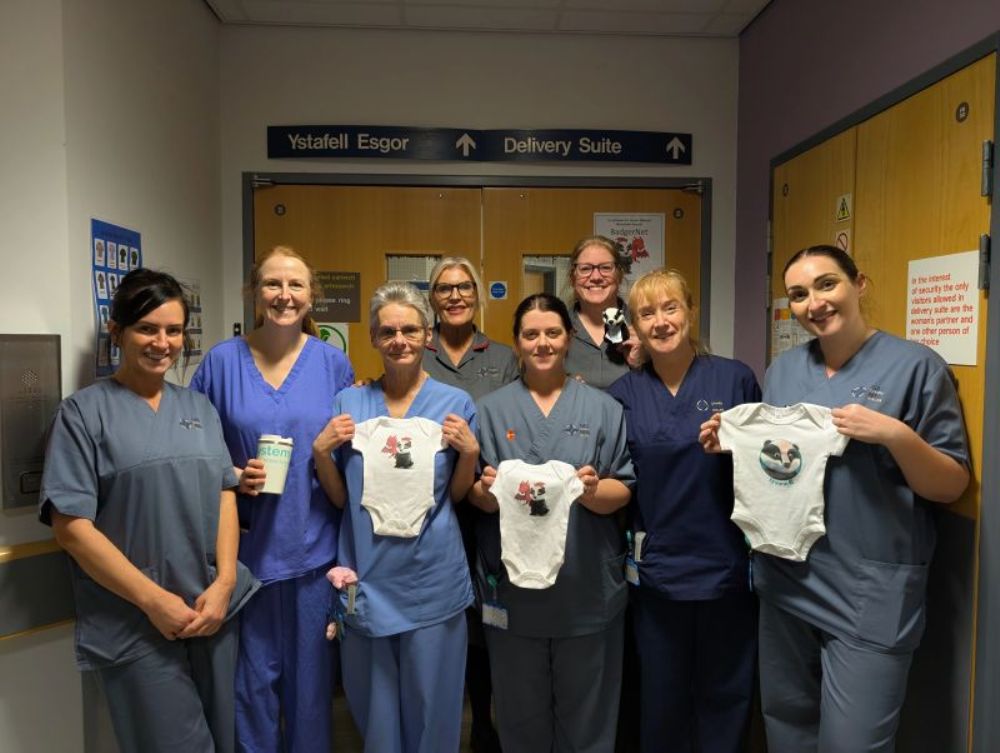
System C has completed the national rollout of BadgerNet Maternity across all seven NHS Health Boards in Wales. This is the first time any UK nation has unified its maternity care under a single digital record and patient-facing app.
With approximately 26,000 babies born annually in Wales, BadgerNet connects maternity information across organisational boundaries in the country.
Expectant parents can access their records, maternity appointments and key updates digitally through a single app, wherever they receive care while clinicians have secure access to the right information at the point of care.
The national three-year agreement across all Heath Boards replaces a patchwork of separate local systems and eliminates the need for paper hand-held notes.
Anthony Tracey is director of digital at Hywel Dda University Health Board, the final of the Welsh Health Boards to go live with BadgerNet.
He said: “The rollout of BadgerNet across Wales is a vitally important step forward in modernising our maternity services and providing a consistent service across the country.
“By giving expectant parents direct access to their information and enabling clinicians to share data more effectively, we are strengthening safety, transparency and consistency in maternity care nationwide.”
For expectant parents, the single digital maternity record transforms how they engage with their care.
Instead of carrying paper notes and repeating information at every appointment, parents can access key details, appointments and updates digitally, supporting more informed conversations and shared decision-making.
The result is greater transparency, fewer administrative frustrations and a more joined-up experience throughout pregnancy and into the postnatal period, regardless of which health board they fall under.
For clinicians and Health Boards, the joined-up approach reduces duplication and streamlines handovers across teams and sites. Information is digitally captured once and made available securely wherever it is needed, helping to minimise errors, reduce time spent tracking down notes and support more efficient multidisciplinary working.
At a national level, linking maternity data across Wales creates a foundation for safer, more consistent care.
Aggregated, standardised information enables earlier identification of trends and variation, supports evidence-based policy decisions and enhances long-term service planning.
With a comprehensive view of maternity activity and outcomes across the country, Wales is now better positioned to raise standards for parents, babies and families.
Guy Lucchi, managing director of healthcare at System C, added: “Delivering a truly national approach across all seven Health Boards is a significant achievement for Wales.
“One shared system means information flows with the patient, not the organisation.
“That reduces duplication, supports earlier identification of risk and frees up valuable clinical time.
“Crucially, linking maternity data at a national level provides powerful insight to drive improvement. Health Boards can benchmark, plan services with greater confidence and ensure resources are targeted where they are needed most, while expectant parents benefit from clearer communication and a more connected experience of care.”













Scotland recorded its lowest number of births for a third consecutive year in 2025, with 45,067 live births registered.
The total was almost 696 fewer than the previous year and the lowest annual figure since records began in 1855.
Deaths also outnumbered births for the 11th consecutive year, with the gap between the two generally widening since 2014.

Registrar General and National Records of Scotland chief executive Alison Byrne said: “This is the eleventh year in a row where deaths have outnumbered births and the third in a row where we have a new record low for the number of births in Scotland.
“Generations of change are captured in these figures.
“This data will inform debate and decision-making across the public and private sectors, as we consider what this means for our future.”
Figures published by the National Records of Scotland (NRS) show the country’s total fertility rate fell to 1.23 in 2025, from 1.24 in 2024.
The total fertility rate measures the average number of children born to each woman. A rate of around 2.1 is needed for a population to replace itself without migration.
Scotland’s 2025 figure was the lowest since the start of the NRS-published time series in 1951. The country’s fertility rate was last above 2.1 in 1973.
Despite the decline in births, Scotland’s population increased slightly in the year to June 2025, driven by migration.
The annual figures also showed an increase in stillbirths, from 159 in 2024 to 188 in 2025.
This represented 4.2 stillbirths for every 1,000 live and stillbirths, compared with 3.5 in 2024. The 2024 figure was the joint lowest stillbirth rate recorded for any year and remains historically low.
The infant death rate fell from 3.5 per 1,000 live births in 2024 to 3.3 in 2025.
Adoptions declined from 369 in 2024 to 340 in 2025.
Meanwhile, 27,191 marriages took place in Scotland during 2025, 236 more than the previous year. Four per cent were same-sex marriages and 96 per cent were mixed-sex marriages.
Civil partnerships increased to 944, the highest number since 2006, the first full year in which civil partnerships were available.
The figures form part of the NRS annual release covering births, marriages, deaths and other vital life events in Scotland.
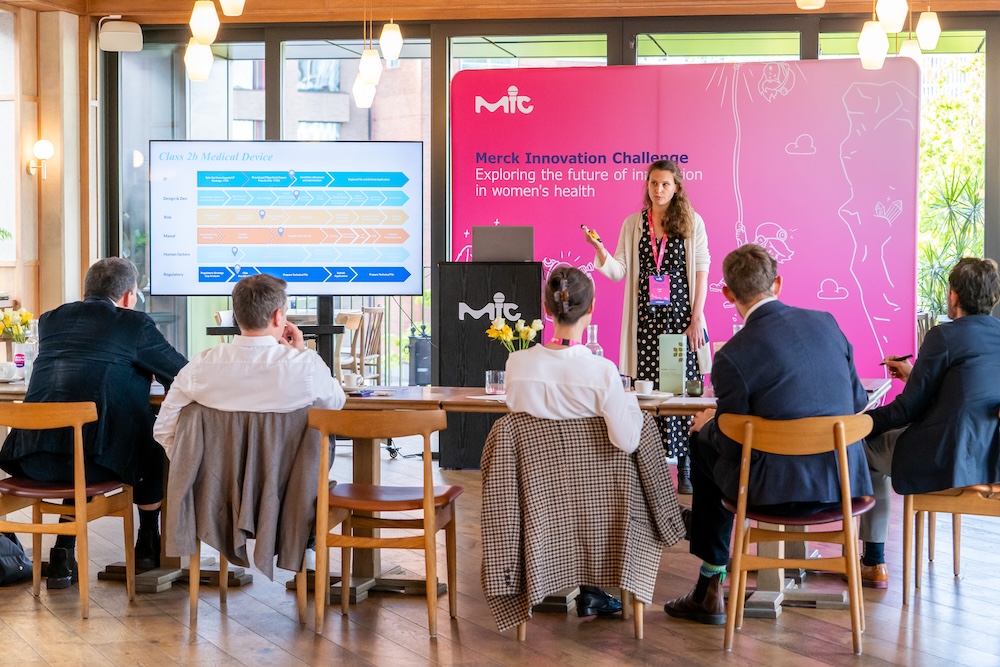
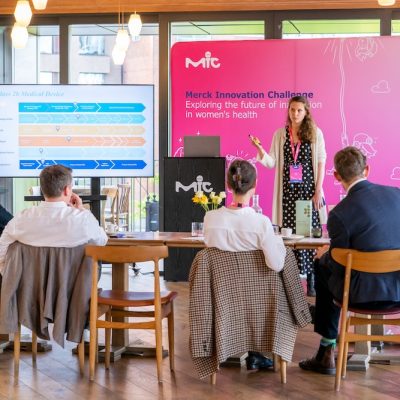
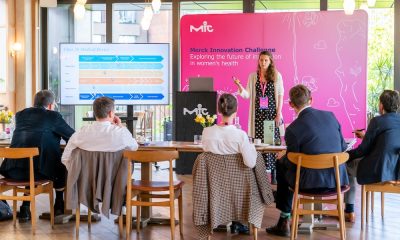
Applications close 2 September at 12pm BST for W Accelerate with Merck KGaA and M Ventures, a fast-track programme offering startups, scaleups and spinouts in reproductive and maternal health direct access to decision-makers at one of the world’s leading reproductive health companies.
With a single application, innovators connect with Merck KGaA’s partnership team and investment professionals from M Ventures, Merck’s corporate venture arm.
Selected companies will be notified on 11 September and invited to pitch at W Accelerate in London, at One Hundred Shoreditch, on 5 October.
During the event, they will receive a private 30-minute session with Merck and M Ventures leadership, small-group guidance from regulation and investment specialists, an “Ask Merck Anything” roundtable, and access to a VIP networking reception.
Applications are open to companies working on breakthrough solutions across reproductive and maternal health, including fertility, endometriosis, adenomyosis, ovarian health, preeclampsia and pregnancy comorbidities.
Applicants can choose one of three lanes, depending on whether they’re seeking strategic collaboration, investment, or both: Partnership Lane, Investment Lane, or Dual Lane. Direct-to-consumer and over-the-counter products are outside the programme’s scope.
Thang Vo-Ta, CEO & co-founder of Calla Lily Clinical Care and participant of a previous edition of W Accelerate with Merck Healthcare and M Ventures, said: “The opportunity to pitch directly to senior leadership at Merck and M Ventures sparked conversations that became the foundation of relationships leading to our eventual strategic collaboration with Merck. I’ve yet to see another event run with this level of excellence.”
For more information, visit W Group’s website: wplatform.co
Applications close 2nd September 2026, 12pm BST
W Accelerate event: 5th October 2026 at One Hundred Shoreditch, London (travel and accommodation not provided)
Apply here

Pregnant women are being advised to avoid runny or under-cooked eggs when eating out amid a developing salmonella outbreak.
The advice also applies to freshly made products that may contain uncooked eggs, including mayonnaise, soufflé and hollandaise sauce.
The FSA said well-cooked eggs served in restaurants, cafés and takeaways remain safe to eat.
The warning follows the UK Health Security Agency declaring a national outbreak of salmonella food poisoning after one person died and hundreds more fell ill.
Imported eggs or dishes containing them are thought to be behind the outbreak.
FSA chief scientific adviser Ian Young said: “If people are eating out or consuming eggs or egg-containing products from cafes and restaurants then for those people in particular who are young, elderly, pregnant or vulnerable, it’s important to make sure that any eggs or egg products that you consume in those settings have been very well cooked.”
He described the outbreak as “unusually large and rapidly increasing”, adding that “people need to be careful”.
The FSA said British eggs bought from supermarkets are not linked to the current outbreak because chickens bred in the UK are vaccinated against common strains of salmonella.
“There is no link to those eggs to this current outbreak,” Young said.
Mark Williams, chief executive of the British Egg Industry Council, said British eggs were safe to eat when runny, including for vulnerable people, and were widely available in restaurants and cafés.
“Customers who want to enjoy a runny egg should simply ask whether British Lion eggs are being used,” he said.
More than 200 cases in the UK have been linked to the outbreak, with the majority across England.
Genetic testing suggests the infections are part of the same outbreak and show similarities with previous outbreaks involving imported eggs.
Investigations into individual cases also suggest the eateries involved were buying eggs from abroad.
Salmonella are a family of bacteria that typically live harmlessly in the digestive systems of animals including cattle, pigs and chickens, which is why eggs and poultry are among foods commonly associated with infection.
People can become infected by eating contaminated food that has not been properly cooked, through cross-contamination between raw and cooked food or by coming into contact with infected animals.
Symptoms can include stomach cramps, diarrhoea, vomiting and fever.
Most people recover without further treatment, but older people, babies and people with weakened immune systems are at greatest risk of severe illness.
Hospital treatment with fluids and, in some cases, antibiotics may be needed for severe infections.
People who are concerned are being advised to contact their GP or out-of-hours service in the first instance.








 Hormonal health4 days ago
Major UK study could be a ‘game-changer’ for heavy periods and endometriosis

 Fertility2 weeks ago
Chelsea FC Women to launch first-of-its-kind player fertility fund

 Menopause5 days ago
Quarter of women miss work due to menstual symptoms, survey finds

 Menopause2 weeks ago
anna perimenopause app launches across 39 markets

 Sponsored Content1 week ago
The perfect ‘period pair’: WUKA launches first-ever Teen Starter Kit in Tesco
 Insight6 days ago
Study to tackle years-long delays in endometriosis diagnosis
 Fertility4 days ago
One week left to apply: W Accelerate with Merck KGaA and M Ventures

 Hormonal health2 weeks ago
Coffee linked to healthier body composition and distinct sex hormone changes – study