




Fertility
AI could transform ovarian care through personalisation, study finds

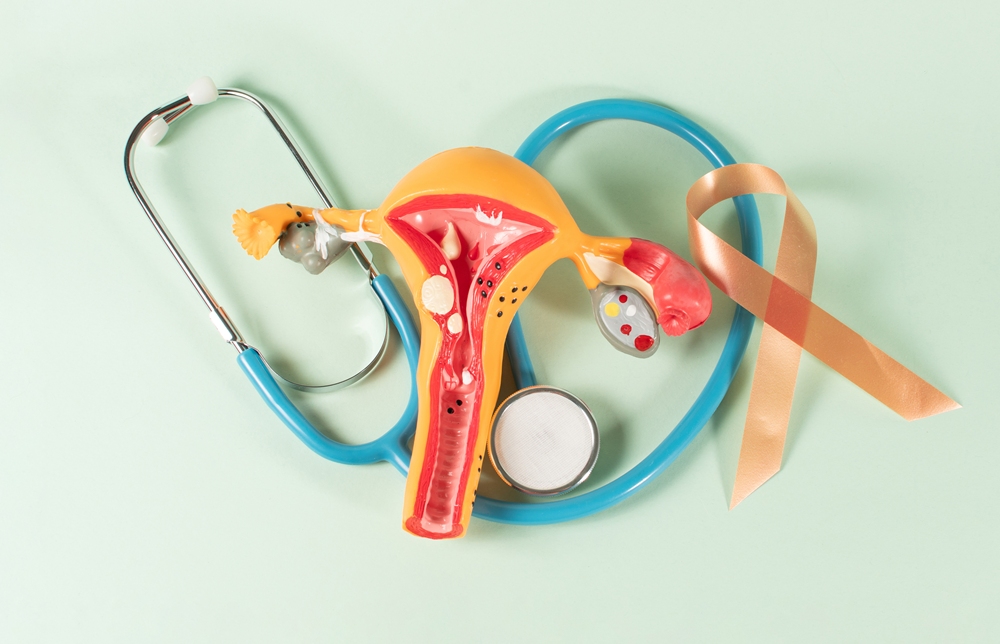
AI could transform ovarian care by personalising cancer and fertility treatment, but more clinical validation is needed before routine use.
A systematic review and meta-analysis found AI models showed high diagnostic accuracy for ovarian cancer when combining data such as ultrasound scans and blood test results.
Across 81 studies, AI models correctly identified ovarian cancer in around nine out of 10 cases, with pooled rates of 89 to 94 per cent.

They were also highly accurate at ruling out ovarian cancer when it was not present, with specificity of 85 to 91 per cent.
The analysis also found that explainable AI tools could predict complete surgical cytoreduction in advanced ovarian cancer.
Complete surgical cytoreduction means removing all visible cancer during surgery, which can be an important goal in treatment planning.
The tools achieved a pooled AUC of 0.87. AUC is a measure of how well a model distinguishes between different outcomes, with higher scores showing stronger performance.
In reproductive medicine, AI algorithms helped physicians optimise ovarian stimulation protocols and predict follicular growth during IVF.
Ovarian stimulation is the use of hormones to encourage the ovaries to produce eggs, while follicles are the small sacs in the ovaries where eggs develop.
The review found AI could reliably model ovarian response in IVF with a pooled AUC of 0.81.
However, researchers said challenges remain in translating promising research findings into routine clinical practice.
They identified substantial variation across studies, driven by retrospective study designs, variable AI systems and a lack of standardised validation.
Only 22 per cent of analysed studies reported prospective, multicentre external validation, where models are tested forward in time across multiple healthcare settings.
The authors called for rigorous validation to help close the gap between research and routine clinical practice, alongside standardised methodological and reporting frameworks, smooth integration with clinical workflow and robust governance to support responsible and ethical AI use.
They concluded: “Artificial intelligence is a transformative force in the management of ovarian conditions.
“In gynaecologic oncology, AI enhances every phase of care, from early detection and accurate diagnosis to prognostic stratification and surgical planning.”
In reproductive medicine, AI personalises ovarian stimulation and refines the diagnosis of heterogenous endocrine disorders such as PCOS.
PCOS, or polycystic ovary syndrome, is a hormonal condition that can affect periods, skin, weight and fertility.












Natural Cycles has received its sixth FDA clearance for an updated fertility algorithm designed to personalise digital contraception.
The regulator cleared the company’s next-generation NC° Fertility Algorithm, which combines statistical modelling with machine learning to predict fertile and non-fertile days.

Natural Cycles said the algorithm was trained on tens of millions of real-world fertility data points and adapts to individual cycle patterns.
“People don’t just want effective birth control; they want a method that fits naturally into their lives,” said Dr Elina Berglund Scherwitzl, chief executive and co-founder of Natural Cycles.
“One of the unique advantages of a software-based contraceptive is that it can continue to evolve.
“As our scientific understanding of fertility grows and we continue to learn from more than a decade of real-world data, we can responsibly refine the technology through rigorous research, clinical validation, and FDA review.
“This latest clearance is the result of that work, helping us give many users more flexibility while maintaining the effectiveness they rely on.”
Evidence supporting the FDA clearance showed that the updated system maintained the app’s established safety and effectiveness while giving many users more Green Days.
Green Days are those on which the app confirms that pregnancy protection is not needed.
The birth control app remains 98 per cent effective when used as intended and 93 per cent effective with typical use, according to the company.
Natural Cycles said these rates place it in the same effectiveness category as the combined oral contraceptive pill.
Typical use includes mistakes or inconsistent use, while intended use means following the method correctly.
Digital contraception uses technology and physiological data, such as body temperature, to provide personalised fertility predictions.
Natural Cycles said its updated algorithm can identify fertile and non-fertile days more precisely than traditional fertility awareness methods, which may classify larger parts of the cycle as potentially fertile.
The changes provide more Green Days while maintaining effectiveness, improve performance for people with irregular cycles and better handle lower-quality temperature or biomarker data, the company said.
A biomarker is a measurable biological signal, such as body temperature, that provides information about processes taking place in the body.
Natural Cycles also said the system can personalise its predictions more quickly as a user’s menstrual cycle changes over time.
“Years ago, the question was whether digital contraception could work. Today, Natural Cycles has demonstrated robust clinical and real-world evidence that it can,” said Dr Kerry Krauss, senior medical adviser at Natural Cycles.
“The next chapter for digital contraception is making it more personalised and easier to use while maintaining the same high standard of safety.
“This FDA clearance demonstrates how advances in AI and machine learning can improve the user experience while preserving the scientific rigour expected of a regulated medical device.”
Natural Cycles has filed a patent application covering key innovations in the updated algorithm.
The decision follows the FDA’s first De Novo clearance of the company’s birth control app in 2018.
Later clearances allowed the app to integrate with the Oura Ring in 2021 and Apple Watch in 2023.
In 2024, the FDA cleared a Predetermined Change Control Plan, creating a regulatory pathway for future hardware integrations.
Natural Cycles said the plan has since enabled the launch of its NC° Band and other hardware integrations, including a Garmin connection introduced in March 2026.
A further clearance in 2025 allowed the birth control app to be offered both over the counter and by prescription.
The company has also received regulatory authorisations in more than eight markets worldwide, including Europe, Canada, Brazil, Australia, South Korea and Singapore.


A fertility startup has raised US$4m and will open its first lower-cost IVF clinic in West Palm Beach later this year.
It will offer a full IVF cycle, including medications, for US$8,995.
Around 12 per cent of American couples struggle with infertility, according to the company, but only 14 per cent of them receive IVF because of the cost.
A single IVF cycle costs an average of US$23,500, it said, with the cost nearly doubling if further cycles are needed.
Co-founder and chief executive Van Spina said: “We’re building ABC around a straightforward premise: IVF has become unnecessarily expensive, and many patients are priced out before they ever have a real chance to start a family.”
“This is personal for me. My fiancée and I went through IVF ourselves, including multiple failed cycles,” Spina continued, citing Jamie Rapp.
“That experience pushed me to build the kind of fertility company we wished had existed when we began treatment.”
The US$4m seed round was led by Wormhole Capital and Tower Research Ventures.
In a blog post, New York-based Tower Research described ABC as a new model for fertility care, praising its “evidence-based protocols, AI-assisted intake, and modern lab workflows.”
“When we met the team at The American Baby Company (ABC), we saw an opportunity to rethink how fertility care is delivered in the US from the ground up,” the post said.
Co-founder and chief medical officer Dr Paul Magarelli is a board-certified reproductive endocrinologist and one of the most prominent voices in the US on expanding access to fertility care, according to Tower.
Reproductive endocrinology is a branch of medicine concerned with hormones and fertility.
Magarelli developed the Clinical Fertility Physician certification programme, which trains generalist clinicians to deliver routine fertility procedures under specialist oversight.
Spina spent his early career as a technology investor at Warburg Pincus before founding an institutionally backed data business in private credit.
“We’re on a mission to become the place Americans go to start their families,” Spina said.
“Our 10-year goal is to help make 250,000 babies per year.”

Onto Health has acquired Levy Health, a fertility software company providing precision diagnostics and patient intake for reproductive medicine.
The acquisition, fuelled by Onto Health’s US$20m Series A fundraise in April, supports its plan to build scalable, tech-enabled infrastructure for reproductive medicine.
Onto founder Roohi Jeelani, MD, called it the first of several moves in the company’s expansion strategy in a LinkedIn post, adding that there was “more coming soon”.
She said: “This isn’t just an acquisition, it’s proof of how we’re building Onto: physician-led, tech-enabled, and built to scale without losing the personal touch fertility patients deserve.”
Headquartered in Chicago, Onto Health combines evidence-based fertility care with artificial intelligence-driven diagnostics, clinical automation and longevity science.
AI-driven diagnostics use software to analyse patient information and support clinical decision-making, rather than replace clinicians.
Levy Health, founded in Berlin with US offices in San Francisco, helps medical providers identify endocrine disorders more quickly and helps clinics streamline fertility workups.
Endocrine disorders affect the body’s hormone system, which can influence ovulation, menstrual cycles and fertility.
Co-founder Caroline Mitterdorfer said joining Onto would expand Levy Health’s fertility care tools to more clinics and patients, helping physicians focus on patient care.
Onto opened its first clinic in Chicago in February, with plans for three more in the greater Chicago area.
The company said in April that it would use its new funding, led by Artis and Humania, to support additional operations in the US and expand into the Gulf Cooperation Council.
The Gulf Cooperation Council includes six Arab states bordering the Persian Gulf.









 Hormonal health2 weeks ago
Stardust period tracker shares health data, study reveals

 News1 week ago
Zero Candida market set to reach over US$2 billion by 2030 – report

 News1 week ago
From Hologic to Ark Surgical: Why Joseph LaBruzzo is betting on the future of women’s surgical innovation

 Mental health2 weeks ago
Nearly 60% of young women get health advice from influencers, research finds

 News1 week ago
Applications open for Propel’s final 2026 healthtech cohort

 News2 weeks ago
Congress urged to invest over $20bn to close women’s health gap

 Menopause2 weeks ago
Many women still confused about perimenopause, research finds

 Entrepreneur4 days ago
Fertility startup American Baby Company secures US$4m
2 Comments