




News
Digitizing self-defence: Three tech-based solutions that can improve women’s safety


From education to property visits to concerts, everything is digitizing around us. While all sorts of activities are safer in the online world, including shopping for gifts, clothes, and groceries, there’s one area that should be of more concern to people, and this is women’s safety when going out.
The public streets can sometimes be risky places to be. When it comes to driving or ride-sharing, accident-related risks are pretty standard. Add walking around with big-ticket purchases on you, and your surroundings can instantly become more threatening if any malicious trespasser lays eyes on your belongings and attempts to subtract them from you. To complicate matters, the ever-used digital realm doesn’t necessarily teach women how to care for themselves in unforeseeable and daunting instances like the enumerated ones. This is why light should be shed on how tech and virtual applications like tech training programs can improve women’s self-defence and safety from the comfort of their homes. Let’s delve deeper into these applications to find out which ones meet your needs the best.
Phone safety features
Smartphones usually have a few built-in safety-oriented features that function without asking you to buy or download anything else. Emergency calling and location sharing are two of the best examples for anyone with a smartphone.
The evident disadvantage of limiting yourself to your smartphone only is that if the internet is bad, the battery is dead, or the device is simply inaccessible, it becomes useless and can leave you prone to perils when you expect them the least. Fortunately, there are things you can do to reduce such daunting instances, like equipping your phone with a SIM card and external charging battery.
Both iPhones and Androids cut it
On iPhones, you can go to a contact card and choose to share your location or send your current location. These also come equipped with an emergency call button that you can activate through a combination of taps. Moreover, the iOS 17 launched a check-in feature that allows two peers to share ending locations and travel timeframes. These possibilities allow your loved one to always be in the know about your surroundings, enable you to always know where your daughter is, and so on.
Conversely, with Androids, things tend to get a little complicated due to the variety of brands and types of smartphones belonging to this category. Androids can present slightly distinct features, meaning that you might need to do your research and figure out the settings and features that work on your specific Android yourself. At the end of the day, it’s your safety in the game, so it’s worth taking advantage of some perks that already exist with your phone. It’s worth mentioning that you should have all these settings already established if you plan to rely on them while you’re driving your car. With the rising awareness concerning distracted driving, claim solicitor experts draw attention to the importance of always keeping your attention on the road.
A failure to protect yourself and others can easily put you in an unpleasant position legally and morally. Contrarily, if anyone risks and impacts your health and well-being while driving or partaking in road activities, you might be eligible to claim compensation for your suffering from the guilty party.
Online self-defence programs
Self-defence is often more about getting to know yourself in various situations than knowing how to make a devastating move. Martial arts or self-defence training helps you delve into your combative expression and understand contextual awareness. These elements can make the difference between a successful or failing self-defence undertaking.
A theory associated with virtual self-defence training is engraving a plan in your mind. To recreate the crisis moment, you’ll need to trigger a mental game blueprint that will have you familiar with such surroundings when the moment strikes and your reaction becomes vital.
Fortunately, there are numerous online self-defence programs, many of which emerged after the pandemic kicked in and changed the way people interact. A top-tier online software should present safety tips to make the most of your awareness, and teach you how to become a hard target. Moreover, these applications provide educational resources that can be understood and investigated. You can eventually appropriate essential lessons effectively and create a prototype for self-protection thanks to the visual training on means to spot perils.
The fundamental scope of many self-defence programs is to teach people how to identify threatening situations and deter attacks before they become victims. Instead of encouraging fights or violent contact, these programs teach people how to save their lives in the safest way possible.
Virtual reality
Wearable virtual reality (VR) technology can be of underestimated help in teaching women self-defence techniques and skill building, all in a safe and systematized environment. One shouldn’t wait for a real-life situation to occur to them and leave them frozen with fear and without knowing how to protect their safety.
By replicating real-life scenarios, virtual reality apps can help learn efficient strategies to offset potential perils, enhancing preparedness, confidence, and reaction when the contexts require so. VR offers convenient access to skill-building for women in the comfort of their homes, adding the sentiment of realism that’s needed to recreate part of the emotional pressure felt in real-life dangerous situations.
Noteworthy, a PWC study revealed that the confidence in trainees using VR rose by 275% compared to those not using it, increasing their reactions’ promptness and success. Such traits can be game-changing in actual, risky contexts.
Closing thoughts
Many women experience sexual harassment, assaults, robberies, or even “near misses”. For others, coming home at night alone is one of the scariest thoughts possible. To complicate matters, the safety of our daughters is always at the top of our minds, so we are requesting a wise strategy to teach them how to protect themselves and act when faced with experiences like the already enumerated ones.
If any of these common concerns put pressure on you but you lack the resources to physically engage in courses and programs to improve self-defence mechanisms, exploring the opportunities brought by virtual reality, apps, and online self-defence programs might be life-savingly helpful. Break down your needs and choose the most suitable option for you, for there are boundless alternatives!


Our sister publication Health Tech World brings its first live event to London this summer, gathering the people building, buying and regulating healthcare AI for a single afternoon. With a full line-up confirmed and two months to go, tickets are open now, and this first edition is one to book early.
Health Tech World Live, the debut live event from FemTech World’s sister title Health Tech World, makes its first appearance on Friday 21 August, bringing clinicians, founders, developers, NHS commissioners and investors together at Teesside University London in Stratford for an afternoon on where healthcare AI goes next. The programme is confirmed, and with two months to go, it is worth booking your place while the diary is still clear.
The line-up for this first edition reads like a who’s-who of UK health AI. Speakers include Dr James Harmsworth King, Chief Medical Strategy Officer at Numan, fresh from the MHRA’s AI Airlock; Dr Sonia Szamocki, founder and CEO of 01Health; Hugo Dragonetti of NHS London Procurement Partnership; Mikael Kågebäck, CTO at Sleep Cycle; Max Gattlin, Commercial Director at X-on Health; and Marcus Vass, Head of Digital Health at Osborne Clarke, with proceedings chaired by Alastair MacColl.
Across six sessions, the afternoon moves from scaling specialist care and smarter NHS procurement, through responsible delivery and consumer AI, to fair access to GP care and the regulation underpinning all of it. Between the talks, delegates get time with the speakers and the Health Tech World editorial team, the kind of access that is hard to come by anywhere else.
It is shaping up to be one of the summer’s standout dates in health tech, and a launch worth being part of from the start. If you are planning to be there, now is the time to get it booked.
The future of healthcare AI: strategies, opportunities and vital insights
When: Friday 21 August 2026, 12 noon to 4pm
Where: Teesside University London Campus, Queen Elizabeth Olympic Park, 14 East Bay Lane, London, E15 2GW
Tickets: £99

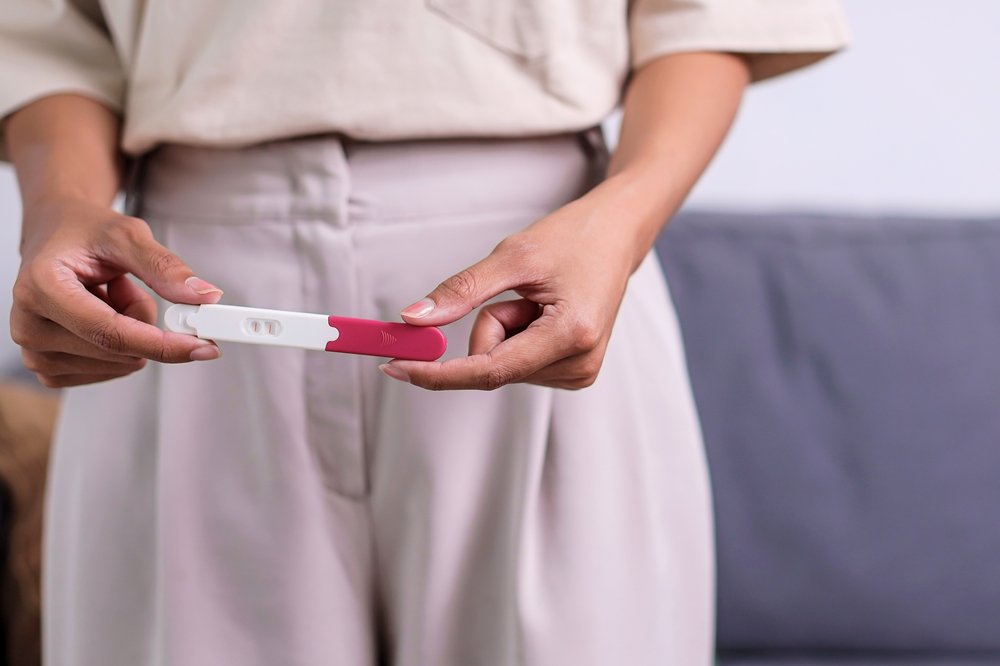
Immunotherapy may temporarily restore fertility in women with autoimmune premature ovarian insufficiency, a pilot study suggests.
Three of the 10 women who received treatment later gave birth to healthy babies.
Premature ovarian insufficiency, or POI, affects just over three per cent of women worldwide and occurs when the ovaries stop functioning before the age of 40.

The condition significantly reduces fertility and can have several causes, including autoimmune processes and genetics.
Researchers at Karolinska Institutet examined whether immunotherapy could make the ovaries temporarily responsive to hormonal stimulation in women with POI caused by autoimmunity.
The study included 12 women aged between 18 and 35 with autoimmune POI.
Two withdrew before treatment began. The remaining 10 underwent ovarian hormone stimulation before receiving rituximab and again four to six months after treatment.
Rituximab is an approved and well-established medicine used to treat several autoimmune conditions and cancers.
None of the women responded to ovarian stimulation before receiving the drug.
After treatment, six developed follicles that made it possible to retrieve eggs in response to ovarian stimulation.
Follicles are small sacs within the ovaries where eggs develop.
Professor Angelica Lindén Hirschberg, the study’s first author and a professor at Karolinska Institutet’s Department of Women’s and Children’s Health, said: “The results show that in some women there remains an egg reserve that can be activated when the autoimmune process is suppressed.”
In five women, mature eggs could be frozen or fertilised.
Three later had embryos transferred and all three gave birth to healthy babies.
For safety reasons, the embryo transfers took place no earlier than one year after treatment.
One serious side effect was reported and was linked to the hormone stimulation rather than the immunotherapy.
Women with autoimmune POI commonly have other autoimmune diseases.
All six women who responded to the treatment also had autoimmune Addison’s disease, a condition in which the immune system destroys the adrenal glands.
The study was a proof-of-concept investigation without a control group and involved a small number of participants, meaning the findings must be interpreted cautiously.
A proof-of-concept study is an early investigation designed to assess whether an approach could work before it is tested more widely.
Professor Lindén Hirschberg said: “This is a first step. To determine whether the method is effective and safe, larger, randomised studies are required.”
The research team has launched a larger randomised study.
The work was carried out by researchers at Karolinska Institutet, Karolinska University Hospital and the University of Bergen.
It was funded by organisations including the Swedish Research Council, the Knut and Alice Wallenberg Foundation, the Novo Nordisk Foundation and Region Stockholm.
The researchers reported no conflicts of interest.
POI is also linked to long-term health risks caused by oestrogen deficiency, including osteoporosis, an increased risk of cardiovascular disease, cognitive decline and poorer mental and sexual wellbeing.
Hormone replacement therapy can relieve menopausal symptoms and reduce many of these risks, but no treatment has been reliably shown to restore fertility in women with POI.
Egg donation was previously the only option for women with the condition who wanted to become pregnant.

Xella Health has launched what it calls the first AI precision health platform built for the XX chromosome.
The company says it aims to address a lack of diagnostic precision and clinical research focused on female biology.
Women make up half of the population and account for 80 per cent of consumer healthcare decisions, but research into women’s health has historically received less funding than male-focused studies.

Kelly Lacob, Xella Health co-founder and chief executive, said: “Women have been trapped in a diagnostic dark age experiencing debilitating symptoms like severe period pain, bloating and GI issues, exhaustion, and brain fog, routinely dismissed by the healthcare system.
“This dismissal results in women being diagnosed four years later than men, on average, for the same conditions, and a seven-to-10-year delay for women to receive an accurate diagnosis for conditions like endometriosis.
Stalling necessary care and treatment results in prolonged suffering with chronic pain, heightened infertility risks, and declining mental health.
Xella is here to replace the systemic medical gaslighting women have endured for generations.
We are handing women the evidence and information they need to advocate for themselves and secure faster, accurate diagnoses before early-stage conditions spiral.”
Xella says its AI examines billions of data points from clinical information and multi-omic biomarkers to assess the probability of more than 130 conditions specific to female biology.
Multi-omic data combines information from several biological areas, including genes, proteins and hormones.
The conditions assessed include polyendocrine metabolic ovarian syndrome, or PMOS, formerly known as polycystic ovary syndrome, as well as perimenopause and endometriosis.
Xella was founded by Lacob, Adriana Dantas and Dr Jesus Ching, who developed the concept while working together on molecular diagnostics at Mammoth Biosciences.
The founders say the platform is designed to provide information about possible underlying causes through advanced testing and long-term care of a kind often available only through expensive concierge services.
They drew on personal experiences to build a service intended to identify small changes in a woman’s biological baseline.
Members complete an initial health questionnaire before having blood taken at a local partner laboratory such as Quest or Labcorp.
A phlebotomist can also visit a member’s home for an additional charge.
The company’s AI analyses biomarker data from genomics, proteins and hormones alongside symptoms, lifestyle risks and medical history.
Xella says this information is used to screen for more than 130 female-specific conditions, including PMOS, Hashimoto’s disease, premenstrual dysphoric disorder, endometriosis and perimenopause timelines.
Hashimoto’s disease is an autoimmune condition in which the immune system attacks the thyroid gland.
Premenstrual dysphoric disorder, or PMDD, is a severe form of premenstrual syndrome that can cause significant emotional and physical symptoms.
The results are processed through Xella’s own dry laboratory, which the company says is certified under the US Clinical Laboratory Improvement Amendments and accredited by the College of American Pathologists.
A dry laboratory analyses data using computing and other non-experimental methods rather than carrying out traditional laboratory procedures.
The findings are turned into a personalised healthcare plan and reviewed with a certified telehealth doctor.
The doctor may recommend immediate clinical action, including personalised hormone therapy or referrals to genetic counsellors, pelvic floor physiotherapists and reproductive endocrinologists.
Reproductive endocrinologists are doctors who specialise in hormones, fertility and reproductive health conditions.
Dantas, co-founder and chief operating officer, said: “Women’s health data has historically been treated in isolated silos – a hormone test here, an ultrasound there – but no one was connecting the dots across the entire biology.
“By tracking unique biological patterns longitudinally across cycles and life stages, we aren’t just providing data, but a clear path forward.”
Xella’s clinical advisers include Dr Allison Kurian, director of Stanford Women’s Clinical Cancer Genetics Program and professor of medicine, epidemiology and population health at Stanford.
They also include Dr Lynn Westphal, a reproductive endocrinology and infertility specialist and chief medical officer of Kindbody.
Xella has received US$4.7m in angel and pre-seed funding from Precursor Ventures, Capital F, Ulu Ventures and Swizzle Ventures.
Other funds and angel investors from healthcare, diagnostics and consumer technology also participated.
Margaret Coblentz, co-founder and general partner of Capital F, said: “Women’s health is one of the highest-momentum categories in the market today, driven by a US$15tn female economy.
“Xella represents exactly how Capital F sees women’s health evolving: deep clinical expertise paired with a consumer-first mindset, and a genuine opportunity to unlock the next generation of healthcare.”











 Mental health3 weeks ago
British women among angriest in Europe, health survey reveals

 Menopause4 weeks ago
Women still being failed when they reach menopause, experts say

 Menopause3 weeks ago
Apple Health adds menopause and perimenopause tracking
 News2 weeks ago
Femtech World Awards 2026: Winners revealed

 News3 weeks ago
Elation Health acquires EHR startup Aster

 News3 weeks ago
Menopause workplace toolkit launched to help UK employers support staff
 News4 weeks ago
Endometriosis documentary profiles stars including Marilyn Monroe and Amy Schumer
 News4 weeks ago
Smartwatch data helps researchers study menopause transition