




Femtech World Awards
Femtech World Awards nominations are open for 2025


The Femtech World Awards are back for a second year, with nominations for all 10 categories now open.
The awards will celebrate the brightest lights in femtech and will recognise some of the best examples of leadership, innovation and impact in key women’s health areas.
This year’s inaugural event, which concluded with an online ceremony in May, attracted hundreds of entries from across the globe.
The Femtech Wolrd Awards 2025 will be delivered in partnership with Planned Parenthood, who will also be selecting the winner of the Judges’ Choice Award.
Planned Parenthood is a trusted health care provider, an informed educator and a global partner. For the past century, Planned Parenthood has transformed women’s health and empowered millions of people worldwide to make informed health decisions, forever changing the way they live, learn, love and work.
Its skilled healthcare professionals deliver vital reproductive healthcare, sex education and information to millions of women, men, and young people worldwide.
Award categories:
- Company of the Year sponsored by Guidea
- Research Project of the Year sponsored by Future Fertility
- Women’s Cancer Innovation sponsored by Endomag
- Menstrual Health Innovation sponsored by Clue
- Maternity Health Innovation sponsored by TeleScan
- OB/GYN Innovation sponsored by Elitone by Elidah
- Fertility Innovation sponsored by FinDBest IVF
- Menopause Innovation sponsored Cross-Border Impact Ventures
- Brain and Mental Health Innovation sponsored by Women in Cloud
- AI Innovation sponsored by SiS
- The Judges Choice Award sponsored by Planned Parenthood
Nominations close in February 2025, when the entries will be shortlisted by the Femtech World team. The shortlist will be passed on to a judging panel, who will support the deciding judge in deciding the overall winner.
Sorina Mihaila, editor of Femtech World, said: “We are really excited to launch the Femtech World Awards 2025.
“This year’s event introduced us, our readers and the event sponsors to so many incredible companies, entrepreneurs and innovations. We are thrilled to do it again in 2025.”
To enter and for more information, visit our awards page here.









Diadia Health, winner of the Femtech World AI Innovation Award, is working to revolutionise women’s health through AI-backed at-home testing.
By analysing genetics, biomarkers and medical literature, Diadia addresses women’s health issues, taking a functional medicine approach to healthcare.
With the goal of making personal healthcare accessible and affordable, Diadia Health uses technology to automate tasks for clinicians and doctors to save time and improve decision making, and provides comprehensive health reports.

Diadia app was founded by machine learning and AI scientist and CEO Elena Ikonomovska, and CTO Andrii Yasinetsky.
Ikonomovska speaks to Femtech World about the inspiration behind the app, how the app helps to find health issues traditional care misses and the future of Diadia in the healthcare system.
What was the inspiration behind the app and what was at the forefront of your mind when developing Diadia?
My research was about learning from infinite data streams, so for a very long time, I’ve been obsessed with the idea of teaching machines how to learn, in a similar way to how humans learn, which is incremental.
Early on I got into the space of machine learning and built multiple products and systems at companies like Google, Reddit, Change.org.
I also built a number of companies which were all AI first companies, always with a social impact in mind as I was creating these products.
I started experiencing health issues during my last company, and I’ve always been someone that has tried to be as healthy as possible – eating healthy, working out – but I was still becoming pre-diabetic.
My health was getting worse and worse. I spoke to four different doctors, changed primary care doctors, providers, and no one actually had any idea what’s going on, and didn’t know how to help me.
Being a scientist, I decided I was going to try to solve it by myself with the help of AI.
At this time, AI was already at a place where it was quite powerful, allowing us to research and read all the medical knowledge and interpret data.
I realised that there’s so much knowledge we have that has not reached healthcare providers because it is specialised knowledge.
The way that the healthcare system is organised is that everything is solved within a specialty, isolated.
The problems are looked at in isolation when, in essence, they’re not isolated. They’re very connected. Everything in the body is influencing everything else.
Through that problem, I actually started learning about this, and I started applying concepts of systems biology, which is used in functional medicine, an area of medicine which is very niche.
They look at the body as a whole system when they’re solving problems.
This is how I discovered answers for my health, over time, I understood the real cause for my issues was thyroid problems.
This was contributing to my insulin resistance and a number of other deficiencies such as iron anemia, that were contributing to the whole problem that needed to be solved all together, so that I could stop myself from becoming diabetic.
At Diadia, you combine genetics, biomarkers, and medical literature to uncover what normal testing tends to miss.
What was the breakthrough that made you realize AI could solve a problem that traditional clinical tools have struggled with?
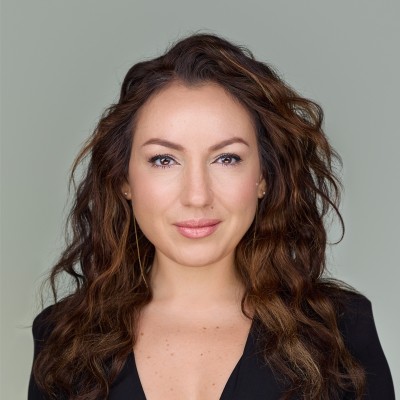
Elena Ikonomovska
AI is capable of connecting the existing knowledge we have with questions and problems.
Initially, we built a system that was capable of seeing the problem only from the five biomarkers without further testing, and that made me realise that this is powerful because it can make the connections between these data points and that represent the different systems in the body intelligently.
This means that it understands the relationships, understands biology, understands how things are like, you know, interacting with each other.
The only thing that we were worried about is that sometimes it might be wrong, as it really doesn’t do proper logical thinking but pattern matches and connects information that statistically is likely accurate together.
There is no protection from fabricating little details that are wrong.
So what we call hallucinations are happening more and more, these are mistakes that AI does that are not obvious.
You can’t catch them by the eye, especially if you’re not an expert. You wouldn’t understand that this is not true.
What we did was we forced logical thinking, we forced logical connections between the evidence that the AI is capable of finding, so that we make sure that the conclusion at the end from the data that is being given is making sense.
It’s logical, and there is research and there is data supporting that connection. That’s something that chatbots don’t do.
I think that’s the reason that makes me sleep well at night because we know that this way we can connect not only genetics – we actually work with gut tests and metabolites, toxins analysis, infections, and all sorts of different tests and biomarker labs.
It enables a multi-specialist view on the problem when you’re analysing the data of the patient in the context.
There may be concern that AI might replace clinical judgment, but you have taken a different approach – what have you learned from working with clinicians about where AI creates the most value?
I don’t believe AI will replace clinical judgment, not yet.
For AI to be able to replace clinical judgment, it needs to be trained over highly dimensional data coming from specialty labs that represent the full body all at once, and such data does not exist.
There is no data of that sort, and also there is no decision making clinical frameworks or choices around how treatments should be ordered and sequenced out that is available to the AI to learn from.
This is knowledge that only clinicians have.
In fact, like the best clinicians have been creating such knowledge and frameworks for decades, practicing in this cutting-edge field of medicine, honing their skills and learning from experience, and embedding the latest research.
That’s the kind of knowledge that is needed to guide these systems to make better decisions over time.
That is also something we are working with clinicians on, because we know that AI cannot on its own come up with the best actual answers, and what we want is the best possible, and the most accurate right analysis, so that we’ll be able to safely deploy such technology to millions of people.
We are working towards that world, and clinicians are a huge part of it.
The more data we generate, the more knowledge we will create about our understanding of disease, human longevity and health span will create more human judgment to continue guiding the tool to uncover more and create more data.
This will be to feed back that data into clinical decision-making processes, because the space is so unexplored, it’s like we’re just entering right now.
At the end of the day, it has to be a human being accountable for another human, and also a human that is there to explain and help the other person incorporate all the things that they need to be doing for their health.
How does Diadia bridge the knowledge gap between patients and clinicians?
The AI is analysing data and prepares very comprehensive reports with clinical priorities and protocols. It explains why certain choices have been made, what it is addressing, and more.
For the patients, there is also really great research to learn more and read more. We give them all the medical research and then it gives them something to hold on to until next time they see their doctor.
Over time we are likely going to have features like chatting functionalities so that the AI will be able to answer certain questions based on the knowledge or the clinical guidelines from a specific clinic.
It is saving hours of analysis time that most doctors don’t have time to really look at. Once you start entering this complex data, it can be hours of analysis where you need to look at 300 biomarkers, or even 1000 in some cases. That’s a long time that a lot of doctors don’t really have.
The AI is in essence cutting that off and giving them a fairly comprehensive insight report that they can quickly understand, look into things, and adjust if needed, and then hand it over to the patient.
As AI and other elements of healthcare such as precision and personalised medicine continue to evolve, where do you see Diadia heading in the next five years, and in women’s health more broadly?
Right now Diadia is being used by clinics who are practicing functional medicine. What we’re capable of, is empowering clinicians to see more patients while maintaining the same high quality standards, as well as being able to grow their practices and train staff.
I hope that as this technology becomes better, we’re going to be able to then bring it into more accessible clinics like direct primary care, and eventually integrated into the healthcare system.
My big dream is that this technology will be covered by insurance. It will be helping millions of doctors in the U.S.
For now we’re in the U.S. market in order to provide this kind of quality care and ultimately offer the service to more women and men as well this personalised precision medicine care that I believe should be the standard of care for everyone.
Finally, what does it mean to win a Femtech World Award?
It’s really an amazing recognition.
As a woman, I put a lot of heart into this. My whole mission is to build a world where women and men, of course, will have the right kind of care that we need, and we will have better data.
I hope that some of the bias and unfairness around women’s health will be fixed.
And so, being recognised that we’ve made a contribution in this direction means a lot to me.
It really helps me do this work and feel more inspired to continue forward.

Winner of the Women’s Cancer Innovation Award at the 2026 Femtech World Awards, Namida Lab is working to tackle gaps in breast cancer screening and detection through the development of an innovative tear-based test called Aria.
Catching breast cancer early depends on accessible diagnostics, with research showing that geographic inaccessibility is the most significant barrier to early detection and diagnosis.
Equally, surveys show that almost 50 per cent of US women who are eligible for an annual mammogram do not receive one every year.
Namida Lab is working to address these gaps with its breast cancer screening test, Auria.
By identifying biomarkers in tears, the-home test offers a cost-effective, accessible way that aims to improve access and uptake.
The test does not diagnose breast cancer, but detects signals early on that indicate breast cancer may be present.
Omid Mogadam, CEO of Namida Lab, speaks to Femtech World about how the company aims to save lives by improving early detection, and what it means to win the Femtech World Women’s Cancer Innovation Award 2026.
The Auria test has a unique way of detecting breast cancer using tears – what was it that inspired you to use tears as a way of detecting breast cancer?
Our work comes from academic research that is around 20 years old. There were a number of breast cancer surgeons at the forefront of trying to find early screening, because they were the ones who had to deal with consequences of finding cancers in later stages.
Two of these surgeons we know: Suzanne Love at UCLA and Suzanne Klimberg at UAMS.
They started looking at biomarkers in alternate fluids other than blood, and Suzanne Love discovered cancer or breast cancer markers in milk of lactating women – nickel aspirate.
Klimberg started looking at tears because the nipple aspirate and tears are both byproducts of blood plasma.
They did clinical trials and found actually that there was a difference between the protein levels in tears of women with and without breast cancer.
That was the basis of the work that we adopted and brought into the company; to actually identify what those markers were, and to validate them through various trials, and then turn that into the product that eventually became Auria.
What makes tears unique is that there’s a lot of dead cells and pieces of other analytes that are circulating in blood.
They are much larger proteins which mask the smaller ones that you’re looking for. These cancer markers are typically small small molecules, and finding them in blood becomes an expensive proposition.
What are the gaps in diagnostic care that need addressing?
Our modern healthcare system is very good at advanced diagnostics in treatments, new treatments, and advanced imaging.
What it’s not good at is engagement, in bringing people in at an early stage.
In order to be able to serve everyone, keep people healthy, and not bankrupt the healthcare systems, you really do need that early engagement, which currently doesn’t exist.
A test like ours uses a signal from your body to tell you that you need to engage the system, and that is very powerful.
The result of our test is not whether you have breast cancer, it says that there is a signal that says there might be breast cancer – so, you need to follow up and engage sophisticated imaging, diagnostics, and treatment in the healthcare system.
As a result, more people will screen, and we will find cancers in earlier stages.
Right now, in the U.S. half the mortality in breast cancer is in women under the age of 45, and a lot of them have never been screened. They come in with later stage cancers and we need to flip that statistic.
Our test is recommended for someone without symptoms, and who may not be a high risk person. If you’re high risk, you need to be in a high risk screening programme, but this is for people of average risk with no symptoms.
Can you explain the science behind how the screening test works with proteins in tears to detect the possibility of breast cancer being present?
Looking at the early cancer detection technologies, there are a lot of products that use circulating tumor DNA and methylated DNA.
These all all fall under the same category of DNA tests, and they look for the DNA shedded cells from tumours.
There is a negative to using ctDNA or methylated DNA for early cancer detection because, in early cancer detection, there’s not enough of those shed cells because the tumor has not formed or has formed it very small and it’s not shedding.
This means that these types of tests do very well in later stages of cancer.
For earlier stages, you shouldn’t be looking for DNA. That’s why we focus on proteins.
We’re looking for proteins that surround the formation of cancer. In breast we’re looking for breast inflammation, and vascularization proteins, which always exist in the body.
So, those are the proteins that we’re looking for, and we’re looking for elevation of those proteins. We have had several rounds of discovery in order to identify those proteins.
The very first one, we took human tears and mapped all of the protein markers that are in them.
Once we had that database, then we started looking at breast cancer and the relevance of elevation of these proteins, and which will be elevated in a statistically meaningful way for women with breast cancer.
We went through several rounds of studies to see which ones are actually highly significant, and those were the ones that we built our assay around.
What challenges do women face when looking to access early screening for breast cancer?
The inconvenience of early screening for women exists everywhere.
For example, the “danger” age for breast cancer is the busiest time of a woman’s life when they may have family obligations, aging parents, children or a career.
There is also the scarcity of resources. There are some health systems in the U.S. in larger cities where there is a six to nine month wait to get a mammogram, and if you miss your appointment, you are back in the back of the queue and have to wait another six to nine months.
Equally, there is currently a shortage of radiologists using imaging, and there is also the compression of mammograms on the breast tissue which can cause pain and inconvenience, which is also not very good for women with dense breasts or with breast implants.
In a large country like the United States, you know most of the imaging centers are concentrated in cities.
If you live anywhere between 30 to 40 miles, which is normal commuting distance in a lot of cities, it’s very difficult to take the whole day off and just go to one appointment and come back. So people miss them.
Additional barriers exist for women in certain cultures such as Hispanic women and Asian women that they don’t want to bother their family with their own issues, so they miss their cancers.
There’s a lot of issues that a convenient at-home collection will solve. Because it’s at home, you can do it any time.
You don’t need to build an infrastructure for it. We use the U.S. Postal Service, for example. That’s our infrastructure of collection.
Auria is designed to complement imaging rather than replacing it. How do you envisage the test fitting into existing healthcare pathways?
Right now, our test is direct to consumers.
We offer them through the healthcare system which currently has two branches. One is insurance covered, which adopts new inventions at a much slower rate. Then there is direct care, which is cash pay healthcare which adopts innovation much more readily.
As well as being direct to consumers, we also provide employers who pay for more than half of the healthcare costs of the country.
They also adopt new inventions much more readily than the healthcare system, and they offer it as supplemental benefits to their employees.
Eventually, we see ourselves becoming integrated into the screening system, as well as moving into other spaces such as the colorectal cancer space.
We will be bringing more patients into the system to get screened. That’s going to be the next phase of screening in cancer.
What would it mean for patients if a simple non-invasive sample could eventually become the entry point for screening for multiple cancers?
Our current product is in breast cancer, but we do have targets for other cancer markers in tears.
Depending on funding, we will expand our R&D programme into those as well.
So right now we have targets for five other cancers plus one for a diagnostic in breast cancer. That test wouldn’t just be a screening, it would be a diagnostic, and that would be a game changer.
What are the plans now for the lab for maybe the next year or two? Do you have any milestones coming up, or any specific developments you’re working on?
In order to get into the regular healthcare system in the U.S. we need FDA clearance.
Right now, our test is a lab-developed test that we sell under a CLIA license. In the next year we’re going to start our studies for the FDA clearance and submit our application there.
We’re going to continue working with more employers next year. Following that, I would like to expand into other studies and other platforms.
We also have a proof of concept: we transferred our tests to disposable cartridges, which would make it even more interesting because then you can get the result at home rather than have to send the sample back to us.
What does it mean to yourself and the team to win the Femtech World Award?
It’s a great honor to be recognised for your work, and it came out of nowhere.
We were just quietly working over here in this corner of the world when we got the good news.
One of the reasons that we’re looking to develop the disposable cartridge is for low-resource countries to be able to afford them.
They need they need different tools for for their populations, and and I hope that in the next next few years that this thinking gets to public health officials in those countries, and they start they start doing their own studies or changing changing the protocols that they are adhering to today.


By Wolfgang Hackl, CEO, OncoGenomX Inc., Allschwil, Switzerland
As the FemTech World Awards 2026 winners are revealed, it is a privilege to reflect on the Research Award 2026 sponsored by OncoGenomX Inc., and on the exceptional standard set by this year’s finalists.
On behalf of OncoGenomX Inc., sincere thanks to every applicant and congratulations go to the nominees whose work continues to push women’s health innovation forward.
Research Awards matter because they do more than recognize excellence in a single moment; they help elevate the science, courage, and systems thinking needed to transform women’s health at scale.
This year’s three finalists represented three different but equally important forms of progress. Natural Cycles brought forward one of the largest studies ever conducted on menstrual and ovulatory patterns in perimenopause, analysing nearly one million cycles from more than 197,000 women across over 140 countries.
That project stood out for both its dataset scale and its ability to translate new evidence into a regulated product designed to support women navigating a historically under-researched life stage.
IVI RMA stood out for scientific rigor and clinical precision. Its multicenter, double-blinded, non-selection study on non-mosaic segmental aneuploid embryos offered high-quality evidence on implantation and live birth outcomes, helping move fertility care away from assumption and toward a more evidence-based approach to embryo management and patient counseling.
UN ESCAP’s ‘Femtech in South-East Asia: Unlocking innovation for women’s health’ stood out for a different reason.
Rather than focusing on one product area or one clinical question, it mapped an entire emerging ecosystem.
The report examined the state of femtech across key South-East Asian markets, documented barriers such as financing gaps, stigma, weak ecosystem support, and data challenges, and then translated that research into practical recommendations for governments, investors, founders, and ecosystem builders.
In many ways, all three finalists are winners.
Each project excelled on core evaluation criteria including originality, relevance, coherence, effectiveness, efficiency, impact, and sustainability.
Each also offered something genuinely valuable to the future of women’s health: stronger evidence, clearer decision-making, more informed product development, and greater visibility for unmet needs that have gone too long without sufficient attention.
The final decision was therefore a genuine head-to-head race.
The jury supported its discussion with a numerical scoring approach, but it also looked carefully at systems impact: the extent to which a project not only advances one intervention, but improves the wider conditions under which innovation can emerge, scale, and endure.
That perspective mattered in this category, because the strongest research is not always only the most technically impressive; sometimes it is the research that opens doors for many future innovations to follow.
On that basis, the OncoGenomX Jury selected UN ESCAP as the winner of the Research Award.
The decisive factor was not simply that the report was comprehensive, though it was.
It was that the project helps change the environment around innovation itself.
It provides a practical roadmap for strengthening research, improving data governance, expanding founder support, addressing gender bias in investment, scaling innovative finance, and integrating women’s health more fully into policy and development agendas.
That broader enabling effect is what distinguished the UN ESCAP project. Natural Cycles demonstrated outstanding research translation, and IVI RMA demonstrated exceptional clinical rigor.
UN ESCAP, however, showed how research can influence the structures that determine whether many other femtech solutions will ever be funded, adopted, trusted, and scaled. In that sense, its impact reaches beyond one company, one product, or one clinical pathway, and toward a healthier innovation landscape overall.
Warm congratulations again to all finalists and nominees.
And special congratulations to UN ESCAP on receiving the OncoGenomX Research Award at the Femtech World Awards 2026.
The jury’s decision reflects deep respect for all three projects and a shared belief that women’s health advances fastest when excellent science is paired with the power to reshape the systems around it.


 Menopause1 week ago
Menopause may not explain rising heart condition in women – study

 Fertility2 weeks ago
Paracetamol use may impact future fertility, studies suggest
 Insight1 week ago
Women with birth trauma face 2.5x higher healthcare costs – study

 Menopause2 weeks ago
Cancer drug could tackle osteoporosis menopause weight gain

 News1 week ago
Medical cannabis may improve endometriosis symptoms – study
 Cancer1 week ago
Study could explain why obesity is a breast cancer risk factor

 Menopause2 weeks ago
Menopause hormone therapy may improve cardiovascular health outcomes, study suggests
 AI1 week ago
Evvy secures US$40m for AI-powered vaginal microbiome testing