




Entrepreneur
London-based graduate develops device to help visually impaired women manage their periods
Muna Daud has created the gadget during her master’s degree studies in innovation design engineering


A London-based design engineering graduate has come up with a period blood detection device to help visually impaired women manage their periods.
The device, called FlowSense, was designed by Muna Daud during her master’s degree studies in innovation design engineering at the Royal College of Art and Imperial College London. It uses disposable testing strips that attach to pads and underwear to measure pH levels and detect period blood.
Developed in conjunction with the visually impaired community at Royal National Institute of Blind People, the gadget provides tactile and audio feedback, while also helping women track their cycle.
“A lot of us use tracking apps to track our menstrual cycle, but this can be much more difficult for visually impaired women,” explains Muna.
“Up to 95 per cent of these women would rely on showing their underwear or paper towel to someone in their family who can tell them whether they got their period.
“Those who would prefer not to ask for help would wear pads three to four days before or after they’re done with their period – something that can be very expensive and unsustainable in the long term.
“With FlowSense, I wanted to develop something that could help women figure everything out themselves.”

FlowSense aims to empower visually impaired women to independently manage their menstrual hygiene
The device, which comes with a charging station that can act as a cleaning kit, lets women know whether they got their period either through vibrations or audio feedback. However, when used consistently, it can also predict a user’s next period.
“FlowSense can record users’ results on an app, so that, based on their cycles, women would be reminded closer to their next period to do the test again,” says Muna.
“The app is also a way for them to know more information about their vaginal health and pH balance.”
The need for innovation
While all women struggle, to some extent, to navigate the lack of innovation and stigma surrounding periods, those with visual impairments can be particularly vulnerable.
Only one in every five menstrual or period products are accessible for the blind which really shows that we need more innovation,” says Muna.
“As designers and healthcare advocates, we can recognise the unique challenges women face and help provide a more empathetic and inclusive design approach.”
The designer plans to collaborate with manufacturers to deploy a batch of prototypes to diverse users to gather feedback and establish trust.
“I think the product would firstly launch locally within communities to raise more awareness with visually impaired women.
“I don’t think it would be something that would be placed on the shelves right away, because it would need to be a bit more widespread within the communities so that people could be more aware of it.”
However, she would be happy to see FlowSense in big stores in the future.
“The entire mission with FlowSense is to better manage women’s healthcare and raise awareness of menstrual designs that fail to ensure everybody has access to products they can use comfortably,” she explains.
“It won’t be a device that aims to replace the typical menstrual pads; it will be a tool in addition to these other products.
“I think it’ll be quite unique, as it has no a direct competitor, but my hope is for it to become a pioneer in menstrual hygiene.”
To receive the Femtech World newsletter, sign up here.









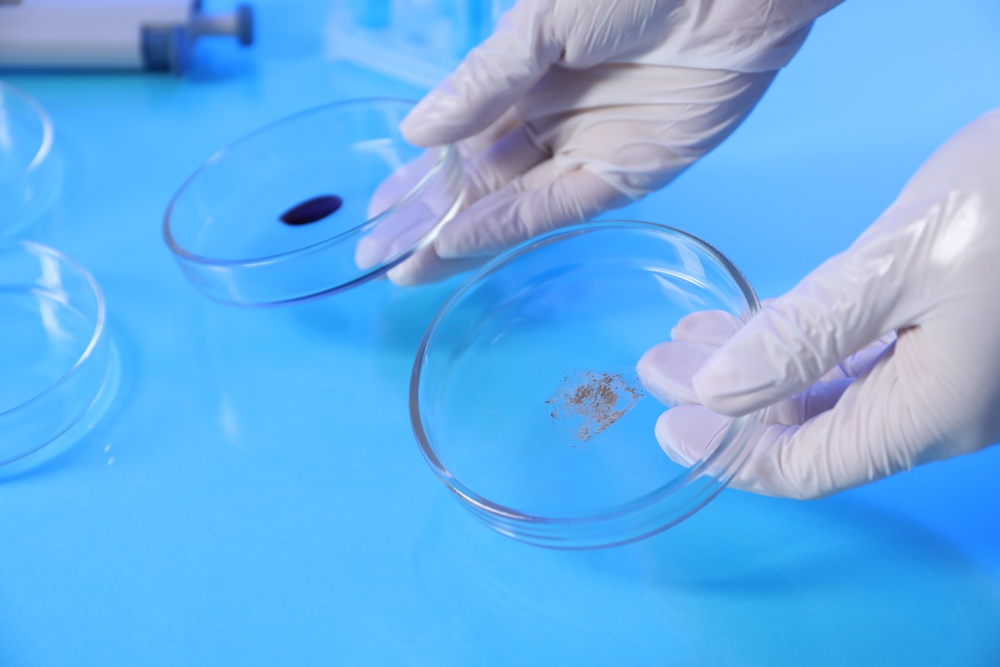
Juno Bio has secured US$3.8m to expand its diagnostics platform for vaginal health and reproductive care.
The funding round was led by Ada Ventures, with participation from Artesian, Entrepreneur First and Illumina Accelerator.
The women’s health startup said the seed funding will support the launch of its first CLIA-certified sequencing laboratory in Oakland, California, and a new clinical vaginal microbiome and STI test for healthcare providers.
CLIA certification refers to US laboratory standards for testing human samples used in diagnosis, prevention or treatment decisions.

Dr Leighton Turner, co-founder and chief scientific officer of Juno Bio, said: “The vaginal microbiome is still one of the least understood systems in the body at a clinical scale.
“With our lab, we’re starting to build a measurement standard that clinicians can actually use.
“We believe the level of detail from this kind of testing can meaningfully improve how vaginal healthcare is provided.”
The company is developing precision diagnostics for vaginal health, where patients can experience recurring symptoms, inconsistent diagnoses and treatments based on trial and error.
Juno Bio said bringing testing in-house gives it greater control over the process, from sample handling to results, while allowing it to refine its technology and build what it says is one of the largest datasets focused on the vaginal microbiome.
The vaginal microbiome is the community of bacteria and fungi that naturally live in the vagina. Changes in this balance can be linked to infections, symptoms and wider reproductive health issues.
Juno Bio’s newly launched clinical test examines the wider vaginal microbiome and screens for four common sexually transmitted infections, or STIs.
Rather than looking for a single cause, the test is intended to give clinicians a broader picture of what may be contributing to symptoms.
Juno Bio says this matters because multiple infections can occur at the same time and microbiome changes may be linked to fertility, menopause or recurrent infections.
Dr Anna Powell of Johns Hopkins said: “Vaginal microbiome testing has the potential to significantly reshape how we understand and manage vaginal health, particularly for patients with recurrent or unexplained symptoms.
“While the field is still evolving, advances in sequencing and data interpretation are moving us closer to a future where more personalised, microbiome-informed care can complement existing diagnostic approaches.”
Check Warner, co-founding partner at Ada Ventures, added: “Juno Bio is setting a new standard for how vaginal health is understood and managed.
“What they’ve built at this stage, with this level of capital efficiency, is exceptional.
“We’re proud to support the team as they scale their clinical infrastructure and continue leading innovation in this critically underserved category.”

Women’s health companies raised a record $1.55 billion in disclosed equity in 2025, up 41 per cent year on year, according to W Group’s first Global Women’s Health Investment Report, The Road to the Era of Scale.
The report tracks over 500 funding stories and 164 equity rounds across 15 categories and 30+ countries.
Eighty-five companies raised equity in 2025, the highest single-year count on record. But according to the report, the headline figure isn’t the most significant one.
The bigger shift is in where that capital went and how concentrated it was at the top compared to the year before.
The report also points to a brand new investment category that didn’t exist twelve months ago.
SheMed closed a $50 million Series A this year to build a women-specific GLP-1 and metabolic health platform, the first dedicated raise of its kind.
Alongside the momentum, the report identifies one structural risk that could determine whether 2025’s growth holds: a bottleneck at Series A that’s leaving a number of promising seed-stage companies stuck.
Molly Taylor, head of content at W Group, said: “2025 was the biggest year women’s health has ever had, and the most important finding isn’t the headline number.
“It’s that the money has stopped pooling at the top.
“Capital is reaching more companies, more categories and more countries than ever before. The Era of Scale is real. It’s just not finished, and the Series A gap is where it could stall.
“Closing that gap is the highest-leverage move this ecosystem can make in 2026.”
Read the full report: https://wplatform.co/forms/womens-health-equity-funding-trends-report-2026?utm_source=advocacy&utm_medium=ext_email&utm_campaign=2026-q3-health-report-femtech-world



Onto Health has acquired Levy Health, a fertility software company providing precision diagnostics and patient intake for reproductive medicine.
The acquisition, fuelled by Onto Health’s US$20m Series A fundraise in April, supports its plan to build scalable, tech-enabled infrastructure for reproductive medicine.
Onto founder Roohi Jeelani, MD, called it the first of several moves in the company’s expansion strategy in a LinkedIn post, adding that there was “more coming soon”.

She said: “This isn’t just an acquisition, it’s proof of how we’re building Onto: physician-led, tech-enabled, and built to scale without losing the personal touch fertility patients deserve.”
Headquartered in Chicago, Onto Health combines evidence-based fertility care with artificial intelligence-driven diagnostics, clinical automation and longevity science.
AI-driven diagnostics use software to analyse patient information and support clinical decision-making, rather than replace clinicians.
Levy Health, founded in Berlin with US offices in San Francisco, helps medical providers identify endocrine disorders more quickly and helps clinics streamline fertility workups.
Endocrine disorders affect the body’s hormone system, which can influence ovulation, menstrual cycles and fertility.
Co-founder Caroline Mitterdorfer said joining Onto would expand Levy Health’s fertility care tools to more clinics and patients, helping physicians focus on patient care.
Onto opened its first clinic in Chicago in February, with plans for three more in the greater Chicago area.
The company said in April that it would use its new funding, led by Artis and Humania, to support additional operations in the US and expand into the Gulf Cooperation Council.
The Gulf Cooperation Council includes six Arab states bordering the Persian Gulf.









 Insight2 weeks ago
Women with PMOS should have annual NHS checks, new guidance says

 Diagnosis1 week ago
Two “gamechanger” tests set to speed up endometriosis diagnosis on the NHS

 News2 days ago
New menopause drug approved for use by NHS in Scotland

 Cancer1 week ago
Thousands of women could avoid painful cancer exam with new AI blood test

 AI2 weeks ago
Breast cancer biosensor and low-cost ultrasound startups win women’s health AI competition

 Entrepreneur1 week ago
Applications open for the third W Accelerate with Merck KGaA and M Ventures

 News2 weeks ago
Clue spotlights seven women’s health journeys in new campaign

 Fertility1 week ago
Older women face lower chance of fertility treatment working, even with donor eggs, study finds