



News
The power of community for women in tech
Unlocking potential through executive preparedness, mentorship and support


In the fast-evolving tech landscape, community is crucial for women’s growth, economic empowerment, and success. Below we’ll explore how women in tech can leverage executive preparedness, mentorship and community to advance their careers and make meaningful contributions through the insights of four influential leaders involved in the Insider Circle programme from Women In Cloud.
Contributors to the discussion are:
Cass Cooper, columnist on inclusive leadership, CRN.com; principle strategist and keynote speaker, Know Better Do Better Consulting
Niya Desai, founder of Women in the Making
Rebecca Mayville, partner marketing manager, Google
Sandhya Prabhakar, senior manager information technology, Boeing India
Here they highlight their experiences and the importance of collective support in unlocking your full potential.
Niya Desai, founder of Women in the Making, passionately said of her journey with Insider Circle: “There was a moment that defined everything for me—standing on stage at the #empowHERaccess Awards. This was the moment I felt my executive gravitas—the energy of true leadership—unleash itself fully.”
Moments like these are not only milestones but also reflections of the transformative power that a supportive community can provide.
The Insider Circle is an annual leadership programme from Women In Cloud designed to prepare women for economic opportunities while uplifting women in tech.
It exemplifies how executive preparedness, coaching and mentorship can help individuals reach their fullest potential.
“Through the Insider Circle programme, I learned that true authority doesn’t stem from just what you say, but how you make others feel,” Niya explains.
This focus on emotional resonance highlights a crucial aspect of leadership: the ability to inspire and connect. In a field often dominated by impersonal metrics and data-driven decisions, the art of listening and engaging becomes invaluable.
Rebecca Mayville, partner marketing manager at Google, emphasises this, stating “some of the best leaders are those listening,” underscoring that leadership is not solely about being heard, but also about understanding and empowering others.
Moreover, the sense of camaraderie fostered within these communities leads to a culture of mutual respect and support.
Sandhya Prabhakar, senior manager at Boeing India, reflects on her experience, stating: “What truly sets apart is the way individuals lift up each other with mutual respect and support irrespective of their positions at career stages.”
This sentiment is echoed across the board, as women learn not only from formal training but also from each other’s experiences and insights. The act of lifting one another creates an environment where everyone can thrive, illustrating the profound impact of community on individual growth.
In a tech industry often perceived as isolating, these communities serve as a lifeline, providing the executive preparedness, coaching and mentorship necessary to navigate challenges and celebrate successes.
Cass Cooper, a columnist on inclusive leadership, notes the distinction between gravitas and executive presence, emphasising that “gravitas is more about dependability, consistency, confidence, and being viewed as a trusted authority”.
By fostering an understanding of these qualities within a community setting, women can cultivate the skills that not only enhance their professional presence but also contribute to a more inclusive and supportive tech landscape.
In essence, the journey of women in tech is enriched by community—a space where mentorship flourishes, relationships are built, and potential is realized. As women lift each other, they collectively rise, transforming not only their individual careers but also the very fabric of the industry itself.
Providing a support system for goal achievement
The role of community in achieving goals cannot be overstated. Niya Desai reflects on her journey, stating, “before I joined, it felt like I was moving through my career on an island, where wins were celebrated in isolation and failures were shouldered alone”.
This stark contrast highlights the profound difference a supportive community can make. With the Insider Circle, Niya discovered a tribe that not only celebrated her victories but also offered real accountability and guidance during challenging times.
“We rise by lifting each other,” she emphasises, capturing the essence of collective empowerment that propels members toward their goals.
Cass Cooper echoes this sentiment, explaining: “Community is building relationships we need, as we need it.”
She shares how the Insider Circle has transformed her perspective on support, especially after the pandemic, stating: “We are building a cohort of people, women, who want us all to win—to build—to grow into the best version of ourselves.”
The environment fosters a spirit of collaboration and encouragement, where each member pushes one another to excel, creating a ripple effect of growth.
Sandhya Prabhakar adds: “when women genuinely lift one another up, it fosters an empowering, inclusive environment which drives both personal and professional growth.”
In this way, community not only supports individual ambitions but also cultivates a collective strength that leads to shared success in the tech industry.
Thought leadership preparation
Engaging in community initiatives or groups such Insider Circle can also catalyze personal growth and thought leadership among women in tech.
Niya Desai recalls a pivotal experience with the Insider Circle, stating: “One of the most pivotal moments for me was the opportunity to do video campaigns and interviews for Hollyshorts during the screening of ‘ICONS.’”
This experience allowed her to expand her platform and discover new capabilities, transforming her from a podcast host into a “true media personality”.
Niya reflects “our voice is our most powerful tool, and how we wield it defines the impact we make,” illustrating how the community pushed her to explore new avenues for self-expression and influence.
Cass Cooper highlights a similar evolution, noting: “Being a part of the Insider Circle has made me aware of the ways those experiences make me unique, but also how they are a strategic advantage as a business thought leader.”
This awakening has allowed her to embrace her diverse background as a source of strength, positioning her for greater impact. Likewise, Rebecca Mayville shares how her involvement has reinvigorated her sense of purpose, stating: “The energy that flows in this community is exactly the kind of energy I need to remind myself that I am worthy of my own attention.”
Through these experiences, members of the Insider Circle are not only enhancing their professional skills but also fostering a robust sense of identity and leadership that will propel them into future opportunities.
What advice would they offer to women in tech:
As women navigate their careers in the tech industry, the wisdom shared by these leaders offers invaluable guidance. Niya Desai emphasises the importance of self-empowerment, saying: “Own your narrative and never shrink to fit a smaller space.”
She encourages women not to wait for validation or permission, urging them to “create your own lane” and embrace opportunities with confidence. Her message is clear: “The only validation you need is your own belief in your worth.”
Cass Cooper echoes this sentiment, advising women to seek out supportive communities: “Get in the Insider Circle—or any other group that will champion you as you advance your career.”
She reinforces the idea that collaboration is essential, reminding us, “if you want to go far, you must go together”.
Surrounding oneself with inspiring women can be a powerful antidote to the challenges of a male-dominated industry.
Sandhya Prabhakar offers practical advice too: “Stay confident in your abilities and seek opportunities to learn and grow.”
She emphasises the importance of mentorship and the ripple effect of uplifting others, highlighting that “giving back to the community can create a ripple effect of empowerment and success”.
Rebecca Mayville wraps up this collective wisdom by urging women to “surround yourself with the most inspiring people you can find”.
She notes the importance of finding those who are positive and generous with their expertise, adding: “And once you find those people, don’t ever let them go!”
Together, these insights form a powerful call to action for women in tech: to own their journeys, seek out supportive networks, and lift each other as they rise.
Conclusion
These remarkable women exemplify the critical role of mentorship and community in their journeys to success, showcasing how collaboration can lead to transformative growth. Their stories highlight the value of rising together and ensuring that no one is left behind, fostering an environment where every woman can thrive.
For those looking to join this empowering movement, Women in Cloud’s Insider Circle offers an executive preparedness program and supportive community dedicated to championing women in tech. To learn more and become a part of this inspiring network, visit Women In Cloud’s Insider Circle. Together, we can pave the way for a more inclusive and successful future in technology.









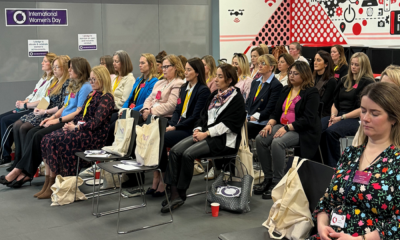





A new Female Health Hub launched by the English FA will support women and girls in grassroots football in England with trusted advice on health issues affecting play.
The hub brings together expert-backed guidance, practical tools and player insights in one place, giving women and girls practical advice and reassurance on female health in football.
It has four core aims: to help women and girls better understand their bodies and how female health affects performance and participation, to educate players on key health topics and when to seek further advice or support, to provide practical strategies to help navigate common female health challenges, and to help break down taboos and normalise conversations around female health in football.

Users of the hub will also be able to hear directly from members of the England women’s national team, who share their own experiences of navigating female health matters while playing at the highest level of the game.
“Our ambition is to create a game where women and girls can thrive,” said Sue Day, the FA’s director of women’s football.
“To achieve that, it’s essential that players feel supported in environments that understand and respond to their female health needs.
“We’ve heard directly from grassroots players that they want better information and support around female health, but that they often don’t know where to find it.
“The launch of the Female Health Hub marks an important step in changing the landscape.
“We want every player to feel confident in her own skin and supported without judgment, so she can feel empowered by her body, rather than held back by it.”
The platform was launched following research conducted by the FA that highlighted the need for better education and support around female health in football.
According to the FA, 88 per cent of adult players surveyed said their menstrual cycle has an impact on their ability to train or play, but 86 per cent reported they had never received education about the menstrual cycle in relation to football performance and training.
The research also found 64 per cent of women experience issues related to sports bras or breast health while playing football, despite sports bras being considered one of the most important pieces of playing kit.
Players also expressed strong interest in learning more about injury prevention, at 87 per cent, nutrition, at 84 per cent, and mental health, at 77 per cent, in relation to female health.
The first phase of the Female Health Hub focuses on three of the most requested topics: menstrual health, breast health and injury resilience, with further content to follow, including nutrition and pelvic health guidance.




Article produced in association with London Pregnancy Clinic and Jeen Health
For the majority of couples planning a pregnancy, genetic testing is not something they think about until a problem arises.
Pre-conception genetic carrier screening challenges this approach by identifying risk before pregnancy begins.
As panel sizes have grown and at-home testing options have become widely available, carrier screening is transitioning from a niche clinical referral into a mainstream component of reproductive planning.
What Carrier Screening Tests For
Being a carrier of a genetic condition means carrying one copy of a variant in a gene associated with that condition, without being affected by it.
In most cases, carriers are entirely unaware of their status.
The clinical significance of carrier status emerges when both members of a couple carry a variant in the same gene: in this scenario, each pregnancy carries a one in four chance of resulting in a child who inherits two copies of the variant and is affected by the condition.
The conditions most frequently included in expanded carrier screening panels include cystic fibrosis, spinal muscular atrophy (SMA), fragile X syndrome, sickle cell disease, and a range of metabolic and enzyme deficiency disorders.
The Beacon 787 carrier test, offered by Jeen Health, screens for 787 conditions from a single sample, making it one of the most comprehensive panels currently available to UK families.
Who Is Most Likely to Benefit
Any couple planning a pregnancy can consider carrier screening. It is particularly relevant for:
- Couples with a family history of a known inherited condition
- Those from populations with higher carrier frequencies for specific conditions, including Ashkenazi Jewish, South Asian and African communities
- Couples pursuing fertility treatment, where genetic information informs treatment planning
- Those who wish to have the most complete picture of their reproductive health before conception
Importantly, being a carrier of a condition does not mean a child will be affected. It means there is a defined statistical risk that can be quantified, discussed and planned for with appropriate clinical support.
How the Test Is Performed
Carrier screening is typically carried out on a blood or saliva sample.
For at-home options such as the testing offered by Jeen Health, a cheek swab collection kit is dispatched to the patient, the sample is returned by post, and results are delivered digitally within a defined turnaround period.
In-clinic carrier testing may use a blood draw and provides the advantage of immediate access to a clinical consultation at the point of result delivery.
London Pregnancy Clinic offers genetics counselling through its partnership with Jeen Health, allowing couples to receive and contextualise carrier test results with expert support.
Genetic counselling before and after testing is recommended by Genomics England as a standard component of any genomic testing pathway.
What Happens If Both Partners Are Carriers
If both partners are identified as carriers for the same autosomal recessive condition, they are typically offered further counselling to discuss their options.
These may include proceeding naturally with an awareness of the risk, using prenatal diagnosis (CVS or amniocentesis) during pregnancy to test the fetus, or pursuing preimplantation genetic testing (PGT) in the context of IVF, which allows unaffected embryos to be selected before transfer.
The purpose of identifying carrier status before pregnancy is to give couples time to consider these options without the added pressure of an ongoing pregnancy.
Knowledge of carrier status does not remove reproductive choices; it expands the information available when making them.
The Role of Pre-Conception Services
Carrier screening sits within a broader category of pre-conception care that includes fertility assessments, general health optimisation and, where relevant, management of existing conditions before pregnancy begins.
London Pregnancy Clinic offers pre-conception services encompassing fertility investigations, genetics counselling and carrier testing as part of an integrated 0th trimester approach, allowing couples to address genetic and clinical risk factors before their pregnancy starts rather than after.
Disclaimer: This article is produced for informational purposes only and does not constitute medical advice, diagnosis or treatment.
Clinical guidance referenced reflects published NHS, NICE and RCOG standards as at March 2026. Individual circumstances vary; readers are advised to consult a qualified healthcare professional before acting on any information in this article.
This piece was produced in association with London Pregnancy Clinic and Jeen Health, which provided background clinical information for editorial purposes.
Hyperlinks to external sources are included for reference only and do not represent an endorsement of any product, service or organisation.












 Events2 weeks ago
Three sessions that show exactly where women’s health is heading in 2026

 Menopause4 weeks ago
California plans US$3.4m menopause care overhaul

 Pregnancy3 weeks ago
How NIPT has evolved and what AI NIPT means in 2026

 Menopause3 weeks ago
Watchdog bans five ads for women’s heath claims

 Entrepreneur4 weeks ago
WHIS USA 2026 announces first ticket release for landmark Women’s Health Innovation Summit

 Menopause4 weeks ago
Menopause has no lasting impact on cognition, research finds

 News2 weeks ago
Two weeks left to make your mark in women’s cardiovascular health

 Opinion3 weeks ago
Q1 momentum: Female founders are advancing, but the system still hasn’t caught up
12 Comments