



News
New service to allow women with cancer in Hong Kong to preserve ovarian tissue
Ovarian tissue freezing is a technique that can offer female cancer patients the chance to preserve their fertility


A new service in Hong Kong will allow female cancer patients to preserve their ovarian tissue as a means to regain their fertility after treatment.
Fertility issues are common in women getting cancer treatment as a result of chemotherapy medicines which can affect patients’ ability to become pregnant.
Often women in need of treatment do not have time to freeze their eggs or embryos, meaning they would not know whether they could have children until after finishing therapy. Ovarian tissue cryopreservation could, in this case, be a promising option.
The procedure, now available at a Hong Kong assisted reproductive technology unit, consists of a small operation to remove some ovarian tissue which is then frozen. The tissue may later be thawed and placed back into the woman’s body once the cancer treatment is finished.
“Before the patients undergo any kind of chemotherapy or treatment that can affect their reproductive ability, we can carry out surgery to extract ovarian tissue for preservation,” Dr Jacqueline Chung Pui-wah, associate professor of Chinese University’s department of obstetrics and gynaecology, told South China Morning Post.
“If in the future, they wish to have children after their recovery, we can carry out another operation to transplant the tissue on the ovary surface so that they can reproduce again.”
Chung’s team had been assessing the feasibility of implementing ovarian tissue cryopreservation in Hong Kong since 2019.
The researchers collected and froze 52 ovarian tissue samples from 12 patients, aged 29 to 41, which were later transplanted into 34 mice.
The findings, published in the Hong Kong Medical Journal in February, showed that most of the tissue remained viable after transplant.
Ovarian tissue cryopreservation has already been offered in countries such as Singapore, Thailand and the US for about 15 years. However, Hong Kong had only provided sperm, egg or embryo cryopreservation in the past.
Success rates are similar to standard fertility treatments such as IVF. Although the treatment remains relatively new, scientists say the results are extremely promising.
While acknowledging the importance of the procedure, Chung warned that the chance of getting pregnant after the ovarian tissue was transplanted back into the patient’s body would depend on many factors, including age, uterus health and embryo quality.
It was also possible that the ovarian tissue extracted before the cancer treatment could contain cancerous cells, she said, adding that pathologists would need to examine the tissue before transplant.


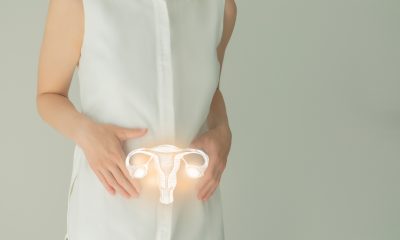



A new Female Health Hub launched by the English FA will support women and girls in grassroots football in England with trusted advice on health issues affecting play.
The hub brings together expert-backed guidance, practical tools and player insights in one place, giving women and girls practical advice and reassurance on female health in football.
It has four core aims: to help women and girls better understand their bodies and how female health affects performance and participation, to educate players on key health topics and when to seek further advice or support, to provide practical strategies to help navigate common female health challenges, and to help break down taboos and normalise conversations around female health in football.

Users of the hub will also be able to hear directly from members of the England women’s national team, who share their own experiences of navigating female health matters while playing at the highest level of the game.
“Our ambition is to create a game where women and girls can thrive,” said Sue Day, the FA’s director of women’s football.
“To achieve that, it’s essential that players feel supported in environments that understand and respond to their female health needs.
“We’ve heard directly from grassroots players that they want better information and support around female health, but that they often don’t know where to find it.
“The launch of the Female Health Hub marks an important step in changing the landscape.
“We want every player to feel confident in her own skin and supported without judgment, so she can feel empowered by her body, rather than held back by it.”
The platform was launched following research conducted by the FA that highlighted the need for better education and support around female health in football.
According to the FA, 88 per cent of adult players surveyed said their menstrual cycle has an impact on their ability to train or play, but 86 per cent reported they had never received education about the menstrual cycle in relation to football performance and training.
The research also found 64 per cent of women experience issues related to sports bras or breast health while playing football, despite sports bras being considered one of the most important pieces of playing kit.
Players also expressed strong interest in learning more about injury prevention, at 87 per cent, nutrition, at 84 per cent, and mental health, at 77 per cent, in relation to female health.
The first phase of the Female Health Hub focuses on three of the most requested topics: menstrual health, breast health and injury resilience, with further content to follow, including nutrition and pelvic health guidance.




Article produced in association with London Pregnancy Clinic and Jeen Health
For the majority of couples planning a pregnancy, genetic testing is not something they think about until a problem arises.
Pre-conception genetic carrier screening challenges this approach by identifying risk before pregnancy begins.
As panel sizes have grown and at-home testing options have become widely available, carrier screening is transitioning from a niche clinical referral into a mainstream component of reproductive planning.
What Carrier Screening Tests For
Being a carrier of a genetic condition means carrying one copy of a variant in a gene associated with that condition, without being affected by it.
In most cases, carriers are entirely unaware of their status.
The clinical significance of carrier status emerges when both members of a couple carry a variant in the same gene: in this scenario, each pregnancy carries a one in four chance of resulting in a child who inherits two copies of the variant and is affected by the condition.
The conditions most frequently included in expanded carrier screening panels include cystic fibrosis, spinal muscular atrophy (SMA), fragile X syndrome, sickle cell disease, and a range of metabolic and enzyme deficiency disorders.
The Beacon 787 carrier test, offered by Jeen Health, screens for 787 conditions from a single sample, making it one of the most comprehensive panels currently available to UK families.
Who Is Most Likely to Benefit
Any couple planning a pregnancy can consider carrier screening. It is particularly relevant for:
- Couples with a family history of a known inherited condition
- Those from populations with higher carrier frequencies for specific conditions, including Ashkenazi Jewish, South Asian and African communities
- Couples pursuing fertility treatment, where genetic information informs treatment planning
- Those who wish to have the most complete picture of their reproductive health before conception
Importantly, being a carrier of a condition does not mean a child will be affected. It means there is a defined statistical risk that can be quantified, discussed and planned for with appropriate clinical support.
How the Test Is Performed
Carrier screening is typically carried out on a blood or saliva sample.
For at-home options such as the testing offered by Jeen Health, a cheek swab collection kit is dispatched to the patient, the sample is returned by post, and results are delivered digitally within a defined turnaround period.
In-clinic carrier testing may use a blood draw and provides the advantage of immediate access to a clinical consultation at the point of result delivery.
London Pregnancy Clinic offers genetics counselling through its partnership with Jeen Health, allowing couples to receive and contextualise carrier test results with expert support.
Genetic counselling before and after testing is recommended by Genomics England as a standard component of any genomic testing pathway.
What Happens If Both Partners Are Carriers
If both partners are identified as carriers for the same autosomal recessive condition, they are typically offered further counselling to discuss their options.
These may include proceeding naturally with an awareness of the risk, using prenatal diagnosis (CVS or amniocentesis) during pregnancy to test the fetus, or pursuing preimplantation genetic testing (PGT) in the context of IVF, which allows unaffected embryos to be selected before transfer.
The purpose of identifying carrier status before pregnancy is to give couples time to consider these options without the added pressure of an ongoing pregnancy.
Knowledge of carrier status does not remove reproductive choices; it expands the information available when making them.
The Role of Pre-Conception Services
Carrier screening sits within a broader category of pre-conception care that includes fertility assessments, general health optimisation and, where relevant, management of existing conditions before pregnancy begins.
London Pregnancy Clinic offers pre-conception services encompassing fertility investigations, genetics counselling and carrier testing as part of an integrated 0th trimester approach, allowing couples to address genetic and clinical risk factors before their pregnancy starts rather than after.
Disclaimer: This article is produced for informational purposes only and does not constitute medical advice, diagnosis or treatment.
Clinical guidance referenced reflects published NHS, NICE and RCOG standards as at March 2026. Individual circumstances vary; readers are advised to consult a qualified healthcare professional before acting on any information in this article.
This piece was produced in association with London Pregnancy Clinic and Jeen Health, which provided background clinical information for editorial purposes.
Hyperlinks to external sources are included for reference only and do not represent an endorsement of any product, service or organisation.











 Events2 weeks ago
Three sessions that show exactly where women’s health is heading in 2026

 Menopause4 weeks ago
California plans US$3.4m menopause care overhaul

 Menopause3 weeks ago
Watchdog bans five ads for women’s heath claims

 Pregnancy2 weeks ago
How NIPT has evolved and what AI NIPT means in 2026

 Menopause4 weeks ago
Menopause has no lasting impact on cognition, research finds

 Entrepreneur3 weeks ago
WHIS USA 2026 announces first ticket release for landmark Women’s Health Innovation Summit

 News2 weeks ago
Two weeks left to make your mark in women’s cardiovascular health

 Opinion3 weeks ago
Q1 momentum: Female founders are advancing, but the system still hasn’t caught up
1 Comment