




Pregnancy
Health secretary orders urgent maternity care review


Health secretary Wes Streeting has launched a national investigation into England’s worst-performing maternity units after a series of scandals involving baby deaths and maternal harm.
The review will focus on up to 10 of the most underperforming maternity and neonatal services, including those in Leeds, Sussex, Gloucester, and Mid and South Essex. It will begin this summer, with findings due by December 2025.
Speaking at the Royal College of Obstetricians and Gynaecologists World Congress on Monday, the health secretary said the level of risk facing women and babies is “considerably higher” than it should be, warning of a deep-rooted crisis in care.

The announcement follows major failings uncovered in Shrewsbury and Telford, East Kent, Morecambe and Nottingham.
Last year, the maternity regulator found that two-thirds of services were rated as “requires improvement” or “inadequate” for safety.
Streeting told the congress: “Over the last year, I’ve been wrestling with how we tackle problems in maternity and neonatal units, and I’ve come to the realisation that while there is action we can take now, we have to acknowledge that this has become systemic.
“It’s not just a few bad units. Up and down the country, maternity units are failing, hospitals are failing, trusts are failing, regulators are failing.
“There’s too much obfuscation, too much passing the buck and giving lip service.”
He said he had met with bereaved families who had lost babies or experienced serious harm during childbirth.
He said: “What they have experienced is devastating—deeply painful stories of trauma, loss, and a lack of basic compassion—caused by failures in NHS maternity care that should never have happened.
“Their bravery in speaking out has made it clear. We must act and we must act now.
“I know nobody wants better for women and babies than the thousands of NHS midwives, obstetricians, maternity and neonatal staff, and that the vast majority of births are safe and without incident, but it’s clear something is going wrong.
“That’s why I’ve ordered a rapid national investigation to make sure these families get the truth and the accountability they deserve, and ensure no parent or baby is ever let down again.”
The investigation will be carried out in two stages.
The first will look urgently at the worst-performing units to give families answers as quickly as possible, while the second will assess the maternity system more broadly and produce a national improvement plan.
Streeting said the review would be co-produced with victims of maternity failings, giving families a voice in how the inquiry is run.
This includes examining individual cases in Leeds and Sussex, including nine specific cases identified by families in Sussex.
“I’m currently discussing with Leeds families the best way to grip the challenges brought to light in that trust by their campaigning, reports in the media and the latest CQC report.
In March 2022, an investigation into Shrewsbury and Telford NHS Trust found that neglect and poor care provision caused 200 babies and nine mothers to die needlessly.
A push to reduce caesarean sections and increase natural birth rates was partly blamed.
Earlier this year, Nottingham University Hospitals NHS Trust was fined £1.6m in court for a “long list of failings” in maternity care.
The trust is now at the centre of the largest-ever inquiry into NHS maternity services and was charged with five counts of failing to provide adequate care, putting mothers and babies at risk of serious harm, and a sixth charge related to harm caused to a baby named Quinn.
It is the first trust to be prosecuted more than once by the maternity regulator, the Care Quality Commission.
The Birth Trauma Association estimates that around 20,000 women each year develop post-natal post-traumatic stress disorder, with up to 200,000 experiencing trauma symptoms after childbirth.








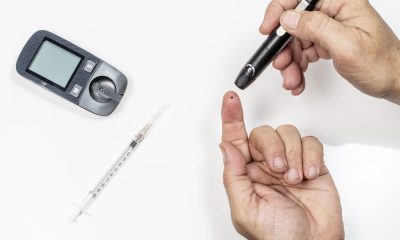




A preeclampsia study has found unusual cell activity in mothers and babies that could reveal new targets for treatment.
The condition affects 2 to 4 per cent of pregnancies worldwide and is a leading cause of maternal and foetal mortality.
There is currently no cure, and severe cases can put both the mother and baby at risk.

Scientists from UCL and University College London Hospitals found that stressed placental cells, poorly functioning blood vessels and an overactive immune response all contribute to the condition.
Preeclampsia causes high blood pressure during pregnancy. It can affect blood flow to the baby and cause symptoms such as swelling, headaches, blurred vision and pain under the ribs.
Without treatment, it can damage the mother’s health, slow the baby’s growth and, in severe cases, become life-threatening.
Previous research has focused only on the placenta, the organ that develops during pregnancy to support the baby’s growth, rather than the tissues around it.
The researchers said the findings could reveal new therapeutic targets, which are biological processes that future treatments could be designed to alter.
Senior author professor Sara Hillman, of the UCL EGA Institute for Women’s Health, said: “We studied individual cells from both the mother and the baby to see how their activity changes in healthy pregnancies compared with preeclampsia.
“This helped us to confirm some changes already suspected in the condition and also discover new ones.”
The team studied 20 pregnant women recruited at UCLH, including 10 with severe preeclampsia and 10 without the condition.
They used genomic testing to examine individual cells in the placenta and other tissues where cells from the developing baby and mother come into contact.
Genomic testing examines genetic information to help researchers understand how cells behave and the roles they may play.
The other tissues studied were the myometrium, the muscular layer of the womb, and the chorioamniotic membranes, which surround the baby during pregnancy.
The team compared cells from healthy pregnancies and those affected by preeclampsia at different gestational ages, meaning different stages of pregnancy.
They used technology that can read the genetic information of thousands of individual cells at the same time, allowing them to see what each cell was doing and where it was located in the tissue.
In preeclamptic pregnancies where babies were born prematurely, before 37 weeks, during the third trimester, placental cells showed signs of stress and low oxygen levels.
The cells also did not use energy in the normal way.
Some cells responsible for reshaping the mother’s blood vessels were not working properly, the researchers found, which may affect blood flow to the baby.
There were also signs of an overactive immune response in the placenta, nearby tissues and the mother’s blood.
The researchers said this response, together with other stress molecules released by the placenta, helps explain why preeclampsia affects the whole body and can become serious.
They hope the findings will help researchers find treatments for the condition and potentially save lives.
Co-lead author Dr Yara Sanchez Corrales, of the UCL Great Ormond Street Institute of Child Health, said: “These findings point to specific biological processes that could be targeted with treatments. Acting early in pregnancy, especially in more severe early-onset cases, could help improve outcomes and reduce the high risks associated with severe preeclampsia.
“We hope that our findings may set us on the path to reducing premature births and fatalities associated with preeclampsia.”
Co-lead author Mr Theodoros Xenakis, of the UCL Great Ormond Street Institute of Child Health, said: “Future studies may provide an even clearer picture of the biological changes linked to the disease by including more participants and using even more precise methods.”

Pregnancy complications may increase women’s risk of peripheral artery disease later in life, new research suggests.
The study analysed data from more than two million women in Sweden who gave birth to single babies between 1973 and 2015.
Led by Casey Crump, the research examined the long-term risk of peripheral artery disease among women who experienced preterm delivery, pre-eclampsia, gestational diabetes or other adverse pregnancy outcomes.
Crump, professor in the department of family and community medicine at McGovern Medical School at UTHealth Houston, said: “Our prior work has already shown that adverse pregnancy outcomes are associated with long-term risks of heart disease, stroke, and heart failure.
“This study builds on that work by showing that these women have an increased risk of peripheral artery disease, an important but understudied cardiovascular condition.”
Peripheral artery disease is often a precursor to long-term cardiovascular complications, including stroke, ischaemic heart disease and premature death.
The condition affects millions of people worldwide and occurs when narrowed arteries reduce blood flow, most commonly to the legs and feet.
Ischaemic heart disease occurs when the heart does not receive enough blood and oxygen, usually because the arteries have narrowed.
Symptoms of peripheral artery disease can include leg pain, cramps while walking, numbness, cold feet and sores on the feet or legs that are slow to heal.
Crump said women who experience pregnancy complications have an important opportunity after giving birth to make plans with their primary care doctor to monitor long-term risks.
Women who have experienced complicated pregnancies should speak with their doctor about possible future cardiovascular health risks.
Checks for blood pressure, diabetes and cholesterol are important.
While the period after childbirth is an important time for women to monitor their health, Crump said it is never too late to lower the risk of peripheral artery disease.
He said: “Women with a history of adverse pregnancy outcomes who seem to be doing well may still have a higher risk that can emerge later in life.”
Crump also suggested preventive steps such as avoiding smoking, maintaining a healthy weight and following a healthy lifestyle.
He stressed the importance of long-term follow-up care and conversations with healthcare providers to help protect cardiovascular health later in life.
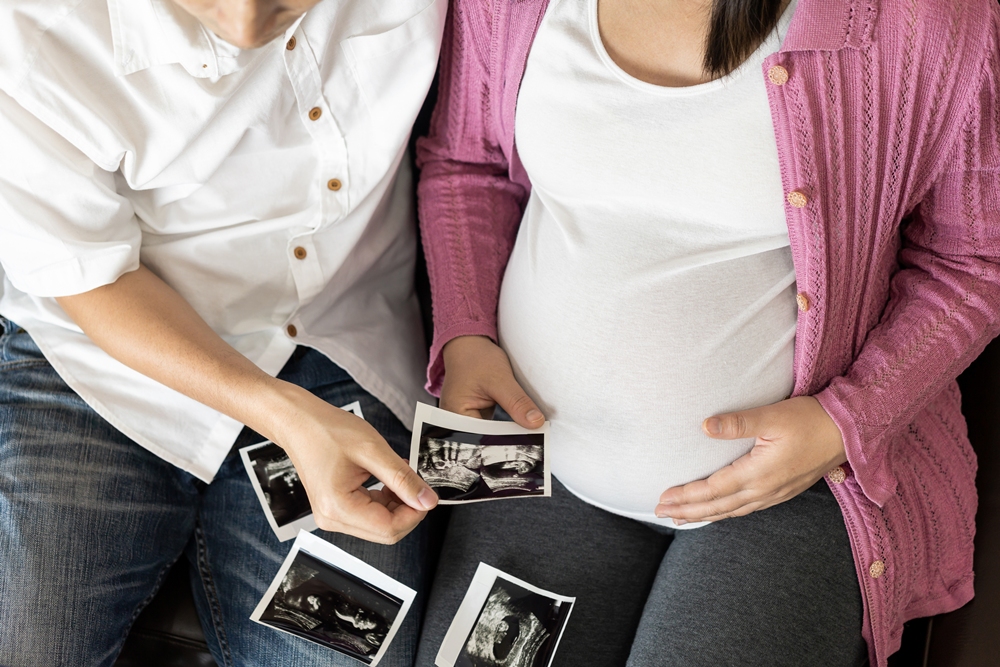
A high-powered ultrasound treatment could help identical twins affected by a rare and serious condition during early pregnancy, an initial study suggests.
Twin-to-twin transfusion syndrome, or TTTS, causes uneven blood flow between identical twins who share a placenta.
The imbalance can leave one baby dangerously small and the other too large, putting both babies’ survival at risk.

Brioney Garrett’s daughters were in danger before doctors used the world-first treatment to seal the blood vessels causing the problem without an operation.
Nancy and Margo were born healthy and, now aged four, are due to start school.
Researchers from Queen Charlotte’s and Chelsea Hospital tested the non-invasive procedure in 10 women from the UK and elsewhere in Europe after scans detected TTTS during early pregnancy.
Five women needed further treatment, while 12 of the 20 babies survived following the procedure.
The researchers described having a treatment that did not require a needle or telescope to be inserted into the mother’s abdomen as “extremely exciting”.
However, they said larger studies involving more pregnant women were needed before the procedure could be offered more widely.
Garrett described her daughters as “my miracle twins”.
She said: “We were in a very dire situation and I don’t forget that.
“It stays with me always how things could have been. Every day I still count my blessings.”
TTTS affects between 10 and 15 per cent of identical twins who share a placenta, representing around 300 to 400 pregnancies in the UK each year.
The uneven blood flow causes excess fluid to build up around the larger recipient baby, while leaving dangerously little fluid around the smaller donor baby.
Treatment usually involves inserting a needle into the womb to drain some of the fluid or using a laser to seal the connecting blood vessels.
Garrett’s procedure took about 20 minutes. She lay flat while a specially designed machine directed high-powered ultrasound waves at small blood vessels in her placenta.
She said: “It was very quick and pretty painless.”
Christoph Lees, head of fetal medicine at Imperial College Healthcare NHS Trust and professor of obstetrics at Imperial College London, described the research as “very promising”.
He said: “If this could work in a fully-fledged study, it could give hope to a lot of women who otherwise might have to have quite invasive treatment.”
Ultrasound is commonly used during medical scans to produce images of the body, but this procedure uses much more focused waves.
Heat generated by the waves can seal blood vessels about 2mm in diameter and located around 5cm to 6cm beneath the skin.
The procedure blocked blood flow in 90 per cent of the vessels treated during the study, with no unwanted side-effects reported.
Twins Trust, which supported the study, said the approach could make a significant difference for families affected by TTTS.
Helen Peck, head of healthcare engagement and research, said: “Any procedure that is non-invasive and can potentially identify TTTS earlier and improve outcomes for our families with this life-threatening condition could be a turning point.”
Scans carried out weeks after Garrett’s procedure showed that blood flow between the babies had been rebalanced, although other problems developed during the pregnancy.
Garrett said Margo, who had too little fluid around her, “was in a much better position” and that “the strain on Nancy’s heart had eased”.
Nancy and Margo were born at nearly 34 weeks, weighing 3lb 7oz and 3lb 3oz respectively.
Garrett said: “They were both healthy, and Margo wasn’t as small as we worried she was going to be.”
The twins are due to start primary school in September.
Garrett said: “They’re funny, smart, energetic little girls that just fit right in with their age group.”








 News2 weeks ago
New menopause drug approved for use by NHS in Scotland

 Hormonal health1 week ago
Stardust period tracker shares health data, study reveals

 News6 days ago
Zero Candida market set to reach over US$2 billion by 2030 – report

 Entrepreneur2 weeks ago
Women’s health draws record $1.55bn in equity as capital spreads beyond the mega-rounds

 Insight2 weeks ago
Softening ovaries could extend fertility as women age, study suggests

 Entrepreneur2 weeks ago
Onto Health acquires diagnostics software company Levy Health

 News1 week ago
Congress urged to invest over $20bn to close women’s health gap

 Mental health1 week ago
Nearly 60% of young women get health advice from influencers, research finds