




News
How Phone Apps Can Improve Your Family’s Safety


Technology has become part and parcel of most people’s lives in today’s society. According to Forbes, 94.6% of Americans have access to the internet as of 2024. This is a testament to the extensive presence of smartphones and the internet. Consequently, technology has revolutionized communication, allowing families to keep in touch even when they are miles away from each other. However, all these benefits come with ingrained risks that call for careful management. Let’s explore these risks to your family, as well as tips on how you can always use phone apps to ensure that they are safe.
Risks Your Family Is Exposed to on the Internet
The internet is a great way to access information, connect, collaborate, and even make money, as influencers and digital creators have proved time and time again. With everyone leaving a conspicuous digital footprint, it is important for you and your loved ones to exercise caution while on the internet. Here are a few examples of threats that lurk in the digital realm:
Cyberbullying
Cyberbullying is the use of technology to bully a target person. This includes sending nasty text messages or emails, intimidation, posting mean comments, photos or videos designed to hurt someone, and so much more. This is a common trend today, and it often takes a toll on the victim’s mental health. With kids nowadays having access to the internet, they may be exposed to such cyberbullying attacks. Ominously, some cases of cyberbullying have been known to lead to suicide.
Online Grooming
A common concept to keep in mind while online is that not everyone is who they say they are. Online grooming is where someone befriends someone, maybe even a child, online and builds their trust with the intention of exploiting them or causing them harm. Groomers create fake accounts with fake names and photos to appear as if they were the same age as the child. They may even make an account impersonating aspirational figures. Fortunately, armed with a robust online GPS location tracker by phone number, you can easily uncover their identity and take appropriate measures.
To lure kids, groomers often compliment kids and give them lots of attention and affection, money, and the like. Once they’ve gained their trust, they strike- which could manifest as radicalization, requesting sensitive information, or exploiting them to send sexually explicit images.
Online Sexual Exploitation
Sadly, the internet has proved to be a hotbed for the sexual exploitation of children. Cases that might be considered online sexual exploitation include but are not limited to:
- Enticing, manipulating, or forcing a child to perform sexual acts in front of a webcam.
- Distributing, importing and exporting, or knowingly obtaining sexual material from a child online.
- Sexting, which is sharing explicit images, videos, or texts
- Exposing a child to pornography without consent
Unfortunately, the same online sexual exploitation can happen to the adults in your family as well.
Phishing
This is a technique used to acquire sensitive data such as bank account numbers or passwords through solicitation emails or messages in which the perpetrator masquerades as a legitimate person or business. Kids are more likely to fall victim to phishing attacks due to their impressionable nature. As a remedy, teach them to avoid clicking links sent to them by numbers they don’t recognize or clicking links on websites.
Identity Theft
In the popular Netflix series “Tinder Swindler”, a man who presented himself as the son of a Russian-Israeli diamond mogul scammed women into giving him their credit cards. He would then go ahead to max out their credit cards, leaving them wallowing in debt. This is an apt example of how identity theft can happen.
Identify theft is the unauthorized use of another person’s name and personal information to commit fraud. Since the victim’s identity is used to commit crimes, it might end up landing them in trouble with the authorities. Common crimes identity thieves commit include applying for loans and credit cards under the victim’s name, buying products using the stolen identity, opening fraudulent accounts or making fraudulent purchases, and much more. This is why many people ask, “what is identity theft protection?”—it refers to services and strategies designed to monitor, detect, and respond to suspicious use of personal data, helping individuals reduce risks and recover quickly if their identity is compromised.
Phone Apps for Safety
Here are our top picks for apps that will help you mitigate some of the risks we’ve discussed and always ensure that your family is safe:
GEOfinder
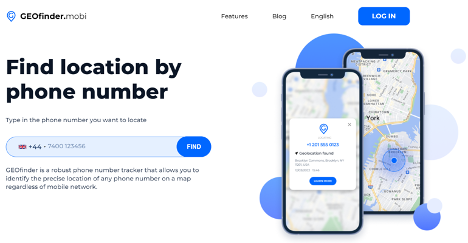
Accessible on both Android and iOS devices, GEOfinder is a web-based tool that allows you to get location information about any phone number worldwide. It operates discreetly, so whoever you track remains none the wiser. Additionally, it encrypts any data you provide to maintain your family’s privacy and confidentiality:
- VPN checker: This feature allows you to get the location information of the target recipient even when they attempt to obscure it using a VPN.
- GPS tracker: This allows you to view their exact location on a map for easier tracking.
- Wi-Fi tracker: It allows you to pinpoint their location by tracking the Wi-Fi network they are connected to. This feature comes in handy when your target is indoors, where GPS may not work accurately.
- No installation is required: GEOfinder is web-based, which means it is accessible from any browser on any internet-connected device.
- Cell phone carrier lookup: This feature allows you to know what carrier the recipient is using, and the only requirement is their phone number.
And it’s easy to use, too! Here’s only 3 steps you need to take to track a person via GEOfinder:
- Visit the GEOfinder website.
- Draft a text to send to your recipient. GEOfinder will embed a tracking link with your text.
- When they click the link, you will be able to see their location on a map in your user space.
Glassagram
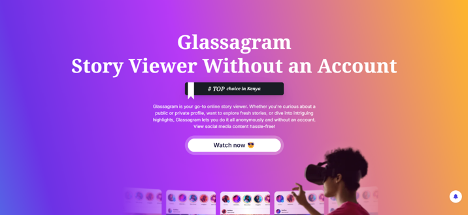
Glassagram is your go-to IG story viewer. It allows you to view Instagram profiles and stories anonymously without creating an account. It gives you full access to any Instagram account as if you were a follower, allowing you to monitor everything you need discreetly. What’s more, it works on private and public accounts. With it, you can monitor your child’s every activity on Instagram:
- Monitoring multiple accounts: Glassagram allows you to add multiple accounts to your account and check them out anytime.
- Anonymous story viewer: This allows you to view stories of any account, private or public, without appearing in the story viewers list.
- Media download: This feature allows you to download stories, reels, and pictures from anyone’s Instagram to watch at your convenience. Stories are saved for up to 3 months on the platform.
- Detailed posts’ information: This feature allows you to view the history of an account in a convenient calendar view. It will also analyze all activity of the tracked profile in the form of a chart.
- Hot likes: This feature alerts you whenever there is heightened interest in any of your target’s old posts. If it’s triggered on your child’s Instagram, it could point to a groomer or other unscrupulous character.
Fortunately, for those who don’t use technology often and have no idea what’s going on most of the time, Glassagram is very easy to set up. Here’s what you should do:
- Visit the Glassagram homepage and click on the Watch Now button.
- Select the type of account you want to monitor.
- Enter the username or URL of the account you would like to see.
- Choose and purchase a subscription to initiate the monitoring.
Phonyspy
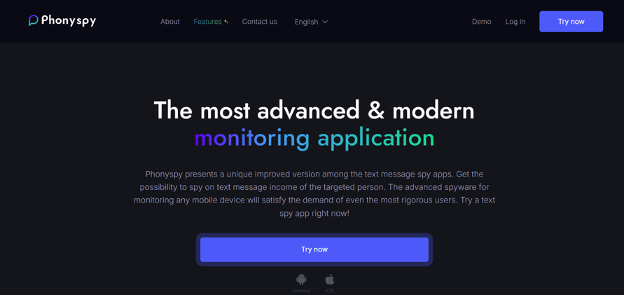
Phonyspy is a parental control app that enables parents always to keep an eye on their children. With little to no learning curve, it allows you to access data from your child’s device in real time. It also generates reports and receives updates every few minutes:
- History and call recording: The app allows you access to all calls made or received.
- Messenger monitoring: This feature allows you to monitor the most popular messengers, such as WhatsApp, Viber, FB Messenger, and others.
- Emails tracking: This feature enables you to keep track of all incoming and outgoing emails on the device.
- Browser tracking: You can easily pull up your child’s browsing history when needed using this feature.
- Photos and video monitoring: This feature gives you access to any photo or video captured on the target phone. It also gives you access to media downloaded or received.
- Keylogger: This allows you to log everything that the person types, including passwords.
- GPS monitoring: The app will give you access to the current location of the target as well as a detailed history of locations they’ve visited.
The set-up process is easy and straightforward for this one – you only have to follow these simple steps:
- Visit the Phonyspy website.
- Select the target device to be monitored.
- Install and set up the app.
- Track your device.
Conclusion
Ensuring that your family is safe and secure always is a parent’s greatest concern. The apps we’ve explored can go a long way in helping you protect and shield your children from harm that may arise online or physically. It is also a good idea to educate them on the risks they may be exposed to online and encourage them to talk to you if they feel they might be experiencing any danger online.





We are excited unveil the three finalists competing for one of the Femtech World Awards’ most coveted honours: the Startup of the Year Award, sponsored by Future Fertility.
This award celebrates an early-stage company making a bold impact in women’s health through innovation, vision and execution.
The winner will be announced at our virtual ceremony on 19 June, with the decision made by a representative from category sponsor Future Fertility.
Congratulations to the shortlist and thank you to everyone who entered or nominated.
Startup of the Year Shortlist

Hello Inside is the first women’s health AI company to turn daily metabolic signals into outcomes women feel and healthcare systems reimburse.
Women’s health has long been under-researched, and current AI benchmarks fail on women’s health questions roughly sixty percent of the time.
Hello Inside built the architecture to close that gap.
Across four years and 12,000+ validated metabolic profiles, three in four women improve at least one symptom within ninety days.
They lose four kilograms in three months, moving from overweight into the healthy range. In a clinical study with Alisa Vitti’s Flo Living, 91.9 per cent reduced PMS burden within sixty days.


U-Ploid is an early-stage biotechnology company tackling one of the most fundamental challenges in fertility care: the sharp, age-related decline in egg quality that limits outcomes across IVF and egg freezing.
While much of the field focuses on improving assessment and selection, U-Ploid is developing a first-in-class therapeutic approach designed to improve egg quality itself by addressing the biological causes of age-related chromosomal errors.
Supported by strong preclinical evidence and now advancing into human studies, U-Ploid combines scientific rigour, regulatory discipline and long-term vision to help redefine what is possible in fertility care.

Gestational diabetes is a strong risk factor for future type 2 diabetes, even in women with normal pre-pregnancy weight, according to a study at the University of Gothenburg.
The researchers call for earlier testing and better follow-up.

“Our results show that gestational diabetes functions as a kind of stress test for the body’s ability to manage blood sugar, and identifies women with a greatly increased risk of future type 2 diabetes”, said Jon Edqvist, PhD and affiliated to research at the University of Gothenburg, and operating room nurse at Sahlgrenska University Hospital.
Gestational diabetes is a special type of diabetes that can affect pregnant women.
The condition is defined as elevated blood sugar levels, without previously known diabetes. Treatment involves self-monitoring of blood sugar, advice on lifestyle habits and, if necessary, medication.
Identifying gestational diabetes is important because the disease increases the risk of complications such as preeclampsia, the need for a cesarean section and high birth weight for the baby.
Those who have had gestational diabetes are also at higher risk of later developing type 2 diabetes.
In the current study, published in eClinicalMedicine, researchers now show that gestational diabetes is a strong indicator of future risk of developing type 2 diabetes, even in women with normal weight before pregnancy.
Elevated risk even with normal weight
The study is based on data from the Medical Birth Registry on just over 1.15 million first-time mothers in Sweden, who gave birth between 1987 and 2019. 16,870 women with confirmed gestational diabetes were compared with age-matched women without the diagnosis. The median follow-up period was nine years.
The results show that women with a BMI of 35 and above, i.e. severe obesity, had an almost tenfold increased risk of developing gestational diabetes compared to women with normal weight.
The risk of subsequent type 2 diabetes also increased with higher BMI, but it was significantly increased even with normal weight, which the researchers describe as particularly worrying.
More follow-up and more studies
The researchers behind the study welcome the recently updated recommendations on gestational diabetes in Sweden, where a higher proportion of pregnant women at increased risk are expected to be offered testing earlier in pregnancy, and if necessary, interventions.
“Diagnostics and care of gestational diabetes have looked very different in different parts of the country,” said Annika Rosengren, professor at the University of Gothenburg.
“There is a need for both improved follow-up after gestational diabetes, and more studies that investigate how such follow-up affects future health and prognosis”











 News4 weeks ago
Women’s digital health market set to reach US$5.28 billion in 2026 – report

 Insight4 weeks ago
Why the UK’s fertility rate keeps falling – and what it means if you’re trying now

 Wellness4 weeks ago
Women’s HealthX unveils Northwell Health, Corewell Health, Biogen & more to headline Chronic Disease stage

 Opinion3 weeks ago
What Maternal Mental Health Month reveals about where postpartum support actually breaks down

 Fertility4 weeks ago
Toxins and climate harms having ‘alarming’ effect on fertility, research warns

 News3 weeks ago
NIH Grant terminations disproportionately impact minority scientists, research finds

 Adolescent health3 weeks ago
WUKA brings Period-Positive Pool Party to London Aquatics Centre to keep girls swimming through puberty

 Hormonal health4 weeks ago
Researcher explores weight loss jab impact on PCOS