




News
Hertility acquires Netherlands-based hormone testing company Grip


Women’s health company Hertility is announcing the acquisition of Netherlands-based fertility and hormone testing firm Grip, increasing their market share in the women’s health space
Until now, comprehensive data on women’s health hasn’t existed, but Hertility is hoping that by acquiring Grip, they will expand the dataset and reach their goal of drastically cutting down the time to diagnosis of female health conditions.
Hertility is planning on launching in Ireland this summer and the Netherlands before the end of the year and is already offering end to end gynae and fertility care with a team of over 30 experts.
With 92 per cent of women saying they have insufficient information about their gynaecological health and one in seven couples experiencing infertility, the two femtech companies have come together to enable women to take control of their reproductive health through access to personalised, at-home hormone and fertility testing, innovative diagnostics, telemedicine and scanning at a fraction of the price of private treatment.
Founded by scientists and powered by an all-female research team, Hertility is aiming to shape the future of reproductive healthcare by unique diagnostic testing that provides data-driven and advanced insights into reproductive health, fertility decline and the onset of menopause.
“This acquisition is a coming together of women who are on a mission to drive real change in women’s health,” says Dr Helen O’Neill, founder of Hertility.
“We are over the moon to have taken Grip under our wing, and will be taking Hertility into new markets, starting with the Netherlands. Anne Marie and Ling [the Grip co-founders] share the same passion as we have, and we’re proud to take the lead and redefine women’s reproductive health.”
The acquisition will mean that the Grip offering is replaced with Hertility. The latter will use the anonymised and consented data that Grip has collected to accelerate its clinical trials and shape a future in which women can receive personalised testing, diagnosis and treatment from home.
By expanding their dataset, Hertility reproductive health experts hope they can gain better insight into female health conditions and further innovate diagnostics to ultimately reduce the time to diagnosis for women worldwide.
Grip was active in the Netherlands and the UK, and going forward, will be led by Hertility’s founders Dr Helen O’Neill, Deirdre O’Neill and Dr Natalie Getreu.
“We are passionate to the core about helping women to understand their bodies better,” explains Anne Marie Droste, Grip co-founder. “It’s why Ling and I launched in 2020, and it’s why we’re proud to be joining forces with Hertility today.
“Their clinical trials that are bridging the gaps in female health are outstanding, and their deep scientific understanding and developments of this market are second to none. We are excited about the future for women’s health with Hertilty leading the charge, and we are hugely proud as women to support other women in furthering this mission.”
Hertility raised €4.6 million in April 2021 and has acquired Grip for an undisclosed sum.









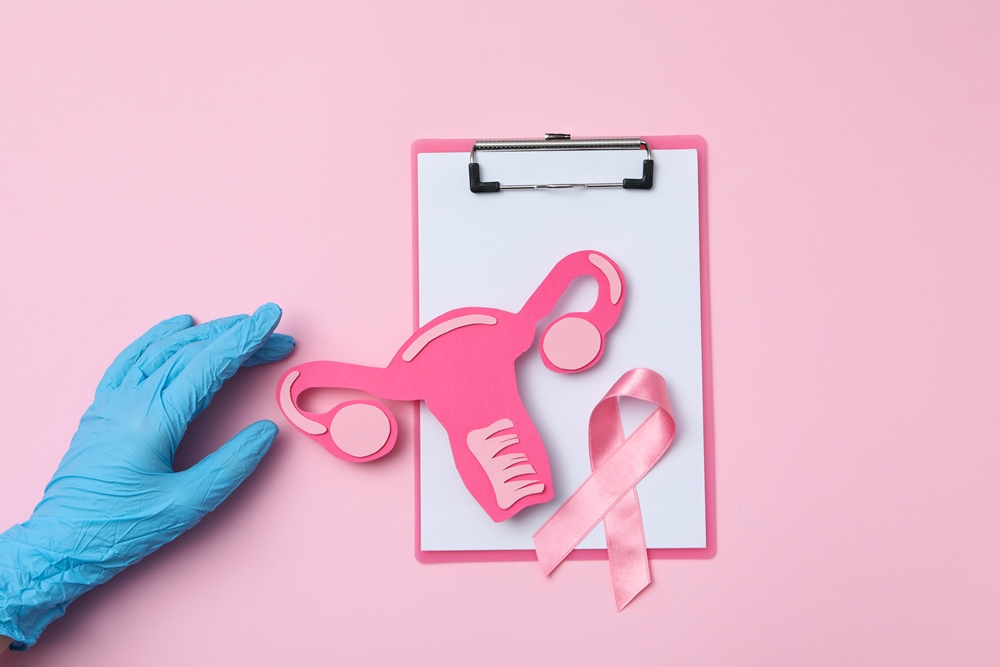
A non-profit has launched an endometriosis documentary featuring Amy Schumer and Marilyn Monroe as it pushes for changes in how the condition is treated and understood.
The Endometriosis Collective has launched to change how endometriosis is researched, treated and understood, starting with a documentary featuring stories from people including Amy Schumer and Marilyn Monroe.
The feature-length documentary, “End of the Cycle”, will premiere in New York on Tuesday, and The Endometriosis Collective is making the film free to stream online.

Schumer, a comedian, writer and actor, has previously spoken of how endometriosis left her “on the floor in pain, vomiting from the pain, the pain that nobody can see.”
Schumer is one of several celebrities featured in the documentary. Other contributors include dancer Julianne Hough, Olympic medallist Brittany Brown and actors Janel Parrish and Folake Olowofoyeku.
The Endometriosis Collective timed the documentary premiere to coincide with the 100th anniversary of Marilyn Monroe’s birth.
Monroe, who died in 1962, starred in films such as “Some Like It Hot” and “Gentlemen Prefer Blondes.”
According to a biography published in 1985, Monroe’s endometriosis was so severe that it destroyed her marriages, her wish for children, her career and ultimately her life.
The Endometriosis Collective said the documentary shares newly uncovered information about Monroe’s experience with endometriosis.
The non-profit said the information connects Monroe’s story to the experiences of women across generations, highlighting how far awareness, research and care still have to go.
A representative of the Marilyn Monroe Estate said: “By sharing this part of her story through ‘End of the Cycle,’ we hope to honour her legacy in a way that brings visibility to endometriosis, encourages more open dialogue and helps inspire the research needed to create change.”
As part of the premiere, The Endometriosis Collective is holding a panel discussion.
Schumer, Brown and Olowofoyeku, the documentary’s co-directors Sammy Jaye and Soraya Simi, and medical experts are due to be part of the premiere.
AbbVie’s Orilissa and Sumitomo Pharma’s Myfembree are among the approved drugs for endometriosis pain.
Hough, one of the participants in the documentary, starred in an Orilissa campaign in 2017.











 Menopause1 week ago
Perimenopause misinformation ‘putting women at risk’
 News4 weeks ago
NIH Grant terminations disproportionately impact minority scientists, research finds

 Adolescent health4 weeks ago
WUKA brings Period-Positive Pool Party to London Aquatics Centre to keep girls swimming through puberty
 Insight3 weeks ago
PCOS renamed after decade-long campaign to end ‘cyst’ misconception

 Events4 weeks ago
WHIS 2026 unveils agenda and first speakers for the leading women’s health summit

 Mental health4 weeks ago
CBT shows promise for menopause insomnia and hot flashes
 Diagnosis2 weeks ago
NHS urged to update website following renaming of PCOS

 News6 days ago
Three menopause innovators shortlisted for Femtech World Award