



Insight
Study reveals how sex impacts heart attack survival


A study of 900,000-plus patients found frail men faced a higher one-year death risk after a heart attack, although severe frailty was more common in women.
While attention has rightly focused on women often being undertreated after a heart attack, the research points to what it describes as a hidden and serious vulnerability in men.
The study found severe frailty, a state where the body’s reserves are reduced and recovery is harder, was more common in women after a heart attack, but the one-year risk of death was significantly higher for frail men.

This creates a more complex picture, with women facing inequalities in access to care, while frail men face what the researchers describe as a “malignant” prognosis that current standard treatments are failing to address.
The research, which the authors describe as the largest of its kind, was led by the University of Leicester and funded by the National Institute for Health and Care Research and British Heart Foundation Centre of Excellence. It analysed national data over a 15-year period to disentangle the relationship between sex, frailty and survival. It was conducted through an international collaboration with the Victor Phillip Dahdaleh Heart and Lung Research Institute at the University of Cambridge and the Center for Geriatric Medicine at the Cleveland Clinic.
Dr Muhammad Rashid, from the University of Leicester’s department of cardiovascular sciences and senior clinical research fellow for the NIHR Leicester Biomedical Research Centre, led the study alongside Dr Hasan Mohiaddin and Horatio Mosanya.
He said: “The study challenges current risk assessments which often treat frailty as a uniform predictor.”
Rashid said the interaction between frailty and sex had not previously been explored, leaving a gap in understanding patient risk. He said the findings relate to AMI patients, with AMI meaning acute myocardial infarction, the medical term for a heart attack.
“Our study provides new insights into this, demonstrating that the likely impact of frailty in AMI patients is not uniform, but significantly modified by sex. In males this could be rooted in fundamental differences with data suggesting they are more prone to artery blockages and have a higher prevalence of diabetes and multiple diseases, and a more vulnerable cardiac state. Even when they receive more intensive therapeutic care, their vulnerability and diminished physiological reserves to withstand another major cardiovascular event are low.”
“However, frailty in females may represent a more multi-system decline not exclusively linked to the severity of their coronary disease. This suggests that frailty in females is a marker of accumulated disability across multiple systems rather than being driven primarily by advanced coronary disease.”
Rashid said the findings could have significant clinical implications. He added that current risk assessment needs to evolve so that male care pathways after a heart attack are enhanced beyond cardio-metabolic management and prioritised cardiac rehabilitation, while equitable delivery of established, life-saving therapies should be established for females.
“The development and validation of new sex-specific frailty assessment tools should therefore be a priority for future research as such tools may be better suited to identifying high-risk individuals and guiding targeted interventions for the most vulnerable patients.”









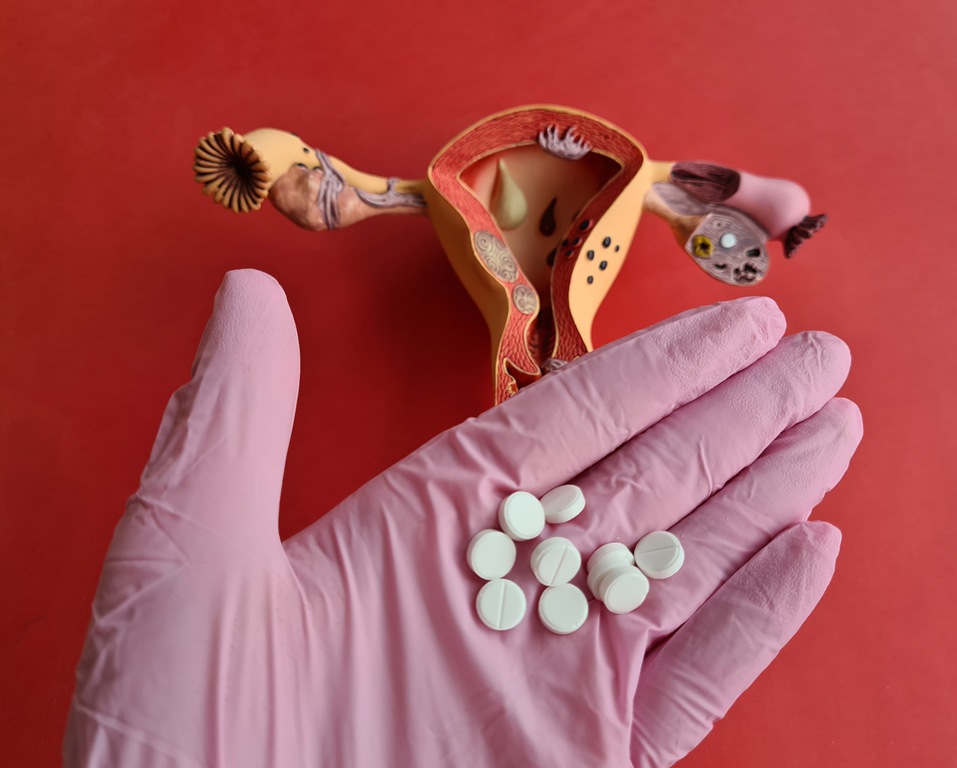
GSK said its ovarian cancer drug shrank or cleared tumours in more than 60 per cent of patients in an early trial as CCO Luke Miels pushes faster development.
The company said that in an early-stage trial, Mocertatug Rezetecan, known as Mo-Rez, shrank or eliminated tumours in 62 per cent of patients with ovarian cancer after chemotherapy had failed, and in 67 per cent of those with endometrial cancer.

Hesham Abdullah, GSK’s global head of cancer research and development, said: “Treatment of gynaecological cancers remains a major challenge, with a pressing need for new therapies that offer improved response rates.
“With Mo-Rez we now have compelling evidence of a promising clinical profile.”
GSK acquired the Mo-Rez treatment, an antibody-drug conjugate, from China’s Hansoh Pharma in late 2023 and has trialled it in 224 patients around the world, including the UK, over the past year.
Only a few patients needed to stop treatment because of side effects, the most common being nausea.
It is given every three weeks by intravenous infusion, meaning directly into a vein.
Combined with data from a separate intermediate trial in China, the results have given the British drugmaker the confidence to go straight to late-stage trials, with five clinical studies planned globally in the next few months, including on patients in the UK.
Speaking to journalists before the conference, Abdullah described Mo-Rez as a “key asset” in the company’s growing cancer portfolio.
It is expected to be a blockbuster drug, with peak annual sales of more than £2bn, which GSK hopes will help it achieve its 2031 sales target of £40bn.
A few years ago GSK did not have any cancer drugs on the market, but it now has four approved medicines and 13 in clinical development.
Last year, oncology generated nearly £2bn in sales, up 43 per cent from 2024, with sales of its endometrial cancer drug Jemperli rising 89 per cent.

Self-employment is linked to lower rates of high blood pressure, obesity, diabetes, poor health and binge drinking in Hispanic women, research suggests.
The findings, published in the peer-reviewed journal Ethnicity & Disease, suggest work structure may be related to cardiovascular disease risk among this group.
Dr Kimberly Narain is assistant professor of medicine in the division of general internal medicine and health services research at the David Geffen School of Medicine at UCLA, senior author of the study, and director of health services and health optimisation research for the Iris Cantor-UCLA Women’s Health Center.
She said: “Hispanic women experience a disproportionate burden of heart disease compared to non-Hispanic women. This is the first study to link the structure of work with risks for heart disease among this group of women.”
The researchers examined 2003 to 2022 data from the Behavioral Risk Factor Surveillance System to assess the association between self-employment, cardiovascular disease risk factors and health outcomes for Hispanic women.
The data included 165,600 Hispanic working women. Of those, about 21,000, or 13 per cent, were self-employed rather than working for wages or a salary.
Overall, the researchers found that self-employed women were less likely to report cardiovascular-disease-associated health problems.
They were also about 11 per cent more likely to report exercising compared with their non-self-employed counterparts.
Specifically, they found that self-employed Hispanic women had a 1.7 percentage point lower chance of reporting diabetes, roughly a 23 per cent decline.
They also had a 3.3 percentage point lower chance of reporting hypertension, roughly a 17 per cent decline.
The study also found a 5.9 percentage point lower chance of reporting obesity, roughly a 15 per cent decline.
It found a 2.0 percentage point lower chance of reporting binge drinking, roughly a 2 per cent decline.
It also found a 2.5 percentage point lower chance of reporting poor or fair overall health, roughly a 13 per cent decline.
The relationship between heart disease risks and the structure of work among Hispanic women was not driven by access to healthcare or differences in income, Narain said.
In fact, the decrease in high blood pressure linked to self-employment was nearly as large as the decrease in high blood pressure linked to being in the highest income group.
The study has some limitations.
The researchers relied on self-reported outcomes, which might be less reliable among ethnic and racial minorities and those from a lower socioeconomic background.
In addition, the researchers’ definition of poor mental health does not entirely match the accepted definition in the fifth edition of the Diagnostic and Statistical Manual of Mental Disorders.
They also did not have data allowing them to examine the specific types of occupations held by the women.
The study design also cannot prove any causal relationship between self-employment and cardiovascular disease risk, which is a subject the researchers will explore.
“The next step in the research is to conduct studies that are able to better assess if the structure of work is a cause of higher heart disease risks among Hispanic women.”
Narain said this.
Study co-authors are Lisette Collins, who led the research, and Dr Frederick Ferguson of UCLA.
Grants from the Iris Cantor-UCLA Women’s Health Center-Leichtman-Levine-TEM program and the UCLA National Clinician Scholars Program supported the research.













 Events2 weeks ago
Three sessions that show exactly where women’s health is heading in 2026

 News4 weeks ago
Luna and Kindbody partner to bring data-driven insight to women’s health and fertility care

 News4 weeks ago
Femtech World Awards announces deadline extension

 Wellness4 weeks ago
Menstruation costs £20,359 a lifetime, sparking calls for Government action

 Menopause3 weeks ago
California plans US$3.4m menopause care overhaul

 News4 weeks ago
Halogen Ventures surpasses 100 investments in female-founded startups

 Menopause3 weeks ago
Watchdog bans five ads for women’s heath claims

 Pregnancy2 weeks ago
How NIPT has evolved and what AI NIPT means in 2026