




Opinion
Why microplastics in intimate care demand a scientific response


Dr Olivia Ahn, founder of FLUUS
The FemTech industry is rapidly innovating, but the conversation often neglects a fundamental issue: material safety.
While we focus on digital tracking and advanced fabrics, the tiny, ubiquitous fragments of plastic in our personal care products, microplastics, pose a significant, yet often silent, threat to women’s intimate and systemic health.

As a former doctor who moved into material science, my research focuses on the intersection of these two fields, particularly exploring the pathways through which microplastics from period and intimate care products enter the bloodstream.
The current evidence demands a radical shift in how founders and manufacturers approach product design.
The Ubiquity of the Problem
Microplastics, defined as plastic particles smaller than five millimeters, are no longer confined to remote oceans or deep-sea trenches.
Recent studies have demonstrated their presence in every part of the human body, including the bloodstream, lungs, placenta, and reproductive tissues.
For the FemTech and consumer health sectors, this raises profound questions. While we often focus on microplastics shed from synthetic clothing or food packaging, we must address direct exposure pathways.
Many single-use period pads and liners contain synthetic polymers, adhesives, and backsheets, which are all sources of microplastic shedding through friction and degradation.
Even when the outer layer is organic cotton, the hidden core materials can present a systemic risk.
The Intimate Absorption Pathway: A “Fast Track” to the Bloodstream
The primary concern with microplastics in intimate care lies in the unique vulnerability of the vaginal and vulval mucosa.
Unlike the skin on our arm, which is designed to be a tough, protective barrier (keratinized epithelium), the vaginal mucosa is highly specialised and much more permeable. It is a richly vascularised tissue meaning it contains a high concentration of tiny blood vessels just beneath the surface.
This structure allows for:
1. Rapid Systemic Uptake
The tissue acts almost like a sponge, allowing substances to be absorbed quickly and directly into the circulatory system. In medicine, this pathway is leveraged for rapid drug delivery, confirming its efficiency.
2. Bypassing First-Pass Metabolism
When substances are absorbed through the gut, they pass through the liver, which acts as a primary filter to detoxify or metabolize compounds.
When chemicals or microplastics enter via the vaginal mucosa, they can bypass this critical “first-pass” mechanism, potentially leading to higher systemic exposure levels of the contaminants.
When microplastics are present in a period pad, making prolonged, intimate contact with the mucosa, there is a clear and high-risk pathway for these particles to cross the tissue barrier and enter the bloodstream.
The Broader Implications for Women’s Health
The health impact of microplastics is complex and still emerging, but existing evidence raises serious red flags, particularly for gynaecological and reproductive health:
Inflammation and Oxidative Stress:
Microplastics are known to induce inflammation and oxidative stress in cell cultures and animal models.
Chronic, low-grade inflammation is a foundational mechanism for numerous diseases, including endometriosis, Polycystic Ovary Syndrome (PCOS), and cardiovascular issues.
Microplastics has not been linked to be causative to these conditions, but reducing any source of inflammatory burden is critical for overall health.
Hormonal Disruption:

Dr Olivia Ahn
Microplastics can act as carriers, or “Trojan horses,” for endocrine-disrupting chemicals like phthalates and BPA, which are added during plastic manufacturing.
When the microplastic enters the body, it releases this cocktail of EDCs, which mimic or interfere with natural hormones.
This disruption is directly linked to fertility challenges, impaired ovarian function, and altered reproductive development.
Reproductive Tissue Accumulation:
Recent studies are particularly alarming, detecting microplastics in human ovary follicular fluid, semen, and the placenta.
These findings suggest that microplastics are accumulating in the very tissues responsible for reproduction and fetal development, demanding immediate action to minimise exposure.
Setting a New Standard for Integrity
The challenge for founders and manufacturers is no longer merely to sell a product, but to assume full responsibility for its material science and its entire lifecycle.
We must move past the industry’s status quo where products are chemically complex and built to last centuries.
We must advocate for radical transparency in ingredient disclosure and invest in genuine, circular technology that eliminates these pollutants at the source.
The next generation of femtech must prioritise both the user’s health and the planet’s health equally
The Fluus Standard: Zero Microplastics, Zero Waster and Zero Compromise
This drive for scientific integrity is the foundation of Fluus.
We developed our proprietary Flushtec technology to prove that a 100 per cent microplastic-free, fully flushable period pad is not just an ideal, but a reality.
By eliminating plastic SAPs and traditional hot-melt acrylic adhesives, we deliver genuine confidence, ensuring the product fully disintegrates after use, leaving zero waste and zero microplastic residue behind.












Opinion
What Maternal Mental Health Month reveals about where postpartum support actually breaks down

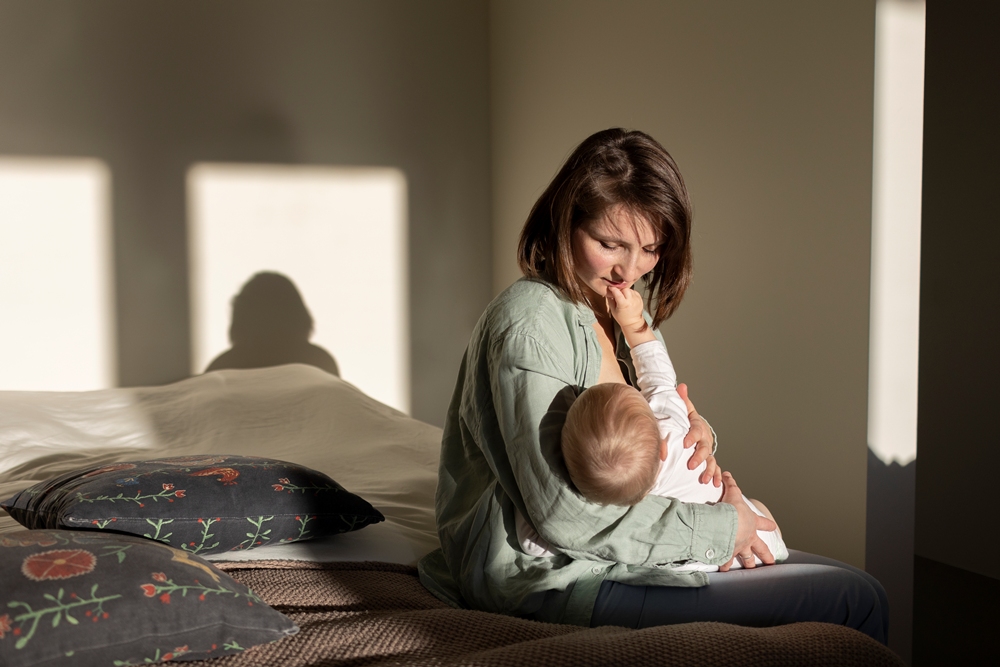
By Morgan Rose, chief science officer at Ema, and Lauren Scocozza, vice president of product at Willow
May is Maternal Mental Health Month, and every year it surfaces a familiar set of statistics: 1 in 5 new mothers experiences postpartum depression or anxiety, most go unscreened, and the majority who are screened don’t receive adequate follow-up care.
The conversation is important. But the numbers obscure something that anyone who has worked in this space knows to be true: postpartum mental health distress rarely arrives with a label.
It arrives as exhaustion. As “I’m not sure I’m doing this right.”
As a question about supply, pumping, whether it’s okay to feel this disconnected from something you were supposed to love immediately.
Willow integrated Ema, AI built for women’s health, with the goal of closing the maternal care and data gap.
The pattern mentioned above appears consistently in Ema’s conversational data through the Willow app.
A mother reports mastitis symptoms.
Ema walks her through the clinical presentation, confirms she should keep pumping, and then she questions if she is using her pump correctly. In the same thread, within a few exchanges, she says she’s “feeling too sad.” Then: “I don’t know. I think I’m depressed. I am not enjoying my postpartum.”
She did not come to the app to talk about her mental health.
She came about a breast infection. The mental health disclosure came through the already-opened door.
The Weight Underneath the Technical Question
New motherhood involves an enormous amount of problem-solving at a time when cognitive and emotional reserves are depleted. The pump has to work. The baby has to eat. The body has to recover.
Work comes back. Sleep doesn’t. Feeding their babies requires skill, and the learning curve sits atop it all.
What Ema’s conversation data shows is that the emotional load of navigating these challenges is not separate from mental health. It is mental health.
When a mother writes, “I’m postpartum and overwhelmed and tired,” and then, in the same breath, asks about flange sizing, she is telling us what the postpartum experience actually feels like from the inside.
The technical question and the emotional state are one and the same.
Breastfeeding carries particular weight here.
The desire to breastfeed, the guilt when it doesn’t go as planned, and the identity questions that come with feeding choices are not peripheral to the postpartum mental health conversation.
In our conversations, women navigating supply concerns often reveal deeper anxieties: about whether they are good mothers, whether their bodies are “working,” and whether the difficulty they are experiencing means something about them.
These are the signals worth asking about.
What Screening Looks Like in Practice
Ema is trained on the Edinburgh Postnatal Depression Scale and is equipped to offer the EPDS when a conversation warrants it.
The value is being present for the moment when a woman is ready to name what she’s feeling.
That moment rarely comes as a direct request for mental health support. It comes when someone is already in a conversation about something else, and something shifts.
A woman dealing with mastitis says she feels sad. A woman worried about supply says she doesn’t feel like herself. A woman managing the logistics of going back to work with a wearable pump says she’s not sure she can keep up with it all — and the “it all” isn’t about the pump.
Ema is designed to hear that. She doesn’t stay on the clinical or technical track when the conversation moves. She follows the person.
And when the moment is right, she offers the screening as a natural next step.
In one exchange, a woman was offered the EPDS after disclosing depressive feelings. She declined.
Ema acknowledged that and asked if she wanted to talk about something else. That’s the right response. The offer was made without pressure. The door stays open.
Sometimes what matters most is that someone asked at all.
The Continuity Problem
One of the most persistent structural failures in maternal mental health care is fragmentation.
A woman sees her OB at six weeks postpartum for a brief screening. She may get a call from a nurse. She may be given a referral she never follows up on because she doesn’t have the capacity to navigate a new care relationship while managing a newborn.
The clinical touchpoints are too few, too far apart, and too often siloed from one another.
The postpartum period lasts far longer than the six-week checkup implies. Mental health symptoms can emerge weeks or months after delivery, shift in character over time, and interact with physical challenges in ways that don’t fit neatly into any single provider’s lane.
A lactation concern becomes an anxiety spiral. A supply drop triggers a grief response. A difficult return to work surfaces a postpartum depression that wasn’t fully recognized at six weeks.
Ema sits inside these moments because she’s embedded in the platform women are already using. She doesn’t require a separate appointment, a referral, or the cognitive bandwidth to seek out a new resource.
She’s in the Willow app that mom is already using multiple times a day to manage her pump.
When Ema identifies a woman who may need more support than she can provide, she routes to the right resource — whether that’s a SimpliFed lactation consultant for feeding-related concerns or a clinical professional for mental health follow-up.
The conversation leads to the handoff with someone who can do more.
What the Month of May Means for the Rest of the Year
Maternal Mental Health Month is a useful moment of attention. The awareness campaigns, the social media posts, and the statistics shared in newsletters matter.
But the gap in postpartum mental health care is not really an awareness problem.
Most people in the perinatal space and beyond know the statistics. The problem is access, timing, and continuity.
AI doesn’t close that gap on its own.
What it can do is be present in the spaces where women already are, at the times when they need something, and attentive enough to recognise that a conversation about a pump, a clogged duct, or a supply concern is also a conversation about how someone is doing.
The question behind the question is often the more important one.
For Willow, the conversation data Ema generates is a map of where mothers are struggling, what they reach for when they need help, and when they are ready to say more than they came to say.
That information, used well, shapes better resources, better onboarding, and a more connected experience across the full arc of the postpartum year and beyond.
Building the infrastructure to support maternal mental health is a year-round project.
Willow is doing one part of that, and the conversations happening on the Willow platform every day are evidence that women want support that meets them where they are… in their app, in their moment, without having to ask for it twice.
About the authors
Morgan Rose is Chief Science Officer at Ema, an AI platform for women’s health. Ema partners with healthcare organisations and femtech companies to deliver clinically grounded AI support across the perinatal journey.
Lauren Scocozza is the Vice President of Product at Willow Innovations, Inc. For women by women, Willow is building a maternal care platform to address the interconnected challenges of postpartum.


By Wolfgang Hackl, MD, CEO OncoGenomX, Allschwil, Switzerland
FemTech is moving from a promising niche to a foundational part of modern healthcare.

Over the next decade and beyond, its real promise will not only be better products, but a more equitable system: one where women’s health is treated as an equal area for innovation, investment, clinical care, and public policy.
That shift matters because women’s health has long been under-researched, underfunded, and too often managed through systems that were not designed with female biology and life stages in mind.
The opportunity now is to change that trajectory.
If stakeholders act deliberately, FemTech can become a category that improves outcomes, expands access, and creates measurable value across the HealthTech ecosystem.
From niche to infrastructure
The most important change ahead is a mindset shift. FemTech should no longer be seen as a narrow consumer segment focused only on logging symptoms.
It should be understood as health infrastructure spanning puberty, fertility, pregnancy, postpartum recovery, menopause, pelvic health, chronic disease, mental health, and long-term preventive care.
This broader framing creates a more durable market and a stronger social case. It also encourages innovation that serves people across the full life course, rather than only at highly visible moments.
In practical terms, this means building tools that are clinically relevant, integrated into care pathways, and designed to work for different populations and health systems.
What needs to change
For FemTech to become a truly equal healthcare category and a genuine societal priority, several layers need to move together.
First, the evidence base must deepen. More sex-disaggregated data, more women-inclusive clinical studies, and more research on conditions that disproportionately affect women are essential.
Without stronger evidence, product development, diagnosis, reimbursement, and clinical adoption all remain constrained.
Second, policy and regulation must mature. Privacy protections need to be strong enough to build trust in highly sensitive health data.
Regulatory pathways should be clear enough to help innovators bring safe, effective products to market without unnecessary delay.
Reimbursement frameworks also need to evolve so that useful digital tools are not limited to those who can pay out of pocket.
Third, healthcare systems must become more open to integration. The best FemTech products should not sit outside the care journey as standalone apps.
They should connect with clinicians, diagnostics, telehealth, and care coordination so that patients experience continuity rather than fragmentation.
Finally, society needs a broader cultural shift. Women’s health should be discussed as a mainstream public health and economic issue, not as a side topic or a private concern.
That means normalizing conversations around menopause, miscarriage, postpartum health, chronic pain, infertility, and long-term preventive care.
The role of each stakeholder
A healthier FemTech future depends on the full value chain.
Founders and product teams need to design for clinical relevance, usability, and trust. The strongest solutions will be those that solve real problems, use data responsibly, and fit into everyday life and care.
Investors can help by backing long-term value creation rather than only consumer growth. FemTech deserves capital that supports rigorous validation, regulatory readiness, and scalable business models.
Healthcare providers and systems play a critical role in adoption. By integrating FemTech into clinical workflows, they can reduce delays in care, improve monitoring, and make support more continuous and personalised.
Payers and insurers can accelerate access by recognising the downstream value of early intervention, prevention, and better self-management. Coverage decisions will strongly shape which innovations become standard practice.
Policymakers and regulators should create environments where safety, innovation, and privacy coexist. Clear standards and supportive reimbursement policy can make the difference between isolated success and category-wide growth.
Employers and public institutions also have a role. Women’s health affects productivity, retention, and long-term wellbeing, which means workplace benefits and public programs can help expand access and reduce inequity.
FemTech is not only “women for women.” It is “everyone to solve a health and social issue that has been ignored for far too long.”
When stakeholders across the value chain recognise women’s health as a shared responsibility, FemTech moves from a segmented category to a mainstream force for better outcomes, fairer access, and stronger social impact.
Why the upside is larger than the market
The benefit of getting this right is not only commercial.
Better women’s health tools can improve early detection, support self-management, reduce avoidable complications, and lower the burden on social and healthcare systems.
They can also help close persistent gaps in access and outcomes that affect families, workplaces, and economies.
For HealthTech innovators, this is an opportunity to build products that are both mission-driven and scalable. For health systems, it is a chance to improve care quality and efficiency. For society, it is a way to move women’s health from an afterthought to an equal priority.
Actions that will move the field forward
The right direction will not happen automatically. It requires deliberate action across the ecosystem.
- Build products around real clinical needs, not only consumer engagement.
- Invest in women-inclusive research and validation from the start.
- Design privacy and governance into the product architecture.
- Create reimbursement models that reward prevention and continuity.
- Integrate FemTech into mainstream care pathways.
- Expand education for clinicians, employers, and the public.
- Expand the category to the invisible concerns to cover the full range of women’s health needs.
When these actions align, FemTech can mature into something larger than a market category. It can become a model for how health innovation should work: evidence-based, inclusive, trusted, and built to improve lives at scale.
A strong FemTech future is not just possible. It is a practical next step if the ecosystem chooses to treat women’s health as what it truly is: a core healthcare priority and a major driver of innovation.
Table: FemTech Focus Areas
| Field | Approximate number of active solutions/companies |
| Reproductive health & fertility | 120+ |
| Pregnancy & maternal care | 80+ |
| Menstrual health | 60+ |
| General women’s health & wellness | 50+ |
| Diagnostics & monitoring | 45+ |
| Menopause & perimenopause | 40+ |
| Pelvic & uterine health | 30+ |
| Chronic women’s health / integrated care | 30+ |
| Sexual health & wellness | 25+ |
Legend: FemTech is becoming a multi-category healthcare layer. Reports also show that software/apps remain the largest product type overall, while reproductive health continues to dominate as an application area. Best-effort estimates based on category listings, company directories, and market reports, not audited totals.

By Melissa Wallace, CEO Fierce Foundry
The first quarter of 2026 tells a familiar but evolving story for female founders in the U.S.: measurable progress, paired with persistent structural gaps.
On the surface, the numbers suggest momentum.
A recent Pitchbook report showed female-founded companies captured 27.7 per cent of U.S. venture capital in 2025, up significantly from 19.9 per cent the year prior.
This is not a marginal shift, it reflects a broader recognition that women are building scalable, investable companies across sectors.
But the deeper cut tells a different story.
When you isolate companies founded solely by women, funding drops to just 1.1 per cent of total venture dollars.
As many of us continue to preach, this gap has remained largely unchanged for decades, hovering around 2 per cent on average.
This is the paradox: performance is not the issue—access is.
Research consistently shows that women-led companies generate stronger capital efficiency, yet they continue to receive a fraction of funding.
As Leslie Feinzaig has pointed out, the challenge is not a lack of ambition or quality, it’s that the system still evaluates women through a narrower lens, often expecting more proof, more traction, and more certainty before capital is deployed.
A Shift in How Women Are Getting Funded
What’s changed in Q1—and what’s most important—is not just how much funding is flowing, but how it’s being accessed.
Based on the data shared by Forbes in their 6 Trends Reshaping Women’s Health Investments this is what is clear:
- A rise of angel and operator capital: More women are entering the cap table as investors, not just founders, reshaping early-stage decision-making
- Alternative vehicles gaining traction: Donor-advised funds (DAFs), syndicates, and community-driven capital pools are stepping in where traditional VC has been slow
- Lower barriers to entry for investors: Smaller check sizes and structured angel education are expanding who participates in funding innovation
This diversification matters. Traditional venture capital has historically been concentrated both in who writes checks and what gets funded.
Broadening capital sources doesn’t just increase access; it changes what is considered “investable.”
At Fierce Foundry, this is a core assumption.
The venture studio model is not just about building companies, it’s about engineering capital access from day one.
By combining capital with shared services, investor networks, and early validation, the goal is to reduce the friction female founders face long before a Series A.
Why This Matters for Women’s Health
Nowhere is this shift more critical than in women’s health.
Despite being one of the fastest-growing sectors in healthcare, projected to exceed $200B globally in the next decade, FemTech and women’s health startups remain significantly underfunded. In 2024, only ~6 per cent of healthcare venture funding went to this category.
This disconnect is not due to lack of opportunity. In fact, the opposite is true.
Thanks to another incredible article from Geri Stenger in Forbes, we know women’s health has already generated over $100 billion in exits, with 27 billion-dollar transactions and increasing M&A activity.
This is not an emerging category, it is a proven one that has simply been misclassified, undercounted, and undervalued.
The implication is clear: capital is not flowing in proportion to outcomes.
The Role of New Models in Closing the Gap
This is where new models, particularly venture studios, are becoming essential.
The traditional startup pathway assumes equal access to networks, capital, and operational expertise.
Female founders, particularly in women’s health, are often navigating all three deficits simultaneously:
Limited access to early-stage capital
- Higher burden of proof in clinical and regulatory environments
- Fewer embedded operators with domain expertise
- The studio model addresses this by collapsing time and risk:
Co-building companies alongside founders
- Providing shared services across product, regulatory, and go-to-market
- Embedding investor alignment and exit pathways from the beginning
What Q1 Signals for the Future
If Q1 tells us anything, it’s that the narrative is shifting but the infrastructure is still catching up.
We are seeing:
- Increased participation of women across both sides of the cap table
- New funding mechanisms that challenge traditional VC gatekeeping
- Growing recognition that women’s health is not niche, but foundational
But we are also seeing that progress is uneven, and in many cases, still fragile.
The next phase of growth will not come from incremental increases in funding percentages.
It will come from rebuilding the systems that determine how capital flows in the first place. Because the real opportunity is not just funding more female founders.
It’s building an ecosystem where they don’t have to fight so hard to access what they’ve already proven they can return.
Learn more about Fierce Foundry at thefiercefoundry.com











 Entrepreneur2 weeks ago
Future Fertility raises Series A financing to scale AI tools redefining fertility care worldwide
 Fertility3 weeks ago
Future Fertility partners with Japan’s leading IVF provider, Kato Ladies Clinic

 Menopause3 weeks ago
More research needed to understand link between brain fog and menopause, expert says

 Entrepreneur6 days ago
Women’s digital health market set to reach US$5.28 billion in 2026 – report

 Mental health2 weeks ago
Lifting weights shows mental health and cognitive benefits in older women, study finds

 Insight3 weeks ago
Self-employment linked to better cardiovascular health outcomes in Hispanic women

 Entrepreneur3 weeks ago
Flora Fertility closes US$5m seed round

 Menopause2 weeks ago
Resistance training has preventative effects in menopause, study finds