




News
Why breast milk deserves a place in the femtech conversation

By Tirza Jova, Founder & CEO, Milk by Mom
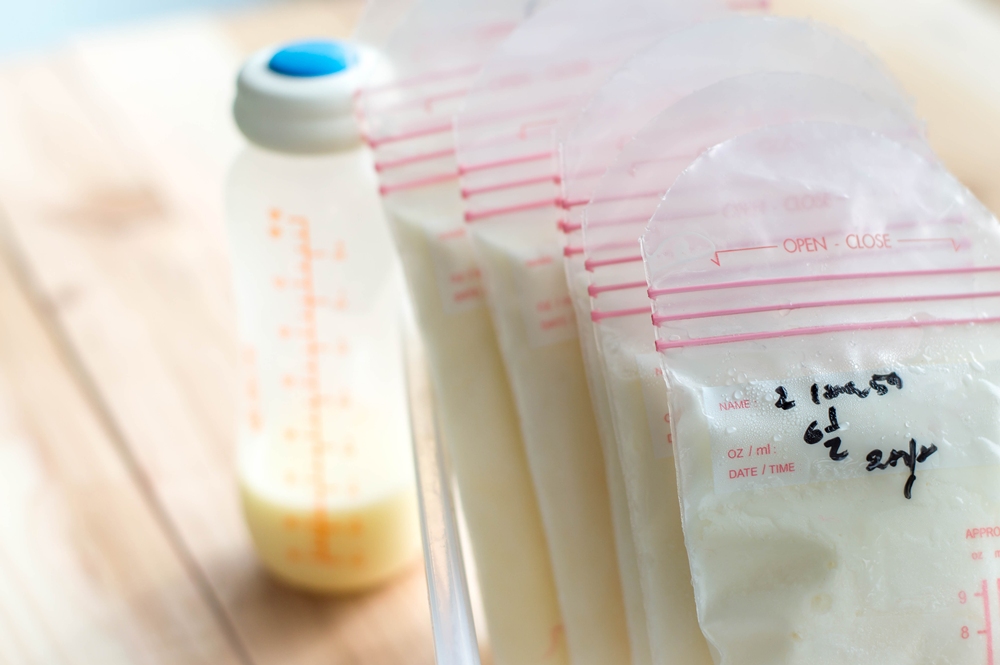
Planning my first cross-country trip as a new mom, I pictured the airport obstacle course: hard cooler, melting ice packs, and the dread that one delay could undo weeks of effort. Then I discovered freeze-drying my breast milk.
We live in a world with autonomous cars and AI copilots, yet moving a few pouches of frozen milk can still derail a day.

That moment pushed me to build Milk by Mom, a service that freeze-dries moms’ expressed milk into a shelf-stable powder.
The goal with freeze-drying is simple: let families carry their “liquid gold” without the cold chain or the constant worry.
If you haven’t heard of freeze-drying breast milk, you’re not alone.
So many moms I meet—too many—say the same thing: “I’ve never even heard of this!” And yet, it can be a game-changer.
The process gently removes moisture from frozen breast milk in a vacuum, turning it into a powder while preserving its nutrients, immune properties, and flavor.
Once freeze-dried, it becomes shelf-stable for up to 3 years and is easily rehydrated with water.
It’s breast milk in a form made for today’s everyday life, without the refrigeration or ice packs.
And that kind of flexibility is essential. Because while the science of breastfeeding is ancient, the reality of parenting today is anything but.
Our infrastructure is failing families, especially breastfeeding moms.
While we’ve made strides with pumps and storage, modern life has outpaced our tools.
Today’s parents are mobile, caregiving is shared, private pumping spaces are rare, and the result is stress, wasted milk, and feeding plans cut short.
Too many families give up on a plan they genuinely want to keep. If femtech exists to close the gap between what health requires and what life allows, breastfeeding belongs squarely on the roadmap.
For many mothers, the desire to continue breastfeeding comes from knowing it supports their baby’s immune system, digestion, and bonding. Yet everyday hurdles, like return-to-office mandates or lack of privacy, often force early weaning. That’s where femtech can help by meeting families where they are, with tools that flex to real life.

Tirza Jova
Freeze-dried milk offers a third path besides fresh milk and formula. It’s portable, mess-free, and lets moms feed their babies on their own terms.
For commuting, traveling, or moms simply trying to get through a meeting without skipping a pumping session, it changes the game.
Freeze-dried breast milk powder packs small, mixes on demand, and gives caregivers confidence without a freezer.
For investors, this is an opportunity hiding in plain sight.
The postpartum market is immediate, recurring, and driven by caregivers who advocate fiercely for safety and quality. It’s not only about selling directly to consumers.
The most meaningful growth will come through partnerships with employers, healthcare systems, and community networks.
Equity matters here, too. Support and access aren’t universal.
If innovations only reach those with resources, we widen the gap instead of closing it.
That’s why solutions must be practical, affordable, and rooted in lived experience. And that starts with funding more female founders who’ve walked the journey themselves.
Policymakers also have a role. Align regulations with real-world conditions: power outages, return-to-office policies, split households.
Make lactation support a right, not a privilege. Fund research, increase awareness, and normalize flexibility.
Supporting breastfeeding more effectively could prevent nearly 600,000 infant deaths and save billions in global health costs. It improves maternal mental health, reduces pediatric illness, and strengthens families.
Every safe container, private room, and freeze-drying option is a step toward feeding freedom.
Parents need support they can trust. That means clear, evidence-based guidance and real options that work in everyday life.
We shouldn’t force families to choose between what’s ideal and what’s doable.
It’s time to bring breast milk fully into the femtech conversation—with the same urgency, innovation, and empathy we already extend to fertility, birth, and beyond.
















We are excited unveil the three finalists competing for one of the Femtech World Awards’ most coveted honours: the Startup of the Year Award, sponsored by Future Fertility.
This award celebrates an early-stage company making a bold impact in women’s health through innovation, vision and execution.
The winner will be announced at our virtual ceremony on 19 June, with the decision made by a representative from category sponsor Future Fertility.
Congratulations to the shortlist and thank you to everyone who entered or nominated.
Startup of the Year Shortlist

Hello Inside is the first women’s health AI company to turn daily metabolic signals into outcomes women feel and healthcare systems reimburse.
Women’s health has long been under-researched, and current AI benchmarks fail on women’s health questions roughly sixty percent of the time.
Hello Inside built the architecture to close that gap.
Across four years and 12,000+ validated metabolic profiles, three in four women improve at least one symptom within ninety days.
They lose four kilograms in three months, moving from overweight into the healthy range. In a clinical study with Alisa Vitti’s Flo Living, 91.9 per cent reduced PMS burden within sixty days.


U-Ploid is an early-stage biotechnology company tackling one of the most fundamental challenges in fertility care: the sharp, age-related decline in egg quality that limits outcomes across IVF and egg freezing.
While much of the field focuses on improving assessment and selection, U-Ploid is developing a first-in-class therapeutic approach designed to improve egg quality itself by addressing the biological causes of age-related chromosomal errors.
Supported by strong preclinical evidence and now advancing into human studies, U-Ploid combines scientific rigour, regulatory discipline and long-term vision to help redefine what is possible in fertility care.

Gestational diabetes is a strong risk factor for future type 2 diabetes, even in women with normal pre-pregnancy weight, according to a study at the University of Gothenburg.
The researchers call for earlier testing and better follow-up.
“Our results show that gestational diabetes functions as a kind of stress test for the body’s ability to manage blood sugar, and identifies women with a greatly increased risk of future type 2 diabetes”, said Jon Edqvist, PhD and affiliated to research at the University of Gothenburg, and operating room nurse at Sahlgrenska University Hospital.
Gestational diabetes is a special type of diabetes that can affect pregnant women.
The condition is defined as elevated blood sugar levels, without previously known diabetes. Treatment involves self-monitoring of blood sugar, advice on lifestyle habits and, if necessary, medication.
Identifying gestational diabetes is important because the disease increases the risk of complications such as preeclampsia, the need for a cesarean section and high birth weight for the baby.
Those who have had gestational diabetes are also at higher risk of later developing type 2 diabetes.
In the current study, published in eClinicalMedicine, researchers now show that gestational diabetes is a strong indicator of future risk of developing type 2 diabetes, even in women with normal weight before pregnancy.
Elevated risk even with normal weight
The study is based on data from the Medical Birth Registry on just over 1.15 million first-time mothers in Sweden, who gave birth between 1987 and 2019. 16,870 women with confirmed gestational diabetes were compared with age-matched women without the diagnosis. The median follow-up period was nine years.
The results show that women with a BMI of 35 and above, i.e. severe obesity, had an almost tenfold increased risk of developing gestational diabetes compared to women with normal weight.
The risk of subsequent type 2 diabetes also increased with higher BMI, but it was significantly increased even with normal weight, which the researchers describe as particularly worrying.
More follow-up and more studies
The researchers behind the study welcome the recently updated recommendations on gestational diabetes in Sweden, where a higher proportion of pregnant women at increased risk are expected to be offered testing earlier in pregnancy, and if necessary, interventions.
“Diagnostics and care of gestational diabetes have looked very different in different parts of the country,” said Annika Rosengren, professor at the University of Gothenburg.
“There is a need for both improved follow-up after gestational diabetes, and more studies that investigate how such follow-up affects future health and prognosis”











 News4 weeks ago
Women’s digital health market set to reach US$5.28 billion in 2026 – report

 Insight4 weeks ago
Why the UK’s fertility rate keeps falling – and what it means if you’re trying now

 Wellness4 weeks ago
Women’s HealthX unveils Northwell Health, Corewell Health, Biogen & more to headline Chronic Disease stage

 Opinion3 weeks ago
What Maternal Mental Health Month reveals about where postpartum support actually breaks down

 Fertility4 weeks ago
Toxins and climate harms having ‘alarming’ effect on fertility, research warns

 News3 weeks ago
NIH Grant terminations disproportionately impact minority scientists, research finds

 Adolescent health2 weeks ago
WUKA brings Period-Positive Pool Party to London Aquatics Centre to keep girls swimming through puberty

 Fertility4 weeks ago
Researcher explores weight loss jab impact on PCOS