




Pregnancy
Newborn screening by genome sequencing shown to be safe and effective


Two studies show the potential for genomic screening in newborns to address high rates of infant hospitalisation and mortality.
Presently, hundreds of genetic diseases are either preventable or treatable but currently are detected only after a child falls ill and endures a years-long “diagnostic odyssey,” often receiving diagnoses too late to achieve the best outcomes.
The first study described a novel platform with scalability and performance that will allow millions of babies to be screened and treated by genome sequencing and artificial intelligence within two weeks from birth.
Previously, medical genome sequencing was much too expensive for newborn screening. Plus, a high rate of false positive results – genome findings that falsely suggest a newborn to have a genetic disease – have been of great concern when genomes are examined without clinical context.
Previously, no method existed to translate genome results into treatment guidance in a way that most physicians could understand and put into practice.
The novel platform, BeginNGS (pronounced beginnings) solves this. It makes use of the latest genome sequencing technology to provide an affordable genome.
BeginNGS uses a combination of human and artificial intelligence tools to automate the complex process of interpreting disease risk based on genome information alone, which is critical for scaling to the 3.7 million babies born in the U.S. each year.
The study reported a 97 per cent reduction in false positives based on a method derived from human evolution. The genome variations that cause severe childhood diseases are subject to extreme natural selection called purifying hyperselection.
As a result, DNA variants that truly cause severe childhood disease are not found in genomes of elderly persons. By studying the genomes of almost half a million middle aged and elderly subjects, from the UK Biobank and Mexico City Prospective Study, researchers were able to discover those false positive DNA differences and reduce their occurrence to less than 1 in 50 subjects tested.
The computational methodology uses query federation, a method to analyse genomes remotely without data being moved or shared, which is enabled by TileDB, a database technology partner for BeginNGS.
Remarkably, after removing these DNA variants, BeginNGS retained greater than 99 percent sensitivity when compared with the gold standard method of rapid diagnostic genome sequencing.
BeginNGS used a custom-built clinical guidance system called Genome to Treatment (GTRx) to communicate a potential course of action for babies who screen positive. Many of these disorders are so rare the typical physician will rarely see them in practice.
GTRx provides practical guidance for physicians in a manner that is easy to understand. Testing of over 3,000 children with suspected genetic diseases revealed that 1 in 14 would have benefited from BeginNGS by receiving a time-to-diagnosis of 121 days earlier than compared with gold standard testing after those children developed symptoms.
In addition, testing revealed that BeginNGS would have benefited one in 13 babies who died in infancy.
“The future of newborn genetic screening lies in global collaboration and shared data resources,” says Stavros Papadopoulos, CEO and founder of TileDB.
“By connecting genetic information across international databases, we significantly enhance our ability to identify and understand rare diseases — an endeavour that transcends individual projects and geographical boundaries.
“Through TileDB’s expansion of the BeginNGS consortium and our federated query capabilities, we’re enabling more comprehensive analysis of variant datasets. For RCIGM and the families they serve, this translates directly into faster, more reliable answers during those critical early days of life.”
The second study evaluated whether BeginNGS was ready for broader expansion. In this trail, 120 babies in the neonatal intensive care unit at Rady Children’s Hospital – San Diego, received the BeginNGS screening.
Results were compared with traditional, federally mandated newborn screening and t\rapid diagnostic genome sequencing which evaluated all ~10,000 genetic diseases.
“The amazing, unexpected result of this BeginNGS trial was that nearly 30 percent of NICU babies who weren’t considered to need genome sequencing actually had genetic diseases — this is similar to the rate of diagnosis in babies who are suspected of having genetic diseases,” said Stephen Kingsmore, president and CEO of Rady Children’s Institute for Genomic Medicine
“This suggests that the health benefits of rapid whole genome sequencing apply to every baby admitted to a Level IV NICU, not just those who are currently being tested.”
Only babies who were not suspected of having genetic diseases were eligible for enrolment in the clinical trial since the trial wished to mimic screening of healthy newborns.
BeginNGS genome-based newborn screening was shown to be safe and effective. One in 24 babies tested had positive results that were likely to impact their care.
BeginNGS had no false positives, showing that the purifying hyperselection methods indeed worked in the real world. Eighty four percent of parents in the trial reported that their child’s genomic sequencing results were useful, and 80 per cent felt that participation did their child a lot of good. When compared with state newborn screening, BeginNGS had a higher true positive rate and lower false positive rate.
“Genome-based newborn screening has the potential to transform health outcomes for children with certain rare diseases by accelerating their time to diagnosis and proper care,” said Tom DeFay, vice chair of BeginNGS and deputy head of diagnostics at Alexion, AstraZeneca Rare Disease.
“As a founding member of the BeginNGS Consortium, Alexion is encouraged by these Phase 2 results and remains committed to advancing health equity by helping improve diagnostics for families impacted by rare genetic and often life-threatening conditions.”
These studies pave the way for a much larger, multicentere clinical trial to formally compare BeginNGS with standard newborn screening.
That trial has started and to date is replicating the findings of the pilot study. In addition, now that computational methods exist for removal of false positives, BeginNGS is poised to expand from 412 severe childhood genetic diseases to the more than 2,000 disorders that have been suggested to be actionable early onset rare disorders for newborn screening.
Now that the feasibility of federated queries has been successfully demonstrated it will be possible to expand these to many genome biobanks worldwide to examine the incidence and prevalence of genetic diseases across the globe, allowing BeginNGS be tailored to screen each population.


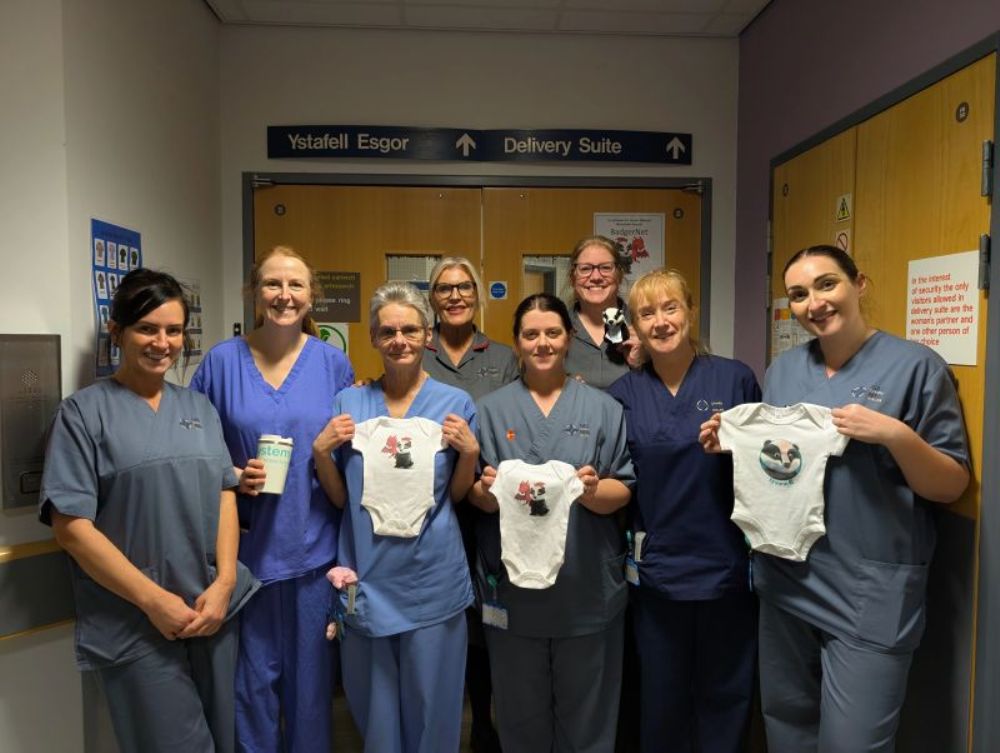
System C has completed the national rollout of BadgerNet Maternity across all seven NHS Health Boards in Wales. This is the first time any UK nation has unified its maternity care under a single digital record and patient-facing app.
With approximately 26,000 babies born annually in Wales, BadgerNet connects maternity information across organisational boundaries in the country.
Expectant parents can access their records, maternity appointments and key updates digitally through a single app, wherever they receive care while clinicians have secure access to the right information at the point of care.
The national three-year agreement across all Heath Boards replaces a patchwork of separate local systems and eliminates the need for paper hand-held notes.
Anthony Tracey is director of digital at Hywel Dda University Health Board, the final of the Welsh Health Boards to go live with BadgerNet.
He said: “The rollout of BadgerNet across Wales is a vitally important step forward in modernising our maternity services and providing a consistent service across the country.
“By giving expectant parents direct access to their information and enabling clinicians to share data more effectively, we are strengthening safety, transparency and consistency in maternity care nationwide.”
For expectant parents, the single digital maternity record transforms how they engage with their care.
Instead of carrying paper notes and repeating information at every appointment, parents can access key details, appointments and updates digitally, supporting more informed conversations and shared decision-making.
The result is greater transparency, fewer administrative frustrations and a more joined-up experience throughout pregnancy and into the postnatal period, regardless of which health board they fall under.
For clinicians and Health Boards, the joined-up approach reduces duplication and streamlines handovers across teams and sites. Information is digitally captured once and made available securely wherever it is needed, helping to minimise errors, reduce time spent tracking down notes and support more efficient multidisciplinary working.
At a national level, linking maternity data across Wales creates a foundation for safer, more consistent care.
Aggregated, standardised information enables earlier identification of trends and variation, supports evidence-based policy decisions and enhances long-term service planning.
With a comprehensive view of maternity activity and outcomes across the country, Wales is now better positioned to raise standards for parents, babies and families.
Guy Lucchi, managing director of healthcare at System C, added: “Delivering a truly national approach across all seven Health Boards is a significant achievement for Wales.
“One shared system means information flows with the patient, not the organisation.
“That reduces duplication, supports earlier identification of risk and frees up valuable clinical time.
“Crucially, linking maternity data at a national level provides powerful insight to drive improvement. Health Boards can benchmark, plan services with greater confidence and ensure resources are targeted where they are needed most, while expectant parents benefit from clearer communication and a more connected experience of care.”



A recent study developed a new “digital companion” to support the prevention and follow-up of maternal cardiovascular risk in women with pregnancy complications.
Cardiovascular disease, or CVD, is the leading cause of premature death and illness in women, yet sex-specific causes remain understudied and women are underrepresented in research.
Pregnancy complications, including hypertensive disorders of pregnancy, or HDP, and gestational diabetes mellitus, or GDM, are strong predictors of future CVD, with pregnancy itself acting as a natural stress test.

Despite CVD accounting for 35 per cent of female deaths worldwide in 2019, systematic postpartum prevention remains limited in practice and incidence continues to rise.
Myocardial infarction, commonly known as heart attack, and stroke are the main fatal CVD events in women. Up to one-third of women develop hypertension within a decade after HDP, especially as maternal age rises.
Obstetric guidelines have historically lacked clarity on early CVD prevention after HDP and GDM, often relying on expert consensus rather than evidence.
Some cardiology guidelines now recommend personalised approaches, such as periodic hypertension and diabetes screening. Norwegian guidelines recommend cardiovascular risk evaluation at three months and one year postpartum, but adherence in practice is uncertain.
Effective risk reduction requires intervention before middle age. The immediate postpartum period following HDP or GDM is a critical window for early detection and intervention, offering an opportunity to engage women in cardiovascular health management, particularly as pregnancy can encourage long-term lifestyle awareness.
Electronic health, or eHealth, refers to the use of digital technologies and electronic communication tools to support healthcare services, medical information management and related health activities.
Systematic, eHealth-supported postpartum prevention can improve maternal health literacy and long-term cardiovascular outcomes.
However, there is a significant gap in targeted, eHealth-based postpartum interventions for cardiovascular risk management after HDP and GDM, despite strong patient demand and international calls for coordinated digital health strategies.
Home blood pressure monitoring shows promise, but broader digital support remains limited.
A cardiovascular postpartum follow-up programme was created as a mobile app based on Norwegian and international guidelines.
The MumCare app was developed through co-creation involving users, stakeholders and clinical experts. Five qualitative interviews and 10 user testing sessions informed improvements.
This study primarily analysed the iterative co-creation process used to develop the app, rather than evaluating clinical outcomes.
The MumCare project team in Oslo included an IT expert, obstetricians, a midwife, a GP, two sociologists and two cardiologists, all with relevant experience in eHealth and women’s health. A medical student with technological and medical expertise also helped turn ideas into app features for young women.
User representatives from two national patient associations contributed to information, recruitment, design and testing of the MumCare app.
Both associations provided user perspectives and took part in interviews and app testing. Additional users with HDP or GDM at Oslo University Hospital were also involved throughout the co-creation process.
The app’s digital infrastructure prioritises security and privacy, using encryption, de-identification and two-factor authentication.
User data is stored securely on the app and, for research purposes and with consent, on a dedicated University of Oslo server in line with GDPR and Norwegian regulations.
A linear Stage-Gate model structured the co-creation process, dividing it into phases with quality checkpoints reviewed in project meetings.
This approach balanced internal development with external user feedback, helping ensure the app is evidence-based, technically robust and user-centred.
The MumCare app guides postpartum women through tracking blood pressure, weight, physical activity and lab results, and provides personalised feedback to support self-management, mainly during the first postpartum year.
It also includes educational resources such as videos and guideline-based information to support understanding and engagement.
The app is also designed to support the transition from specialist pregnancy care to long-term follow-up with general practitioners.
It is described as a “digital companion” or health coach and does not replace clinical diagnosis or function as a medical device.
The co-creation process followed four phases focused on technical and procedural development.
In phase 1, input from expert organisations and user representatives established the app’s technical foundation.
It also reminds users of the one-year postpartum follow-up with their GP, a key time to assess risk factors and future care needs.
User organisation representatives gave feedback in phase 1, directly guiding content and feature development.
Phase 2 interviews confirmed that users want to monitor cardiovascular risk factors after HDP and GDM.
The analysis highlighted three themes: self-care strategies and uncertainties about hypertension, the need for accessible health information, and a more personalised approach to blood pressure monitoring in the app.
Concerns were also raised that frequent monitoring or app use could increase stress or create a sense of burden.
In phase 3, the app’s design and features were revised in response to feedback to improve usability and make sure they met users’ needs.
These changes led to a more intuitive and supportive interface for women during and after pregnancy.
Phase 4 involved building a prototype based on the updated designs, followed by further refinements after testing by the project team and users. Initial pilot testing with a small number of users suggested the app met its objectives and functioned as intended.
The MumCare app was co-created with input from experts, user organisations and patients over four phases.
Early expert and organisational contributions helped define the app’s goals, while ongoing feedback from patients helped ensure the design and content reflected users’ real needs.
This collaborative approach resulted in an app tailored to support women with pregnancy complications.
The MumCare app is currently being evaluated in a randomised controlled clinical trial that began in June 2024, with results needed to determine whether it improves long-term cardiovascular outcomes.











 Motherhood4 weeks ago
What Maternal Mental Health Month reveals about where postpartum support actually breaks down

 News3 weeks ago
NIH Grant terminations disproportionately impact minority scientists, research finds

 Menopause5 days ago
Perimenopause misinformation ‘putting women at risk’

 Adolescent health3 weeks ago
WUKA brings Period-Positive Pool Party to London Aquatics Centre to keep girls swimming through puberty

 Insight3 weeks ago
PCOS renamed after decade-long campaign to end ‘cyst’ misconception

 Events4 weeks ago
WHIS 2026 unveils agenda and first speakers for the leading women’s health summit

 Menopause3 weeks ago
CBT shows promise for menopause insomnia and hot flashes

 Insight4 weeks ago
Online abuse and deepfakes ‘pushing women out of public life’