




Wellness
Persperity Health raises £1 million for sweat-sensing technology


Persperity Health, a new company spun out of The California Institute of Technology, has raised $1 million in pre-seed funding to accelerate the development of its sweat-sensing technology that provides real-time, non-invasive hormonal insights.
The technology enables real-time hormone monitoring through device-based sweat analysis, enabling non-invasive hormone monitoring for women ad providing personalised health insights.
Sweat contains a wealth of information about hormonal health, including critical hormones like estradiol, progesterone, and luteinizing hormone (LH), which are vital to women’s reproductive health and overall wellbeing.
Persperity’s technology leverages a non-invasive process called iontophoresis to induce sweat on demand, allowing women to monitor their hormone levels anytime, anywhere—without strenuous exercise or invasive procedures.
“If you look at what’s commercially available, devices can track heartbeat and steps, but they aren’t capable of studying your health at a molecular level,” said Dr. Wei Gao, co-founder and inventor of the core technology at Persperity Health.
“By analysing sweat, our device provides detailed information about what’s happening inside your body. Once you realise the potential of sweat for health monitoring, it’s hard to go back to conventional methods.”
Persperity Health has also announced its involvement in a $3 million ARPA-H Spark Award aimed at accelerating innovation in women’s health. Spearheaded by Principal Investigator Dr. Wei Gao at Caltech, the project was one of only 23 awardees selected from over 1,700 global applicants to advance a wearable sweat-sensing system for chronic pain assessment, especially benefiting women.
Dr. Pauline M. Maki, co-investigator on the grant, commented: “This innovative technology has the potential to transform women’s health research by enabling, for the first time, the non-invasive collection of biological markers in sweat, including oestrogen—a crucial factor in numerous health conditions that disproportionately affect women, such as migraine.”
With the new capital, Persperity Health has stated it will accelerate product development, pursue strategic partnerships, and navigate the regulatory approval process, with the long-term goal of expanding its platform to analyse additional biomarkers, with potential applications in mental health, stress management, and early detection of other women’s health issues.







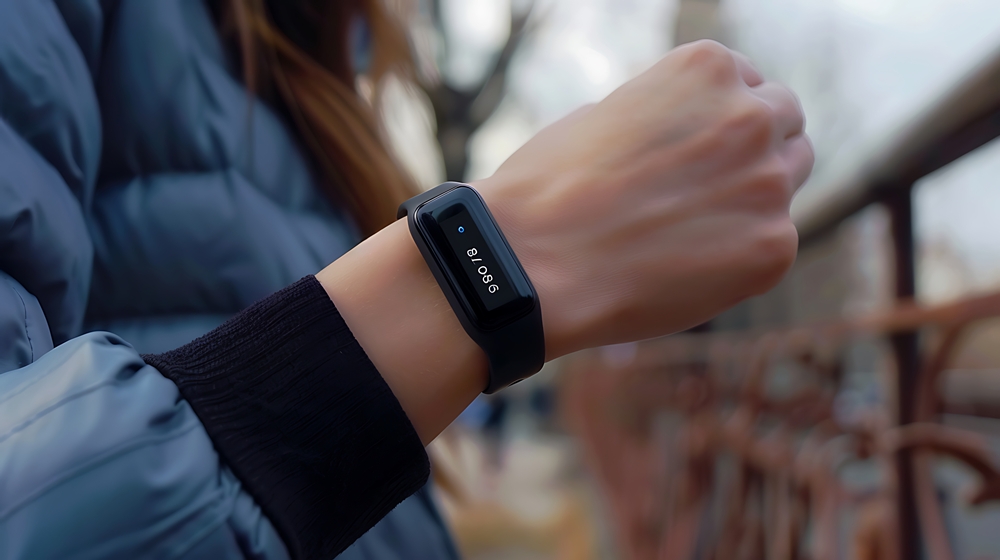
Wearable technology could revolutionise how women understand and manage their menstrual and hormonal health, according to a major new review that assessed dozens of studies involving data from millions of participants.
The review, which examined 40 studies with cohorts ranging from small pilot groups to nearly 19 million participants, found that devices such as the Oura Ring, Apple Watch, Fitbit, WHOOP band and Garmin watches are capable of detecting meaningful physiological changes across the menstrual cycle – and could one day help identify conditions far sooner than current methods allow.

The findings come as growing attention is being paid to the economic and personal toll of menstrual health problems.
Up to 90 per cent of women report cycle-related symptoms including pain, bloating and mood swings, while up to 40 per cent suffer from premenstrual syndrome.
A more severe condition, premenstrual dysphoric disorder, affects up to 8 per cent of women. In economic terms alone, menstrual and perimenopausal symptoms are estimated to cost the United States more than US$26 billion a year.
Researchers found that wearables were able to reproduce well-established hormonal patterns in real-world settings.
Skin temperature was found to be lower in the first half of the cycle before ovulation, and higher afterwards, consistent with known effects of progesterone.
Resting heart rate rose by around two to four beats per minute from the pre-ovulation phase to the days following it.
Heart rate variability, a marker of nervous system activity, was highest in the early cycle and lowest in the premenstrual phase, with lower readings linked to symptoms of PMS and PMDD.
The review also challenged some long-held assumptions.
Digital data suggested that ovulation tends to occur later and more variably than previously thought, with the pre-ovulation phase averaging 15 to 17 days rather than the 13 to 14 days typically cited.
Skin temperature was also found to dip most sharply more than five days before ovulation – not immediately before it – a finding the authors said could have practical implications for women using cycle tracking for contraception or conception.
Large datasets revealed that cycle patterns vary considerably between individuals and across a lifetime.
Nearly 20 per cent of women showed significant cycle-to-cycle variability, and both low and high body weight were linked to longer and less predictable cycles.
The data also pointed to racial differences in menstrual characteristics that had previously gone largely undetected in smaller laboratory studies.
On contraception, the review found that combined hormonal contraceptive users showed flatter, inverted heart rate variability patterns across the cycle, while progestin-only methods produced trends closer to natural cycles.
The authors cautioned that most research has been conducted in the United States and Europe, with predominantly white participants, and called for broader, more diverse studies.
They also flagged significant gaps in research on perimenopause, partly because many studies excluded women with irregular cycles.
Despite these limitations, researchers concluded that wearable devices hold genuine promise for helping women monitor their health and enabling earlier identification of conditions that might warrant medical attention – provided privacy safeguards and standardised research methods are put in place.














 Opinion4 weeks ago
What Maternal Mental Health Month reveals about where postpartum support actually breaks down

 News3 weeks ago
NIH Grant terminations disproportionately impact minority scientists, research finds

 Menopause4 days ago
Perimenopause misinformation ‘putting women at risk’

 Adolescent health3 weeks ago
WUKA brings Period-Positive Pool Party to London Aquatics Centre to keep girls swimming through puberty
 Insight2 weeks ago
PCOS renamed after decade-long campaign to end ‘cyst’ misconception

 Events4 weeks ago
WHIS 2026 unveils agenda and first speakers for the leading women’s health summit

 Menopause3 weeks ago
CBT shows promise for menopause insomnia and hot flashes

 Insight4 weeks ago
Online abuse and deepfakes ‘pushing women out of public life’