




Menopause
Hollywood, Silicon Valley and media well represented in Midi funding drive


Virtual care clinic for women aged 35+, Midi Health, has seen prominent figures from business, entertainment, sport and the media among those joining its oversubscribed US$63m series B round via a US$5M special purpose vehicle (SPV).
Among the new investors are actors/producers Amy Schumer, and Connie Britton, Phenomenal Media’s Meena Harris, soccer star Brandi Chastain, fashion designer/entrepreneur Tory Burch, investor and Angel City FC co-founder Kara Nortman and Sandberg Bernthal Venture Partners, the venture fund run by former Meta COO Sheryl Sandberg and her husband. Others include Waymo co-CEO Tekedra Mawakana, PagerDuty CEO Jennifer Tejada, Stripe executive Claire Hughes Johnson, and Toast CFO Elena Gomez.
Top executives from OpenAI, Atlassian, Databricks, Cloudflare, Google, Apple, Amazon, Meta, Life360, Calm, Universal Music Group, and Warner Media also joined the round.
In total, 80 investors participated with individual check sizes ranging from $10K – US$500K+.
Midi is targeting a vast unmet need in women’s health, with nearly 30 per cent of the female population in the US aged over 35, and 75 million women currently perimenopausal, menopausal, or postmenopausal. While women generally live longer than men, they spend on average 25 per cent more of their lives in poor health.
This health disparity is even more pronounced for women of colour and those from lower socioeconomic backgrounds. Midi is the leading digital health company focused on providing care for women in midlife and covered by insurance in all 50 states.
More than 85 per cent of women will experience symptoms that can negatively impact their quality of life and longevity, which can last more than a third of a woman’s life, beginning as early as mid-30s. Given 80 per cent of OBGYNs have no meaningful training in this area and there is a general practitioner shortage in the US, the vast majority of women suffering do not receive any treatment for their symptoms. Midi is working to change that.
The SPV was overseen by the early-stage B2B venture fund and community, Operator Collective.
“As an early seed investor in Midi, we’ve been waiting for the right moment to spearhead this SPV,” said Mallun Yen, founder and managing partner of Operator Collective.
“We intentionally convened leaders across major industries that are outside the typical circles of venture capital. By design, it reflects our unique collective venture model in action. There’s power in investing beyond just a brand endorsement, and we’re proud to have created an access point that enables these leaders to be directly involved in Midi’s future growth.”
Midi Health CEO and co-founder Joanna Strobe said: “This is truly an example of women investing in companies such as Midi that they want and believe need to exist in the world, putting their own money behind their belief in our goal of closing the care gap for perimenopause, menopause and beyond.
“It’s exciting to see women of such a wide array of fields and ages at the top of their game coming together to help build solutions in the marketplace that will effect change for other women.”
Amy Schumer said of her investment: “Just like you, I have noticed a clear gap in companies that prioritize the needs of women and address the challenges they face when seeking healthcare. Midi is breaking new ground for women 35+ as their healthcare needs evolve.
“The SPV investment opportunity was a unique way for leaders across different industries to come together to ensure women’s health remains at the forefront of innovation, rather than as an afterthought as it has for so long. It’s important to invest in companies that impact us personally and be a force for change for women everywhere.”




Theramex has been censured over HRT failures that regulators said jeopardised patient safety.
The UK producer of HRT drugs, including Evorel and Intrarosa, was found to have breached fundamental compliance standards.
These included not updating crucial prescribing information, in some cases for several years, and not making clear that one drug must not be used during pregnancy.
The Prescription Medicines Code of Practice Authority issued the public reprimand after Theramex staff blew the whistle over what it described as “alarming” compliance issues and incomplete prescribing information for Evorel and Intrarosa that “jeopardise patient safety”.

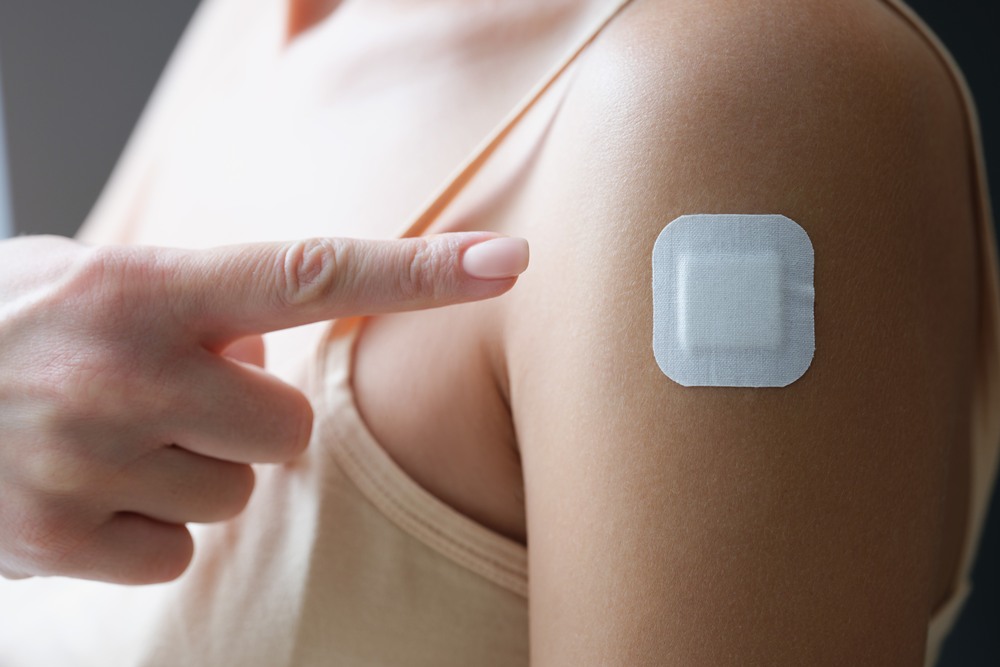
Evorel patches, which contain estradiol, are among the most prescribed forms of transdermal HRT, meaning hormone treatment delivered through the skin. More than 250,000 items were issued in the last financial year, according to NHS Business Services Authority figures.
Overall, nearly 10m items of estradiol, including gels, were prescribed in the 2024/25 financial year.
The employees’ concerns included failing to provide comprehensive side-effect information in Evorel’s prescribing information, and not updating Intrarosa’s product information since 2019.
The PMCPA also reprimanded the company over failures to specify in advertising at a reproduction and advertising conference that Yselty, used to treat uterine fibroids, should not be taken during pregnancy.
In total, the PMCPA found Theramex had breached the Association of the British Pharmaceutical Industry’s code of practice 21 times.
The panel said the breaches not only jeopardised patient safety, but that Theramex had “brought discredit upon, and reduced confidence in, the pharmaceutical industry”.
The PMCPA also condemned Theramex’s decision to leave the regulator’s jurisdiction.
“By leaving the self-regulatory framework and requiring the Medicines and Healthcare products Regulatory Agency to assume full responsibility for regulating it, Theramex has inevitably delayed any regulatory action and oversight,” it said.
Dr Amit Aggarwal, medical director of the ABPI, said: “Theramex has fallen seriously short of the standards expected under our strict ABPI code of practice, and it’s right that the PMCPA took action.
“It’s also disappointing that as a result, the company has decided to leave the pharmaceutical industry’s self-regulatory system, which holds companies to standards above and beyond the law.”
Julian Beach, MHRA’s executive director of healthcare quality and access, said he was disappointed Theramex had left the PMCPA, but that the MHRA would take any necessary steps to ensure patient safety.
He said: “Leaving the jurisdiction of the PMCPA does not mean a company escapes scrutiny.
“The MHRA has legal powers to investigate and act on concerns about medicines that may impact public safety. Breaches of regulations can amount to criminal offences.”
A spokesperson for Theramex said: “Upholding ethical standards, compliance, and patient safety is very important to us. We acted promptly to address these historical matters as soon as we became aware of them.
“We take these matters seriously and have undertaken a comprehensive review of our compliance framework, including commissioning an independent external audit and implementing a broad programme of enhancements.
“As part of this process, we concluded it is most appropriate to be regulated with respect to UK medicines legislation by the MHRA, while continuing to uphold the spirit and principles of the EFPIA and ABPI codes of practice.
“Therefore, we withdrew from the PMCPA’s jurisdiction in January 2026. This approach allows us to focus our resources on maintaining high standards of ethical and compliant behaviour, with patient safety.”


Resistance training improves hip strength, balance and flexibility during menopause and may also improve lean body mass, research suggests.
A study of 72 active women aged 46 to 57 found those who completed a 12-week supervised programme saw greater gains than those who kept to their usual exercise routines.
None of the participants were taking hormone replacement therapy.

The supervised, low-impact resistance exercise programme focused on strength at the hip and shoulder, dynamic balance and flexibility.
Participants used Pvolve equipment, including resistance bands and weights around the hips, wrists and ankles, and also lifted dumbbells of varying loads.
Women in the resistance training group showed a 19 per cent increase in hip function and lower-body strength, a 21 per cent increase in full-body flexibility and a 10 per cent increase in dynamic balance, meaning the ability to stay stable while moving.
Those in the usual activity group did not show any significant improvements.
Previous studies have assessed the decline in lower limb strength and flexibility during menopause, but this is said to be the first study to compare the effect of resistance training on muscle strength and mass before, during and after menopause.
This was done by including participants in different phases of menopause rather than following the same participants over a long timeframe.
Francis Stephens, a researcher at the University of Exeter Medical School in the UK, said: “These results are important because women appear to be more susceptible to loss of leg strength as they age, particularly after menopause, which can lead to increased risk of falls and hip fractures.
“This is the first study to demonstrate that a low-impact bodyweight and resistance band exercise training programme with a focus on the lower limbs, can increase hip strength, balance, and flexibility.
“Importantly, these improvements were the same in peri- and post-menopausal females when compared to pre-menopausal females, suggesting that changes associated with menopause do not mitigate the benefits of exercise.”
Although one of the researchers sits on Pvolve’s clinical advisory board, the researchers said the company did not sponsor the study or influence its results.
Stephens added that any progressive resistance exercise training focused on lower-body strength is likely to yield the same results.
He said: “The important point is for an individual to find a type of exercise, modality, location, time of day etc., that is enjoyable, sustainable, and improves everyday life.
“The participants in the present study reported an improvement in ‘enjoyment of exercise,’ and some are still using the programme since the study finished.”
Kylie Larson, a women’s health and fitness coach and founder of Elemental Coaching, who was not involved in the study, said the results were compelling.
She said: “This is particularly exciting for those that tend to think of menopause as ‘the end’. The study proves that if you incorporate strength training you can still make improvements to your muscle mass and strength, which will also have a positive ripple effect to your ability to manage your body composition.
“In addition, staying flexible and being able to balance are both keys to a healthy and functional second half of life.”
Participants in the study did four classes a week for 30 minutes each session, but Larson said even half that amount of strength training can go a long way, particularly if you emphasise progressive overload, which means gradually increasing muscle challenge through more weight.
Larson said: “Gradually increasing the challenge is what drives real change.
“Lifting heavier over time is what builds strength, protects your bones, and keeps your body resilient through menopause and beyond.”











 Entrepreneur4 weeks ago
Three sessions that show exactly where women’s health is heading in 2026

 Entrepreneur4 days ago
Future Fertility raises Series A financing to scale AI tools redefining fertility care worldwide

 Pregnancy4 weeks ago
How NIPT has evolved and what AI NIPT means in 2026

 Opinion4 weeks ago
Q1 momentum: Female founders are advancing, but the system still hasn’t caught up

 News4 weeks ago
Two weeks left to make your mark in women’s cardiovascular health
 Fertility2 weeks ago
Future Fertility partners with Japan’s leading IVF provider, Kato Ladies Clinic

 Mental health6 days ago
Lifting weights shows mental health and cognitive benefits in older women, study finds

 Mental health2 weeks ago
More research needed to understand link between brain fog and menopause, expert says