




News
Hollywood, Silicon Valley and media well represented in Midi funding drive


Virtual care clinic for women aged 35+, Midi Health, has seen prominent figures from business, entertainment, sport and the media among those joining its oversubscribed US$63m series B round via a US$5M special purpose vehicle (SPV).
Among the new investors are actors/producers Amy Schumer, and Connie Britton, Phenomenal Media’s Meena Harris, soccer star Brandi Chastain, fashion designer/entrepreneur Tory Burch, investor and Angel City FC co-founder Kara Nortman and Sandberg Bernthal Venture Partners, the venture fund run by former Meta COO Sheryl Sandberg and her husband. Others include Waymo co-CEO Tekedra Mawakana, PagerDuty CEO Jennifer Tejada, Stripe executive Claire Hughes Johnson, and Toast CFO Elena Gomez.
Top executives from OpenAI, Atlassian, Databricks, Cloudflare, Google, Apple, Amazon, Meta, Life360, Calm, Universal Music Group, and Warner Media also joined the round.
In total, 80 investors participated with individual check sizes ranging from $10K – US$500K+.
Midi is targeting a vast unmet need in women’s health, with nearly 30 per cent of the female population in the US aged over 35, and 75 million women currently perimenopausal, menopausal, or postmenopausal. While women generally live longer than men, they spend on average 25 per cent more of their lives in poor health.
This health disparity is even more pronounced for women of colour and those from lower socioeconomic backgrounds. Midi is the leading digital health company focused on providing care for women in midlife and covered by insurance in all 50 states.
More than 85 per cent of women will experience symptoms that can negatively impact their quality of life and longevity, which can last more than a third of a woman’s life, beginning as early as mid-30s. Given 80 per cent of OBGYNs have no meaningful training in this area and there is a general practitioner shortage in the US, the vast majority of women suffering do not receive any treatment for their symptoms. Midi is working to change that.
The SPV was overseen by the early-stage B2B venture fund and community, Operator Collective.
“As an early seed investor in Midi, we’ve been waiting for the right moment to spearhead this SPV,” said Mallun Yen, founder and managing partner of Operator Collective.
“We intentionally convened leaders across major industries that are outside the typical circles of venture capital. By design, it reflects our unique collective venture model in action. There’s power in investing beyond just a brand endorsement, and we’re proud to have created an access point that enables these leaders to be directly involved in Midi’s future growth.”
Midi Health CEO and co-founder Joanna Strobe said: “This is truly an example of women investing in companies such as Midi that they want and believe need to exist in the world, putting their own money behind their belief in our goal of closing the care gap for perimenopause, menopause and beyond.
“It’s exciting to see women of such a wide array of fields and ages at the top of their game coming together to help build solutions in the marketplace that will effect change for other women.”
Amy Schumer said of her investment: “Just like you, I have noticed a clear gap in companies that prioritize the needs of women and address the challenges they face when seeking healthcare. Midi is breaking new ground for women 35+ as their healthcare needs evolve.
“The SPV investment opportunity was a unique way for leaders across different industries to come together to ensure women’s health remains at the forefront of innovation, rather than as an afterthought as it has for so long. It’s important to invest in companies that impact us personally and be a force for change for women everywhere.”





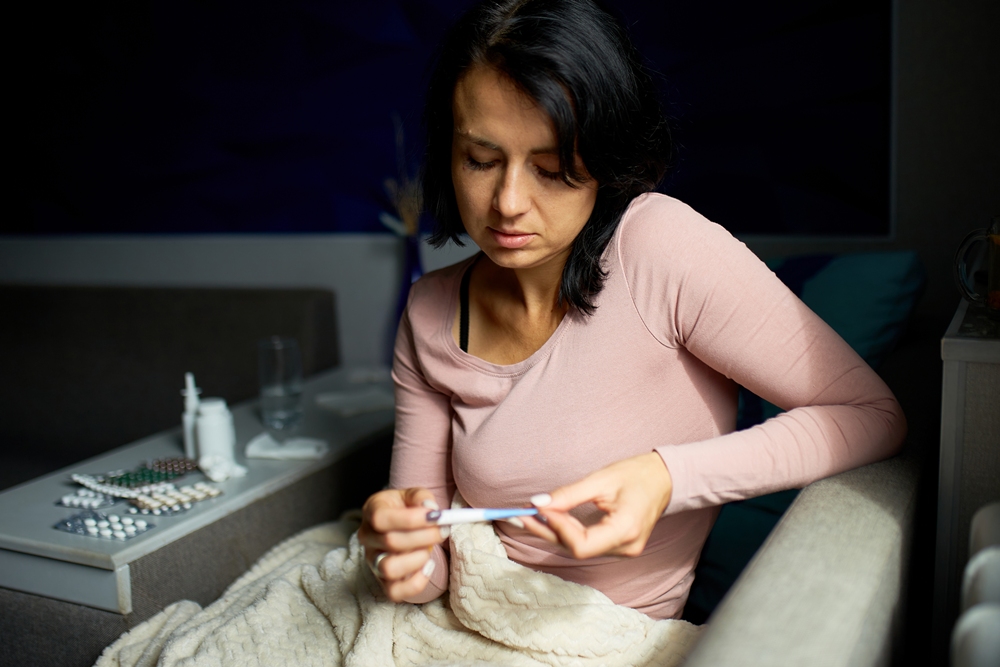
Simultaneous exposure to toxic chemicals and climate-related heat may be worsening fertility harms across humans and wildlife, research suggests.
The review of scientific literature looks at how endocrine-disrupting chemicals, often found in plastic, together with climate-related effects such as heat stress, are each linked to lower fertility and fecundity, meaning the ability to reproduce, across species including humans, wildlife and invertebrates.

Though the reproductive harms of each issue in isolation are well studied, there is little research on what happens when living organisms are exposed to both.
“Together, the two issues are likely to pose a greater threat to fertility, and the additive effect is “alarming”, said Susanne Brander, a study lead author and courtesy faculty at Oregon State University.
“You’re not just getting exposed to one, but two, stressors at the same time that both may affect your fertility, and in turn the overall impact is going to be a bit worse,” Brander said.
The paper looked at 177 studies.
Shanna Swan, a co-author on the new paper, co-produced a 2017 study that found sperm levels among men in western countries had fallen by more than 50 per cent over four decades. Other research has suggested human fertility has been declining at a similar rate.
The University of Washington’s Institute for Health Metrics and Evaluation has previously said the world was approaching a “low-fertility future”, with more than three quarters of countries below replacement rate by 2050.
The new paper’s authors focused on the effects of endocrine-disrupting chemicals and substances, including microplastics, bisphenol, phthalates and PFAS.
These are thought to cause a range of serious reproductive problems, disrupt hormones and be a potential driver of falling fertility.
Brander said the harms linked to these chemicals are often similar across organisms, from invertebrates to humans.
Phthalates, for example, have been linked to altered sperm shape in invertebrates, spermatogenesis in rodents, meaning sperm production, and reduced sperm counts in humans.
PFAS are also thought to affect sperm quality, and both have been linked to hormone disruption.
The chemicals are widespread in consumer goods, so people are often regularly exposed.
Meanwhile, previous research has shown how rising temperatures, lower oxygen levels and heat stress, among other effects linked to climate change, may also worsen infertility.
Heat stress has been found to affect human hormones, and is linked to spermatogenesis in rodents and bulls.
Research shows temperature also plays a role in sex determination in fish, reptiles and amphibians.
The species has evolved to choose which sex it produces in part based on temperature, and the heating planet can “push it too far in one direction or the other, which overrides that evolutionary benefit”, Brander said.
Similarly, many endocrine disruptors may alter environmental sex determination.
The study set out some of the overlapping effects of chemical exposure and climate change across taxonomic groups, from invertebrates to humans.
In birds, for example, exposure to increased temperature, PFAS, organochlorines and pyrethroids may each individually cause abnormal sperm, increased fledgling mortality, abnormal testes and population decline.
“What happens if they’re exposed to more than one of those stressors at the same time? There has been little exploration of that question.
“Even if there have not been a lot of studies looking at these simultaneously, if you have two different factors that both cause the same adverse effect, then there’s a likelihood that they are going to be additive,” Brander said.
Katie Pelch, a senior scientist with the Natural Resources Defense Council nonprofit, who was not part of the study, said the authors had reviewed high-quality science.
She said she wanted to see more examples of the overlap in impacts, but agreed with the overall premise.
“It is likely [multiple stressors] would have an additive effect, at very least, even if they have different mechanisms of harm,” Pelch added.
The solution to the systemic problems would involve tackling climate change and reducing the use of toxic chemicals.
The study cites the global reduction in the use of DDT and PCBs achieved under the Stockholm Convention as an example of an effective measure, but Brander said much more is needed.
“There is enough evidence in both areas to act to reduce our impact on the planet,” she said.















 Events4 weeks ago
Three sessions that show exactly where women’s health is heading in 2026

 Entrepreneur4 days ago
Future Fertility raises Series A financing to scale AI tools redefining fertility care worldwide

 Pregnancy4 weeks ago
How NIPT has evolved and what AI NIPT means in 2026

 News4 weeks ago
Two weeks left to make your mark in women’s cardiovascular health

 Opinion4 weeks ago
Q1 momentum: Female founders are advancing, but the system still hasn’t caught up
 Fertility2 weeks ago
Future Fertility partners with Japan’s leading IVF provider, Kato Ladies Clinic

 Menopause2 weeks ago
More research needed to understand link between brain fog and menopause, expert says

 Mental health6 days ago
Lifting weights shows mental health and cognitive benefits in older women, study finds