




Opinion
Why Mobility Is Becoming Essential for Accounting Professionals


The concept of accounting has, for a long time, been associated with desks and fixed nine-to-five office hours. However, that image no longer reflects the current realities of accounting professionals. That’s mainly because businesses are becoming more digital and global.
At the same time, accounting clients cross borders. This ensures that accounting professionals have to adapt to hybrid and remote models, which makes mobility vital. Read on to learn more about why mobility is becoming essential for accounting professionals.
Reliable access to systems while travelling or off-site
Mobility is incredibly essential for accounting professionals, as it ensures they stay relevant, competitive, and effective in the fast-paced digitalized and global profession. And what makes this mobility possible is the reliable access to systems, such as accounting software, client portals, and secure file systems.
These systems are designed for remote access. However, they only work if the accountant has a reliable, secure, and stable internet connection. So, what mainly ensures mobility is possible for accounting professionals is that there are now advanced ways to connect to the internet that allow accountants to use the accounting systems anywhere and anytime.
And one of the best ways to connect to the internet is through eSIMs. eSIMs allow accountants to activate local data plans directly on their smartphones or tablets without needing a plastic SIM card. So if you’re travelling to Brazil for work, you can get an eSIM Holafly plan for Brazil to help you access local data plans from Brazil.
The same applies when you travel to Bali, China, the USA, or wherever you want to go for work. The good thing? An eSIM from providers like Holafly allows accountants to use local networks to access local data.
This means that you get to enjoy the same stable, reliable, and affordable internet access as locals, no matter where you are. So, you can reliably access accounting platforms like QuickBooks Online, Xero, NetSuite, Sage Intacct as soon as you land at the airport.
Client meetings beyond the traditional office
Another thing that encourages mobility is that client meetings are no longer confined to the traditional office. That’s because today’s clients expect accounting professionals to meet them where it’s more convenient. It can be at their business premises, a co-working space, or a quiet cafe.
Mobility turns accountants into true business partners. It allows them to get a better understanding of the business, as they get to see inventory, workflows, and team dynamics during face-to-face meetings.
That on-the-ground insight leads to more efficient accounting services. In addition to face-to-face meetings, today’s clients also expect accounting professionals to host meetings outside the traditional office, through virtual meetings. This is made possible by tools such as Zoom, Teams, Google Meet, and the secure client portal.
These tools make virtual meetings just as effective as the in-person ones, especially when combined with real-time access to live financial data. For instance, an accountant can pull up the latest Profit & Loss statements during a video call and walk the client through variances, forecasts, and cash flow options, without having to leave their hotel room.
Supporting advisory services and fieldwork

Mobility enables accounting professionals to provide advisory services as soon as the clients need them. For example, a client may need an accounting professional to send a last-minute request for a cash-flow scenario, a budget review, or grant application support while the accountant is out of the office.
So, what will the accountant do in that case? Well, as long as they have their mobile setup with them, that is a laptop, eSIM, and remote access to records, they can do the required analysis from anywhere, even while in transit on a train.
Therefore, mobility ensures that an accounting professional provides advisory services no matter where they are. Also, it makes fieldwork, such as audits, inventory counts, process reviews, and due diligence, possible.
Fieldwork at a client’s business premises is vital. It ensures that accountants can:
- Capture notes, verify transactions, and make adjustments on the spot without waiting till they get to the office.
- Improve accuracy and service quality.
- Update checklists, attach photos of documents, and flag issues in a shared cloud system while on-site. This reduces turnaround time and encourages client trust.
Balancing flexibility with data protection
Mobility enables the accounting profession to be flexible. However, it also raises concerns about data protection and compliance. This is because financial information is very sensitive, and accessing it from multiple locations or unsecure devices increases exposure to security risks, such as:
- Unsecured networks
- Device loss
- Unauthorized access to sensitive financial information
- Data breaches
Therefore, mobile accounting professionals must balance flexibility with data protection: They can do that by:
- Using only encrypted cloud platforms that ensure multi-factor authentication and role-based access controls.
- Avoiding public wi-fi when transferring client data.
- Using secure methods of internet connection, such as through the eSIM.
- Using strong VPNs when accessing internal systems or large client files.
- Using strong biometric locks or passcodes for all work laptops, tablets, or phones.
- Never leave a laptop unattended in a hotel.
- Using private filters while on public transport.
- Practicing secure file sharing.
Redefining professionalism in a mobile world
As mentioned above, professionalism in accounting is no longer measured by a corner office and a strict nine-to-five. Instead, it is defined by reliability, responsiveness, and consistent value delivery, regardless of location.
In fact, the most respected accountants in this mobile world are those who deliver high-quality work on time, communicate clearly, and adapt to a client’s needs, whether they’re in Brazil, the UK, or China.
The mobile world forces a mindset shift. That’s from being present at a desk to being present for the client. This means:
- Being reachable during key deadlines, no matter where you are in the world.
- Proactively sharing updates
- Having client data and tools whenever a decision arises
All that does not depend on a physical presence at the office. Instead, it’s about being present anywhere in the world as long as work tools are available. This level of availability builds deeper trust and credibility, as accounting professionals will always be prepared to work remotely or while on the move.



By Claire Pettengill, science intern and Jade Anstine, clinical AI intern, Ema EQ
Every year, Gallup asks Americans which professions they trust most. Every year, nurses win. Not doctors. Not scientists. Nurses. And if you spend any time thinking about why, the answer is not hard to find.
Medicine runs on the nurse noticing first. In other words, the diagnosis follows the nurse sounding the alarm. They ask questions that feel human, not procedural. They explain what is happening in language you can understand.
And, critically, they know when something is beyond their scope and get you to the right person without making you feel like a burden for needing more.
That is the model we built Ema on.
When we set out to build an AI companion for women’s health, we could have just built something that answers questions efficiently. Pattern matching. Fast retrieval. Clinically accurate outputs.
Those things matter, and Ema does all of them. But accuracy alone does not build trust, and trust is the entire game in healthcare.
A woman asking about her postpartum recovery, her fertility, or her breastfeeding supply is not looking for a search engine. She is looking for someone who will take her seriously.
Women’s concerns don’t just need to be ‘validated’; they also need to be believed. Dismiss a woman’s pain as anxiety once, and you’ve taught her to doubt her own body.
The nursing model of care is built on exactly that premise. It is care that is shaped by her story. It asks about context and symptoms.
It treats the person as a whole, and it recognises that the right answer is sometimes a referral, not a response.
We trained Ema to escalate. That may sound like a small thing, but in AI, it is a deliberate design choice.
Most AI systems are optimised to answer and maintain engagement. Ema is optimised to help, and sometimes helping means saying “you need to speak to a clinician” and making that path easy.
This matters especially in women’s health, where the clinical trust gap is well-documented.
In a 2022 nationally representative survey of over 5,000 women, nearly 1 in 3 reported that their doctor had dismissed their concerns, and 15 per cent said a provider simply didn’t believe them.
Women are more likely to have their symptoms dismissed, their concerns minimised, and their pain undertreated. Among women under 35, nearly half reported at least one of these experiences.
They have had to learn how to advocate within systems designed for efficiency, built on men’s health.
With Ema, every conversation is an opportunity to make a woman feel heard, informed, and directed to the right level of care, neither over-triaged nor undertreated.
The goal is not to replace clinicians. It is to create a trustworthy first point of support that listens carefully, explains clearly, recognises limits, and helps women move toward appropriate care.
The nurses who top those Gallup rankings every year earn that trust through consistency. They show up, listen, follow through, and know their limits.
Ema is simply that trust, built into technology. That is the standard we hold Ema to: a trustworthy presence that knows when to answer and when to hand off.
Medicine spent a long time teaching women not to expect to be believed. Ema is built by the people who never stopped listening.
Bios
Claire Pettengill is a psychiatric nurse and DNP-PMHNP candidate at Columbia University School of Nursing, specialising in women’s mental health across the lifespan and algorithmic justice – ensuring the AI tools shaping women’s care are built to actually listen. She joined Ema EQ as a science intern focusing on clinical safety standards for evaluating AI in women’s health.
Jade Anstine is a senior nursing student at Gustavus Adolphus College looking to bridge the gap between frontline medicine and digital health innovation. He joined Ema EQ as a Clinical AI Intern to assess the Ema AI model across different clinical populations, specifically pediatrics and LGBTQ+.


By Jane Lewis, chief operating officer, chief financial officer and women’s health lead, ABHI
For years, the conversation around women’s health has rightly focused on recognition.
Recognition that women wait longer for diagnosis. Recognition that symptoms are too often dismissed or normalised. Recognition that healthcare systems have historically been designed around male biology, leaving gaps in research, evidence and care.
That recognition matters. But awareness alone will not improve outcomes.
The challenge facing women’s health today is no longer simply identifying the problem. It is acting on the solutions already available.
At ABHI’s Women’s Health Summit earlier this year, leaders from across healthcare, government, academia and industry came together to discuss the future of women’s health.
One message emerged repeatedly throughout the day: we do not have an innovation problem.
Across medical devices, diagnostics, digital health and genomics, there are already technologies capable of transforming outcomes for women.
From self-sampling approaches for cervical screening and non-invasive diagnostics to AI-enabled tools and advanced imaging, innovation is happening. The question is whether healthcare systems can adopt it quickly enough.
Too often, promising technologies become trapped in pilot programmes, fragmented procurement processes or lengthy implementation pathways. Evidence generation, commissioning and adoption are frequently treated as separate challenges rather than part of a single journey.
The consequence is that innovations capable of improving quality of life and reducing pressure on health services take years to reach the women who could benefit from them.
This matters because women’s health extends far beyond reproductive health.
Historically, many discussions have centred on fertility, pregnancy and gynaecological conditions. These remain critically important, but they represent only part of the picture.
Women experience cardiovascular disease differently to men. They are disproportionately affected by autoimmune conditions. They face distinct health challenges throughout their lives, from adolescence to healthy ageing.

Jane Lewis
Yet healthcare systems often continue to approach these issues in isolation.
A woman does not experience her health in separate compartments. Pregnancy, cardiovascular risk, menopause, mental health and musculoskeletal conditions are interconnected.
Healthcare systems need to reflect that reality through more integrated, life-course approaches to care.
There has never been a better opportunity to do so.
Across the NHS, the shift towards prevention, community-based care and digital transformation aligns closely with the needs of women’s health.
Women’s Health Hubs are already demonstrating the benefits of bringing services together around the needs of women rather than organisational boundaries. Digital technologies are helping to identify risk earlier and support more personalised care.
Innovation can help deliver all three of the NHS’s major transformation ambitions: moving from treatment to prevention, from hospital to community, and from analogue to digital care.
But innovation alone is not enough.
Closing the women’s health gap also requires us to address longstanding gaps in research and evidence.
Women remain underrepresented in many areas of clinical research, and sex-disaggregated analysis is not always applied consistently. The result is that clinical pathways and treatment decisions are often based on evidence that does not fully reflect female physiology.
Better data, stronger research participation and greater focus on female-specific and female-predominant conditions will be essential.
There is also a compelling economic case for action.
Women’s health is often framed as an equality issue, and equality remains central. But poor health affects workforce participation, productivity and economic growth.
Improving outcomes for women benefits not only patients, but employers, healthcare systems and wider society.
Yet despite this, women’s health innovation continues to attract only a fraction of the investment directed towards other areas of healthcare.
That is beginning to change.
Across the UK and internationally, momentum is building. Governments, investors, researchers and innovators increasingly recognise that women’s health is both a societal necessity and an economic opportunity.
The conversation has moved on significantly in recent years. Topics that were once overlooked are now firmly on the policy agenda.
The next challenge is ensuring that awareness translates into action.
The technologies exist. The evidence is growing. The policy direction is increasingly clear.
ABHI is increasingly taking this agenda beyond national boundaries. Through our engagement with international industry associations, policymakers and healthcare leaders, we are working to ensure that women’s health is recognised as both a health and economic priority.
We are helping to shape discussions on innovation, regulation, investment and adoption, while sharing lessons from the UK with partners around the world.
Whether addressing the gender health gap, improving access to diagnostics or accelerating the uptake of new technologies, international collaboration will be essential.
The challenge now is not recognising the need for change, but delivering it.
Women have waited long enough for acknowledgement of the problem. They should not have to wait any longer for the benefits of the solutions that already exist.
ABHI is the UK’s leading industry association for HealthTech. Its members, ranging from multinationals to small and medium-sized enterprises (SMEs), develop and supply technologies spanning everything from syringes and wound dressings to surgical robots, diagnostics, and digitally enabled healthcare solutions. ABHI’s 400 member companies represent approximately 80% of the UK HealthTech sector by value.

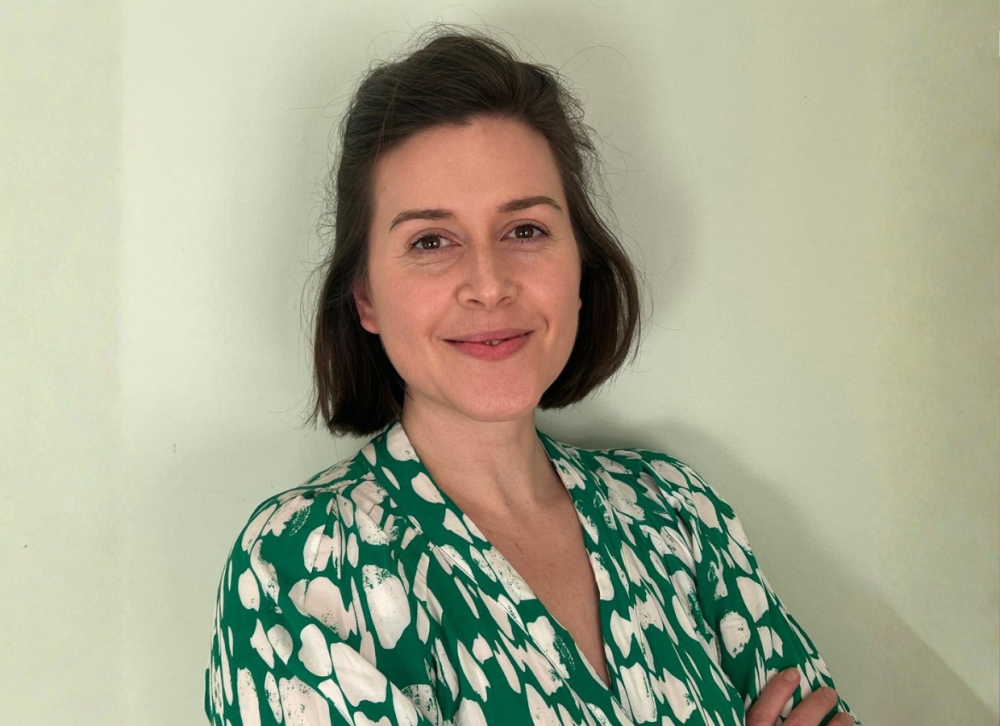
By Dr Fran Conti-Ramsden, clinician at Guy’s and St Thomas’ NHS Foundation Trust, academic at King’s College London, and chief medical officer of MEGI Health.
A woman gives birth. A few days later she goes home, often with a bag of medication for her blood pressure, and then, very often, very little structured follow-up for her heart (cardiovascular) health.
In my clinical work, and through our collaboration with Action on Pre-eclampsia, I see and hear about this postnatal cliff edge again and again, and it still shocks me.
We invest a lot of medical care and attention whilst a woman or birthing individual is pregnant, then, at the very moment emerging evidence suggests we have a window of opportunity to modify long-term health, the support falls away.
That cliff edge is a symptom of a deeper issue: we have come to treat “women’s health” as a synonym for reproductive health. Pregnancy, periods and fertility, important as they are, have crowded out everything else.
Yet the conditions that do most to shorten and limit women’s lives are not reproductive at all.
Cardiovascular disease is the leading cause of death in women worldwide, and it is still too readily thought of as a man’s problem.
Heart disease in women is more likely to be missed and under-treated, in part because for decades women were under-represented in the research that built our knowledge.
Pregnancy makes this vivid.
Conditions such as pre-eclampsia are not only risks to be managed for nine months; they are early warnings about a woman’s future, markers that she is more likely to develop heart disease and high blood pressure in the years to come.
We have the knowledge to act on that. What we mostly do instead is discharge her and look away.
This is exactly the kind of problem better tools should help us solve: spotting risk earlier, supporting women and their clinicians through the vulnerable postnatal window, and providing continuity where the system currently provides a drop due to lack of capacity.
Artificial intelligence and digital health have real potential here; in risk prediction, in monitoring blood pressure at home, and in helping stretched clinicians know who needs attention and when.
And yet this is not where most of the energy is going.
It is far easier to build, fund and scale an app that tracks a cycle than a tool that changes the trajectory of a woman’s heart.
So, innovation clusters at the lighter, lower-risk end of innovation, while the conditions that actually kill and disable women, and moments like the postnatal cliff, stay under-served.
Closing the women’s health gap could add at least a trillion dollars to the global economy each year, the World Economic Forum estimates, but the bigger prize is women living longer, healthier lives.
None of this means technology is a cure in itself. It is a tool, and a tool built carelessly can do harm.
Because women have been under-represented in medical data, systems trained on that data can quietly carry the same blind spots forward, deepening inequalities rather than closing them.
Responsible innovation, with clinical-grade evidence, privacy and equity designed in from the start, and tools built around real clinical pathways rather than bolted on afterwards, is not a brake on progress.
It is the only version of progress worth having.
I am optimistic, because a serious community is forming around exactly these questions and the appetite to get it right is real.
It is why, at MEGI, we are bringing clinicians, researchers, founders, regulators and investors together for our AI × Women’s Health summit on 25 June.
If we keep our focus on the conditions that matter most to women’s lives, and build the tools to meet them responsibly, the postnatal cliff edge could become something else entirely: the moment the system finally catches her and delivers preventative healthcare.
AI × Women’s Health: Innovation, Challenges and Opportunities summit is taking place on Thursday 25 June 2026 at the London Institute for Healthcare Engineering. The event is free and is fully booked and operating a waiting list. Join the waiting list here.
About Dr Fran Conti-Ramsden
Dr Fran Conti-Ramsden is a UK Obstetrics and Gynaecology registrar and Chadburn Clinical Lecturer at KCL passionate about transforming women’s health through technology and innovation.
Combining NHS clinical experience with an MRC-funded PhD, recent NHS Clinical AI fellowship and commercial role as Chief Medical Officer at Megi health, she works at the intersection of clinical medicine, data science, technology and AI.
Her current programme of research focuses on the intersection of healthcare and technology; leveraging advances such as smartphone based vital signs capture and large language models to drive forward scalable innovation in maternal cardiovascular care.
She has published over 20 peer-reviewed manuscripts (See gScholar, h-index 12), including award-winning work recognized by Hypertension Journal.
She was awarded an AI visionary award in 2025 by Health Innovation KSS was the recipient of the 2024 International Society for the Study of Hypertension in Pregnancy Zuspan prize.









 News2 weeks ago
New menopause drug approved for use by NHS in Scotland

 Hormonal health1 week ago
Stardust period tracker shares health data, study reveals

 News5 days ago
Zero Candida market set to reach over US$2 billion by 2030 – report

 Entrepreneur2 weeks ago
Women’s health draws record $1.55bn in equity as capital spreads beyond the mega-rounds
 Insight2 weeks ago
Softening ovaries could extend fertility as women age, study suggests

 Entrepreneur2 weeks ago
Onto Health acquires diagnostics software company Levy Health

 News1 week ago
Congress urged to invest over $20bn to close women’s health gap

 Menopause1 week ago
Many women still confused about perimenopause, research finds