




Wellness
Verdane invest in Clue to accelerate the future of women’s health


Clue, the women-led period and cycle tracker health and wellness app, has announced a significant and strategic investment from Verdane – the European specialist growth equity firm focused on technology-enabled businesses.
The investment – which is a substantial contribution from Verdane’s €2 billion growth fund – is the single largest investment in Clue to date and marks a noteworthy milestone for the business.
The funding, which will result in Verdane being the largest investor in the women’s health and wellness app, follows an exceptional 2025 that strengthened Clue’s growth foundations and created a clear path to long-term and sustainable profitability.
With Verdane’s partnership, Clue will accelerate its next phase of growth including:
- Deepening product innovation, user experience and feature development
- Expanding global reach by scaling new and existing markets
- Investing in healthcare partnerships to expand access to more personalised care
- Investing in clinical and world-class research to inform our product excellence and continue to close the women’s health gap
- Strengthening market leading privacy-first and security measures
- Investing in technology that aids in delivering more personalised care
Clue and Verdane are united by a shared belief that women’s health remains one of the most underserved, and most impactful, categories in global health and wellness.
Both organisations recognise the opportunity to build category-defining companies that combine scientific rigor, ethical data practices, and long-term thinking to deliver meaningful outcomes for users and society.
Clue has long differentiated itself through its commitment to medical research, and scientific-based insights, leading data privacy standards, and an inclusive approach to women’s health that goes beyond fertility tracking alone.
Verdane brings deep experience partnering with mission-driven, digital-first companies, helping them scale responsibly while staying true to their values and ethical positioning.
Rhiannon White, CEO at Clue, said: “Women are the world’s largest health and wellness consumers, controlling the majority of household spending in every market, yet they remain strikingly underserved relative to their economic power.
“This gap creates three systemic pain points: a profound lack of accessible female health knowledge that forces women to self-diagnose, a confusing marketplace filled with unproven products and little evidence-based guidance, and persistent barriers to accessing care.
“For businesses, this represents not just a social issue but a significant market failure and a compelling opportunity to build trusted, data driven solutions that meet the needs of the most influential spenders in global health and wellness.
“Partnering with Verdane enables us to accelerate the creation of this powerful ecosystem and tackle these issues for women.
“Verdane’s deep expertise in growing sustainable businesses, combined with their extensive operating experience in the health and wellness space means they bring unparalleled support to the opportunity in front of us.”
Verdane’s investment philosophy, which is centered on sustainable growth, operational excellence and building enduring market leaders, aligns closely with Clue’s ambition to set the global standard for digital women’s health and wellness.
Together, the companies aim to advance the category by investing in research, partnerships, and privacy-first technology.
Christina Stoll, principal at Verdane, said: “We are highly impressed by the Clue management team and the strong momentum the business is demonstrating.
“Clue has earned exceptional user trust by combining the highest data protection standards with rigorous, science-based insights in a category where credibility truly matters.
“Consumer demand and awareness for trusted women’s health solutions continues to accelerate, and Clue is uniquely positioned to lead this space.
“With Verdane’s sector expertise in scaling digital health and wellbeing platforms, we are confident that we can be a strong long-term partner to the team, supporting continued growth, product innovation and an outstanding user experience, while deepening valuable partnerships across the health and wellbeing ecosystem.
“Clue’s women-led, mission-driven approach and focus on meaningful impact strongly align with what Verdane stands for.”







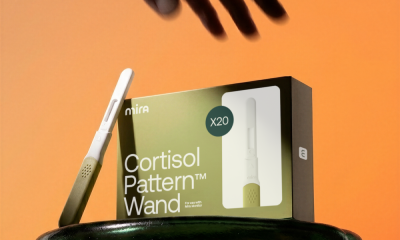






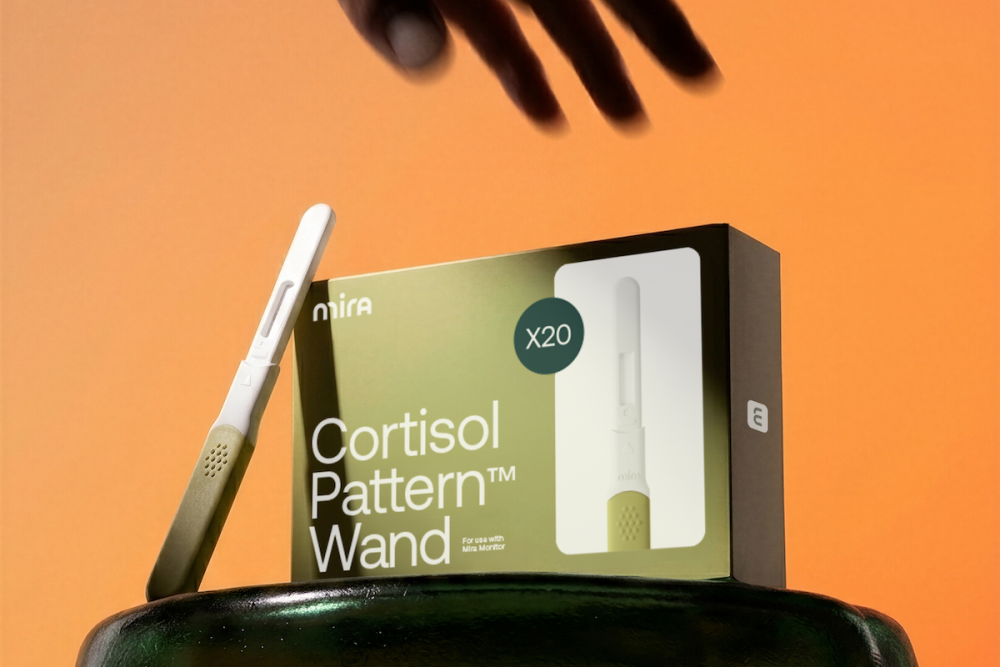
Mira has launched an at-home cortisol tracking kit that allows women to monitor stress-related patterns over time using urine samples.
The Cortisol Pattern Kit measures urinary free cortisol directly from a urine sample and displays results through the company’s existing monitor and app.
The system is intended for repeated testing rather than a single measurement, allowing users to compare results with a personal baseline built from their own data.
Mira said consistent daily testing can establish a baseline in about a week. It recommends testing in the morning and evening to see how cortisol patterns change throughout the day.
Cortisol is involved in the body’s stress response but is not a direct or complete measure of stress. The company said the kit is intended for general wellness use and is not designed to diagnose stress, an endocrine condition or any other medical condition.
The Cortisol Pattern Wands use the same lateral-flow testing format as Mira’s existing hormone tests. Users dip a wand into a urine sample, insert it into the Mira Monitor and view the result in the app within minutes.
The company said cortisol data can be viewed alongside cycle, hormone and daily routine information.
Sylvia Kang, founder and chief executive of Mira, said: “The Cortisol Pattern™ Kit gives women a new way to understand their stress patterns over time, in the context of their own biology.”
She added: “We built Mira to give women answers they had spent far too long searching for, beginning with the TTC journey and expanding into hormone and cycle tracking across life stages, including perimenopause. Now, we’re taking Mira beyond reproductive health and into everyday wellness, bringing personalised stress-pattern tracking directly into women’s homes.”
Mira said more than 350,000 women already use its platform to track their cycle and hormones.
Waitlist sign-ups for the Cortisol Pattern Kit and Cortisol Pattern Wands opened on 22 September, with wand refills available to pre-order in 20- and 30-count options.

Manchester City has launched a female athlete health platform covering menstrual, pelvic and breast health, as well as nutrition.
The Her City website is designed for the club’s women’s first-team players, coaches, support staff, academy players and parents.
Manchester City says the platform is the first of its kind in the Women’s Super League and was developed over two years.

The project was led by director of performance services Emma Deakin, physical performance scientist Rosie Anderson and PhD student and first-team nutritionist Sarah Malone.
It grew out of PhD research into menstrual, pelvic and breast health and nutrition, with the team seeking to turn that work into an online educational resource.
The website divides the four areas into separate sections and provides peer-reviewed information that the club says has been critically analysed by experts.
Content will continue to be reviewed and updated as further evidence emerges.
Resources include posters, visual explainers, audio materials and downloadable educational content, with information tailored to different groups including players and parents.
The platform aims to improve knowledge, develop critical analysis skills and strengthen communication within football and at home.
It also includes material to help users assess misinformation they encounter on social media or elsewhere.
A confidential contact form allows users to raise concerns or ask questions directly of experts at Manchester City.
Parents of academy players can also access the platform, with resources intended to help them support their children during a key phase of their development.
Manchester City said its longer-term aim is to make the platform available to all women working across City Football Group.









 Menopause1 week ago
Menopause may not explain rising heart condition in women – study

 Fertility2 weeks ago
Paracetamol use may impact future fertility, studies suggest

 Insight1 week ago
Women with birth trauma face 2.5x higher healthcare costs – study

 News1 week ago
Medical cannabis may improve endometriosis symptoms – study

 Cancer1 week ago
Study could explain why obesity is a breast cancer risk factor

 Menopause2 weeks ago
Menopause hormone therapy may improve cardiovascular health outcomes, study suggests

 AI1 week ago
Evvy secures US$40m for AI-powered vaginal microbiome testing

 Q&A1 week ago
Innovating breast cancer screening with tears