




News
UKWritings tutor on exploring career opportunities in FemTech for STEM students


FemTech – short for Female Technology – is an emerging industry. It’s also an emergent term that describes a movement to develop entirely new products and services to better address the health and wellbeing needs of women, around the world. Innovative. Fast-paced.
Multi-faceted – and sexy and important. Yes. And that’s the exact reason why FemTech is a tech company to its core, a tech company that brings women, health and technology issues to the center stage together. And any student of STEM (sciences, technology, engineering and mathematics) is in for a career full of dreams. Exploring career opportunities in FemTech opens exciting paths for STEM students, and using UKWritings to write my dissertation can help them focus on this growing field while ensuring their academic work is top-notch. UKWritings.com provides expert dissertation writing services, making it easier for students to balance career exploration with academic success.
This is all the more important now, when more women are aware of female-specific health products, and when industry is expanding at a pace: the FemTech market is set to grow by a CAGR of 11.4 per cent, with plenty of new and exciting jobs for STEM graduates who want to use technology and innovation to improve the lives of women.
The Rise of FemTech
Indeed, the very word FemTech was coined back in 2016 by Ida Tin, the founder of the period-tracking app Clue. Shaped by her own experience of polycystic ovary syndrome, Tin made it her mission to destigmatize female sexual health and create technology that could help women better understand their bodies. Since then, the fledgling FemTech industry has exploded: disrupting stale markets, creating jobs and driving significant capital into a sector long ignored by the patriarchy. Clue alone raised $30 million within its first three years. Today, almost any product that relates to women’s health or hygiene can be counted as FemTech: from fertility-solutions and menstrual-tracking apps to pregnancy and lactation care; and women’s sexual wellness and care of reproductive surgery.
According to Frost Sullivan, a market research firm, the FemTech market will grow to $50 billion by 2025, and much faster than that thereafter. This growth can be attributed to three factors. First, public awareness of female health issues is rising. Second, personalized health solutions are in high demand. Third, technology advancements have allowed us to address previously unmentioned parts of the female anatomy that used to be taboo.
Why STEM Students Should Consider FemTech Careers
Pursuing career opportunities in FemTech offers exciting prospects for STEM students, and a UK Writings review by LinkedIn author shows how their services can assist students in balancing academic responsibilities with career exploration. FemTech presents an opportunity for STEM students to marry technical skills with a passion for improving the health and wellbeing of women. Here are why STEM graduates should look seriously at FemTech as a career:
- Work with purpose: working at a FemTech company gives professionals a sense of purpose and meaning as they are working on products and services that help women improve their lives around the world, from apps for females to track their menstrual cycle, to innovative medical devices that enable early detection of breast cancer.
- Fast moving career opportunities: as the FemTech market is growing very quickly, there is an excellent chance for any woman to move fast up the career ladder. As the market evolves, new roles and new specializations are getting available too, presenting good prospects for one’s career development.
- Interdisciplinary potential: FemTech draws on biology, computer science, data analysis, engineering, and more. Students graduating in STEM subjects can put their skills to use in myriad ways, and collaborate with a range of colleagues.
- Innovation-driven: as a bleeding edge of innovation, FemTech offers the opportunity to be at the vanguard of women’s health technology. For STEM students who thrive on creativity and problem-solving, FemTech is a dynamic place to work.
- Unmet needs: Much of women’s health has been historically overlooked in medical research and product development. In that sense, FemTech can create valuable opportunities for STEM professionals to work on the development of groundbreaking solutions for subjects that have long been neglected.
Career Opportunities in FemTech
The FemTech industry offers a wide array of career opportunities for STEM graduates. Here’s a table showcasing some of the key roles available in the field:
| Role | Description | Required Skills |
| Biomedical Engineer | Design and develop medical devices for women’s health | Engineering, biology, product design |
| Data Scientist | Analyze health data to improve FemTech products and services | Statistics, machine learning, programming |
| Mobile App Developer | Create user-friendly apps for tracking women’s health | Mobile development, UX/UI design |
| Clinical Research Scientist | Conduct studies to validate FemTech products | Biology, clinical research methods, data analysis |
| Product Manager | Oversee the development and launch of FemTech products | Project management, market research, communication |
| AI/ML Engineer | Develop AI-powered solutions for personalized healthcare | Machine learning, AI algorithms, programming |
| UX/UI Designer | Design intuitive interfaces for FemTech applications | User experience design, graphic design, prototyping |
| Bioinformatics Specialist | Analyze genetic data for personalized health solutions | Genetics, programming, data analysis |
| Robotics Engineer | Develop robotic systems for medical procedures | Robotics, engineering, programming |
| Health Informatician | Manage and analyze health data systems | Health IT, data management, information systems |
These roles represent just a fraction of the career opportunities available in the FemTech industry. As the field continues to grow and evolve, new positions are likely to emerge, offering even more options for STEM graduates.
Skills Needed for a Career in FemTech
While skills will depend on the nature of the role and what experts are working on, some core competencies can be applied across the FemTech sector:
- Technical: While you could technically qualify as a data scientist without any formal education past high-school, you’ll certainly need to have a strong background in one or more STEM subjects (science, technology, engineering and mathematics) such as biology, computer science, engineering, or data analysis; depending on aspects of your role your expertise might include areas such as machine learning, mobile app development, or biomedical engineering.These would include skills in data analysis, statistics and data visualization, which will become increasingly important as data within health and healthcare take a bigger and bigger role.
- Programming: Proficiency in programming languages (Python, R, Java, etc) is typically required for any work involving software development (eg, programming/software engineer roles), data analysis (eg, data analyst), or AI/ML engineering (eg, AI/ML engineer roles).
- User-Centered Design: Help developers and entrepreneurs realize that designing with women in mind is a business imperative, not a ‘nice to have’. UCD (user-centered design) and UX (user experience) are prerequisites for creating products that women will actually use.
- Research Skills: Quite a few jobs within FemTech may involve the execution and/or interpretation of scientific research. A good knowledge of research methodologies, literature review skills and scientific writing skills would be needed.
- Interdisciplinarity: You have heard the term ‘thinking outside the box’ and have been advised to think across disciplines and use different ways of thinking to solve complicated problems. The most innovative industry in the world, FemTech, thinks like that.
- Communication: Communicate clearly with different teams in the development process, explain complicated issues to non-technical stakeholders, and (potentially) directly to end-users.
- Empathy and Cultural Sensitivity: Females’ perspectives; empathy for women; sensitivity to cultural differences in health and health behaviors.
Challenges and Opportunities in FemTech
STEM students should be aware of FemTech’s limitations (and its opportunities) because, although the term suggests optimism and new career possibilities, it doesn’t mean that there are no risks or uncertainties attached.
Challenges:
Furthermore, taboos and stigma surrounding women’s health add an additional challenge to marketing and discussions of FemTech products.
Because the field is so new, there may also be fewer established career paths at this time, relative to more traditional STEM industries.
Being inclusive, dealing with the multiple needs of diverse populations of women, can be stressful and needs to be constantly taught and re-taught.
Opportunities:
This space is under-innovated, with tons of room for future products that are specifically designed to address women’s health concerns.
As a consequence, investment in FemTech has continued to rise, with more support for ideas and concepts that prioritize women’s health.
Because FemTech is inherently interdisciplinary, it’s relatively easy to use cutting-edge technologies in new ways and open up creative solutions to problems.
Getting Started in FemTech
Here are some suggestions to get started for STEM students interested in making a career out of FemTech:
- Education: Try to take relevant STEM degrees, and if you can take an elective in women’s health, digital health, or biomedical engineering.
- Internships: Look for internship opportunities with FemTech startups or established companies in the field.
- Networking: Attend FemTech conferences, webinars and meetups. Here, you can learn from experts in the field and rub shoulders with industry professionals.
- Research: Read the latest trade journals, reports and scientific studies to keep up with new developments in women’s health and technology.
- Projects Take on an Interest in FemTech: Set up these projects or attend the women’s health hackathons that are becoming increasingly popular.
- Mentorships: Find mentors who are working in FemTech and ask them for feedback.
Conclusion
STEM students with a keen interest in advancing women’s health through technology have an exciting, meaningful and ‘life-enabling’ career path to follow. FemTech is growing, interdisciplinary and innovative, and STEM graduates have the opportunity to make a real impact.
When empowered with both technical know-how and knowledge of women’s health needs, STEM professionals can create cutting-edge innovations that improve the lives of women everywhere. Growth within the industry spells a future of challenges, new lessons and the opportunity to be part of a healthcare revolution.
As such, for STEM students who want to help create technology for a good cause, FemTech offers a career that offers all the advantages of technological innovation, with the social impact of a perfect match. Your ‘job’ becomes a part of a revolution in women’s health and wellness that will benefit generations to come.


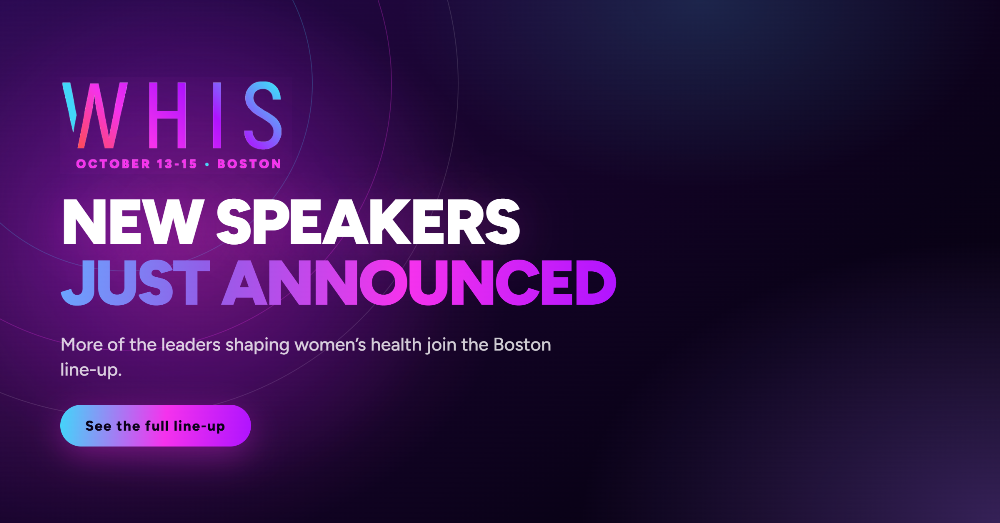
The Women’s Health Innovation Summit (WHIS), the event uniting the global women’s health ecosystem, has just announced 18 new speakers joining the agenda for its 2026 summit, taking place October 13–15 at Encore Boston Harbor.
The latest additions bring further depth across pharma, clinical research, health systems, venture, and policy, reinforcing WHIS’s role as the only platform where the full women’s health ecosystem convenes under one roof.
Newly confirmed speakers include:
- Kelle Moley, MD – VP, Women’s Health Early Phase Clinical Development, Cardiometabolic Research, Eli Lilly & Company
- Justine Levin-Allerhand – Executive Partner, Chief Corporate Development Officer & COO, Flagship Labs, Flagship Pioneering
- Sebnem Yildirimoglu, MD, PMP – Executive Director, Women’s Health Strategy, Premier Research
- Terri Stewart – Head of Global Healthcare & Government Affairs, EMD Serono
- Dr. Morag Grassie – Executive Director, Blavatnik Fund for Innovation, Yale
- Sandra Butler – Director, Design Impact, Mass General Brigham
- Zhenya Lindgardt – Chief Executive Officer, Sera Prognostics
- Sadie Morahan – Head of US Revenue, Withings Health Solutions
- Angela Drew, PhD – Vice President, Regulatory Strategy, Premier Research
- Dr. Stephanie Lahr – CMIO, Aqurio
- Michelle Andrews – Contributing Writer, KFF Health News
- Charlotte Williams – CEO, My Bump Hub
- Clint Dart, MS – Director, NIH Women’s Health Data Coordinating Center, Premier Research
- Cass Sanford – US Venture Advisor, FemTech Lab
- Megan Mukuria – Founder & CEO, ZanaAfrica
- Tiffany Inglis, MD, FACOG – Chief Medical Officer, Sera Prognostics
- Angelean Hendrix, PhD – Vice President, Pharmacometrics and MIDD, Premier Research
- Amanda Ducach – CEO & Co-founder, EmaEQ
“WHIS is where the women’s health industry comes together to take action,” said Poppy Howard-Wall, Event Director at WHIS.
“This latest wave of speakers reflects exactly the kind of cross-sector expertise our attendees expect – from global pharma and clinical research leadership to venture, health systems, and grassroots innovation.
“It’s this breadth that makes WHIS the room where things actually move forward.”
Bringing the Full Ecosystem Together
These additions join a growing 2026 agenda spanning four content tracks that reflect the full lifecycle of healthcare innovation, from early-stage research and development through to patient delivery, system transformation, and commercial scale.
Attendees can expect over 1,000 senior decision-makers, 120+ expert speakers, four dedicated stages, and more than 10 hours of curated 1:1 meetings.
Full speaker and agenda details are available at whisusa.com/speakers-2026.
About WHIS
The Women’s Health Innovation Summit is the only platform uniting the full women’s health ecosystem – providers, payers, employers, pharma leaders, investors, and innovators -to increase deal flow, expand reimbursement, improve access, and deliver better outcomes for women at every stage of life.

Nearly a quarter of women often miss work because of menstrual symptoms, according to a survey examining hormonal health among women in full-time work in Ireland.
The survey looked at the impact of menstruation, fertility and motherhood, and perimenopause and menopause.
Research from The Menopause Hub found more than one in three women who had not disclosed a menstrual health issue at work said the lack of a clear workplace policy was the reason.

More than a quarter said they did not think their concerns would be taken seriously, while 22 per cent cited embarrassment and 18 per cent feared being judged.
Nearly half of respondents said better workplace support would have made them feel less stressed, while 40 per cent said it would have made them feel more valued. Some 36 per cent said they would have felt more comfortable speaking up.
Some 76 per cent of women surveyed said they experienced menstrual health issues, with 23 per cent of those often missing work because of symptoms.
Nearly half of respondents, 49 per cent, said they felt uncomfortable talking about menstruation at work.
One respondent said: “As a woman, we try to get through the day, sometimes in pain that can’t be seen. We feel emotionally and physically drained.”
The research also found that 62 per cent of those who experienced baby loss reported a moderate or significant impact on work attendance.
More than half of respondents who experienced depression during pregnancy also reported a moderate or significant impact on attendance.
Some 63 per cent of mothers said it was “difficult” to return to work after pregnancy, while nearly half said their maternity pay arrangement had negatively affected their financial wellbeing.
One respondent said: “I almost walked away. The only reason I stayed was because I had to provide for my family.”
The survey also found that nearly half of respondents said menopause had some impact on their attendance, while more than six in 10 reported an impact on their work performance.
Some 44 per cent of women said they were “uncomfortable” discussing perimenopause and menopause at work.
One person said they were “already terrified of losing my job at my age:
“I need to just struggle through this without support or acknowledgement. That’s basically workplace discrimination.”
The Menopause Hub chief executive Loretta Dignam said women’s hormonal health has been treated as a “private or personal issue” for too long, “when the reality is that it has a very real impact on women’s working lives”.
“The fundamental point is that women are not ‘mini men.’
“Our biology is different, and workplaces that were largely designed around a male model of health and working life need to evolve to recognise that.
“What is striking is how many women continue to show up, perform, push through and progress at work while managing significant physical and emotional symptoms, often without the policies, understanding or practical support they need,” Dignam said.
She added that because expectations are changing, Gen Z and Gen Alpha employees will be “far less willing than previous generations to accept workplaces that ignore their health and wellbeing”.







 Entrepreneur2 weeks ago
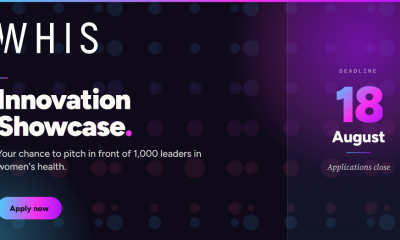
Applications close August 18 for Women’s Health Innovation Summit 2026 Innovation Showcase

 Menopause2 weeks ago
Third of women unaware of perimenopause mental health impact

 Fertility1 week ago
Chelsea FC Women to launch first-of-its-kind player fertility fund

 Menopause2 weeks ago
Menopausal hormone therapy may lower dementia risk, study suggests

 Opinion1 week ago
anna perimenopause app launches across 39 markets

 Hormonal health2 weeks ago
We are wrapping our children in plastic and calling it care

 Pregnancy2 weeks ago
Chemicals in plastics may be linked to high blood pressure during pregnancy

 News2 weeks ago
Women with endometriosis face 46% higher risk of type 2 diabetes – study