




Diagnosis
Shrinking the gender health gap through innovation in clinical trial AI


By Paula Bellostas Muguerza, Global Lead, Healthcare and Life Sciences at Kearney
The lack of female representation in clinical research is finally getting the recognition it deserves as a driving factor of the gender health gap.
With only 7 per cent of healthcare research focused on conditions that exclusively impact women’s health, it’s an area that has frustratingly been overlooked and underfunded for decades.
Clinicians have been forced to make decisions about women’s health based on limited data and male-centric trials.
As a result, women are routinely subjected to missed diagnoses and delayed treatments.
However, like nearly every sector, AI is reshaping healthcare, and if used correctly, there’s a real opportunity to redesign clinical trials, close long-standing gaps, and make research far more inclusive and effective.
Incorporating AI
Unlocking innovation in women’s health, including more diverse women in clinical trials, disaggregating data by sex, redesigning clinical trials with women in mind, and deepening insights on sex differences were all recognised as core principles for improving healthcare policy in the World Economic Forum’s recent “Prescription for Change” white paper, in collaboration with Kearney and the Gates Foundation.
This focus is critical in improving healthcare outcomes for women.
Conditions such as heavy menstrual bleeding, endometriosis, fibroids, and ovarian cysts cost the UK economy approximately £11 billion per year, but fixing the gaps in treatment and trials goes beyond profit – it’s our moral duty.
And to unlock innovation at scale, policymakers should pair regulatory incentives with financing tools like targeted tax credits and dedicated grant programmes.
However, shrinking the gender health gap will take more than good intentions.
Clinical trials still face a range of issues, from under-reported side effects to low female participation. AI can help by improving how data is captured, making trials more inclusive and leading to fairer, higher-quality outcomes.
According to the National Centre for Biotechnology (NCBI), AI’s ability to analyse complex and diverse information allows for an improved understanding of gender differences, leading to more effective treatments for women in the future.
The World Economic Forum’s push to expand inclusion in clinical trials by involving more women highlights the importance of raising awareness among regulators and trial teams.
Inclusion must be prioritised in the early phases of trials, particularly in cardiology and oncology, and extended to underserved groups, including women of colour and post-menopausal women.
Attitudes to inclusion are also moving in the right direction, and AI can help drive that momentum.
By analysing large datasets, advanced algorithms can identify underrepresented women for targeted recruitment, leading to more representative trials.
AI can also review trial protocols to detect potential gender bias and recommend designs that address gender-based differences and women’s specific health needs.
Approach with caution

Paula Bellostas Muguerza
Although AI offers powerful capabilities, it’s not a fail-safe tool, and the need for human oversight has never been more important.
Models trained on biased data risk repeating existing inequalities, especially when sex-based differences in conditions like heart disease, stroke, and neurological disorders are still underrepresented in many datasets, leading to fatal consequences.
In doing so, AI could reinforce the very misconceptions about women’s health it’s meant to correct.
A study by the London School of Economics and Political Science (LSE) found evidence that AI tools are more likely to downplay women’s health issues compared to men’s. The increasing use of AI models by local authorities to supplement the workload of social workers across the country could result in widespread unequal care provision, perpetuating the gender bias.
The recommendation for researchers, clinicians, and developers to enhance sex-disaggregated data is especially relevant here.
Without data that clearly captures sex and gender differences, AI systems can’t be expected to recognise or respond to them accurately.
This requires standardised collection methods and consistent terminology so women’s health signals are properly captured and acted upon.
Healthcare organisations process huge amounts of data containing important clinical information, spread out and stored in different formats.
Improving the way data is captured makes clinical trials more inclusive and produces fairer, higher-quality results.
AI can combine structured and unstructured data, turning clinical records into meaningful and actionable insights.
AI regulation also varies wildly across countries.
The EU’s AI Act is one of the first major attempts to introduce clear rules, but elsewhere, regulation remains patchy.
While pharmaceuticals go through rigorous testing and approval processes, AI-driven tools often slip through regulatory gaps.
That’s why it’s even more important to design inclusive clinical trials from the start, ones that properly capture sex and gender differences and feed better data into these systems from the outset.
Mind the gap
Having reached crisis status, the task of reducing the gender healthcare gap can appear overwhelming.
But despite the scale of the challenge, there are real reasons for optimism.
We’re already seeing progress, and growing pressure from researchers, investors, and campaigners is pushing the system in the right direction.
But progress won’t come from technology alone. Transparency and inclusivity are just as important.
AI systems must be developed through processes that involve patients, clinicians, community advocates, as well as data scientists and engineers.
This kind of collaborative participation will help highlight blind spots, challenge assumptions, and build tools that reflect the complexities of healthcare, ultimately dispelling the one-size-fits-all myth.
If AI is going to play a role in closing the gender health gap, it must be guided by more than innovation.
Yes, we’re making technological breakthroughs, but if they simply replicate the inequities of the past, what use are they?


















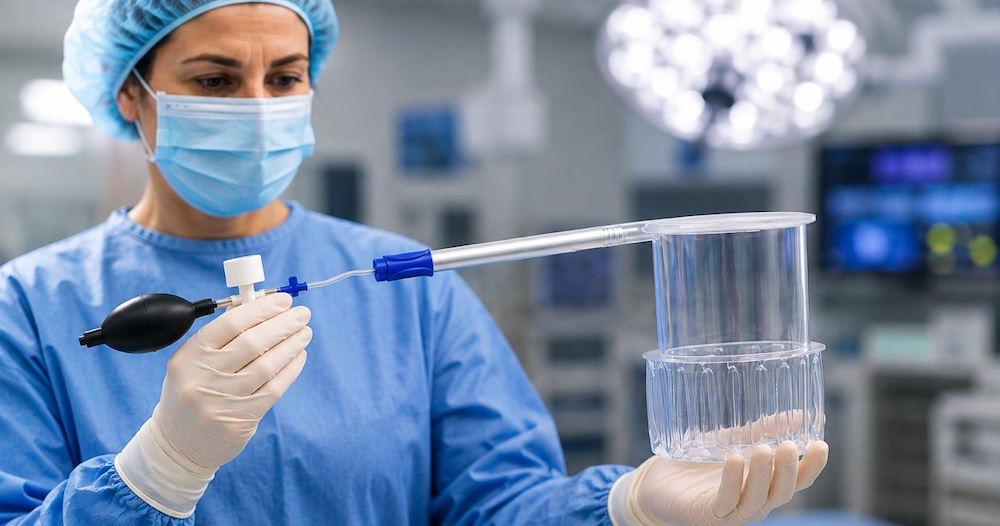
Women’s health medical device company Ark Surgical has secured further institutional backing from JNF and the Israel Innovation Authority (IIA) as it accelerates the US commercial expansion of its surgical tissue containment technology.
Both organisations have previously backed Ark, making the renewed support a significant vote of confidence in the company’s technology, leadership team and commercial strategy as it moves into its next stage of growth.
The new backing comes alongside Ark Surgical’s ongoing Series A financing round, which has also attracted investment from physicians and experienced medical device executives, adding further industry validation as the company builds its US commercial presence.
The Israel Innovation Authority, Israel’s public agency supporting technological innovation, selected Ark Surgical for additional non-dilutive funding following an extensive evaluation process.
The assessment examined the unmet clinical need addressed by Ark’s technology, its clinical results, business and US go-to-market strategy, Israeli and US teams, execution against milestones and future product pipeline.
JNF, which supports economic development and community-building initiatives in Israel, has also increased its previous backing of Ark Surgical.
The relationship has particular significance given Ark’s roots in northern Israel. The company is headquartered near Nazareth in the Galilee and plans to continue strengthening its manufacturing capabilities in the region as its commercial presence in the US grows.
Together, the continued institutional support and investment from experienced healthcare leaders reflect growing confidence in Ark’s technology and its strategy for US expansion.
Stav Tori, CEO of Ark Surgical, said: “Having organisations that already know Ark, our technology and our team choose to support us again is particularly meaningful.
“It reflects our ability to consistently achieve the clinical, regulatory and commercial milestones we set and gives us additional resources to accelerate our expansion in the US.
“Our ambition goes beyond bringing another medical device to market.
“We want to help establish a higher standard of surgical safety for women undergoing minimally invasive procedures.”
Addressing an overlooked risk in women’s surgery
At the centre of Ark’s expansion is LapBox, the company’s FDA-cleared dual-wall tissue containment system developed to address an important safety challenge in minimally invasive gynecologic surgery.
Procedures such as hysterectomy and myomectomy can require large uterine specimens or fibroids to be divided into smaller pieces so they can be removed through small laparoscopic incisions.
This process, known as morcellation, carries a risk of disseminating tissue within the abdominal cavity.
In rare cases where an unsuspected malignancy is present, morcellation can spread malignant tissue and potentially worsen a patient’s prognosis.
But the risk is not limited to cancer.
Even benign uterine tissue can implant elsewhere in the abdominal cavity and grow, potentially resulting in complications such as parasitic fibroids and the need for additional treatment.
LapBox was developed as a dual-wall, bag-in-bag containment system that creates a secured chamber for tissue extraction. The device is FDA-cleared for use with both manual and power morcellation.
From clinical innovation to US adoption
Ark Surgical is now moving beyond its clinical and regulatory milestones to focus on broader commercial adoption.
LapBox™ has already been used in hundreds of procedures, while Ark has been expanding its presence within US hospitals and building relationships with leading minimally invasive gynecologic surgeons.
The latest institutional backing will support the next stage of that strategy, including additional hospital partnerships, key opinion leader engagement, sales leadership and clinical support.
Joseph LaBruzzo, President and CEO of U.S. Operations at Ark Surgical, said: “Ark has reached an important point in its development.
“We have the regulatory clearance, growing clinical experience and increasing engagement from US surgeons and hospitals.
“The focus now is execution and scale.
“What makes this continued backing particularly meaningful is that these are organizations that have followed Ark’s development and seen the team deliver against its objectives.
“Their decision to support the company again provides further validation as we build the commercial and clinical infrastructure needed for broader US adoption.”
That growing adoption is also being reflected in the experience of surgeons using LapBox.
Dr Ramon Yera, a minimally invasive gynecologic surgeon with more than 35 years of experience, said: “Once surgeons use LapBox, they realize this is the bag they should be using for their bread-and-butter procedures.”
Yera believes this reflects a broader shift in expectations around tissue containment in gynecologic surgery.
“Containment is no longer optional. It is an expectation.”
Ark Surgical is continuing its Series A financing round, with additional capital intended to support the next phase of US commercial expansion and development of its broader product pipeline.
Further information for prospective investors is available at ark-surgical.com/investment










 Hormonal health2 weeks ago
Major UK study could be a ‘game-changer’ for heavy periods and endometriosis

 Entrepreneur6 days ago
KOVE Medical raises €1.7 million to improve safety of foetal surgery

 Fertility2 weeks ago
One week left to apply: W Accelerate with Merck KGaA and M Ventures

 Pregnancy7 days ago
UK study aims to transform maternity care for high-risk pregnancies

 Hormonal health2 weeks ago
Quarter of women miss work due to menstual symptoms, survey finds

 Diagnosis2 weeks ago
Ark Surgical secures further institutional backing to accelerate US expansion

 Hormonal health2 weeks ago
PMDD after SSRIs or hormones: Why the brain may be the missing treatment target

 Insight2 weeks ago
Study to tackle years-long delays in endometriosis diagnosis