




Mental health
Psychiatrists challenge FDA panel on antidepressants in pregnancy


Leading psychiatrists say a US panel promoted false claims about antidepressants in pregnancy, including that they are ineffective and linked to autism or birth defects.
The meeting on Monday featured 10 panellists, several of whom rejected the prevailing medical view on the safety of antidepressants during pregnancy.
They raised concerns about conditions such as autism, miscarriage and birth defects, and in some cases claimed depression resolves without treatment.

Three of the experts were based outside the US, while another runs a clinic that supports people stopping psychiatric medication.
Much of the discussion centred on selective serotonin reuptake inhibitors (SSRIs) such as Lexapro, Prozac and Zoloft, which boost serotonin levels in the brain to help improve mood.
Dr Joseph Goldberg is clinical professor of psychiatry at the Icahn School of Medicine at Mount Sinai in New York City.
He said: “They were really rousing concerns about safety that are not evidence-based or established and not at all balanced with concerns about the risks of untreated depression.”
Goldberg, a past president of the American Society of Clinical Psychopharmacology who has previously consulted for pharmaceutical companies, said he was invited to join the FDA panel but declined because the invitation suggested it would not be a fair discussion.
Dr Jennifer Payne, director of the Reproductive Psychiatry Research Programme at the University of Virginia, said: “I’m disappointed that the FDA brought people in from outside of the United States when there’s so many experts here in the United States who truly know this [medical] literature inside and out.”
The general medical consensus is that continuing SSRIs during pregnancy is often safer than stopping, particularly because untreated depression can lead to thoughts of self-harm or low birth weight.
Babies may sometimes show temporary symptoms such as irritability or jitteriness after birth – known as neonatal adaptation syndrome – which typically pass quickly.
While some studies have suggested a slightly higher risk of miscarriage, there is no solid evidence linking SSRIs with autism or birth defects.
“Well-controlled studies continue to not find an association,” said Payne.
Women with a history of depression are also at risk of recurrence during pregnancy, which carries its own potential harms.
One panellist, David Healy – a fellow of the Royal College of Psychiatrists in the UK – claimed: “It’s been said that SSRIs help people who are severely depressed. They don’t.”
Goldberg called that statement “simply untrue”, adding: “You can say the moon landing was faked. Conspiracy theories abound in our world. But there is not a doubt about whether SSRIs work.”
Psychologist Roger McFillin, who hosts a podcast critical of mainstream psychiatry, suggested depression is not an illness but an intense emotional state, particularly in women.
He also claimed, without evidence, that many women are pressured into taking antidepressants during pregnancy.
“I have never, ever, ever, ever heard of a third party pushing a prescription in pregnancy,” Goldberg said.
He added that some obstetrician-gynaecologists unfamiliar with SSRIs have wrongly advised patients to stop taking them.
The American College of Obstetricians and Gynecologists described the panel as “alarmingly unbalanced”.
In a statement, it said: “On a panel of 10 experts, only one spoke to the importance of SSRIs in pregnancy as a critical tool, among others, in preventing the potentially devastating effects of anxiety and depression when left untreated during pregnancy.”
That panellist was Dr Kay Roussos-Ross, a psychiatrist and obstetrician-gynaecologist at the University of Florida College of Medicine, who repeatedly questioned the panel’s conclusions.
“All of us can find a study that agrees with exactly what we think,” Roussos-Ross told the panel.
“But we need to look at the data very objectively.”
An FDA spokesperson defended the panel, saying Commissioner Martin Makary “has an interest in ensuring policies reflect the latest gold standard science and protect public health” and calling criticism of the event “insulting to the independent scientists, clinicians, and researchers who dedicate their expertise to these panels.”
The event followed Health and Human Services Secretary Robert F. Kennedy Jr’s call for a review of antidepressant use.
His “Make America Healthy Again” report warned of “potentially major long-term repercussions” from childhood use of the medications.











Yoga and omega-3 supplements may be as effective as talking therapies for pregnancy depression, a major review suggests.
Globally, nearly one in three pregnant women experience depression, but most receive no treatment.
When support is available, women are often directed towards talking therapies such as cognitive behavioural therapy, or CBT, and mindfulness.

CBT is a structured talking therapy that helps people identify and change patterns of thought and behaviour affecting their mental health.
The review examined 115 clinical trials involving more than 12,000 participants across 30 countries.
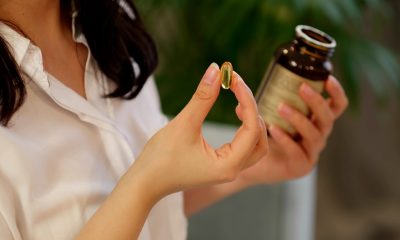
It found that yoga, massage, omega-3 supplements and bright light therapy were broadly as effective as talking therapies at reducing depression symptoms during pregnancy.
Bright light therapy involves controlled exposure to bright light and is sometimes used to treat mood conditions.
The findings point to the importance of social support and increased connection, as all these approaches offer some element of contact or guided support.
Led by King’s College London, the research brought together trial evidence across every type and format of treatment for antenatal depression under a common framework.
Antenatal depression is depression that occurs during pregnancy.
The study was conducted as part of HappyMums, a European consortium led by the University of Milan that aims to improve mental health support during pregnancy and after birth.
Carmine Pariante, professor of biological psychiatry, said: “This is the most comprehensive analysis of treatments for depression in pregnancy ever conducted, and the findings should prompt a rethink of how we support women during this critical period.
“The evidence is clear that there is no single best approach. What matters is that women have access to a range of options, and that clinicians feel equipped to offer them.”
The researchers said yoga and omega-3 supplements could be legitimate treatment options, rather than stopgaps, for women on waiting lists or those who struggle to access mental health support.
However, the studies differed considerably in design, sample size and how results were measured, so the findings should be interpreted with care.
The team said non-psychological approaches could help women cope with long waits for care without ruling out other treatments alongside them.
Digital and online interventions, including apps and telephone-based support, were also found to be as effective as face-to-face treatment.
Researchers said this could affect how antenatal depression is managed, particularly for women who cannot travel or face long waits for in-person care.
The team found no randomised controlled trials of pharmaceutical treatments for antenatal depression, despite antidepressants being widely prescribed for depression outside pregnancy.
A randomised controlled trial is a study in which participants are randomly assigned to different treatment groups, allowing researchers to compare outcomes more fairly.
Evidence for drug treatment during pregnancy therefore relies on indirect research rather than trials carried out during pregnancy, reflecting long-standing caution around testing medicines in pregnant populations.
NICE guidelines recommend antidepressants for moderate to severe depression in pregnancy, while evidence from outside formal pregnancy trials suggests they can be safe and effective.
However, the researchers said trials are still needed, particularly for women who cannot access or engage with other forms of support.
Riddhi Laijawala, trial manager and PhD student, said: “Depression in pregnancy is common, but it is not inevitable, and it is treatable. What this review shows is that the options available to women are broader than many people realise.
“A yoga class, music therapy, or an online programme may not sound like clinical treatment, but the evidence suggests they can make a real difference, and for many women they may be easier (and quicker) to access than a course of therapy.”
Depression during pregnancy affects an estimated 28.5 per cent of pregnant people worldwide, but only around one in five receives appropriate and timely treatment.
The team said closing this treatment gap should be a priority for health systems because the condition can affect both parent and child.
The HappyMums project is supported by the European Union’s Horizon Europe research and innovation programme.

Nearly six in ten young women get health and wellness advice from influencers, new research shows.
Women aged 18 to 29 were more likely than young men to use online influencers for health information.
The topics included beauty, alternative medicine, mental health, weight loss and fitness.
The Pew Research study found that 57 per cent of women aged 18 to 29 said they get health and wellness information from online influencers, 10 percentage points higher than young men.
While Americans still mostly rely on healthcare providers, the research suggests social media influencers also play a major role in how young people find health advice.
Among women who get health and wellness information from influencers, 51 per cent said they often hear about beauty and appearance, compared with 18 per cent of men.
Young women were also around twice as likely as young men to say they see content about alternative medicine, meaning treatments or health practices used outside mainstream medical care.
A third or more of both young men and young women said they often hear about mental health and weight loss from influencers.
Around half or more of both groups said they often see fitness content.
When asked why they seek health and wellness information from influencers, around half of young women said they wanted to make a change to their health or lifestyle.
That compared with 37 per cent of young men.
The research also found that 23 per cent of young women said hearing from people who share their background or beliefs was one reason they used influencers, compared with 14 per cent of young men.
A further 19 per cent of young women said they learnt about things they did not want to ask their doctor, compared with 10 per cent of young men.
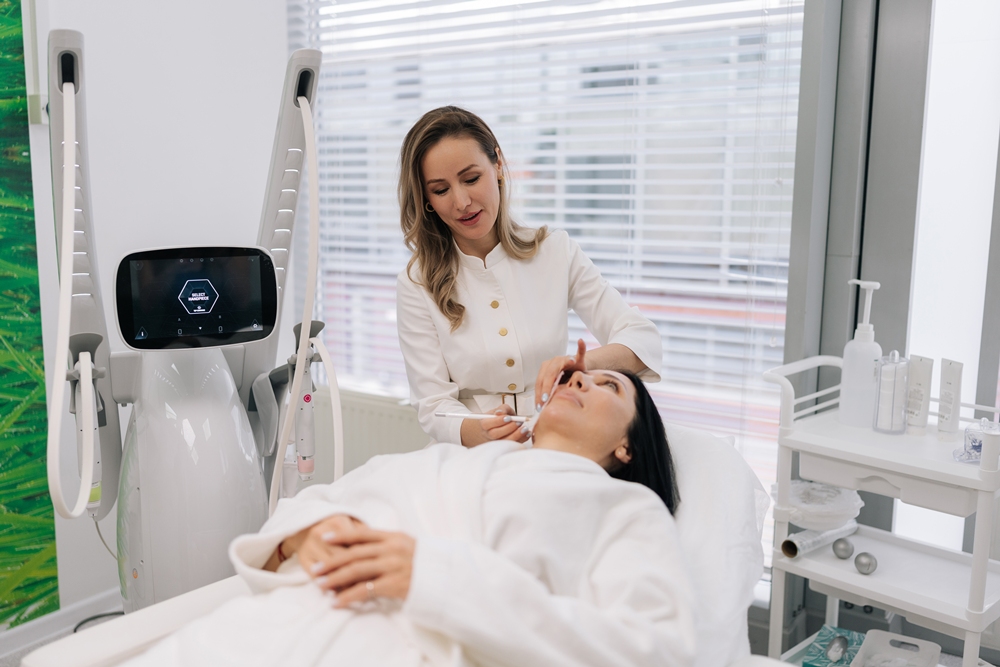
Cosmetic procedures may become addiction-like for some women, with low body esteem and problematic social media use linked to higher risk, new research suggests.
A study of 1,614 women aged 25 to 71 found that one in five who had undergone treatments met the threshold for moderate to severe risk of addictive cosmetic procedure use.
Low body esteem and problematic social media use emerged as the strongest risk factors.
Researchers from the Hebrew University of Jerusalem and the Israel Center for Addiction and Mental Health examined what they described as addictive cosmetic procedure use, or ACPU, among Jewish Israeli women.
ACPU refers to repeated cosmetic treatment behaviour that may resemble addiction, including feeling unable to stop, continuing despite negative effects or craving further procedures.
The study was led by Vera Skvirsky alongside Uri Lifshin, Dvora Shmulewitz and Mario Mikulincer, from the department of psychology at the Hebrew University of Jerusalem and the Israel Center for Addiction and Mental Health.
The researchers surveyed women from the general population rather than focusing only on patients at cosmetic clinics.
Among women who had undergone cosmetic procedures, 20 per cent met the threshold for moderate to severe lifetime risk, while more than 15 per cent reported symptoms within the previous year.
Across the full sample, nearly nine per cent of women showed moderate to severe signs of problematic cosmetic procedure use.
The researchers adapted questions based on mental health criteria used to assess substance-related disorders.
Participants were asked whether they had tried unsuccessfully to stop having cosmetic procedures, felt compelled to continue despite negative consequences or experienced cravings linked to treatment.
Previous research has linked cosmetic procedures with body-image concerns and body dysmorphic disorder.
Body dysmorphic disorder is a mental health condition in which a person becomes highly distressed by perceived flaws in their appearance, often flaws that others may not notice.
The new study examined whether repeated cosmetic procedures may, in some cases, resemble a behavioural addiction.
Women with lower body esteem were more likely to report addiction-like patterns, particularly when this was combined with high levels of problematic social media use.
Participants who reported problematic or excessive social media behaviour appeared especially vulnerable when they also felt dissatisfied with their appearance.
The researchers also found smaller links between addictive cosmetic procedure use and lower feminist attitudes, lower attachment security and more negative attitudes towards ageing.
However, those links were less consistent when several factors were analysed together.
The findings come amid a sharp global rise in cosmetic procedures, with international estimates cited by the researchers suggesting interventions increased by around 40 per cent between 2019 and 2023.
The researchers stressed that the study does not suggest cosmetic procedures are inherently harmful.
Instead, they said repeated engagement may, for some people, take on characteristics similar to behavioural addictions already recognised in mental health research.
The researchers said: “Cosmetic procedures have become deeply normalised in many societies, and for many people they may be a positive experience.
“But our findings suggest that for a meaningful minority, the behaviour may begin to resemble other compulsive patterns we see in addiction research, especially when low body esteem and problematic social media use are involved.”
The study was cross-sectional, meaning it captured a single point in time and cannot prove cause and effect.
Researchers said it remains unclear whether problematic social media use contributes to addiction-like cosmetic procedure behaviour, whether treatments influence body image and online engagement, or whether other psychological factors drive both.









 News1 week ago
New menopause drug approved for use by NHS in Scotland

 Hormonal health1 week ago
Stardust period tracker shares health data, study reveals

 Entrepreneur4 days ago
Zero Candida market set to reach over US$2 billion by 2030 – report

 News1 week ago
Women’s health draws record $1.55bn in equity as capital spreads beyond the mega-rounds
 Mental health2 weeks ago
SSRIs may lower heat intolerance in women with depression – study

 Menopause2 weeks ago
Avni Wellness secures US$470k funding
 Insight2 weeks ago
Softening ovaries could extend fertility as women age, study suggests

 Fertility1 week ago
Onto Health acquires diagnostics software company Levy Health