




News
Leading healthtech companies building AI-powered medical software


AI is now a practical tool in medicine, not science fiction. It’s automating tedious parts of diagnostics and personalizing treatment plans in ways that were too costly or slow before. This piece looks at the companies actually building these systems, the ones moving from prototypes to patient bedsides. It’s a review of who’s delivering real products right now.
Why AI is reshaping the healthtech industry
The pressure is coming from every side. Hospitals are drowning in data from imaging archives, genomic sequencers, and patient monitors. There simply aren’t enough specialists to analyze it all. AI steps in to do the initial heavy lifting, spotting patterns humans might miss because of fatigue or volume. It’s a response to a system cracking under its own complexity.
Several concrete factors are pushing adoption past the hype cycle:
- The sheer explosion of medical data from imaging, genomics, and continuous monitors,
- A global shortage of specialists, especially in radiology and pathology,
- Demand for faster, more accurate diagnostic triage to improve outcomes,
- The move towards value-based care, which needs predictive tools to prevent costly complications.
AI isn’t replacing doctors. It’s giving them a powerful assistant. The goal is to remove administrative drag and highlight critical cases faster, letting clinicians focus on the human parts of care. Frankly, the old way isn’t sustainable.
How to choose an AI healthtech development partner
Picking a team is everything. A mistake here can sink a project for years, burning cash and clinical goodwill. You need builders who know the medical world’s unique rules, not just generic software shops.
Key criteria to vet any potential partner:
- Proven experience shipping clinical-grade software, not just demos;
- Deep, practical knowledge of HIPAA, GDPR, and other medical data rules;
- A track record of building systems designed for regulatory submissions like the FDA;
- Strong, production-level expertise in machine learning operations and medical data engineering.
Ignore these points at your peril. According to our data, teams without this specific background get bogged down in compliance nightmares. They waste months re-architecting for security and audit trails that should have been there from day one. It’s a costly learning curve.
Top healthtech companies building AI-powered medical software
These firms represent the current vanguard. They’ve moved beyond research to create deployed, revenue-generating tools that are changing clinical workflows.
CHI Software

CHI Software operates as an international engineering firm with a sharp focus on applied AI for medicine. They provide healthcare ai consulting and development, translating clinical problems into functioning software. Their work spans diagnostic aids, predictive analytics, and automating hospital administrative tasks.
What they actually build:
- Algorithms for analyzing medical images like X-rays and retinal scans;
- Clinical prediction engines for patient deterioration or readmission risk;
- Workflow integration tools that slot AI insights into existing hospital systems;
- Secure, HIPAA-ready cloud infrastructure for sensitive health data.
Partnering with them offers a shortcut. You get a team that already understands the production stack for medical AI, from data anonymization pipelines to model monitoring in clinical settings. They handle the technical heavy lifting so clinical teams can validate and deploy.
Tempus AI

Tempus built a massive platform linking clinical and molecular data. They collect real-world evidence from oncologists and use AI to find patterns in treatment responses. It’s precision medicine at a commercial scale, now a publicly traded company.
Their strengths are foundational:
- One of the largest curated databases of clinical and genomic profiles.
- AI models that help match patients to therapies based on similar cases.
- A commercially mature platform used by thousands of clinicians.
Their tools are particularly strong in oncology and cardiology, helping doctors make data-informed choices when standard pathways aren’t clear. It’s a big data approach to personalized care.
Zebra Medical Vision

Zebra Medical reads medical images automatically. Their algorithms scan X-rays, CTs, and MRIs for signs of disease, acting as a first pass for radiologists. The value proposition is straightforward: increase throughput and catch what’s easy to miss.
The platform’s advantages are clear:
- Automated detection of dozens of conditions from liver disease to vertebral fractures.
- It reduces the crushing workload on radiology departments.
- Enables earlier diagnosis across a wide spectrum of common and rare diseases.
For hospitals with high patient volume, this isn’t just nice to have. It’s becoming essential infrastructure to keep reporting times down and quality high.
Aidoc

Aidoc specializes in the emergency room. Their AI analyzes CT scans in real-time, flagging critical conditions like intracranial bleeding, pulmonary embolisms, and cervical spine fractures. Speed is their main product.
Key reasons they’re adopted:
- Algorithms focused on time-sensitive, life-threatening conditions.
- They offer a suite of FDA-cleared tools.
- Deployed in hundreds of hospitals worldwide to prioritize urgent cases.
Their system provides a safety net. It ensures the sickest patients get seen first by highlighting critical findings the moment a scan is complete, streamlining the triage process in chaotic ER environments.
Qure.ai

Qure.ai targets accessibility. They develop accurate, affordable AI tools for reading chest X-rays and head CTs, designed to work in low-resource settings where radiologists are scarce. Their mission is to widen access to quality diagnostics.
Their main capabilities include:
- High-accuracy analysis of X-rays and CTs for TB, lung cancer, and stroke;
- Solutions optimized for regions with limited internet or specialist access;
- Coverage for pulmonary, neurological, and trauma-related pathologies.
Their focus on global health makes them a different kind of player. They prove that advanced medical AI doesn’t only belong in wealthy, tertiary-care hospitals.
Market outlook: what’s next for AI in healthcare?
The next phase is moving from point solutions to connected systems. We’ll see fewer standalone analysis tools and more AI baked directly into electronic health records and clinical workflows.
A few directions seem locked in:
- More autonomous diagnostic systems for high-volume, routine screenings;
- Sophisticated tools for designing truly personalized drug and therapy regimens;
- AI models that integrate seamlessly with EMRs, providing insights at the point of care;
- The cautious, regulated arrival of generative AI for clinical note summarization and patient communication.
This shift will demand new hospital IT infrastructure. The future is less about buying a single AI product and more about building an interoperable, AI-enabled data environment. The companies that solve for this integration will lead the next wave.
Conclusion
The AI HealthTech market is maturing past the pilot project. The companies reviewed here are building the new standard of care, where data-driven tools support every clinical decision. AI provides a tangible benefit: it makes healthcare systems more efficient and takes some weight off clinicians’ shoulders.
Choosing the right builder, one with medical-grade expertise, is the critical first step in turning that potential into a working product that helps patients. That’s the real goal.

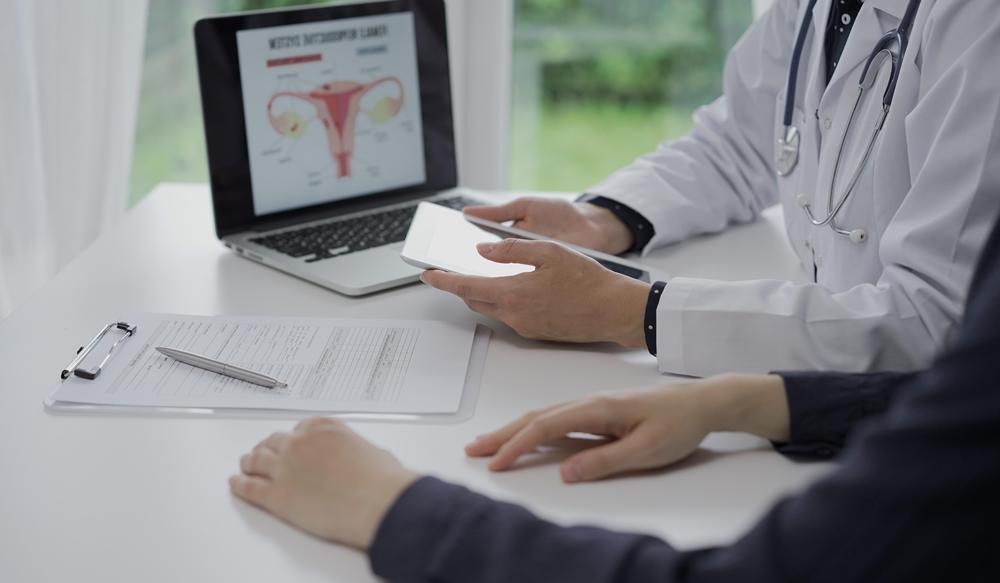

Nearly a quarter of women often miss work because of menstrual symptoms, according to a survey examining hormonal health among women in full-time work in Ireland.
The survey looked at the impact of menstruation, fertility and motherhood, and perimenopause and menopause.
Research from The Menopause Hub found more than one in three women who had not disclosed a menstrual health issue at work said the lack of a clear workplace policy was the reason.

More than a quarter said they did not think their concerns would be taken seriously, while 22 per cent cited embarrassment and 18 per cent feared being judged.
Nearly half of respondents said better workplace support would have made them feel less stressed, while 40 per cent said it would have made them feel more valued. Some 36 per cent said they would have felt more comfortable speaking up.
Some 76 per cent of women surveyed said they experienced menstrual health issues, with 23 per cent of those often missing work because of symptoms.
Nearly half of respondents, 49 per cent, said they felt uncomfortable talking about menstruation at work.
One respondent said: “As a woman, we try to get through the day, sometimes in pain that can’t be seen. We feel emotionally and physically drained.”
The research also found that 62 per cent of those who experienced baby loss reported a moderate or significant impact on work attendance.
More than half of respondents who experienced depression during pregnancy also reported a moderate or significant impact on attendance.
Some 63 per cent of mothers said it was “difficult” to return to work after pregnancy, while nearly half said their maternity pay arrangement had negatively affected their financial wellbeing.
One respondent said: “I almost walked away. The only reason I stayed was because I had to provide for my family.”
The survey also found that nearly half of respondents said menopause had some impact on their attendance, while more than six in 10 reported an impact on their work performance.
Some 44 per cent of women said they were “uncomfortable” discussing perimenopause and menopause at work.
One person said they were “already terrified of losing my job at my age:
“I need to just struggle through this without support or acknowledgement. That’s basically workplace discrimination.”
The Menopause Hub chief executive Loretta Dignam said women’s hormonal health has been treated as a “private or personal issue” for too long, “when the reality is that it has a very real impact on women’s working lives”.
“The fundamental point is that women are not ‘mini men.’
“Our biology is different, and workplaces that were largely designed around a male model of health and working life need to evolve to recognise that.
“What is striking is how many women continue to show up, perform, push through and progress at work while managing significant physical and emotional symptoms, often without the policies, understanding or practical support they need,” Dignam said.
She added that because expectations are changing, Gen Z and Gen Alpha employees will be “far less willing than previous generations to accept workplaces that ignore their health and wellbeing”.


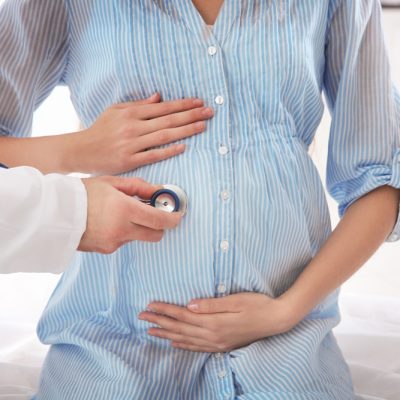
Pregnant women are being advised to avoid runny or under-cooked eggs when eating out amid a developing salmonella outbreak.
The advice also applies to freshly made products that may contain uncooked eggs, including mayonnaise, soufflé and hollandaise sauce.
The FSA said well-cooked eggs served in restaurants, cafés and takeaways remain safe to eat.
The warning follows the UK Health Security Agency declaring a national outbreak of salmonella food poisoning after one person died and hundreds more fell ill.
Imported eggs or dishes containing them are thought to be behind the outbreak.
FSA chief scientific adviser Ian Young said: “If people are eating out or consuming eggs or egg-containing products from cafes and restaurants then for those people in particular who are young, elderly, pregnant or vulnerable, it’s important to make sure that any eggs or egg products that you consume in those settings have been very well cooked.”
He described the outbreak as “unusually large and rapidly increasing”, adding that “people need to be careful”.
The FSA said British eggs bought from supermarkets are not linked to the current outbreak because chickens bred in the UK are vaccinated against common strains of salmonella.
“There is no link to those eggs to this current outbreak,” Young said.
Mark Williams, chief executive of the British Egg Industry Council, said British eggs were safe to eat when runny, including for vulnerable people, and were widely available in restaurants and cafés.
“Customers who want to enjoy a runny egg should simply ask whether British Lion eggs are being used,” he said.
More than 200 cases in the UK have been linked to the outbreak, with the majority across England.
Genetic testing suggests the infections are part of the same outbreak and show similarities with previous outbreaks involving imported eggs.
Investigations into individual cases also suggest the eateries involved were buying eggs from abroad.
Salmonella are a family of bacteria that typically live harmlessly in the digestive systems of animals including cattle, pigs and chickens, which is why eggs and poultry are among foods commonly associated with infection.
People can become infected by eating contaminated food that has not been properly cooked, through cross-contamination between raw and cooked food or by coming into contact with infected animals.
Symptoms can include stomach cramps, diarrhoea, vomiting and fever.
Most people recover without further treatment, but older people, babies and people with weakened immune systems are at greatest risk of severe illness.
Hospital treatment with fluids and, in some cases, antibiotics may be needed for severe infections.
People who are concerned are being advised to contact their GP or out-of-hours service in the first instance.







 Entrepreneur2 weeks ago
Applications close August 18 for Women’s Health Innovation Summit 2026 Innovation Showcase

 Menopause2 weeks ago
Third of women unaware of perimenopause mental health impact

 Fertility1 week ago
Chelsea FC Women to launch first-of-its-kind player fertility fund

 Menopause2 weeks ago
Menopausal hormone therapy may lower dementia risk, study suggests

 Opinion1 week ago
anna perimenopause app launches across 39 markets

 Hormonal health2 weeks ago
We are wrapping our children in plastic and calling it care

 Pregnancy2 weeks ago
Chemicals in plastics may be linked to high blood pressure during pregnancy

 News2 weeks ago
Women with endometriosis face 46% higher risk of type 2 diabetes – study