Connect with us

News

FDA clears “ground-breaking” menstrual blood health test

The move is hoped to be an opportunity for testing important biomarkers for the more than 80 million people who menstruate in the US

Published

on

A menstrual blood health test that could provide insights for millions of women of reproductive age has been cleared by the US FDA.

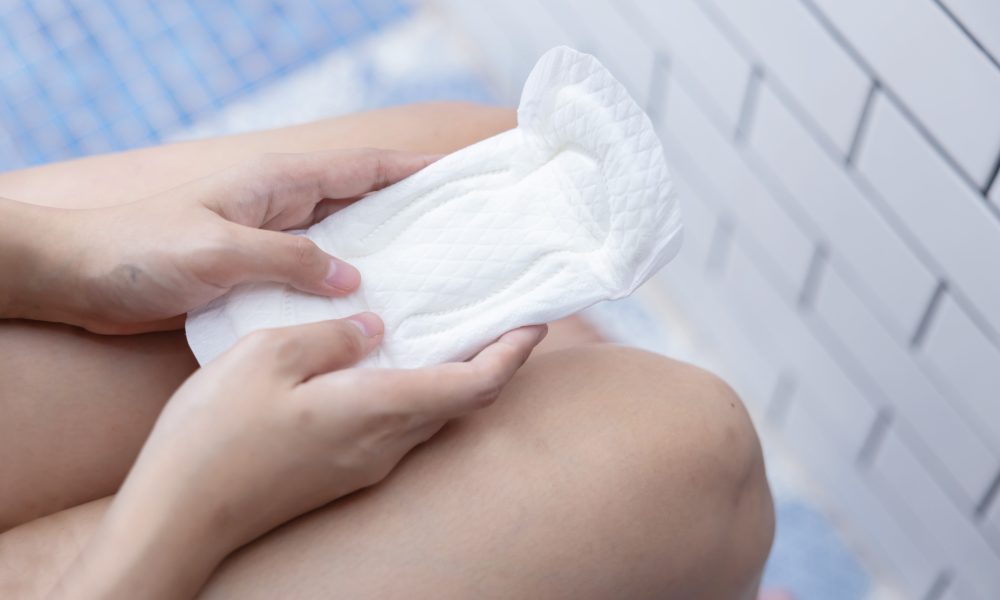
Qvin, the biotech company behind the test, has developed the first and only healthcare service that collects menstrual blood samples as an alternative to traditionally collected venous blood draws.

Although menstrual samples had never previously been explored as a diagnostic source for health information, Qvin proved the clinical relevancy of menstrual blood for a number of important biomarkers.

Now, for the first time, menstrual blood could be used to provide insights for women using the Q-Pad and A1c Test.

“With the first ever FDA-cleared menstrual blood health test, Qvin is paving the way to important new opportunities for women’s health and this is just the beginning,” said Dr Sara Naseri, Qvin co-founder, medical doctor and scientist.

“We are simplifying routine testing and freeing up resources that can be used on providing care and ultimately our goal is to make health care much more accessible.”

The clearance, Naseri said, would make it possible for the millions of women in America who live with diabetes to receive monitoring of A1c, using laboratory tests performed on the Q-Pad.

The move is hoped to be an opportunity for testing important biomarkers for the more than 80 million people who menstruate in the US.

The Qvin A1c Q-Pad Test Kit measures the average blood sugar over a three-month period, by testing the A1c biomarker for people with diabetes.

Each pad includes a removable strip. Once the pad has sufficiently collected a menstrual sample, the removed collection strip is sent to a lab for clinical testing. Users then receive their results via an app.

“Utilising menstrual samples, the Q-Pad can address critical women’s health issues that have historically been neglected,” explained Søren Therkelsen, co-founder of Qvin.

“Because of our vertically integrated infrastructure, we will over time be able to deliver healthcare solutions at a significantly lower cost than traditional methods. We are proud to have developed a product that has the potential to vastly improve access to global healthcare.”

The company, in collaboration with researchers at academic institutions such as Stanford University School of Medicine, has published peer-reviewed research validating other biomarkers that can also be monitored.

Dr Paul Blumenthal, Professor Emeritus of obstetrics and gynaecology at Stanford University and an author on multiple Qvin publications, said: “The research and development that Qvin has undertaken is both highly novel and innovative in helping women better address their health concerns.

“For instance, women seeking to understand their fertility status can soon monitor various reproductive hormones via menstrual blood using the Q-Pad.

“In addition, published research indicates that the Q-Pad could be a convenient, user-friendly, and efficient way of screening for the Human Papilloma Virus (HPV) as part of global cervical cancer prevention efforts.”

According to the company, the pad allows users to submit specimens to the lab and receive reports on health concerns, such as pre/diabetes, anaemia, fertility, perimenopause, endometriosis and thyroid health.

Menopause

Women with ADHD almost twice as likely to experience perimenopause symptoms, study finds

Published

on

Women with ADHD are nearly twice as likely to experience perimenopause symptoms compared with women without ADHD, new research has revealed.

The study reported 54 per cent of women with attention deficit hyperactivity disorder had perimenopausal symptoms, compared with 30 per cent without the condition.

Among perimenopausal women with ADHD, 59 per cent reported psychological symptoms such as anxiety, low mood, irritability and fatigue.

Physical symptoms, including hot flushes, headaches or palpitations (a rapid or irregular heartbeat), occurred in 30 per cent with ADHD versus 14 per cent without.

Published in 2025, the research also found symptoms tended to start earlier for women with ADHD, peaking around ages 35 to 39, while those without ADHD reported their most severe symptoms around age 45.

The study suggests two explanations for the increased burden among women with ADHD.

Firstly, anxiety and lower socio-economic status are known risk factors for perimenopausal symptoms; both are more common among women with ADHD and chronic stress may amplify risk.

Secondly, oestrogen helps modulate ADHD symptoms.

Women with ADHD are at higher risk of premenstrual dysphoric disorder (PMDD) and other cycle-related issues because ADHD symptoms can intensify when oestrogen levels fall.

During perimenopause, oestrogen naturally declines, so women with ADHD may experience both typical perimenopausal symptoms and a worsening of ADHD symptoms at the same time.

The research also found a higher prevalence of lifetime post-traumatic stress disorder (PTSD) symptoms among women with ADHD.

When this factor was accounted for, women with ADHD who did not have PTSD still faced increased risks, though both risk and symptom intensity were reduced.

These findings suggest that interventions which reduce chronic stress and inflammatory responses could help women with ADHD navigate perimenopause more effectively.

Continue Reading

Entrepreneur

US startup builds wearable hormone tracker

Published

on

Stanford graduates’ startup Clair is building a wearable hormone tracker for women, offering continuous, non-invasive monitoring.

The company, Clair, founded by Jenny Duan and Abhinav Agarwal, aims to build what its founders describe as a research-led, privacy-focused tool to help women see how hormone levels affect daily life.

Duan and Agarwal met in spring 2025 and began working on Clair shortly after. Over the past six months, they have been developing the technology and refining the company’s mission.

The device is designed to address gaps in women’s healthcare. Women remain underrepresented in medical research and clinical trials, leading to limited data and slower progress in understanding women’s health conditions.

According to Clair advisor and Stanford Medicine professor Brindha Bavan, hormone tracking in reproductive healthcare “improves our understanding of the function of and communication between the brain’s pituitary gland and ovaries or testes.

The pituitary gland is a small organ at the base of the brain that produces hormones regulating many bodily functions. The ovaries and testes are the primary reproductive organs that also produce sex hormones.

Hormonal health affects not only fertility and reproduction but also mental health, metabolism, energy levels and overall wellbeing.

Bavan said hormone tracking can “provide insight into menstrual cycle patterns and can aid with both diagnosing and assessing treatment for [various] conditions.”

“[Clair enables] patients [to] gain insight into their personal hormone fluctuations over different time periods,” Bavan said, “and share this information at healthcare visits to better understand and correlate any medical issues they are facing and avoid repeat blood draws.”

The device, which resembles a bracelet worn on the wrist, will connect to a mobile app, allowing all data processing to occur directly on the user’s phone rather than in external data centres.

“The device connects with an app so all of the processing happens on the app itself, not in a data centre like other devices. This is especially important given the current political climate around data privacy,” Agarwal said.

Clair also plans to pursue FDA approval and position itself as a medically credible device rather than solely a lifestyle product. The company is planning to launch a clinical trial at Stanford Medicine this spring.

Duan’s interest in women’s health and technology began as a Stanford undergraduate. At TreeHacks in 2024, she built apps focused on endometriosis, a condition where tissue similar to the lining of the womb grows outside of it.

She said a course on Philanthropy for Sustainable Development was particularly influential. “It was this class that sparked my interest in building a solution in [the women’s healthcare] space,” Duan said.

Continue Reading

Wellness

WUKA and Royal Yachting Association partner to support women and girls in sailing

Published

on

WUKA has announced a groundbreaking partnership with the Royal Yachting Association (RYA), including RYA Scotland and RYA Northern Ireland, supporting women and girls in sailing.

Building on WUKA’s growing #TackleAnything campaign – which has already reached thousands of girls across sports in the UK – this collaboration brings practical period solutions into sailing.

Together, WUKA and the RYA are committed to breaking down barriers so periods never limit confidence, participation, or performance on the water.

Ruby Raut, WUKA founder & CEO, said: “Partnering with the RYA has been incredibly important for us at WUKA.

“Sailing is an amazing way for women and girls to build confidence, and periods shouldn’t hold anyone back from enjoying the water or reaching their full potential.

“Through this partnership and our #TackleAnything campaign, we’re proud to provide practical solutions and innovative products that help female sailors feel comfortable, confident, and free to focus on learning, performing, and having fun.

“Breaking down barriers and supporting women to tackle anything — on land, at sea, and everywhere in between – has never felt more meaningful.”

WUKA, which stands for Wake-Up Kick Ass, shares the RYA’s commitment to inclusivity and empowerment.

In 2023, WUKA launched #TackleAnything, a campaign supporting women, girls and sportspeople with periods. Since its launch, the initiative has reached 3,576 girls across 46 clubs and partnered with a range of sports across the UK – from Scottish Gymnastics to Titans wheelchair basketball – helping young athletes play without limits and stay confident, comfortable, and in the game.

The brand offers period-friendly aquatic apparel and practical solutions that help women train and compete with freedom of movement and total assurance.

Through this partnership, WUKA will provide innovative period swimwear for young sailors across key RYA programmes, including the NI Sailing Team, the RYA Scotland Performance Pathway Programme, and the British Sailing Pathways Talent Academies.

By combining WUKA’s mission to challenge stigma with the RYA’s commitment to inclusion, the partnership ensures young sailors can focus on what matters most – learning, performing, and enjoying their time on the water – with confidence and comfort. RYA members will also receive a 10 per cent discount on WUKA products.

Sailing offers incredible benefits for women and girls, but time on the water can present unique challenges -particularly during menstruation.

Together, WUKA and the RYA are providing practical solutions that remove these barriers, helping young sailors participate fully and confidently in the sport.

Sara Sutcliffe, RYA CEO, said: “At the RYA, we have been making strides to break down barriers for women of all ages to help ensure they can experience the water in a supportive and positive environment.

“From education workshops and practical sessions, we want to make sure our female sailors are empowered and this partnership is another great example of how we can demonstrate possible tools to equip them to succeed”.

This partnership is part of the RYA’s wider commitment to making sailing a sport where women and girls can thrive. Alongside initiatives such as the Female Futures Group, the Women’s Race Officials Programme and all new Talent Academy Female Future’s Camps; it demonstrates a continued focus on removing barriers and creating meaningful opportunities across every stage of the sailing.

WUKA’s involvement ensures that practical solutions are available on the water, from innovative period swimwear to support resources, helping young sailors feel fully equipped and confident during training and competition.

By integrating these tools into RYA programmes, WUKA brings a new level of comfort and assurance to female athletes, allowing them to focus entirely on performance, enjoyment, and growth in the sport.

For any women and girls looking to learn more about sailing, visit www.rya.org.uk.

For more information on WUKA visit www.wuka.co.uk.

Continue Reading

Trending

Copyright © 2025 Aspect Health Media Ltd. All Rights Reserved.