




Insight
Consumer research reveals growing impact of reproductive health misinformation

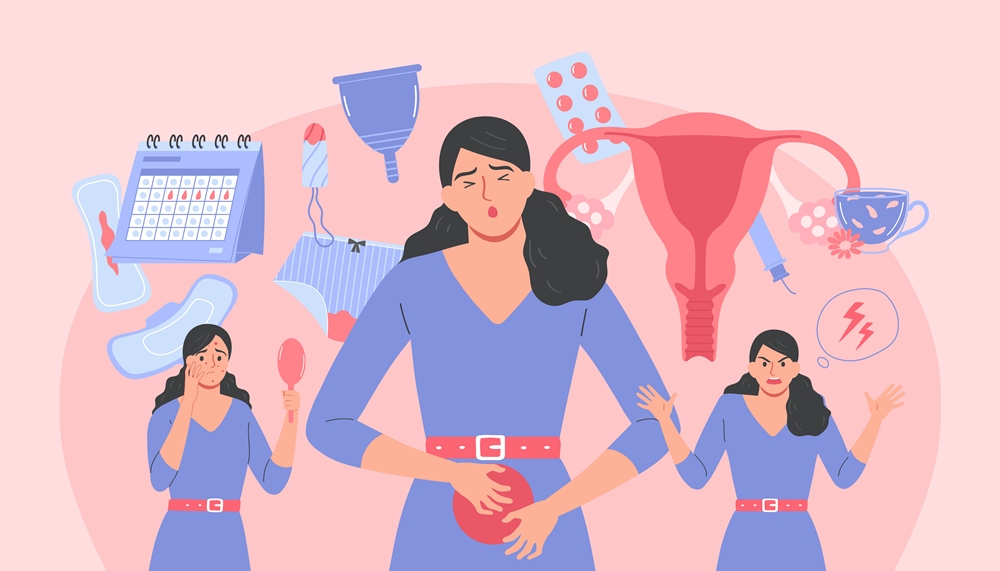
Misinformation about reproductive health is a major concern for almost three quarters of British women, yet 44 per cent admit they do not fact-check medical information they see online, new data has revealed.
The findings in a survey, conducted by women-led period and cycle tracker Clue, paint a clear picture of the impact medical misinformation has on British women.
The survey, which polled 2,000 women, found that many struggle to find accurate and truthful information about reproductive health.
Over half (55 per cent) of Gen Z and millennial respondents reported relying on unverified sources like social media to understand their reproductive health, while 45 per cent admitted they had followed at least one unqualified “healthfluencer” for advice on periods, hormones, or fertility.
Chat GPT (52 per cent), Instagram (49 per cent) and TikTok (47 per cent) were the most commonly used platforms by this generation to find out more about reproductive health.
The findings cement a clear need for better education, access, and tools that centre around science and data.
Louise Troen, Chief Marketing Officer at Clue, said: “This consumer data highlights both the complexity and the opportunity in advancing reproductive health education.
“Our commitment to connecting the dots between personal feelings, intelligent symptom tracking and science-based insights, has never been more important and we are proud to offer a product which – through rich data and world class academic research – empowers millions of women to better understand their bodies and make confident, informed choices.”
As the data shows a growing need for science-based reproductive education, Clue today announces the appointment of Dr Charis Chambers MD, a board-certified OB-GYN and widely respected health educator, as its new Chief Medical Officer.
Known for her evidence-based and approachable voice on social media as “The Period Doctor,” Dr Chambers brings deep clinical expertise and a passion for health equity to Clue’s mission.
Dr Chambers said: “Too many women and people with cycles are left in the dark about what’s happening in their own bodies.
“They’re misinformed, dismissed, or confused, especially when it comes to conditions like PCOS or major transitions like menopause.
“I believe everyone deserves access to clear, credible, personalised care, which is why I’m proud to partner with Clue – a brand built on a foundation of science, credibility, and trust.”
When it comes to menstrual cycles, 27 per cent don’t know when they are most fertile and a quarter (25 per cent) are unable to correctly name all four stages of the menstrual cycle – menstruation, ovulation, follicular phase and luteal phase.
1 in 6 women are unable to identify whether their cycles are irregular or not.
1 in 5 women believe you can’t get pregnant during your period – a common fertility myth.
20 per cent say they mistrust the information they are exposed to about hormonal contraception and a further 19 per cent claim this has made them less likely to use it.
More than half (51 per cent) of women say they wish they had learned more about fertility earlier.
These knowledge gaps have real-world consequences.
Over a third (34 per cent) of women report feeling confused or anxious (19 per cent) after encountering conflicting health information online.
The impact isn’t just mental either.
For women living with polycystic ovary syndrome (PCOS) – a condition that affects 1 in 10 and is a leading cause of infertility – misunderstandings about the menstrual cycle can mean years of delayed diagnosis and treatment.
Clue’s survey highlights how common this problem is, as more than 1 in 4 women (26 per cent) reported having a reproductive health concern dismissed as “normal” by a provider, only to later discover it was anything but.
This new picture of the lack of knowledge, information and accurate insight reinforces the critical role of science-based, research-led companies in the space to provide scientifically credible, and medically sound guidance, to women today.
Digital tools such as Clue play a vital role in helping to close the knowledge gap and empowering women to better understand their health.
Clue’s own data strongly demonstrates the value of accessible, science-based information as 90 per cent of users say using the app has helped them gain a better understanding of their body and cycle patterns.
With the appointment of Dr Chambers alongside Clue’s existing team of in-house scientists, the brand is continuing to empower women and people with cycles to take control of their reproductive health at every stage of life.
To mark the partnership, Dr. Chambers will be tackling some of the most common period and cycle myths in a no-nonsense video across her Instagram channel.
To learn more about Clue and access evidence-based women’s health education, visit helloclue.com.















Targeting CD1d altered immune cells slowed tumour growth and improved immunotherapy responses in mouse models of breast cancer, researchers found.
The findings suggest blocking the molecule could make the environment around breast tumours more favourable to anti-cancer immune responses.
Further work is needed to understand how these immune changes occur and how the approach could be safely used in patients.

Researchers from King’s College London, the Francis Crick Institute and University College London investigated how immune cells inside breast tumours influence cancer growth.
They focused on myeloid cells, a group of immune cells found in large numbers within tumours that can either support an immune attack against cancer or contribute to tumour growth and immune evasion.
The team examined CD1d, a molecule found on the surface of myeloid and other immune and tissue cells that helps regulate immune responses.
When CD1d was genetically removed from cells in a mouse model of breast cancer, the mice were more resistant to tumour growth. Researchers also saw changes in myeloid cell populations, including increased activity among cells that can help attack cancer.
The team then blocked CD1d using an antibody and again observed changes in myeloid cells and slower tumour growth. Blocking CD1d also improved responses to immunotherapy in the mouse model.
Researchers used single-cell RNA sequencing, a technique that examines gene activity in individual cells, to investigate the immune changes in more detail.
They identified a population of myeloid cells called monocytes that expressed genes associated with inflammation, an important part of the immune response. These cells were particularly important in restricting tumour growth in the mouse models.
A similar pattern of gene activity was identified in data from human breast cancer tumours. Its presence in myeloid cells was associated with positive responses to immunotherapy in breast cancer patients.
However, the findings in people were based on gene expression data and did not test CD1d-targeting treatment in patients.
Professor Patricia Barral, professor of immunobiology at King’s College London and senior author of the study, said: “Many breast cancers do not respond well to current immunotherapies.
“Our findings reveal a previously unrecognised mechanism by which immune cells within tumours are regulated.
“While CD1d is best known for helping immune cells recognise lipid molecules, we found that it also plays a role in shaping the behaviour of myeloid cells within tumours.
“These findings suggest that targeting the immune cells that surround and support tumours could boost anti-cancer immunity and potentially improve treatment responses in the future.”
Researchers now plan to investigate how the immune changes occur and how they can be safely harnessed in patients.
They also want to examine whether targeting CD1d could enhance existing treatments and influence treatment responses in different cancer types.
The work was supported by UKRI BBSRC, Breast Cancer Now and the Cancer Research UK City of London Centre.

The fertility rate in England and Wales fell to a record low of 1.39 children per woman in 2025, down from 1.41 a year earlier.
New figures show that parts of London and cities with major universities accounted for many of the areas with the lowest local fertility rates.
The City of London recorded the lowest rate in 2025 at 0.37 children per woman, followed by Cambridge at 0.87 and the London boroughs of Islington and Westminster at 0.90.
The Office for National Statistics (ONS) defines the fertility rate as the average number of live children women would expect to have over their childbearing lives.
Brighton & Hove recorded a rate of 0.95, followed by Southwark at 0.97 and Norwich at 0.98.
Exeter, Oxford and York, along with the London boroughs of Camden and Hammersmith & Fulham, each recorded 1.01 children per woman.
At the other end of the table, Pendle in Lancashire and Luton in Bedfordshire had the highest rate at 1.93.
They were followed by Oldham in Greater Manchester at 1.87, Bradford in West Yorkshire at 1.84 and Barking & Dagenham in London at 1.83.
The overall fertility rate for England and Wales declined from 1.41 in 2024 to 1.39 in 2025.
A rate of around 2.1 is needed for a population to remain stable over time when the impact of migration is excluded.
Twelve of the 25 local authorities with the lowest fertility rates in 2025 were in London.
In Wales, Swansea recorded the lowest fertility rate at 1.18, while Carmarthenshire, the Isle of Anglesey and Newport each had the highest rate at 1.48.
There were 585,396 live births in England and Wales in 2025, down from 594,677 in 2024 and the lowest number since 1977.
Live births fell across every region in England. The West Midlands recorded the largest percentage decline at 3.1 per cent, while the North East had the smallest at 0.3 per cent.
The average age of parents also increased slightly.
Mothers had a provisional standardised mean age of 31.1 in 2025, compared with 31.0 in 2024. Fathers had an average age of 34.0, up from 33.9.
In 1975, the average age was 26.4 for mothers and 29.5 for fathers.
The proportion of births where the mother was born outside the UK also increased, from 20.8 per cent in 2005 to 27.5 per cent in 2015 and 34.6 per cent in 2025.
India was the most common country of birth for non-UK-born mothers in 2025 for the fourth consecutive year.
It was followed by Pakistan, Nigeria and Romania.
In 2025, 56.4 per cent of births were to parents who were both born in the UK, down from 62.7 per cent in 2015.

Women face a hidden burden navigating healthcare, with many repeatedly retelling their medical history, a national study suggests.
The findings indicate that Canadian women are taking on cognitive, emotional and administrative work alongside managing their health, including coordinating providers and advocating for care.
More than half of women surveyed, 53 per cent, reported a past or current chronic condition, while 64 per cent said there were health topics they struggled to raise with their doctor.
Sarah Hoffman, president and CEO of Pacific Blue Cross, said: “These findings challenge us to think differently about women’s healthcare and highlight the hidden work required to navigate the system.
“For many women, managing their health has also come to mean managing the healthcare system itself.
“They are acting as project managers of their own care, shouldering the invisible labour of coordinating between providers, retelling their medical history and advocating to be heard.
“The gap between men and women is meaningful and raises important questions about why younger women report lower levels of confidence and support.
“It also challenges us to consider whether we are actually making progress in women’s care, and whether the next generation is being equipped with the confidence and voice to advocate for their health.”
Overall, 71 per cent of Canadians described their doctors as supportive and 88 per cent expected their appointments to go well.
Among women living with chronic conditions, 71 per cent reported having to repeat their complete health history multiple times a year.
Younger women were particularly likely to report difficulties discussing their health. The study found 81 per cent of Gen Z women aged 18 to 30 and 73 per cent of Millennial women aged 31 to 45 had health topics they struggled to raise with their doctor.
Among Gen Z women with chronic illness, 92 per cent reported having to repeat their complete health history.
The study also found differences between young women and men. While 95 per cent of Gen Z men expected a doctor’s appointment to go well, the figure was 82 per cent among Gen Z women.
Similarly, 82 per cent of Gen Z men said they felt supported by their family doctor, compared with 66 per cent of Gen Z women.
Reasons for holding back health concerns varied between generations.
Among Gen Z women, 30 per cent cited fear of dismissal and 29 per cent fear of judgement.
Embarrassment was the most common barrier among Millennial, Gen X and Boomer women, reported by 29 per cent, 27 per cent and 35 per cent respectively.
Women who felt they needed to prove themselves to be taken seriously said they adapted how they approached appointments.
Strategies included researching medical information, repeatedly describing or justifying symptoms, bringing written notes or documentation, tracking symptom timelines, making repeat visits and emphasising how symptoms affected their daily lives.
The study also found an association between feeling supported by a doctor and expecting appointments to go well.
Canadians who described their physician as supportive were nearly four times more likely to expect appointments to go well than those who felt unsupported, at 98 per cent compared with 25 per cent.
Overall, 66 per cent of Canadians said they described their symptoms accurately. This fell to 48 per cent among those who said they felt unsupported by their doctor.
The 2026 Blue Cross Women’s Health Study surveyed 2,045 adult Canadians online in March 2026 through independent research company Research + Knowledge = Insights.
The survey had a reported margin of error of plus or minus 2 per cent, 19 times out of 20.











 Entrepreneur1 week ago
KOVE Medical raises €1.7 million to improve safety of foetal surgery

 Pregnancy1 week ago
UK study aims to transform maternity care for high-risk pregnancies

 Mental health2 weeks ago
PMDD after SSRIs or hormones: Why the brain may be the missing treatment target

 Diagnosis2 weeks ago
Ark Surgical secures further institutional backing to accelerate US expansion

 Entrepreneur4 days ago
Last chance to save on Women’s Health Week and Women’s Sport Summit: Early Bird pricing ends 11 September

 Menopause7 days ago
Menopause hormone treatment may ease brain fog, study suggests

 Motherhood2 weeks ago
Thousands of UK women develop undiagnosed PTSD after childbirth each year – study

 Menopause2 days ago
Cancer drug could tackle osteoporosis menopause weight gain