




Cancer
UK: Renewed call for millions to take up NHS breast screening invites

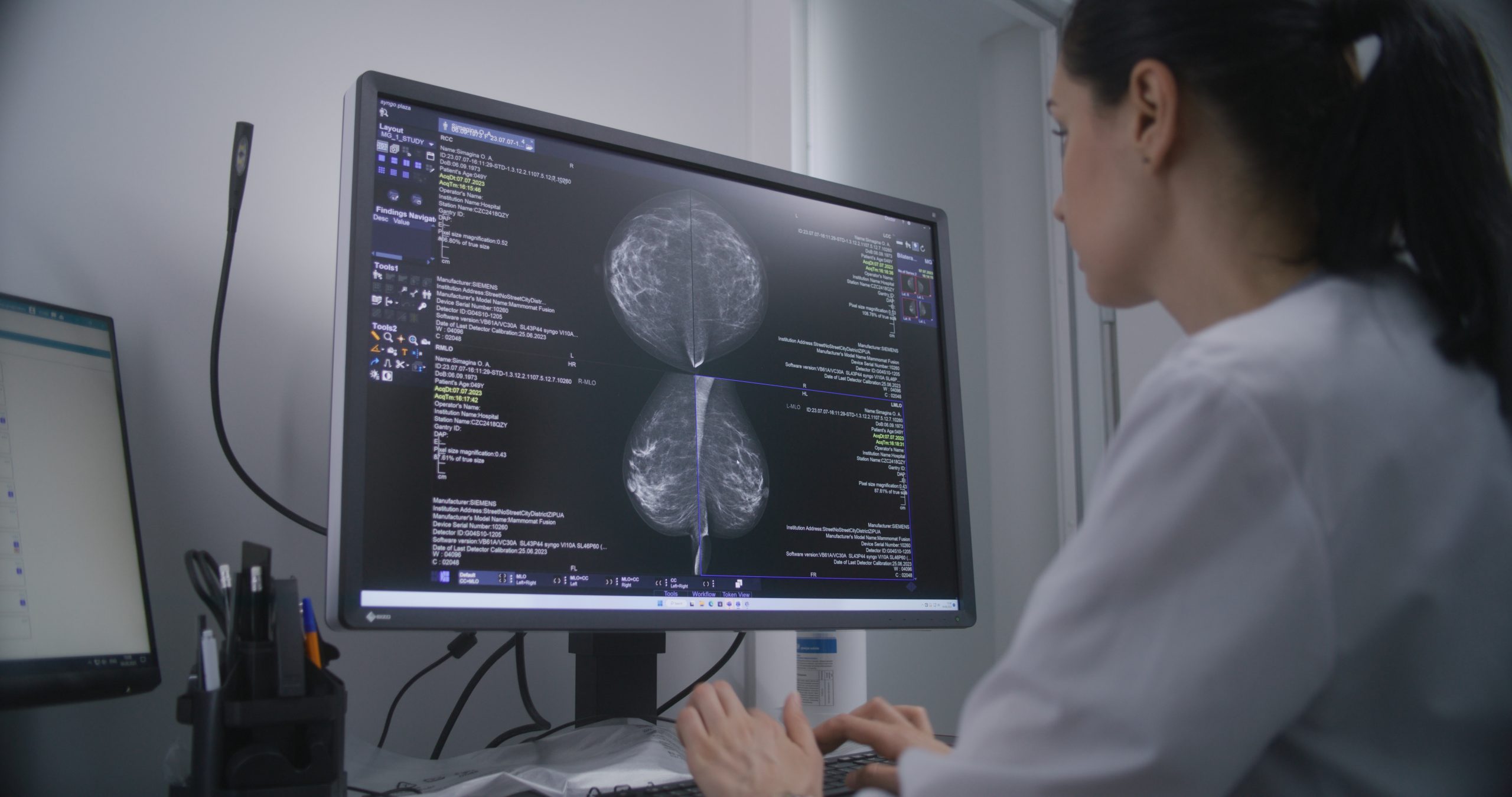
Women aged 50 to 70 across England are being urged to take up invitations to breast screening as the NHS redoubles its bid to reach millions of women not yet taking up the potentially life-saving offer.
Last year alone, NHS breast screening services detected cancers in 18,942 women across England, which otherwise may not have been diagnosed and treated until a later stage.
However, analysis of latest NHS data shows that between 2018/19 and 2022/23, a total of 8.59 million breast screening appointments were attended (within six months of invitation) out of 13.05 million invitations.
Despite rising uptake overall last year, the latest annual (2022/23) data shows more than a third of women (35.4 per cent) did not take up the offer of screening following an invitation, with 2.18 million eligible women not having had a breast screen in the last three years.
Around four in every 100 women screened are asked to come back for more tests after screening and offered care and treatment as required.
Of these four women, one will be found to have cancer, with screening preventing an estimated 1,300 deaths from breast cancer each year in the UK.
The NHS is renewing its call for anyone invited to take up the offer of breast screening to give the best chance of cancer being picked up and treated as early as possible to help give the best possible outcomes.
Dr Louise Wilkinson, NHS National Speciality Adviser for Breast Screening and Consultant Radiologist, said: “Breast screening saves lives by allowing cancers to be identified and treated earlier – in fact, discovering breast cancer at the earliest stage may give you a 98 per cent chance of surviving for five years or more.
“Screening can often pick up breast cancer before you can even see or feel any changes to your breasts yourself and your mammographer will do everything she can to make the experience as comfortable as possible for you, which is why I would urge anyone invited to take up the offer.”
As well as hospitals, screening is available in the wider community, for example through convenient mobile screening vans in supermarket car parks.
Under the NHS Breast Screening Programme, eligible women usually receive their first routine invitation for breast cancer screening between the ages of 50 and 53 and will normally be invited every three years until their 71st birthday.
However, NHS England is also asking women of all ages to be aware of their breast health and to know how to check themselves for cancer symptoms.
Being “breast aware” means being aware of how your breasts look and feel at different times, and crucially telling your doctor straight away if you notice any unusual changes.
It takes only a few minutes to do and can help spot breast cancers at an earlier stage.
Claire Rowney, Chief Executive at Breast Cancer Now, said: “These figures serve as a timely reminder, during Breast Cancer Awareness Month, that far too many people are missing out on the vital breast screening that saves lives from breast cancer.
“The stark reality is that thousands of women miss having their breast cancer detected each year.
“We look forward to working with NHS England to ensure breast screening services are accessible and convenient for everyone who is eligible.
“We encourage eligible women to attend their breast screening appointments when invited and to regularly check their breasts to get to ‘know their normal’ and get any new or unusual breast changes checked out by a GP, including between screening appointments.
“There’s no time to waste to save more lives from breast cancer.”





Glaucoma drugs could potentially be repurposed to treat aggressive breast cancer after researchers identified markers linked to response.
Scientists found that several cancers, including breast cancer, melanoma and a type of blood cancer, rely on the same molecule to become aggressive and spread.
Drugs that block the molecule are already used to treat glaucoma and may therefore have potential as cancer treatments.

Researchers also identified markers that could help indicate which patients may respond well to the drugs.
Experts said the findings could help establish which patients may benefit from existing treatments.
Repurposing medicines already shown to be safe could also allow treatments to reach patients faster.
Lead author Victoria Sanz Moreno, professor of cancer cell and metastasis biology at The Institute of Cancer Research in London, said: “Some cancers are particularly aggressive, and once they spread they become very hard to treat.
“Catching these aggressive cancers and preventing their ability to move around the body is really crucial to our mission to keep more people living well with cancer.
“Our research has identified a shared weakness of aggressive cancer cells that could be targeted across many cancer types, wherever they originate in the body.
“We confirmed our findings in aggressive cancers such as breast cancer, melanoma, and a type of blood cancer called acute myeloid leukaemia, but we believe this molecular fingerprint of cancer cells likely to die after treatment applies to many more cancer types.
“It’s reassuring to know that a treatment already exists – a drug currently being used safely in some patients could be adapted to treat these cancers.”
Researchers set out to find markers that could identify which cancers would respond well to drugs blocking ROCK, also known as Rho kinase.
Aggressive cancer cells rely on ROCK as they spread around the body and cause advanced disease that is harder to treat.
The molecule keeps the scaffolding inside cells tense, causing them to contract and become round and generating enough force for cancer cells to squeeze through tissue.
The team, working in the Breast Cancer Now Toby Robins Research Centre at The Institute of Cancer Research, examined data from a drug-sensitivity database to identify which cancer cells responded to ROCK inhibitors.
Breast cancer cells that responded to ROCK inhibitors had a particular gene called E-Cadherin that was not working properly.
In melanoma, responsive cells tended to have a more rounded shape and high activity in a signalling pathway called NFKB.
Acute myeloid leukaemia cells that responded well to ROCK inhibitors had a specific subset of genetic alterations.
Researchers then tested the findings in laboratory tumour samples and mouse studies.
They hope tumour biopsies showing these markers could eventually help identify patients who may respond well to ROCK inhibitors.
Dr Simon Vincent, chief scientific officer at Breast Cancer Now, said: “With around 11,500 women tragically dying from breast cancer every year in the UK, research like this is vital to finding more effective treatment options.
“This study helps to lay the foundation for understanding who among those with certain cancers, including breast cancer, might benefit most from existing drugs. Finding new uses for existing treatments, which we know people can safely take, is easier and faster than developing new cancer drugs from scratch.
“It’s encouraging that these drugs may be especially effective in targeting cancer cells that are more likely to spread and resist treatment.
“While this research is still at an early stage and clinical trials are needed, it’s an important step towards more personalised breast cancer treatments in the future.”
First author Jaume Barcelo, formerly a postdoctoral research fellow at The Institute of Cancer Research in London and now based at Barts Cancer Institute at Queen Mary University of London, said: “Our study has identified a specific pattern of features that is consistent across many cancer types, and that can be used to match the right patients to this treatment.
“The next stage for this research will be to test how these drugs that inhibit ROCK work in combination with other treatments, to maximise the benefit for patients.
“As ROCK inhibitors are already approved to treat glaucoma, I hope that our findings can be used to progress the drugs into clinical trials to treat cancer in the near future.”
The research was funded by The Institute of Cancer Research, Breast Cancer Now, Barts Cancer Charity, Cancer Research UK, Worldwide Cancer Research and UK Research and Innovation.
Susanna Daniels, chief executive officer of Melanoma Focus, said: “Despite major advances in melanoma treatment over the past decade, too many people still die from the disease each year, and not every patient responds to the treatments currently available.
“Every new discovery improves our understanding of how melanoma grows and survives, bringing us closer to treatments that are more effective, more targeted and have the potential to improve survival.
“While these findings are still at an early stage and will need to be tested in clinical trials, they offer an encouraging direction for future melanoma research and the development of more personalised treatments.”

Diagnosis
Where women live may influence ovarian cancer survival, especially among Black women – study


Women living in socially vulnerable neighbourhoods had a 20 per cent higher risk of death after an ovarian cancer diagnosis, a study found.
Black women also faced a 45 per cent higher risk of death than white women.
Researchers said the combination of being Black and living in a highly vulnerable neighbourhood was linked to a greater risk of death than would be expected from either factor alone.
Francesmary Modugno, professor in the Department of Obstetrics, Gynecology and Reproductive Sciences at the University of Pittsburgh and senior author, said: “We expected residential context to influence outcomes, but what surprised us was how much stronger the impact was for Black women.
“Our findings suggest that it’s not simply where someone lives. The interaction between a woman’s lived experience and her residential environment may be helping drive these persistent disparities.”
Modugno is part of the Women’s Cancer Research Center, a collaboration between UPMC Hillman Cancer Center and Magee-Womens Research Institute.
Epithelial ovarian cancer is the deadliest form of gynaecological cancer, with around half of patients surviving for five years after diagnosis.
Survival is lower among Black women, with fewer than 40 per cent alive five years after diagnosis.
Differences including age at diagnosis, cancer stage and tumour type explain some of the survival gap, but researchers said a substantial proportion remains unexplained.
Researchers examined whether social determinants of health, including conditions in the communities where patients live, could help explain the remaining difference in outcomes.
The study, carried out with researchers at the University of Alabama at Birmingham, analysed data from 2,544 women diagnosed with epithelial ovarian cancer and treated at the O’Neal Comprehensive Cancer Center.
The group included 509 Black women and 2,035 white women.
Researchers linked patients’ residential census tracts to the US Centers for Disease Control and Prevention’s Social Vulnerability Index.
The index measures neighbourhood factors including poverty, housing conditions, transport access, educational attainment and other socioeconomic challenges.
Black women in the study were more likely to live in highly vulnerable neighbourhoods.
However, where women lived did not fully explain the racial difference in survival.
Black women had poorer survival than white women even when they lived in similarly advantaged communities, while being Black and living in a highly vulnerable neighbourhood together was associated with a greater risk of death than expected from either factor alone.
Researchers said the findings could help health systems and cancer services identify women at greater risk and provide additional support.
Possible measures include patient navigation programmes, transport assistance, childcare support and survivorship services to help patients complete treatment and manage the challenges of cancer care.
Rebecca Arend, associate professor of gynaecology oncology at the University of Alabama at Birmingham, said: “Our findings reinforce that we must better understand and address the barriers patients face in their communities and ensure that every woman has equitable access to high-quality care.”
Arend, who is also associate director of clinical research at the O’Neal Comprehensive Cancer Center, added: “Translating research into meaningful improvements in cancer outcomes is only possible through strong collaborations among academic medical centres, researchers and community partners.”
The study builds on research published in 2025 led by Modugno and University of Pittsburgh colleagues using data from UPMC Hillman Cancer Center in western Pennsylvania.
That research also found an association between social vulnerability and ovarian cancer survival.
The latest analysis included a substantially larger group of Black women and examined more closely how residential conditions might contribute to racial inequalities in outcomes.
Researchers said the findings need to be replicated in other parts of the US and among additional racial and ethnic groups to determine how widely they apply.
Future work will examine other social and environmental factors that could affect ovarian cancer survival, including neighbourhood pollution, access to food and community resources.
Researchers hope the findings could lead health systems to develop more targeted support for patients at greatest risk of poor outcomes.
Adding neighbourhood measures such as the Social Vulnerability Index to cancer care planning could help health systems identify women facing barriers to care and connect them with support during treatment.

Weekly app monitoring can reduce fatigue and improve daily life for women with metastatic breast cancer, according to a study.
The approach involves regularly asking patients about their wellbeing through an app and responding quickly when problems are identified.
Germany’s Federal Joint Committee, known as the G-BA, has recommended that the treatment model be incorporated into standard care.
Professor Maria Karsten, senior attending physician at the Charité Breast Cancer Center and initiator of the PRO B project, said: “The new medications often no longer need to be administered at the hospital but can be taken at home.
“As a result, we see patients less frequently at the hospital, and our medical oversight has become somewhat incomplete.
“In order to close this gap and provide patients with close support in spite of the distance, we have developed the PRO B digital treatment concept.”
Around 68,000 women in Germany are living with metastatic breast cancer, meaning the disease has spread to other organs.
At this stage, the cancer is generally considered incurable. Modern treatments can, however, temporarily control the disease and extend life expectancy by several years, with some women able to continue working.
At the centre of PRO B is an app that asks women up to 52 structured questions once a week about their symptoms, daily life and emotional wellbeing.
Questions include whether they have experienced pain, felt too tired to carry out their usual activities or experienced shortness of breath.
An algorithm analyses the answers and immediately alerts the treatment team when relevant changes are detected.
The team then contacts the patient within 48 hours to decide whether any action is needed.
Karsten said: “During these phone calls, for example, we discuss whether the dosage of anti-nausea medication should be adjusted or offer practical tips for managing the various symptoms.
“But we also detect serious side effects more quickly – such as those indicated by a seemingly harmless symptom like fatigue – and can immediately schedule the patient for an appointment at the hospital.”
The study involved 909 women with metastatic breast cancer aged 19 to 81 across 52 breast cancer centres in Germany and followed them for one year.
Around half received PRO B care alongside drug-based cancer treatment.
The other half answered questions about their wellbeing once every three months and were not contacted by their treatment teams in response.
Women receiving PRO B care reported significantly less fatigue, which refers to physical, emotional or mental exhaustion that can severely restrict daily life.
They also rated their physical functioning more positively and required fewer hospital admissions.
Karsten said: “These are effects that have a noticeable impact on the patients’ daily lives; the women are more capable and better able to manage their lives.
“We even have evidence that the PRO B approach extends the remaining lifespan for some patients. We are achieving all of this not through a new medication, but simply by regularly and systematically assessing the women’s well-being and responding accordingly.”
More than 90 per cent of women in the PRO B group said after the study that they wanted the approach to become part of routine care.
Stephanie Neumann-Johnston, 51, who took part in the study, said: “I feel like the app has saved my life several times.
“There are so many situations and incidents that you can’t make sense of – you have so many questions.
“With the app, I can look up common problems and find medically reviewed information, for example, about fatigue. That way, I can help myself, also on the weekends.
“And the personal contact provides me with emotional and medical support.
“For example, I can find out whether I’m allowed to take certain medication for a fever, or get an assessment of my situation: Should I go to the emergency department with these symptoms or not? The app takes a huge weight off your shoulders.”
Based on the medical findings and a health economic analysis, the G-BA recommended in June that PRO B should be incorporated into standard care.
This would allow patients with statutory health insurance to access the model in future when they receive the relevant diagnosis.
PD Dr Christoph Kowalski, department director at the German Cancer Society and a co-author, said: “This recommendation must now be implemented as quickly as possible.
“If a new care concept offers medical and economic benefits, we should not withhold it from the most seriously ill women.”
The health insurance companies involved in the project are also planning further developments so affected women can receive routine PRO B care before its wider introduction into standard care, with access expected to begin this autumn.
The care model will continue under the name “ida”, led by Karsten and her team.
The PRO B project ran from 2020 to 2024 and received around €4.8m from the Innovation Committee of the Federal Joint Committee.
The project was led by Karsten, with consortium partners BARMER, mkk – meine krankenkasse, DAK-Gesundheit, the German Cancer Society and OnkoZert GmbH.
Breast cancer is the most common cancer among women in Germany, with around one in eight expected to develop the disease during their lifetime.
Worldwide, breast cancer is the leading cause of cancer-related deaths.
Despite advances in treatment, 30 per cent of women with early-stage breast cancer and up to 70 per cent of those with lymph node involvement in later stages develop distant metastases, which typically make the disease incurable.
For patients with metastatic breast cancer, treatment aims to prolong life while maintaining the best possible quality of life.
Since 2016, the G-BA has been responsible for supporting new forms of care that go beyond existing standards, as well as health services research aimed at improving healthcare quality in Germany.
Its Innovation Fund is financed through contributions from statutory health insurance plans and the Health Fund.











 News5 days ago
UK femtech investment surges 194% in a decade, research finds

 Wellness1 week ago
Cancer patient receives ‘landmark’ treatment in world-first

 Entrepreneur6 days ago
TidalSense raises £14m to expand five-minute COPD test across NHS

 Sponsored Content2 weeks ago
The room is filling up at WHW Europe 2026 with super early bird pricing ending this Friday

 News5 days ago
Cross-Border Impact Ventures raises US$58m for women and children’s health

 Insight2 weeks ago
Johnson & Johnson offers to pay US$5.5bn to settle talc cancer lawsuits

 Insight1 week ago
Women urged to be wary of menopause misinformation on social media

 Menopause2 weeks ago
Premature menopause is a high blood pressure risk, study finds