



AI
GE’s AI upgrade sharpens 3D mammogram images


GE HealthCare has secured US FDA authorisation for Pristina Recon DL, an AI tool that sharpens 3D mammogram images to support breast cancer detection.
Breast cancer is one of the most common cancers in women, with around one in eight expected to receive a diagnosis in their lifetime and more than a million deaths projected each year by 2050.
The newly authorised Pristina Recon DL sits on GE HealthCare’s Pristina Via system and is designed to improve image quality in digital breast tomosynthesis, a type of 3D mammography created from multiple X-ray images of the breast.
The technology uses deep learning, a form of artificial intelligence that learns patterns from large datasets, together with an approach known as iterative reconstruction, which repeatedly refines images to reduce noise and improve clarity.

According to GE HealthCare, Pristina Recon DL uses two deep learning models in sequence. One focuses on separating the useful signal in the image from background noise, while the second is trained to highlight clinically important details in a synthesised 2D view.
The company says it is the first mammography technology to combine deep learning with iterative reconstruction in this way, aiming to provide high-quality 3D images without increasing the radiation dose to patients.
Pristina Recon DL was born out of a deep commitment to our customers, listening closely to their feedback and working hand-in-hand with radiologists to enhance image quality and clarity,” said Jyoti Gupta, president and CEO, women’s health and X-ray at GE HealthCare. By applying advanced deep learning technologies, we’re shaping the future of breast imaging, one defined by uncompromised image quality, faster workflows and greater confidence in early cancer detection.”
In a recent study cited by the company, breast radiologists reportedly preferred the overall image quality of Pristina Recon DL in 99.1 per cent of image reviews when compared with a previous reconstruction method.
GE HealthCare also reports better performance for detecting microcalcifications, tiny deposits of calcium that can be an early sign of breast cancer, and breast masses in trials using modelled clinical data.
“Our collaboration with GE HealthCare has been instrumental in advancing breast imaging capabilities, and the new 3D image quality represents a meaningful upgrade that will benefit radiologists and patients alike,” said Dr Howard Berger, president and chief executive officer of RadNet. “This pioneering AI technology will help elevate breast care by delivering the clarity and consistency radiologists need to enable more confident diagnoses.”
The Pristina Via system with Recon DL is also marketed as offering workflow efficiencies, including automated image acquisition and personalised exam protocols designed to speed up appointments and reduce waiting times.
GE HealthCare highlights other features such as patient-assisted compression, which allows women to help adjust the pressure on the breast during imaging, with the aim of improving comfort and reducing anxiety.
Additional applications include a shortened biopsy workflow and contrast enhanced mammography, where a dye is injected to help highlight abnormal blood vessels. The company says diagnostic accuracy with its SenoBright HD contrast enhanced mammography is comparable to breast MRI in multiple studies.
“With Pristina Via with Recon DL, we’re setting a new benchmark in breast imaging, delivering sharper, clearer and more consistent images that empower radiologists with more confidence,” said Pooja Pathak, vice president and general manager, mammography at GE HealthCare. “As an upgradable feature on the Pristina Via platform, we are excited to now offer customers uncompromised image quality combined with fast, accurate workflows.”
GE HealthCare said it worked with academic centres and high-volume outpatient imaging sites to develop and validate the algorithms behind Pristina Recon DL, aiming to make it harder for early cancers to be missed on screening images.










Diadia Health, winner of the Femtech World AI Innovation Award, is working to revolutionise women’s health through AI-backed at-home testing.
By analysing genetics, biomarkers and medical literature, Diadia addresses women’s health issues, taking a functional medicine approach to healthcare.
With the goal of making personal healthcare accessible and affordable, Diadia Health uses technology to automate tasks for clinicians and doctors to save time and improve decision making, and provides comprehensive health reports.

Diadia app was founded by machine learning and AI scientist and CEO Elena Ikonomovska, and CTO Andrii Yasinetsky.
Ikonomovska speaks to Femtech World about the inspiration behind the app, how the app helps to find health issues traditional care misses and the future of Diadia in the healthcare system.
What was the inspiration behind the app and what was at the forefront of your mind when developing Diadia?
My research was about learning from infinite data streams, so for a very long time, I’ve been obsessed with the idea of teaching machines how to learn, in a similar way to how humans learn, which is incremental.
Early on I got into the space of machine learning and built multiple products and systems at companies like Google, Reddit, Change.org.
I also built a number of companies which were all AI first companies, always with a social impact in mind as I was creating these products.
I started experiencing health issues during my last company, and I’ve always been someone that has tried to be as healthy as possible – eating healthy, working out – but I was still becoming pre-diabetic.
My health was getting worse and worse. I spoke to four different doctors, changed primary care doctors, providers, and no one actually had any idea what’s going on, and didn’t know how to help me.
Being a scientist, I decided I was going to try to solve it by myself with the help of AI.
At this time, AI was already at a place where it was quite powerful, allowing us to research and read all the medical knowledge and interpret data.
I realised that there’s so much knowledge we have that has not reached healthcare providers because it is specialised knowledge.
The way that the healthcare system is organised is that everything is solved within a specialty, isolated.
The problems are looked at in isolation when, in essence, they’re not isolated. They’re very connected. Everything in the body is influencing everything else.
Through that problem, I actually started learning about this, and I started applying concepts of systems biology, which is used in functional medicine, an area of medicine which is very niche.
They look at the body as a whole system when they’re solving problems.
This is how I discovered answers for my health, over time, I understood the real cause for my issues was thyroid problems.
This was contributing to my insulin resistance and a number of other deficiencies such as iron anemia, that were contributing to the whole problem that needed to be solved all together, so that I could stop myself from becoming diabetic.
At Diadia, you combine genetics, biomarkers, and medical literature to uncover what normal testing tends to miss.
What was the breakthrough that made you realize AI could solve a problem that traditional clinical tools have struggled with?
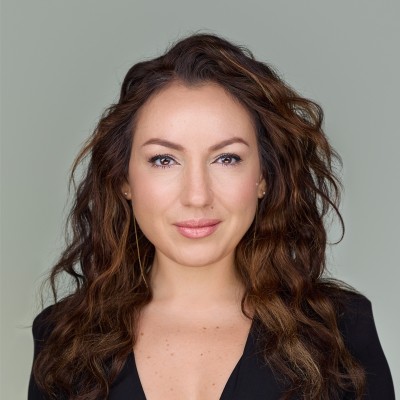
Elena Ikonomovska
AI is capable of connecting the existing knowledge we have with questions and problems.
Initially, we built a system that was capable of seeing the problem only from the five biomarkers without further testing, and that made me realise that this is powerful because it can make the connections between these data points and that represent the different systems in the body intelligently.
This means that it understands the relationships, understands biology, understands how things are like, you know, interacting with each other.
The only thing that we were worried about is that sometimes it might be wrong, as it really doesn’t do proper logical thinking but pattern matches and connects information that statistically is likely accurate together.
There is no protection from fabricating little details that are wrong.
So what we call hallucinations are happening more and more, these are mistakes that AI does that are not obvious.
You can’t catch them by the eye, especially if you’re not an expert. You wouldn’t understand that this is not true.
What we did was we forced logical thinking, we forced logical connections between the evidence that the AI is capable of finding, so that we make sure that the conclusion at the end from the data that is being given is making sense.
It’s logical, and there is research and there is data supporting that connection. That’s something that chatbots don’t do.
I think that’s the reason that makes me sleep well at night because we know that this way we can connect not only genetics – we actually work with gut tests and metabolites, toxins analysis, infections, and all sorts of different tests and biomarker labs.
It enables a multi-specialist view on the problem when you’re analysing the data of the patient in the context.
There may be concern that AI might replace clinical judgment, but you have taken a different approach – what have you learned from working with clinicians about where AI creates the most value?
I don’t believe AI will replace clinical judgment, not yet.
For AI to be able to replace clinical judgment, it needs to be trained over highly dimensional data coming from specialty labs that represent the full body all at once, and such data does not exist.
There is no data of that sort, and also there is no decision making clinical frameworks or choices around how treatments should be ordered and sequenced out that is available to the AI to learn from.
This is knowledge that only clinicians have.
In fact, like the best clinicians have been creating such knowledge and frameworks for decades, practicing in this cutting-edge field of medicine, honing their skills and learning from experience, and embedding the latest research.
That’s the kind of knowledge that is needed to guide these systems to make better decisions over time.
That is also something we are working with clinicians on, because we know that AI cannot on its own come up with the best actual answers, and what we want is the best possible, and the most accurate right analysis, so that we’ll be able to safely deploy such technology to millions of people.
We are working towards that world, and clinicians are a huge part of it.
The more data we generate, the more knowledge we will create about our understanding of disease, human longevity and health span will create more human judgment to continue guiding the tool to uncover more and create more data.
This will be to feed back that data into clinical decision-making processes, because the space is so unexplored, it’s like we’re just entering right now.
At the end of the day, it has to be a human being accountable for another human, and also a human that is there to explain and help the other person incorporate all the things that they need to be doing for their health.
How does Diadia bridge the knowledge gap between patients and clinicians?
The AI is analysing data and prepares very comprehensive reports with clinical priorities and protocols. It explains why certain choices have been made, what it is addressing, and more.
For the patients, there is also really great research to learn more and read more. We give them all the medical research and then it gives them something to hold on to until next time they see their doctor.
Over time we are likely going to have features like chatting functionalities so that the AI will be able to answer certain questions based on the knowledge or the clinical guidelines from a specific clinic.
It is saving hours of analysis time that most doctors don’t have time to really look at. Once you start entering this complex data, it can be hours of analysis where you need to look at 300 biomarkers, or even 1000 in some cases. That’s a long time that a lot of doctors don’t really have.
The AI is in essence cutting that off and giving them a fairly comprehensive insight report that they can quickly understand, look into things, and adjust if needed, and then hand it over to the patient.
As AI and other elements of healthcare such as precision and personalised medicine continue to evolve, where do you see Diadia heading in the next five years, and in women’s health more broadly?
Right now Diadia is being used by clinics who are practicing functional medicine. What we’re capable of, is empowering clinicians to see more patients while maintaining the same high quality standards, as well as being able to grow their practices and train staff.
I hope that as this technology becomes better, we’re going to be able to then bring it into more accessible clinics like direct primary care, and eventually integrated into the healthcare system.
My big dream is that this technology will be covered by insurance. It will be helping millions of doctors in the U.S.
For now we’re in the U.S. market in order to provide this kind of quality care and ultimately offer the service to more women and men as well this personalised precision medicine care that I believe should be the standard of care for everyone.
Finally, what does it mean to win a Femtech World Award?
It’s really an amazing recognition.
As a woman, I put a lot of heart into this. My whole mission is to build a world where women and men, of course, will have the right kind of care that we need, and we will have better data.
I hope that some of the bias and unfairness around women’s health will be fixed.
And so, being recognised that we’ve made a contribution in this direction means a lot to me.
It really helps me do this work and feel more inspired to continue forward.

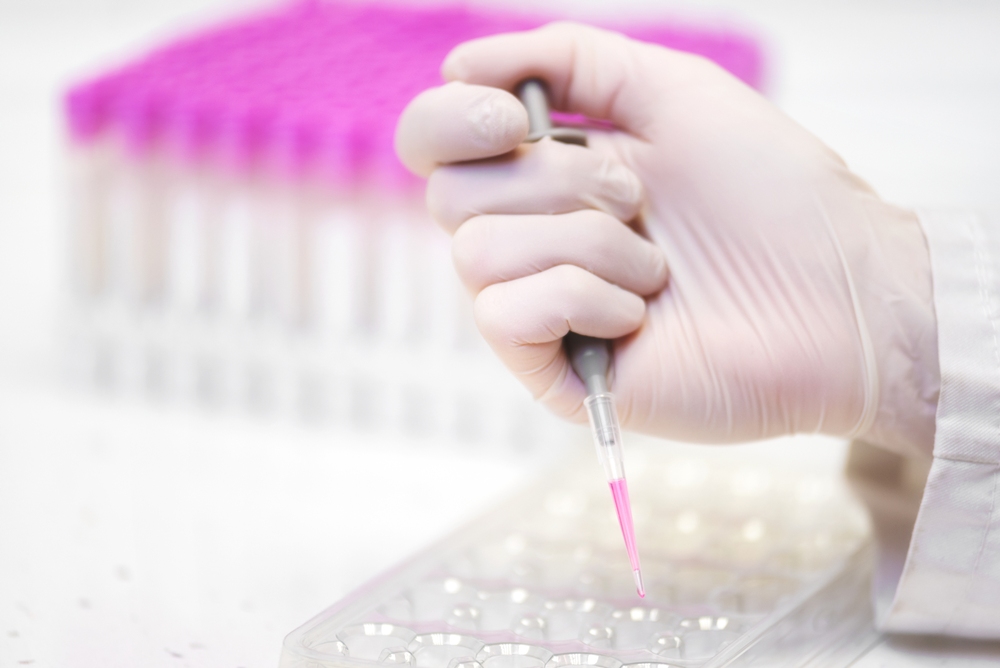
Evvy has raised US$40m to expand its vaginal microbiome platform into reproductive healthcare, starting with fertility and IVF.
The series B funding will also support the expansion of EvvyAI, the data and artificial intelligence platform behind the company’s vaginal healthcare business.
The round brings Evvy’s total capital raised to nearly US$60m across three funding rounds since its launch.
Priyanka Jain, Evvy chief executive and co-founder, said: “Thirty per cent of infertility is categorised as unexplained.
“When you think about the immense emotional and financial effort required to produce a healthy embryo, transferring that embryo into an unexamined, inflamed environment is heartbreaking.
“By measuring and modulating the microbiome proactively, we can tangibly improve clinical outcomes.”
Evvy says it has served more than 100,000 patients and partnered with 3,000 healthcare practitioners.
The company also says 96 per cent of patients opt to contribute their data anonymously to clinical research, contributing to its dataset on the vaginal microbiome and women’s health outcomes.
Its vaginal microbiome testing uses metagenomic sequencing.
Evvy’s at-home Vaginal Health Test analyses more than 700 bacteria and fungi from a vaginal swab and provides clinician-reviewed results, personalised insights and access to prescription treatment where appropriate.
The company’s fertility work builds on 13 peer-reviewed publications and studies conducted in 2025 involving more than 1,000 real-world patients.
The funding round was led by Catalio Capital and included U.S. Fertility through its U.S. Fertility Innovation Fund and Labcorp Venture Fund.
Existing investors General Catalyst, Left Lane Capital, BBG Ventures, Amboy Street Ventures, Ingeborg and Foreground Capital also participated.
Jacob Vogelstein, co-founder and managing partner at Catalio Capital, said: “Its combination of proprietary data, clinical evidence and a growing biomarker discovery engine creates an entirely new foundation for precision women’s healthcare.
“We believe Evvy is building the data platform that will define this category for decades to come.”
Evvy has also expanded into UTI testing, probiotics, suppositories and other vaginal health treatments.
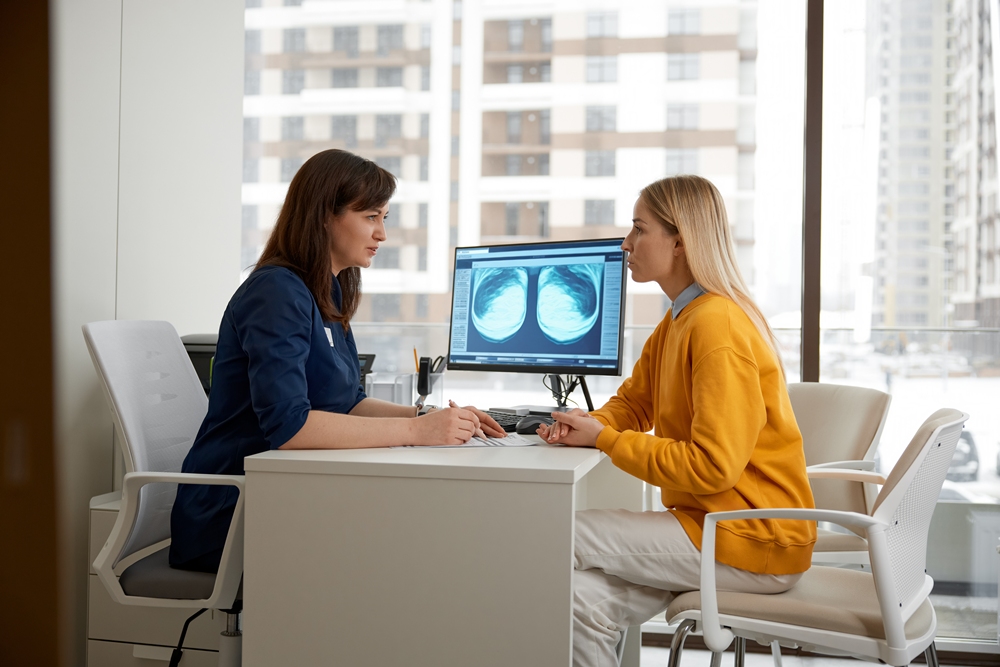
AI may help detect heart disease in women from routine mammograms, according to research involving almost 30,000 women.
Researchers found a machine-learning model could distinguish women with coronary heart disease, high blood pressure or a previous stroke using mammogram images.
The findings suggest breast cancer screening could potentially also flag cardiovascular problems without requiring an additional imaging examination.
Dr Viana Copeland, from Tel Aviv University, presented the findings at the European Society of Cardiology’s annual congress in Munich.
The researcher said: “Despite being the leading cause of death in women worldwide, CVD [cardiovascular disease] is consistently underdiagnosed and undertreated.
“A common finding in our medical centre, and around the world, is that when women do seek medical help, their CVD is already advanced.
“On the other hand, many women do attend routine breast cancer screening, even when they haven’t sought care for cardiovascular symptoms.
Researchers in Israel analysed 97,364 mammogram scans from 29,921 women with an average age of 54 and cross-referenced the images with their medical records.
Among the women, 16 per cent had high blood pressure, 2.5 per cent had coronary heart disease and 2.5 per cent had experienced a stroke.
A machine-learning model was trained to identify women with these conditions.
Using mammograms alone, the model could distinguish women who had experienced a stroke from those who had not 86 per cent of the time.
For high blood pressure, the figure was 79 per cent, while for coronary heart disease it was 78 per cent.
The results were consistent regardless of age or whether a woman also had cancer.
Copeland said analysing existing mammograms for information about cardiovascular health “could potentially offer a scalable approach without requiring an additional imaging examination”.
“Mammography also reaches many women in midlife, an important period for recognising and addressing cardiovascular risk.”
Researchers are working to improve the model’s accuracy, reduce false results and increase the number of heart conditions it can identify.
Elena Arbelo, an expert member of the European Society of Cardiology communication committee, described the findings as “compelling”.
“A mammogram may one day do more than look for breast cancer – it may also offer a window on to cardiovascular health. That matters because CVD in women is still too often recognised late.”
She added: “The challenge now is to establish accuracy and reliability – to move from experimentation to clinical implementation.”

 Menopause1 week ago
Menopause may not explain rising heart condition in women – study

 Fertility2 weeks ago
Paracetamol use may impact future fertility, studies suggest
 Insight1 week ago
Women with birth trauma face 2.5x higher healthcare costs – study

 News1 week ago
Medical cannabis may improve endometriosis symptoms – study
 Cancer1 week ago
Study could explain why obesity is a breast cancer risk factor

 Hormonal health2 weeks ago
Menopause hormone therapy may improve cardiovascular health outcomes, study suggests
 AI1 week ago
Evvy secures US$40m for AI-powered vaginal microbiome testing
 Q&A1 week ago
Innovating breast cancer screening with tears